Lucky Craft Bevy Vibration: the small lipless you fish on a straight retrieve
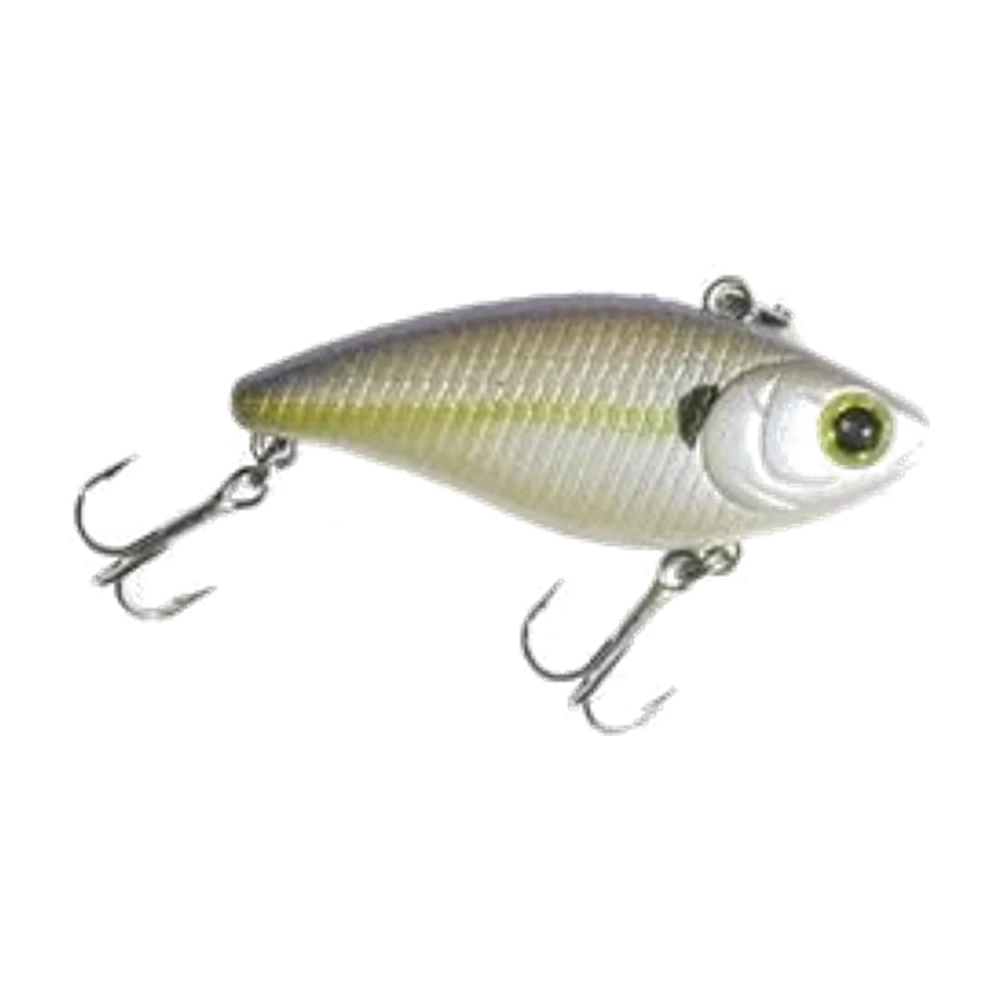
This lure shines under specific conditions. CarnaFish tells you in 10 seconds if today is one of them.
The lipless is nearly always presented the same way: cast, let it sink, lift it in snaps, let it drop back. That yo-yo works — we cover it in depth on the Savage Gear Fat Vibes page — but it assumes depth and open water.
Over a two-metre flat covered in dead autumn weed, that pattern collapses. Every fall ends in the vegetation, the lure loads up, and you spend more time cleaning your trebles than fishing. Plenty of anglers conclude the lipless is not made for that ground. It is the opposite: you just have to stop letting it sink.
The Bevy Vibration is cut out for exactly that job. It is a four to five centimetre lipless, so it is light, with a very tight vibration, held at mid-depth on a continuous retrieve instead of being allowed to drop.
What a format this compact changes
- A higher vibration frequency. A small body vibrates faster and tighter than a seven-centimetre lipless. The signal it puts out is closer to a nervous fry than to an adult baitfish, which is exactly what perch are hunting in autumn.
- More favourable relative buoyancy. At reduced weight, the lure is easier to hold high in the water column at moderate speed. You can keep it fifty centimetres under the surface without winding like a maniac.
- A silhouette that gets past wary fish. On heavily fished water, a seven-centimetre lipless has been seen a hundred times. A four-centimetre model changes the format without changing the family.
- A shorter cast. That is the trade-off: at 6.5 g you do not cover water the same way, especially in wind.
The retrieve: grazing, continuous, with the snag as the trigger
- Cast beyond the weed, never into it.
- Start retrieving immediately, before the lure sinks. The vibration must kick in within a second of it landing.
- Retrieve at a constant, brisk speed, rod at 45 degrees, aiming to graze the top of the vegetation. You should feel the lure brushing the stems.
- When it snags, do not pull progressively. Give a sharp snap of the rod tip to rip it free cleanly.
- Let it run free for half a second after the rip, then resume the constant retrieve.
Points 4 and 5 are the fishing. A lipless tearing loose from an obstacle changes direction, destabilises its action for an instant and restarts: that is exactly the sequence a waiting predator reads as prey in trouble. Almost every bite lands in the half-second after the rip, not during the steady retrieve.
On the water: do not try to avoid the weed, try to catch it just enough. If you make ten retrieves without a single snag, you are fishing too high — drop a layer by slowing down or lowering the rod. A lipless that touches nothing catches nothing on this ground.
Speed and depth
With this lure, depth is not set by weight but by speed and rod angle.
| Target | Speed | Rod position |
|---|---|---|
| 0.5 m under the surface | brisk | rod high, 60° |
| 1 to 1.5 m | medium | rod at 45° |
| 2 to 2.5 m | slow, after a 3 s sink | tip pointed at the water |
| Powering through weed | fast | rod high |
Fluorocarbon of 0.20 to 0.25 mm gives the best compromise. On straight braid you gain snag detection but you rip too violently and lose fish on the hookset — in that case add a metre of fluoro leader.
For the rod, look for a 5 to 20 g blank with a tip that absorbs: you need enough backbone to rip clean with a flick of the tip, but enough give not to pull a hook out of a fish held on a fine treble. A rod that is too stiff solves the first problem and creates the second. A 2500 reel with a medium ratio is plenty; speed comes from the wrist more than the handle.
Also remember to check your trebles after every ten casts. On a lure you deliberately drag through vegetation, the points blunt fast on woody stems and gravel, and a turned-over point explains a lot of bites that never convert.
Where it excels, where it is out of place
- Flats of 1 to 2.5 m covered in dead weed, in autumn and early winter. This is its home ground.
- Reed margins and the shallow ends of gravel pits, on grouped perch.
- Zander in the margins at dusk, when they come up to feed on shallow shelves.
It is out of place in three situations. In deep water beyond three metres, its weight is not enough to get down properly and a heavier lipless works better. In a headwind, its low mass kills the distance and the casting trajectory becomes unmanageable. And in very clear water on apathetic fish, its continuous, insistent vibration is sometimes counterproductive: a slow soft plastic will beat it.
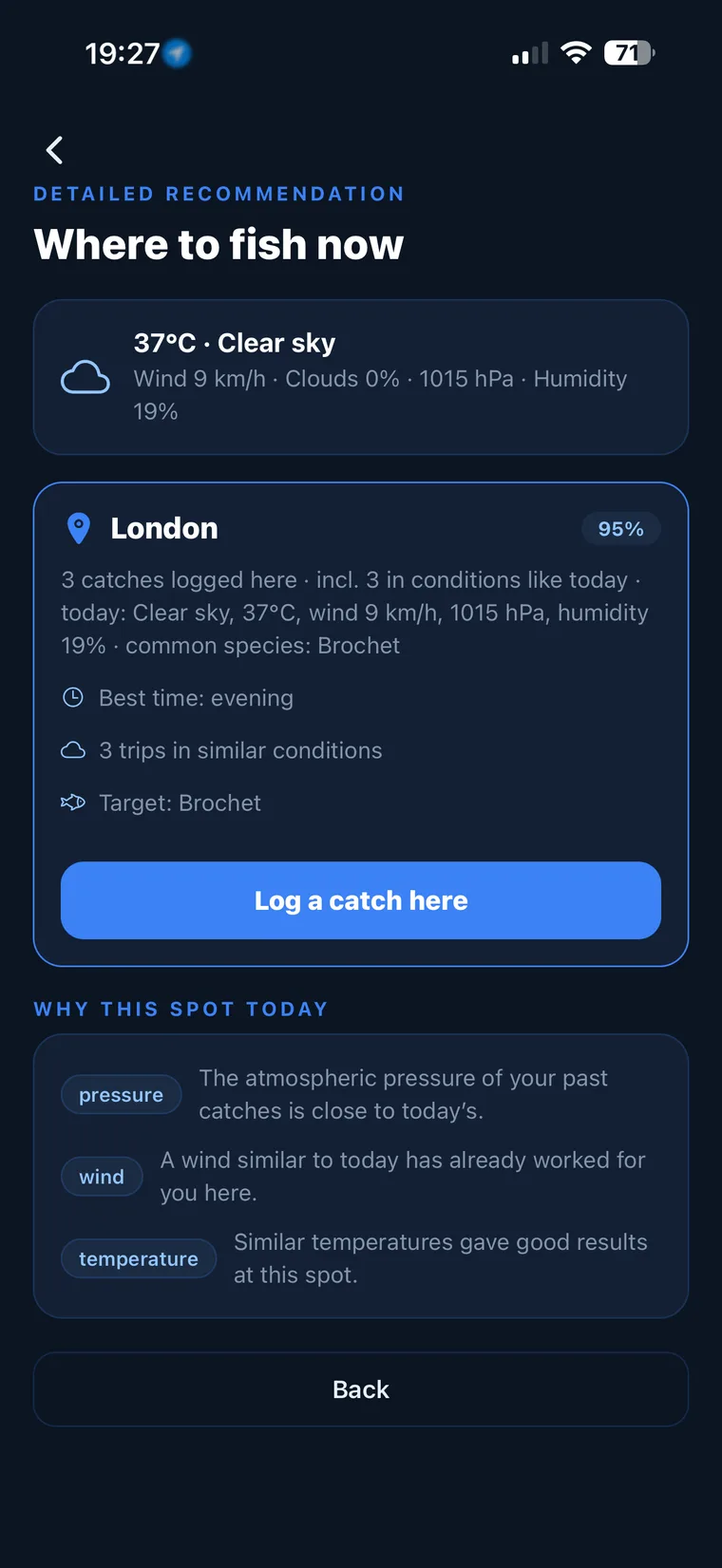
Not sure what to tie on?
Photograph your spot: CarnaFish reads the scene, cross-checks the conditions and gives you the zone, the lure and the retrieve. Free on iOS and Android.
Colours
In clear water, a natural silver or a roach imitation is enough — flat flanks already throw back plenty of light at that vibration frequency. In stained water or over a brown weed bottom, switch to crawfish red or a touch of chartreuse. For perch specifically, an orange-bellied pattern often works better than a strict imitation, because it raises contrast in water loaded with suspended plant matter.
Bevy Vibration or a standard lipless
The Jackall TN 70 is the obvious comparison: same family, bigger format, more mass. It casts further, sinks faster and lends itself far better to the classic yo-yo in deep water. Over a hole or a drop-off, that is the one to tie on.
The Bevy Vibration takes over exactly where the TN gets too heavy to hold high: shallow water, dense vegetation, fish keyed on small baitfish. The Duo Realis Vibration 62 sits between the two, an interesting compromise if you only want to carry one model. And if you want something even more compact for finicky perch, the Illex Nitro Vib 40 plays the same register with a deeper profile.
Our beginner's guide to lure fishing for zander explains how to move between these formats over a day. And if you are unsure what depth to attack when you reach the bank, CarnaFish analyses a photo of the spot and answers.
Key takeaways
- Do not let it sink: start the retrieve the moment it lands.
- Snagging the weed is the trigger, not a problem to avoid.
- Sharp snap to rip free, then half a second of freedom: that is where the bite comes.
- Depth is set by speed and rod angle, not by sink time.
- Undersized beyond 3 m and unmanageable in a headwind.
FAQ
Should I fish the Bevy Vibration yo-yo style?
Rarely. Its light format is built for a grazing straight retrieve over vegetation. The classic yo-yo stays the preserve of heavier lipless baits on deeper spots.
How do I avoid snagging the weed?
You should not avoid it entirely. The aim is to brush the top of the vegetation and rip free with a sharp snap when it catches: that tearing loose is what triggers attacks.
How deep does it swim?
From 50 cm to about 2.5 m, depending on retrieve speed and rod angle. This lure has no fixed depth: you set it as you retrieve.
Which size, 40 or 50 mm?
The 50 mm casts better and covers more water, so it is the default choice. Switch to 40 mm on perch keyed on very small baitfish or on heavily fished water.
Braid or fluorocarbon?
Fluorocarbon in 0.20 to 0.25 mm for the detection-cushioning compromise. On straight braid the rips are too violent and you drop fish: add at least a metre of fluoro leader.
Does it work for zander?
Yes, especially at dusk when zander move up to feed on shallow shelves. In daylight and deep water, a heavier lipless fished yo-yo style remains better suited.
The full zander lure guideSeason-by-season strategy: which family of lure, when, and why.Go from theory to fish
CarnaFish reads your spot from a photo and gives you the game plan: zone, lure, retrieve. Free on iOS and Android.