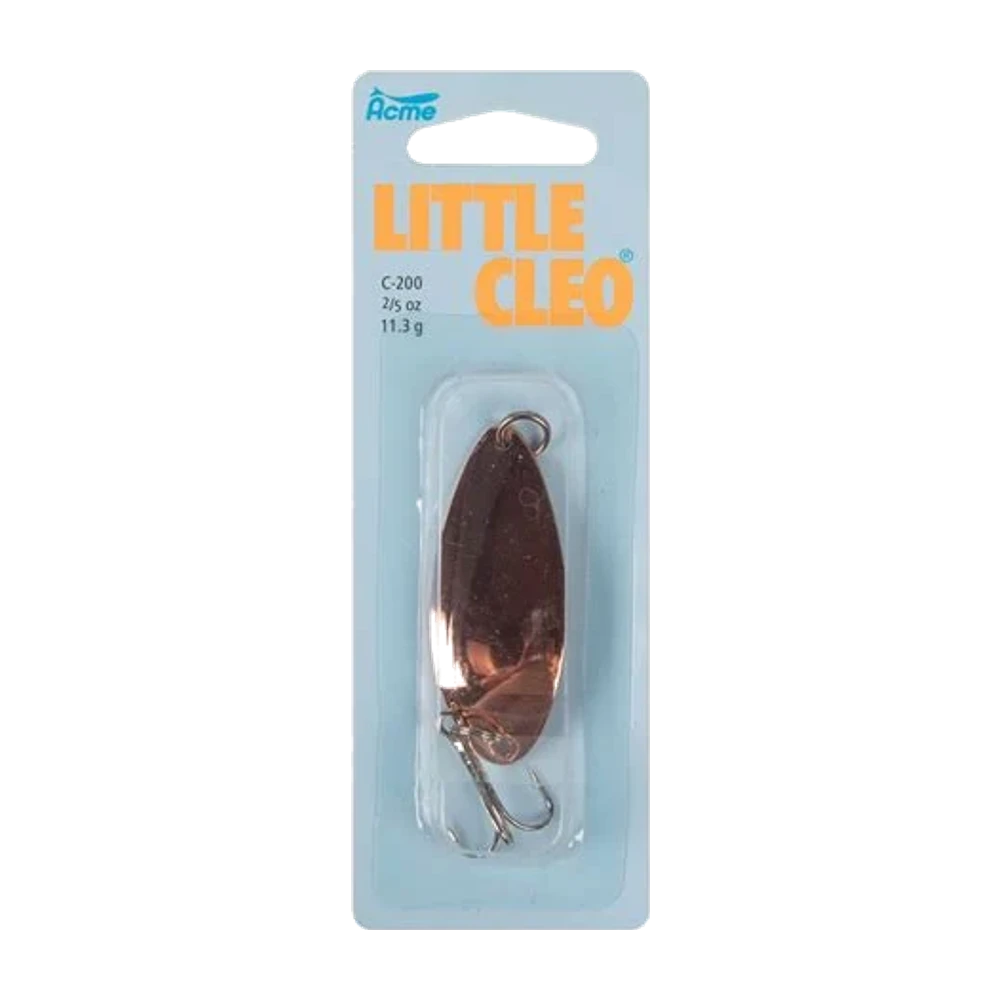
Acme Little Cleo: the concave spoon that fishes heavy current
One lure, endless conditions. CarnaFish reads your spot from a photo so you are not just guessing.
A flat wobbling spoon behaves badly in a strong current: it planes, rises to the surface and ends up spinning on itself. That is the classic limit of the family in fast rivers.
The Little Cleo gets round the problem with its geometry. Its body is hollowed into a channel along its whole length, which gives it a stability that flat models do not have.
What the concave shape does
The hollow acts like a keel. Water rushing into it exerts a pressure that holds the spoon on its line instead of letting it spin out.
Two effects follow.
It holds in the current. You can present it into a fast seam without it stalling, where a flat spoon would be pushed up to the surface.
Its wobble is wider. The hollow creates an asymmetric resistance that tips the spoon more decisively from one side to the other. The flash produced is broader and slower than a flat model's — a signal that carries a long way in broken water.
The three ways to fish it
The straight retrieve, on lakes or still water. Let it sink for a few seconds, then retrieve at the minimum speed that keeps the wobble alive. That is the basis for pike.
The swing in the current, the technique that makes best use of its shape. Cast up and across, let the spoon come down with the flow while keeping just enough contact, and follow it with the rod. It works on its own, carried by the water. That is the number one method on trout rivers.
The drop-back on lakes. Retrieve normally, then stop for two seconds: the spoon flutters down, turning over. Deadly on pike, and the bite often comes as you start winding again.
On the water: in a river, if your spoon rises to the surface during the swing, you are holding the line too tight. Give slack in small increments to let it drop back into the seam — the trout hold in the bottom third of the column.
Choosing the weight
| Context | Weight |
|---|---|
| Stream, low water | 3.5 to 5 g |
| Medium trout river | 7 to 10 g |
| Fast river or big lake | 14 to 18 g |
| Very strong current, real depth | 21 to 28 g |
In current, the instinct to stay light is a mistake: too light a spoon is swept away without ever reaching the productive layer. Go up in weight until you feel intermittent contact with the bottom.
Not sure what to tie on?
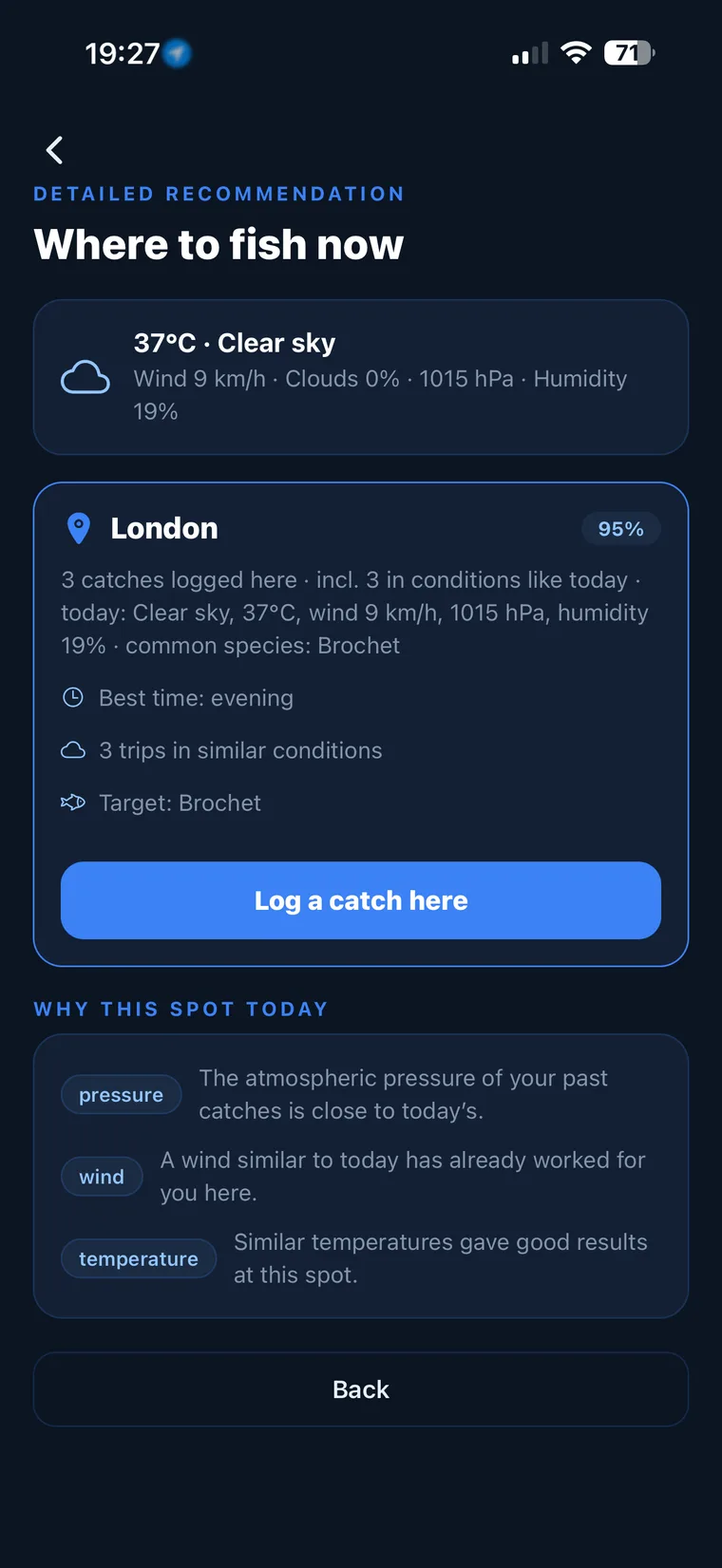
Photograph your spot: CarnaFish reads the scene, cross-checks the conditions and gives you the zone, the lure and the retrieve. Free on iOS and Android.
Trout or pike
For trout, the Little Cleo is a medium-to-fast river lure. Patterns imitating trout markings work particularly well, and the reason is simple: trout are cannibals and a small trout is normal prey.
For pike, the bigger sizes in silver or gold are deadly on lakes, especially in spring and autumn. The wide, slow wobble matches the way pike detect prey, picking up broad variations in light.
Compared with the Mepps Syclops, the Little Cleo wobbles more widely and holds heavy current better thanks to its channel; the Syclops offers a steadier trajectory and lends itself better to a fast straight retrieve on lakes.
Rigging
Two points, as with any spoon.
The rolling swivel at the top of the leader, every time. Even a stable spoon builds up line twist over a session.
The leader for pike. A spoon is often swallowed deep. A 0.50 mm fluorocarbon is the minimum, 25 cm of titanium is safer. This is one of the few lures where going without a leader regularly costs both fish and lures.
Our guide to river trout fishing covers how to read current seams. And if you do not know what weight to tie on against a given current, CarnaFish analyses a photo of the spot and gives you a starting point.
Key takeaways
- The channelled body acts like a keel: it holds in the current without spinning out.
- A wider wobble than a flat spoon: a broad, slow flash that carries a long way.
- In rivers, fish it on the swing from an upstream cast and give slack to stay in the lower layer.
- Do not stay too light in current: go up until you touch bottom intermittently.
- Rolling swivel every time, titanium leader for pike.
FAQ
Why does the Little Cleo hold the current better?
Its body is hollowed into a channel along its whole length. Water rushing into that hollow creates a pressure that holds the spoon on its line, where a flat spoon planes and spins out.
How do I fish it in a river?
On the swing: cast up and across, let the current carry the spoon while keeping just enough contact, and follow it with the rod. Give slack in small increments if it rises to the surface.
What weight should I choose?
3.5 to 5 g in a stream, 7 to 10 g in a medium river, 14 to 18 g in a fast river or big lake, 21 to 28 g in very strong current. In current, go up in weight until you feel the bottom intermittently.
Does it work for pike?
Very well, in the bigger sizes in silver or gold, mainly on lakes in spring and autumn. Its wide, slow wobble matches the way pike detect prey.
What is the difference with the Mepps Syclops?
The Little Cleo wobbles more widely and holds strong current better thanks to its concave shape. The Syclops offers a steadier trajectory and suits a fast straight retrieve on lakes better.
Do I need a wire leader?
For pike, yes. Spoons are often swallowed deep and going without a leader regularly costs fish. A 0.50 mm fluorocarbon is the minimum, 25 cm of titanium is safer.
The full trout lure guideSeason-by-season strategy: which family of lure, when, and why.Go from theory to fish
CarnaFish reads your spot from a photo and gives you the game plan: zone, lure, retrieve. Free on iOS and Android.