Williams Wabler: the century-old spoon that fishes pike and trout
The right lure in the wrong spot still catches nothing. CarnaFish spots the zone that works, from a single photo.
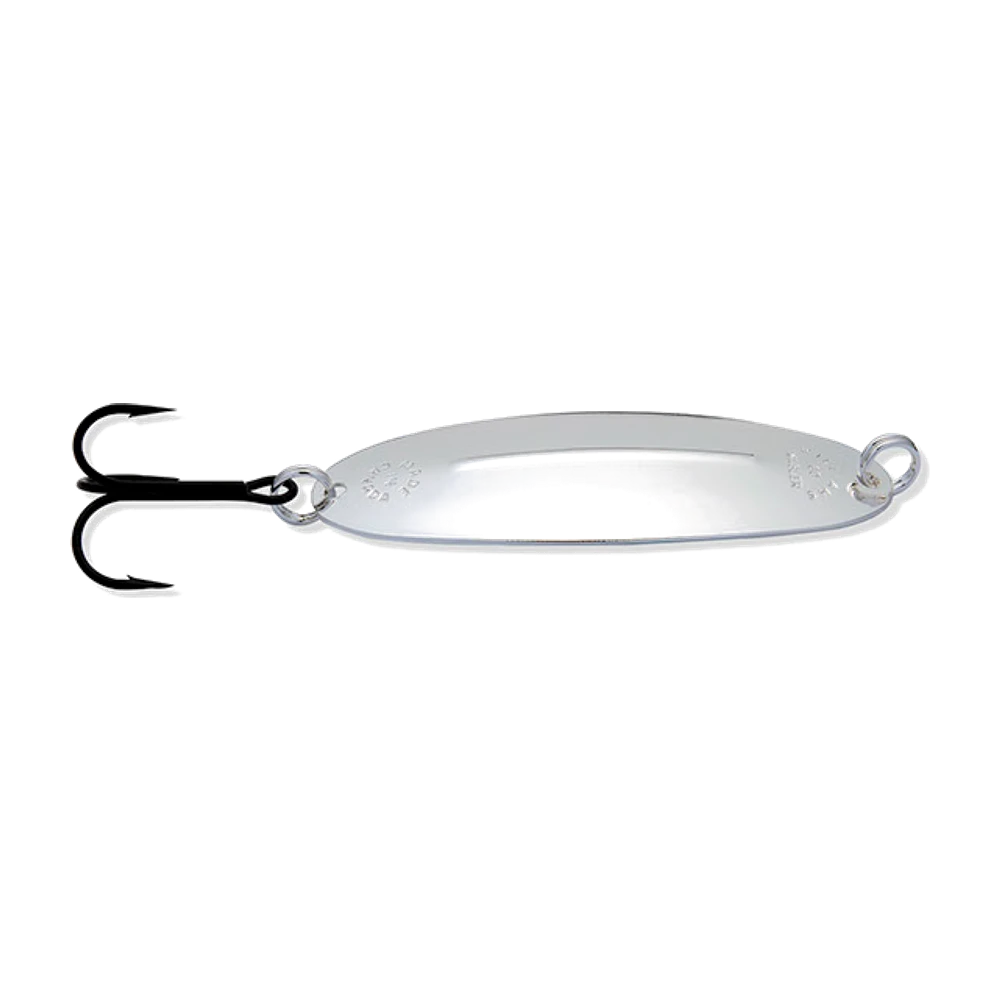
Some spoons never needed a redesign because they got it right the first time. Williams' Wabler belongs to that rare category: stamped from polished brass for over a century, its curved, rounded-edge profile produces a wide wobble that stays stable even at very low speed — exactly what a lazy pike or an unhurried lake trout wants to see.
The shape that does all the work: the curved profile
Unlike a flat spoon that loses its wobble the moment speed drops, the Wabler keeps a slightly raised centre spine that stabilises the swim. The result: you can crawl it back at a snail's pace without it spinning out or losing its beat — a real edge in cold water, when fish refuse anything moving too fast.
Sizes and use cases
- Small sizes (7-9 g): lake or wide-river trout, light scouting.
- Medium sizes (10-14 g): pike/trout versatility, the starting point if you don't yet know what's working.
- Large sizes (18-21 g and up): open-water pike, canals or big lakes, maximum casting range.
The Wabler also comes in much heavier formats built for musky and salmon, but those aren't the sizes to reach for on standard pike and trout water.
Fishing the Wabler for pike
In open water or along a drop-off, a slow to medium straight retrieve with the occasional short burst is enough to make the brass vibrate enough to draw in a holding pike. It's an excellent scouting lure when you don't yet know the bottom contour: its stable swim across speeds lets you test several cadences without switching lures.
Field rule: on a pike that follows without striking, slow down further rather than speeding up — the Wabler keeps its wobble even near a dead crawl, which isn't true of every spoon.
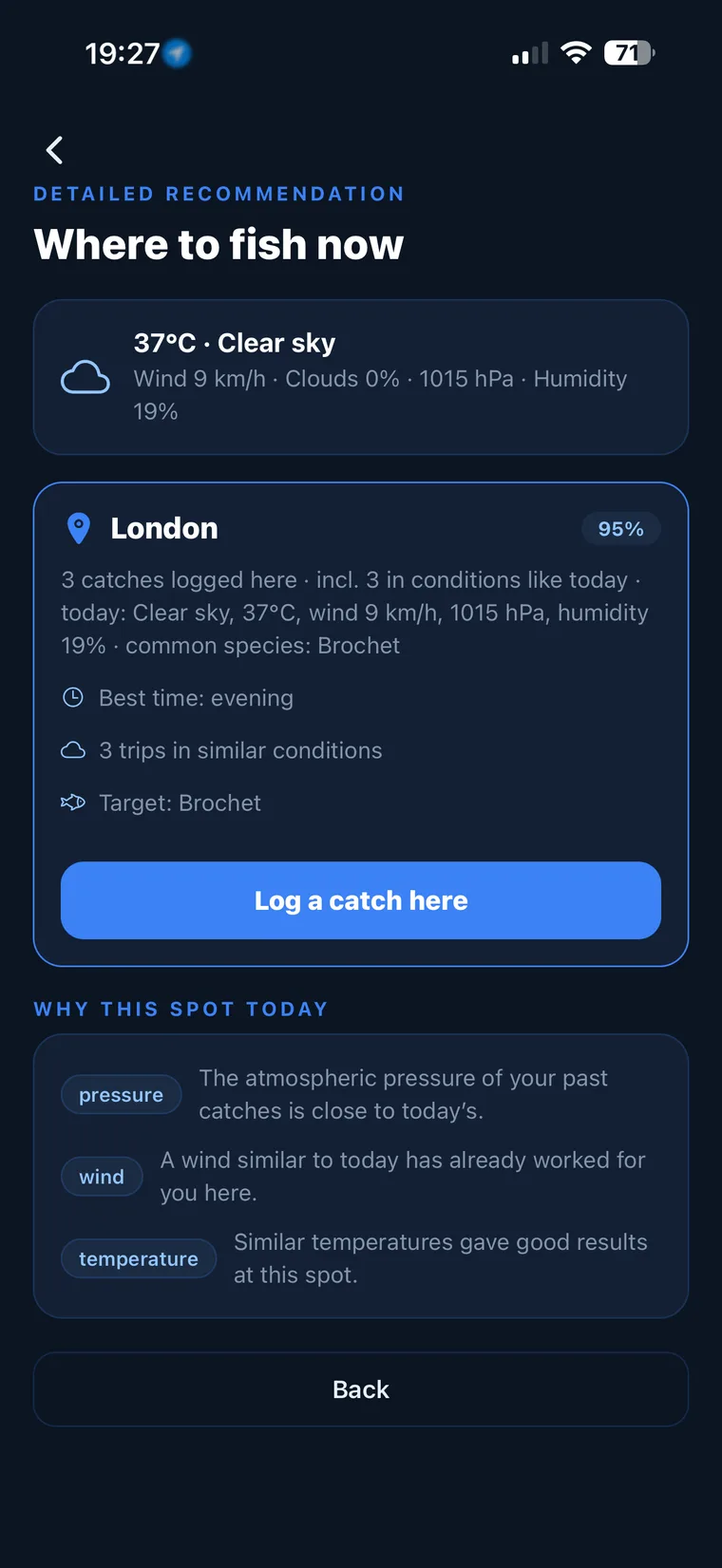
Not sure what to tie on?
Photograph your spot: CarnaFish reads the scene, cross-checks the conditions and gives you the zone, the lure and the retrieve. Free on iOS and Android.
Fishing the Wabler for trout
For trout, favour smaller sizes and cast across the current in a river, or fan-cast a lake. The flash of polished brass reads very well as a small wounded baitfish, a classic trigger in clear water under overcast skies. Our guide to river trout fishing covers reading spots in detail if you're new to this side of things.
Retrieve speed and vibration
The rule is simple: the slower the retrieve, the wider and slower the wobble; the faster it is, the tighter the beat and the sharper the flash. On an active fish, a fast retrieve triggers a reaction strike; on a wary one, slow down and let the Wabler work almost on a pendulum.
Choosing the right spoon never replaces reading the spot and the day's conditions. For both trout and pike, CarnaFish reads a photo of your spot and suggests a zone and a retrieve before your first cast. For more on pike lure choice, our pike lure guide pairs well with this page.
By comparison, the Abu Garcia Toby gives a tighter wobble and a sharper flash at fast speed — a good complement to the Wabler when fish want something more aggressive.
Two species, one spoon
- A curved profile that stays stable at any speed, ideal for testing several cadences without switching lures.
- 7-9 g for trout, 10-21 g for pike depending on water size.
- Slow down on a wary fish rather than speeding up — the Wabler keeps its wobble at a crawl.
- Always use a snap swivel to prevent line twist.
FAQ
What size Wabler should I use for pike?
Medium to large sizes (10-21 g) cover most situations in lakes, canals or big rivers. Start with a medium size if you don't yet know the water, and adjust for depth and the casting distance you need.
Does the Wabler work on a very slow retrieve?
Yes, that's one of its strengths. Thanks to its raised centre spine, it keeps a wide wobble even at very low speed, unlike many flat spoons that lose their action the moment the pace slows.
What colour Wabler should I choose?
Polished brass and silver cover most situations thanks to their natural flash. Save darker or matte finishes for very clear water and bright sun, where too much flash can work against you.
Can you fish for trout in a lake with a Wabler?
Yes, it's an excellent choice for fan-casting from shore or a float tube. Favour small sizes and vary retrieve speed until you find the tempo that triggers a strike.
Do I need a wire leader for pike with this lure?
It's recommended in water with a high pike density, since their teeth can cut through standard fluorocarbon. For trout, standard fluorocarbon is more than enough.
What's the difference between the Wabler and a spoon like the Toby?
The Wabler produces a wider, slower wobble that works well at low speed, while a spoon like the Toby offers a tighter beat and sharper flash on a fast retrieve. The two complement each other depending on how active the fish are.
The full pike lure guideSeason-by-season strategy: which family of lure, when, and why.Go from theory to fish
CarnaFish reads your spot from a photo and gives you the game plan: zone, lure, retrieve. Free on iOS and Android.