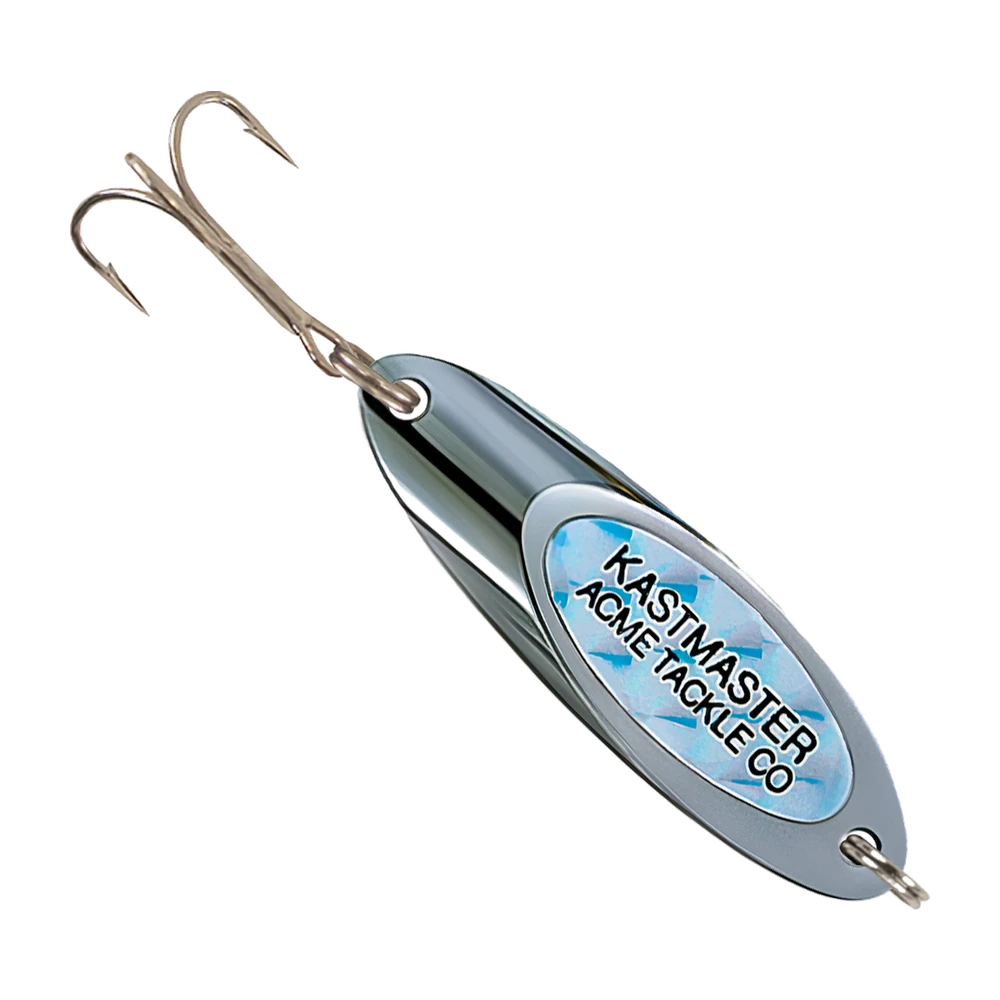
Acme Kastmaster Flash Tape: the tiny spoon with a hyper-realistic flash
The right lure in the wrong spot still catches nothing. CarnaFish spots the zone that works, from a single photo.
Flash is often what makes the difference on a trout that's already seen ten standard spoons go by that morning. Acme's Kastmaster is a historic benchmark in the category, and its Flash Tape version pushes the idea further with a holographic strip applied to the spoon's dense body. The result is a tiny finesse wobbler that triggers strikes where a more generic model gets ignored.
The holographic tape: gimmick or real edge?
The holographic scale pattern printed on the spoon's body changes how light reflects depending on viewing angle — an effect that plain polished brass or standard chrome can't quite replicate. In clear water and low light, that detail makes a real difference on heavily pressured trout; less so in stained water, where raw contrast matters more than the subtlety of the flash.
Weight and river size
- 2-3 g: small streams and headwaters, short casts under overhanging branches.
- 3.5-4.5 g: medium-sized rivers, the most versatile weight.
- 5-6 g: wider rivers or high water, to hold distance and bottom contact.
On a stream crowded with branches, it's usually better to slightly under-size the weight and compensate with a rod sensitive enough to feel the spoon working even on a short cast.
Precise casting under the branches
A spoon this light needs a short, sensitive rod (1.80-2.10 m) that loads properly on casts of just a few metres. Always target the nearest holding spot first: on a narrow river, an overly long cast forces you to reel the lure back through water you haven't fished yet, burning those spots before you even reach them.
Field rule: on a narrow stream, the best spoon is the one you're willing to cast three metres without hesitating because of the branches.
Not sure what to tie on?
Photograph your spot: CarnaFish reads the scene, cross-checks the conditions and gives you the zone, the lure and the retrieve. Free on iOS and Android.
The flash that triggers a sight-fished strike
For sight fishing, this spoon lends itself especially well to a patient approach: spot the fish, cast slightly upstream of its position, and let the current carry the flash past it sideways rather than reeling straight at it. It's often that lateral flicker of flash, caught from the corner of a trout's eye, that triggers the strike more than retrieve speed itself.
Three common mistakes
- Too heavy for the spot: the spoon keeps hitting bottom in shallow water, multiplying snags.
- Retrieving too fast: at this size, excessive speed loses contact and the wobble turns messy.
- Ignoring the approach: the most realistic flash in the world is useless if the trout already spooked from a shadow or a heavy footstep. Our guide to river trout fishing covers approach and reading spots before any lure choice matters.
The right weight and the right spot never replace reading the day's conditions — that's exactly what CarnaFish reads from a simple photo, telling you where and how to work a spot before you wet your first spoon.
To mix things up on the same river, an inline spinner like the Panther Martin Classic makes a great complement when trout prefer vibration over pure flash.
Short version
- 2-6 g depending on stream size, with a holographic finish that earns its keep in clear water.
- A short, sensitive rod for accurate casts at short range.
- Lateral flash often triggers more than retrieve speed.
- Approach always outranks lure choice on small streams.
FAQ
What weight should I choose for river size?
2-3 g for a narrow stream, 3.5-4.5 g for a medium river, 5-6 g for a wider river or high water. Weight should mainly match the casting distance you need, not just the depth.
Does the holographic tape really make a difference for trout?
Yes, especially in clear water and on heavily pressured fish that have already seen plenty of standard spoons that season. In stained water, strong contrast usually matters more than the subtlety of the flash.
What rod suits this spoon?
A short rod of 1.80-2.10 m rated 3-12 g, sensitive enough to load properly even on casts of just a few metres, typical of small streams.
How do I avoid snagging bottom with such a light spoon?
Drop the weight if snags are frequent in shallow water, or slow the retrieve slightly to feel the bottom before hitting it.
Can I sight-fish with this spoon?
Yes, it's one of its best uses. Cast slightly upstream of a spotted fish and let the current carry the flash sideways past it rather than reeling straight at it.
Single or treble hook on this spoon?
A single hook makes releasing fish easier if you practise catch and release, without giving up much effectiveness at this size. The factory treble remains a good choice if you occasionally keep fish.
The full trout lure guideSeason-by-season strategy: which family of lure, when, and why.Go from theory to fish
CarnaFish reads your spot from a photo and gives you the game plan: zone, lure, retrieve. Free on iOS and Android.