Bassday Sugapen: the micro stickbait that saves sea bass sessions
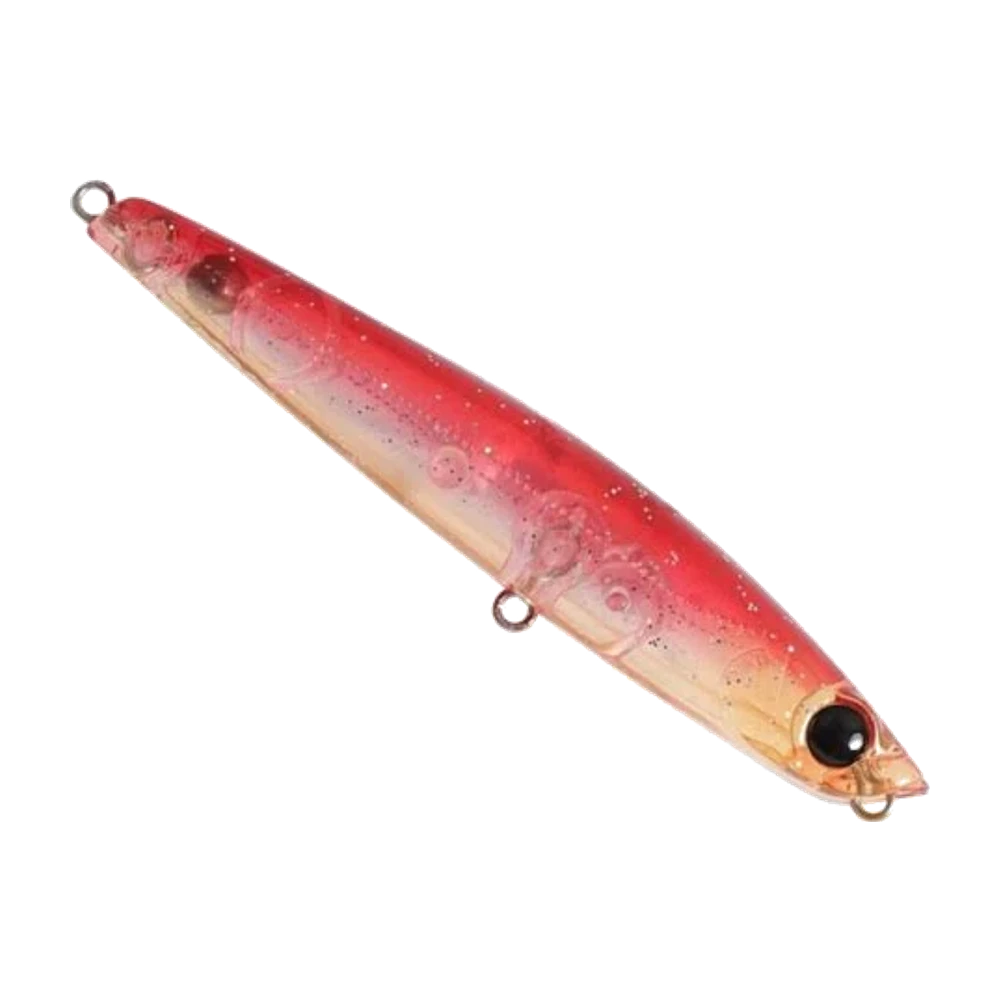
This lure shines under specific conditions. CarnaFish tells you in 10 seconds if today is one of them.
Topwater sea bass fishing has a technical entry ticket: walking the dog. Without that action, most stickbaits just plough straight ahead cutting a pointless furrow. Plenty of anglers give up on the surface for that reason, and miss the most spectacular way to fish the coast.
The Sugapen removes the problem. It zigzags on its own with a plain straight retrieve, with no rod work at all.
A stickbait that does not need you
The body shape and mass distribution send the lure off to one side and then the other the moment you turn the handle. There is nothing to do but reel at a steady speed.
The resulting action combines three signals:
- A tight zigzag on the surface, pushing water out to both sides.
- A V-shaped wake behind the lure, highly visible from a distance to predator and angler alike.
- A tiny profile, matching exactly the size of the fry sea bass feed on along the edge.
It is that combination — visible signal, small prey — that explains why it scores on bass refusing bigger lures.
The retrieve: turn the handle
- Cast as far as you can and close the bail.
- Retrieve at a constant speed, around a turn and a half of the handle per second.
- Keep the rod tip high to hold the lure on the surface.
- Do nothing else. No twitches, no pauses.
On the water: when a bass hits on the surface, do not strike at the noise. Keep retrieving at the same speed until you feel the weight. Striking at the sight of the take rips the lure out of its mouth most of the time — it is the mistake that costs the most fish on topwater.
Two useful variations when fish follow without committing: accelerate sharply for a couple of metres, or stop dead for a second and start again. That change of rhythm often decides the follower.
Where and when
The Sugapen is an edge lure, not a long-range search tool.
- Beaches and foreshores on a rising tide, when bass push in to hunt in shallow water.
- Shallow rocky ground and pools between the rocks.
- Harbours and breakwaters, especially early morning and late in the day.
- Visible fry-busting activity, where its small profile matches the prey of the moment.
Dawn and dusk are its best windows, but it works in broad daylight in clear water, unlike most bulkier topwaters.

Not sure what to tie on?
Photograph your spot: CarnaFish reads the scene, cross-checks the conditions and gives you the zone, the lure and the retrieve. Free on iOS and Android.
Weight decides the use
| Model | Use |
|---|---|
| 58 mm / 5 g | Harbours, very small fish, calm water |
| 70 mm / 8 g | All-round edge model, the most useful |
| 95 mm / 13 g | Distance, wind, bigger bass |
The 70 mm covers most situations. The 95 becomes necessary as soon as there is a headwind or you need to reach feeding fish further out.
Sugapen or popper
The popper puts out a strong, intermittent sound signal: it calls from a distance and suits rough water or active bass spread over an area. In exchange it needs to be worked in twitches.
The Sugapen puts out a continuous, discreet signal: it converts better on fish that are already close, in calm clear water, and on bass feeding on small prey. And it needs no technique at all.
In practice a lot of shore anglers alternate: popper to locate and call, Sugapen to convert the fish they have found.
Our guide to sea bass lure fishing covers how to read edge marks. And if you do not know whether conditions suit topwater when you get to the beach, CarnaFish reads a photo and answers.
Key takeaways
- Automatic zigzag on a straight retrieve: no walk-the-dog technique needed.
- Rod tip high, constant speed, nothing else.
- Never strike at the noise: wait until you feel the weight.
- The 70 mm is the all-round size; the 95 mm for distance and wind.
- An edge lure for calm clear water, complementary to the popper.
FAQ
Do you need to know how to walk the dog with the Sugapen?
No, and that is the whole point. The lure zigzags automatically as soon as you retrieve at a constant speed, with no rod work at all. It is the most accessible stickbait for getting into topwater sea bass fishing.
How fast should you retrieve?
Around a turn and a half of the handle per second, perfectly steady, rod tip held high to keep the lure on the surface. Too slow and the zigzag never starts; too fast and the lure skips out of the water.
Why do bass often miss the lure?
Usually because the angler strikes at the noise or at the sight of the take. Keep retrieving at the same speed until you feel the weight of the fish in the rod before you strike.
What size should I choose?
The 70 mm at 8 g covers most edge situations. The 58 mm suits harbours and very calm water; the 95 mm becomes necessary in a headwind or to reach feeding fish further out.
Sugapen or popper for sea bass?
The popper calls from further away with a strong sound signal and suits rough water. The Sugapen converts better on fish that are close, in calm clear water. Many anglers use the popper to locate and the Sugapen to convert.
Does it work in broad daylight?
Yes, unlike many bulkier topwaters. Its small profile and discreet signal keep it usable in full daylight in clear water, even though dawn and dusk remain its best windows.
The full sea bass lure guideSeason-by-season strategy: which family of lure, when, and why.Go from theory to fish
CarnaFish reads your spot from a photo and gives you the game plan: zone, lure, retrieve. Free on iOS and Android.