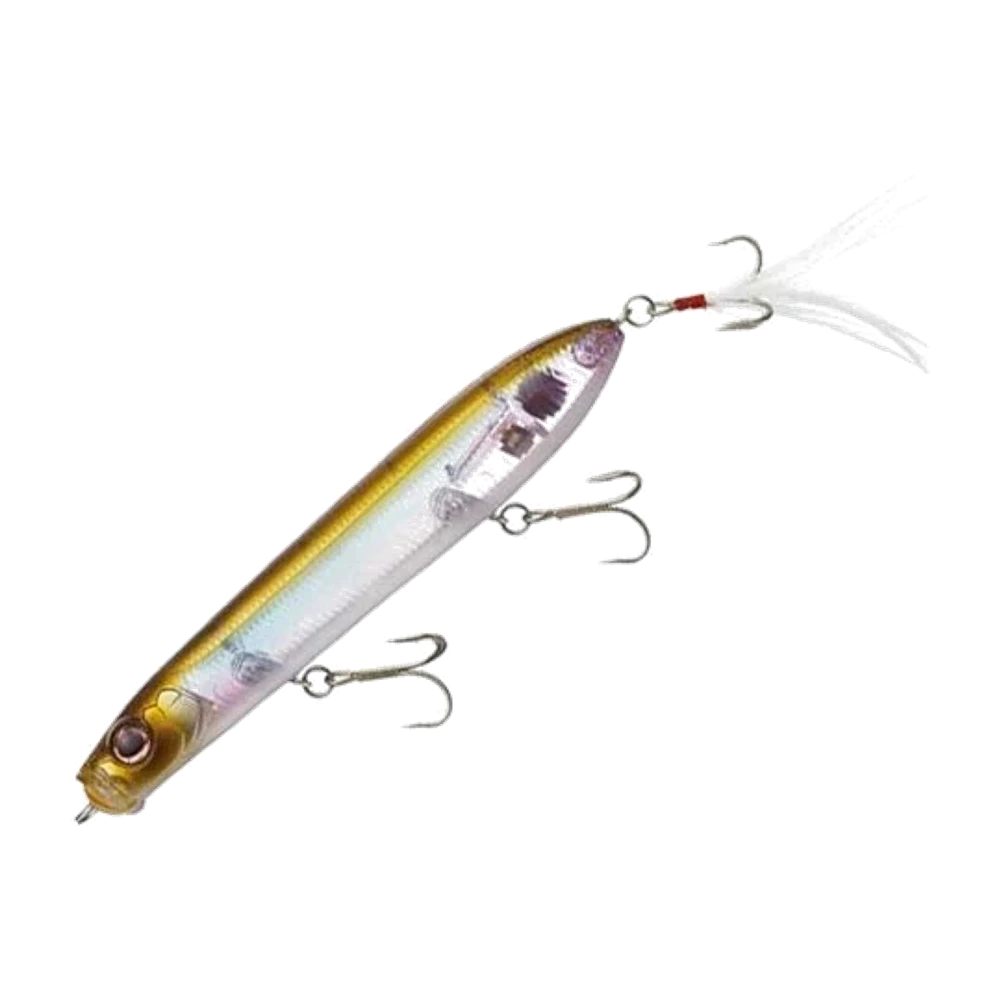
Evergreen Shower Blows: the walking bait that throws water
The right lure in the wrong spot still catches nothing. CarnaFish spots the zone that works, from a single photo.
On a perfectly flat water at the end of the day, you can see bass rising along the margin. You tie on a conventional walking bait, you put in a faultless walk-the-dog, and nothing happens. The lure slides along without a sound, without leaving a trace, and the fish carry on with their business three metres away.
The problem is not the retrieve, it is the signal. A pure stickbait produces a lateral movement and a small wake. That is all. On glassy water the wake carries badly, and movement on its own is not enough to bring up a fish sitting a metre under the surface.
The Shower Blows solves that with a trick of shape: its head, cut into a hollowed bevel, throws a spray of water at every change of direction. You get the lateral travel of a walking bait, plus a visible, audible splash to the right, then the left, then the right. Two signals instead of one, without turning into a popper.
Between a stickbait and a popper, but not a compromise
You have to be precise about what this lure does, because "walking bait that splashes" covers very different things.
A popper has a concave mouth at the front: it pushes water ahead of it, produces a deep plop and stays roughly on the spot. A walking bait has a round or pointed head: it slides sideways without displacing much water, and it travels fast.
The Shower Blows keeps the travel and the slide of the latter, but its bevelled head catches the surface at the moment it pivots and ejects water out to the side. The spray is fine, high, and goes to the outside of the turn. In practice:
- The sound stays light. It is not a plop but a sharp tick, which does not scare off a wary fish.
- The visual trace is strong. Two splashes a second, alternating, leave a zigzag wake visible from a long way off on flat water.
- The lure keeps moving forward. You cover as much ground as with a classic stickbait, which a popper does not allow.
The retrieve: short cadence, soft wrist
The walk-the-dog for the Shower Blows is not that of a big stickbait. The aim is to make the head bite into the surface on every stroke, which calls for a softer, quicker motion.
- Rod low, tip thirty centimetres off the water, pointed at the lure.
- Take up the slack so you have a very slightly loose line — two or three centimetres of slack, no more.
- Short sharp wrist strokes, about two per second, taking a quarter turn of the handle between each. The amplitude of the motion is ten centimetres, not thirty.
- Let the lure finish its slide before the next stroke. Rush it and it runs straight and stops throwing water.
- One firm stop every five or six steps. A second and a half, no more. Then go again.
For a bass that follows without biting, the useful correction is the double stroke: two twitches very close together that pivot the lure almost on the spot and double the spray, followed by a dead stop.
On the water: when you see a fish's wake coming in behind the lure, do not stop and do not speed up — hold exactly the same cadence. A walking bait that stops dead in front of an approaching bass cancels the chase it has just started, and that is the number one cause of refusals in the last metre. Keep the rhythm until the rod loads up.
The settings that make or break the spray
Three variables have a direct, measurable effect.
| Variable | Choice | Effect on the lure |
|---|---|---|
| Line | 0.35 mm mono | Floats, keeps the head high, maximum spray |
| Line | 0.30-0.35 mm fluorocarbon | Sinks slightly, nose lower, wider slide but less spray |
| Split ring | Stock, supple | Free pivot, decisive slide |
| Split ring | Heavy rigid snap | Restricts the pivot, the lure runs straight |
| Front treble | Stock wire | Correct attitude |
| Front treble | Heavier | Nose dips, the spray becomes a dive |
Line is the main lever. If you want to prioritise water displacement — glassy surface, fish a long way off — switch to mono. If you want to prioritise the width of the zigzag — rippled surface, fish close in — stay with fluorocarbon.
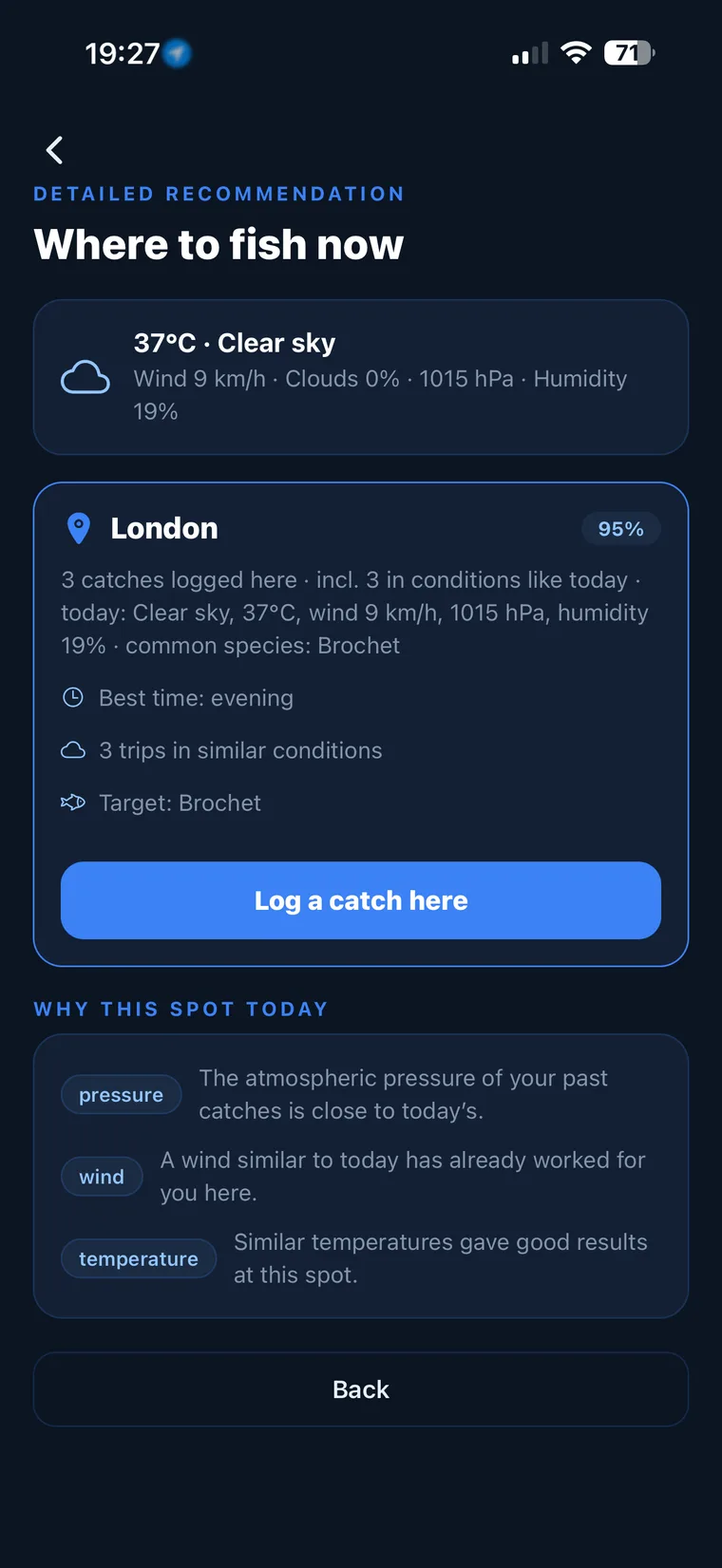
Not sure what to tie on?
Photograph your spot: CarnaFish reads the scene, cross-checks the conditions and gives you the zone, the lure and the retrieve. Free on iOS and Android.
When to reach for it, when to leave it in the box
Its best windows:
- Flat or very slightly rippled water, early morning and late evening, from late spring to early autumn.
- Open shallow zones: flats, weed beds sitting fifty centimetres under the surface, reed edges.
- Fish already hammered by loud poppers, which will accept a strong visual signal with a moderate sound.
- Fast searching in the upper column, when you want to know within ten minutes whether fish are active near the surface.
Its blind spots:
- Wind and real chop: the spray is lost in the surrounding disorder, and you can no longer see the lure to time your cadence.
- Dense surface weed: the trebles load up from the first step.
- Cold water, below 15 °C: bass no longer come up, whatever the signal.
- Precision fishing under low cover: this lure wants running room, not three steps on the spot.
Shower Blows, Super Spook or Sammy
All three are sliding surface lures, and they do not speak to the same fish.
The Heddon Super Spook is the loudest of the three: big volume, internal rattles, it sends out a deep sound signal that carries across a whole bay. It is the tool for rough water, wind and big areas to sweep. On glassy water and educated fish, it is often too much.
The Lucky Craft Sammy 100 is at the other end: fine slide, virtually silent, very discreet. It works wonders on wary fish in clear water, but it does not announce itself — the bass has to be nearby to notice it.
The Shower Blows fills the gap in between: little noise, plenty of visual. You reach for it when the Sammy goes unnoticed and the Spook scares fish off. In practice that is the commonest situation on a pressured water, in calm weather, between June and September.
Our beginner's guide to bass fishing explains when topwater takes over from everything else during the day. And if you are torn between a loud lure and a discreet one when you reach a calm flat, CarnaFish analyses a photo of the spot and answers.
Key takeaways
- The hollowed bevel head throws a sideways spray at every pivot: strong visual signal, moderate noise.
- Fast cadence and short amplitude, about two wrist strokes per second with a few centimetres of slack.
- Mono maximises the spray, fluorocarbon maximises the width of the zigzag. Choose to suit the situation.
- When a fish comes in behind, change nothing in your cadence until the rod loads up.
- Flat water, shallow, above 15 °C. Ineffective in chop and over surface weed.
FAQ
What is the difference between the Shower Blows and a popper?
A popper pushes water ahead of it, produces a deep sound and stays almost on the spot. The Shower Blows slides sideways like a walking bait and throws water out to the side at every pivot: it travels, covers ground, and makes less noise for a comparable visual signal.
Mono or fluorocarbon?
Both work and they give you a different lure. Mono floats, keeps the nose high and maximises the water it throws. Fluorocarbon sinks a little, lowers the nose and gives a wider slide but a reduced spray.
What cadence should you work it at?
About two wrist strokes per second, with an amplitude of only ten centimetres or so, taking a quarter turn of the handle between each. Too slow and the lure does not throw water; too fast and it runs straight.
What do you do when a bass follows without attacking?
Do not stop. Hold the cadence until the rod loads up, or switch to a close double stroke followed by a dead stop of a second and a half. Stopping the lure dead in front of an approaching fish is the number one cause of refusals.
Does it work in wind?
Badly. As soon as there is chop, the spray drowns in the disorder of the surface and you lose sight of the lure, and with it control of your cadence. A bigger, louder walking bait suits those conditions better.
Can you fish it over weed?
Over submerged weed, thirty or fifty centimetres under the surface, yes — and it is an excellent spot. Over a surface mat, no: the trebles load up with vegetation within the first few metres, and a weedless lure is needed instead.
The full bass lure guideSeason-by-season strategy: which family of lure, when, and why.Go from theory to fish
CarnaFish reads your spot from a photo and gives you the game plan: zone, lure, retrieve. Free on iOS and Android.