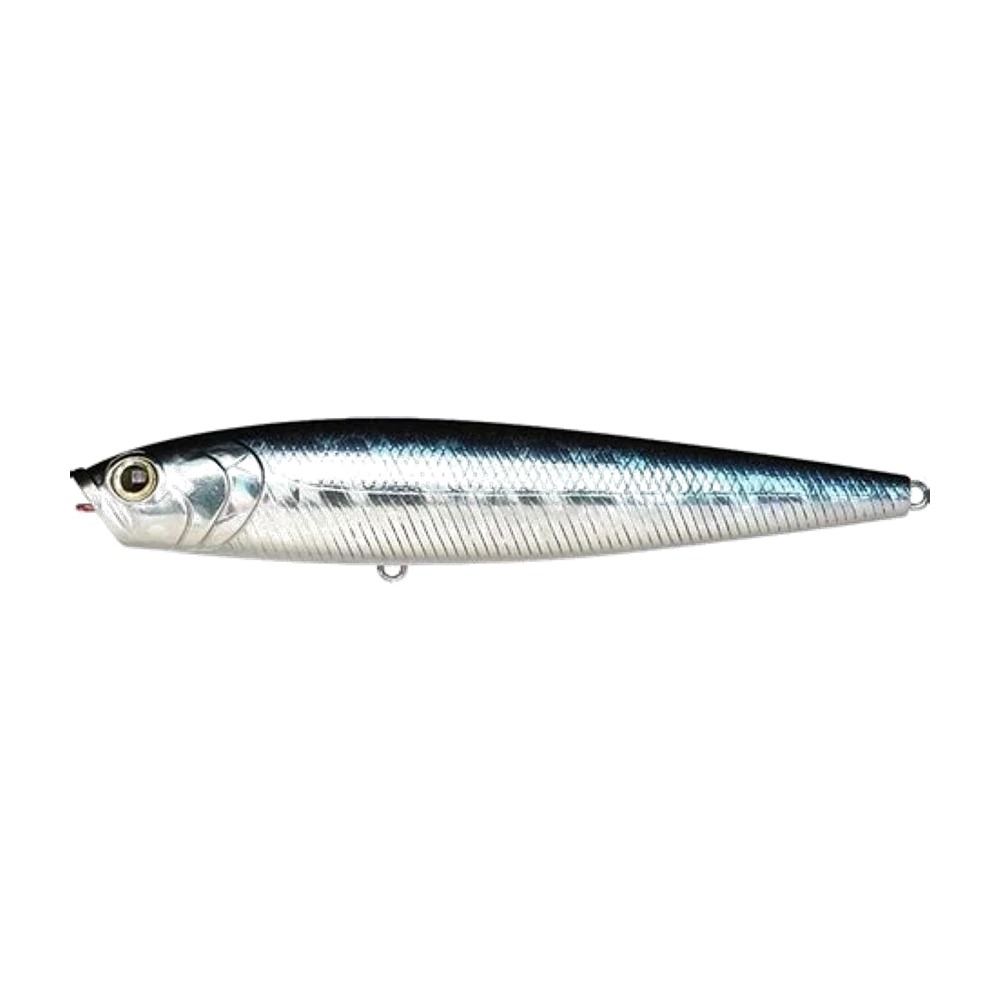
Lucky Craft Gunfish 115: the stickbait that walks and spits
The right lure in the wrong spot still catches nothing. CarnaFish spots the zone that works, from a single photo.
On the surface you normally choose between two families. The walking bait zigzags and covers water: it calls over distance. The popper spits in isolated snaps: it provokes on a precise spot. Switching approach means switching lures, so cutting off, retying, casting again.
The Gunfish 115 lets you do both with the same lure, simply by changing how hard you move the rod.
Two actions in one body
The secret is a slightly cupped face at the front of an elongated stickbait body.
With short, rhythmic flicks of the wrist, the cup does not grab water and the lure goes into a classic walk the dog: a steady zigzag, a V-shaped wake, continuous travel.
With one sharp, wide snap, the cup bites the surface and throws a clean spray of water, exactly like a popper. The lure stops practically on the spot.
You switch from one action to the other without changing anything in the setup, just by changing your movement.
The sequence that works
The point is not to choose an action, but to string them together.
- Five or six zigzags of walk the dog to cover water and draw attention.
- One wide snap that throws a spray — the lure stops dead.
- A one-second pause.
- Back to the walk the dog.
On the water: most attacks come within the second that follows the spray. The zigzag pulls the fish in and gets it following; the abrupt spray forces the decision. Zigzag only and you collect followers; pop only and you call nobody in.
For sea bass, keep a fast cadence and drop the spray in every five or six zigzags. For black bass, slow everything down and stretch the pauses after the spray to two or three seconds.
Its casting qualities
The Gunfish carries a weight transfer system: a ball slides back on the cast to extend range, then returns to the forward position as soon as you retrieve.
Two concrete benefits. It casts a very long way for its size, which matters from a beach or a breakwater. And it gets back into action immediately on the first turn of the handle, with no start-up phase.
Not sure what to tie on?
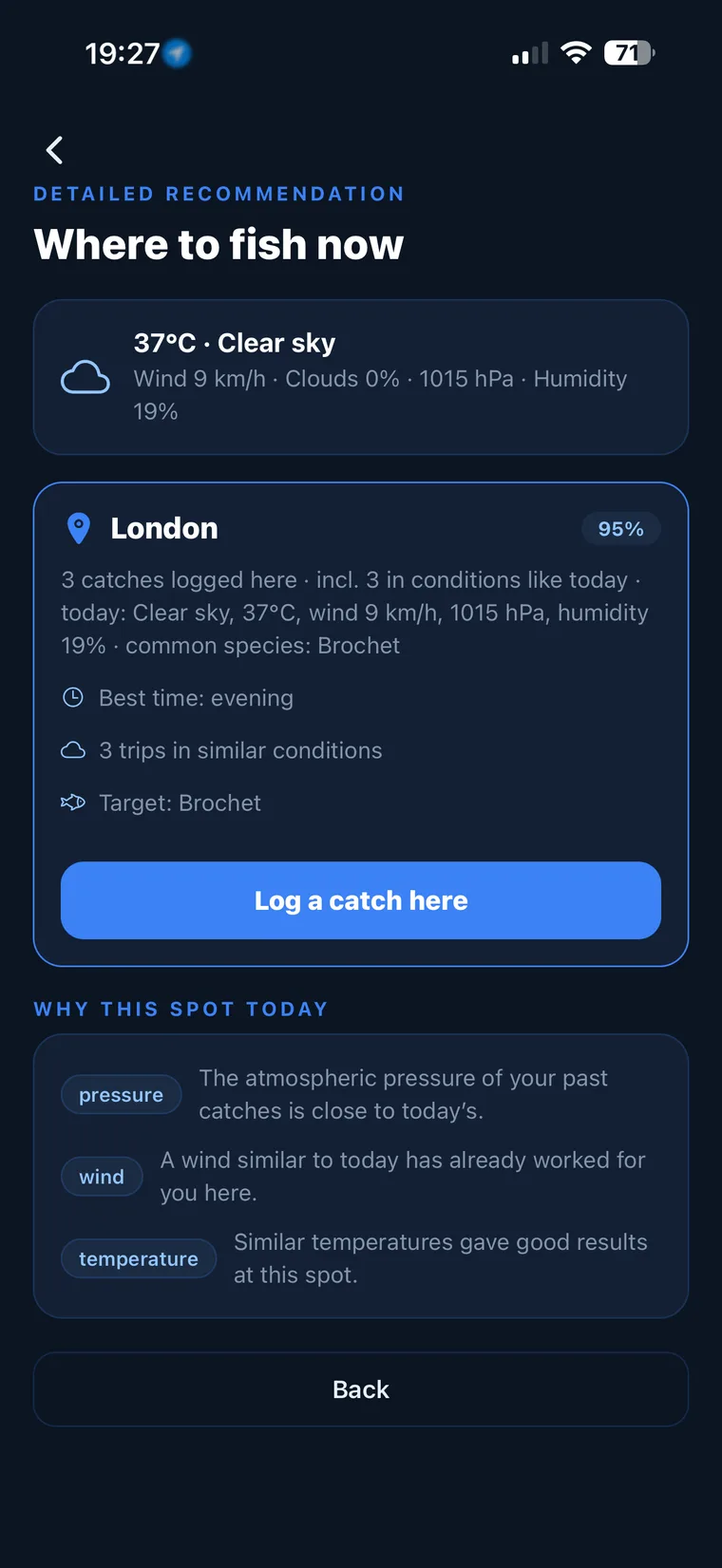
Photograph your spot: CarnaFish reads the scene, cross-checks the conditions and gives you the zone, the lure and the retrieve. Free on iOS and Android.
Where it takes the lead
- Sea bass from the shore on beaches, rocky points and tidal flats, particularly on a rising tide.
- Slightly choppy water, where its spray is still noticeable while a discreet lure would be lost.
- Fish that follow without attacking: a spray placed at the right moment converts followers.
- Fast searching when you do not yet know where the fish are.
On the other hand it is too demanding for perfectly calm, clear water with wary fish — a discreet stickbait will be better there.
Gunfish or Sammy
The Sammy 100 is the pure walking bait of the range: a more regular action, a tighter zigzag, no ability to spit. It excels when the fish want a constant rhythm with no break.
The Gunfish adds the option of breaking that rhythm. In practice, plenty of shore anglers start with the Gunfish for its versatility and switch to the Sammy if the fish turn out to respond to regularity rather than provocation.
Our guide to lure fishing for sea bass covers how to pick a surface lure by conditions. And if you are torn between provoking and staying discreet on a spot, CarnaFish analyses a photo and answers.
Key takeaways
- A cupped face on a stickbait body: walk the dog or spray depending on how hard you snap it.
- Link five or six zigzags, then one wide spray, then a one-second pause.
- Most attacks come right after the spray.
- Weight transfer: it casts far and gets back into action immediately.
- Too demanding in perfectly calm water on wary fish.
FAQ
How do I get both Gunfish actions?
With short, rhythmic flicks of the wrist the lure goes into a classic walk the dog. With one sharp, wide snap the cupped face bites the surface and throws a spray like a popper. You change action without altering anything in the setup.
Which retrieve sequence should I favour?
Five or six zigzags to attract and get fish following, then one wide snap that throws a spray, then a one-second pause before starting again. Most attacks happen right after the spray.
What is the difference between sea bass and black bass?
For sea bass, keep a fast cadence and drop the spray in every five or six zigzags. For black bass, slow the whole thing down and stretch the pauses after the spray to two or three seconds.
Does it really cast far?
Yes, thanks to a weight transfer system that slides a ball back on the cast then brings it forward again as soon as you retrieve. That is a genuine advantage from a beach or a breakwater.
When should I prefer the Sammy 100?
When the fish respond better to a perfectly regular rhythm than to provocation. The Sammy is a pure walking bait with a tighter, more constant zigzag and no ability to spit.
Does it work in calm water?
Less well than discreet stickbaits. Its spray is a strong signal that can push wary fish away on perfectly flat, clear water. It is at its best in slightly choppy conditions.
The full sea bass lure guideSeason-by-season strategy: which family of lure, when, and why.Go from theory to fish
CarnaFish reads your spot from a photo and gives you the game plan: zone, lure, retrieve. Free on iOS and Android.