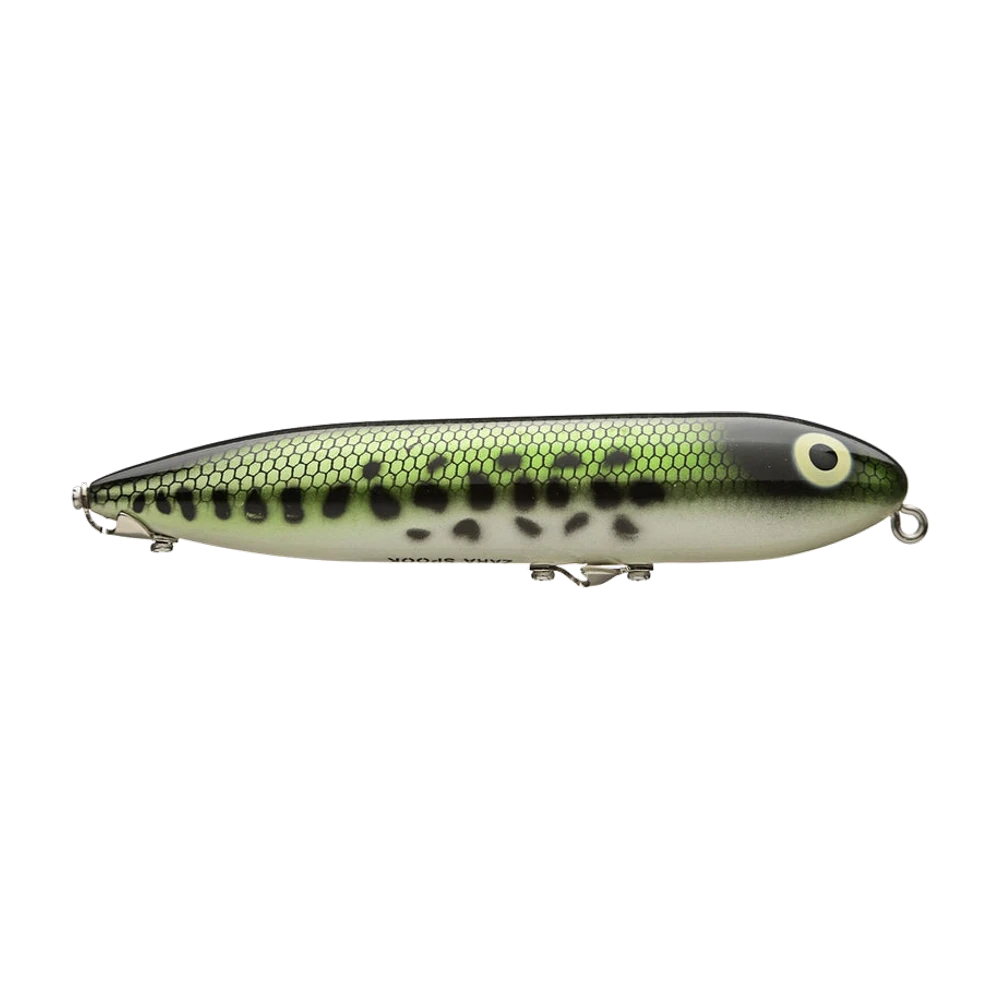
Heddon Zara Spook: the lure that invented walk the dog in 1939
Rather not fish it blind? Photograph your spot — CarnaFish cross-checks the conditions and points you the right way.
Before there was a name for the technique, there was the Zara Spook. Released in 1939, this wood-then-plastic cigar shape literally defined what's now called "walk the dog" — the zigzag motion a topwater bait makes when worked correctly. Nearly a century later, the shape has barely changed, and the bait still catches fish exactly as it did on day one.
A shape that's never needed a redesign
The Zara Spook has no lip, no blade, no moving appendage. Its cylindrical body and slightly upturned ends are enough: with each small rod-tip snap paired with slack line, the bait darts to one side then the other in a steady horizontal motion, like a dog being walked on a leash — hence the technique's name. It's one of the few baits whose original design has never needed a fundamental overhaul to stay competitive against generations of newer competitors.
Walk the dog, actually explained
The motion is simple to describe and hard to nail on the first try: rod tip pointed down, almost at the surface, short sharp wrist snaps with a bit of slack line between each one. That slack, more than the force of the snap, is what lets the bait pivot sharply from side to side instead of just moving forward.
A rule worth its weight in gold for every topwater bait: never set the hook on the sound of the strike. Wait to feel the fish's weight in the rod — otherwise you pull the bait out of its mouth right as it's closing its jaws.
The mistake that kills the rhythm
Trying to speed up the cadence on the first few casts. Walk the dog needs a steady, unhurried rhythm to keep a consistent zigzag width. A rushed or uneven motion sends the bait almost straight, which defeats the whole point of the technique.
The tackle that actually makes walk the dog easier
A rod that's too stiff at the tip makes the motion much harder. A medium to medium-fast action rod, with a tip that follows the wrist movement, makes walk the dog feel far more natural. Line choice matters too: braid floats and adds no weight to the bait, making the zigzag easier than with monofilament, which sinks slightly and restrains the motion.
Bass or pike: two different approaches
The Zara Spook crushes it on both species, but not the same way.
- For bass: favour a faster cadence and early-morning or evening sessions in summer, over shallow water near weed beds.
- For pike: slow the cadence right down and stretch the pauses. Pike often follow the bait for several metres before committing — patience pays more than speed here. Our complete guide to choosing a pike lure covers seasonality and the right tackle for the species, including the non-negotiable wire leader.

Not sure what to tie on?
Photograph your spot: CarnaFish reads the scene, cross-checks the conditions and gives you the zone, the lure and the retrieve. Free on iOS and Android.
Colour by light
- Calm water, neutral light: Bone/white, a subtle silhouette that reads well from below.
- Bright sun: Chrome/Black Back, the chrome flash carries far even under strong light.
- Over weed beds: Frog pattern, mimicking a frog on the surface of lily pads.
The Zara Spook and its topwater cousins
If you want a walking bait with a thinner, more subtle profile, a Duo Realis Pencil is a good alternative in very clear water. For a louder topwater bait that triggers reaction strikes on aggressive fish, a River2Sea Whopper Plopper 130 takes over with its propeller tail.
Spotting the right areas to work a topwater bait — shallow margins, weed beds, bay mouths — remains the real deciding factor. That's exactly what CarnaFish offers: a photo of your spot, and the app identifies the zone and timing suited to this kind of technique. For the bass fundamentals, our beginner's guide is a good starting point.
Key takeaways
- Nearly unchanged design since 1939, still just as effective for walk the dog.
- Medium-action rod and braid: the combo that makes the motion feel natural.
- Fast cadence for bass in summer, slow cadence and long pauses for pike.
- Never set the hook on the sound alone — wait to feel the fish's weight.
FAQ
Is the Zara Spook hard to work for a beginner?
The motion takes a bit of practice, but it comes together fast. Start with a medium-action rod and braid, which make the walk-the-dog motion far more natural than stiffer tackle.
Should I set the hook as soon as a fish hits the bait on top?
No, definitely not. Many missed strikes come from setting the hook too fast, triggered by the sound or splash. Wait to actually feel the fish's weight before setting.
Does the Zara Spook work for pike too?
Yes, very well, as long as you adjust the cadence: slower, with longer pauses than for bass, since pike often follow the bait for a while before striking.
What rod works best for walk the dog?
A medium to medium-fast action rod, with a tip that follows the wrist motion, paired with braid that floats and doesn't restrain the bait's zigzag.
When should I fish the Zara Spook?
Early morning and evening, in summer and early autumn, over shallow water near weed beds or margins. Those are the windows when predators are most willing to feed on top.
What's an alternative to the Zara Spook for more finicky fish?
A Duo Realis Pencil offers a thinner profile, often more effective in very clear water or on especially wary fish.
The full bass lure guideSeason-by-season strategy: which family of lure, when, and why.Go from theory to fish
CarnaFish reads your spot from a photo and gives you the game plan: zone, lure, retrieve. Free on iOS and Android.