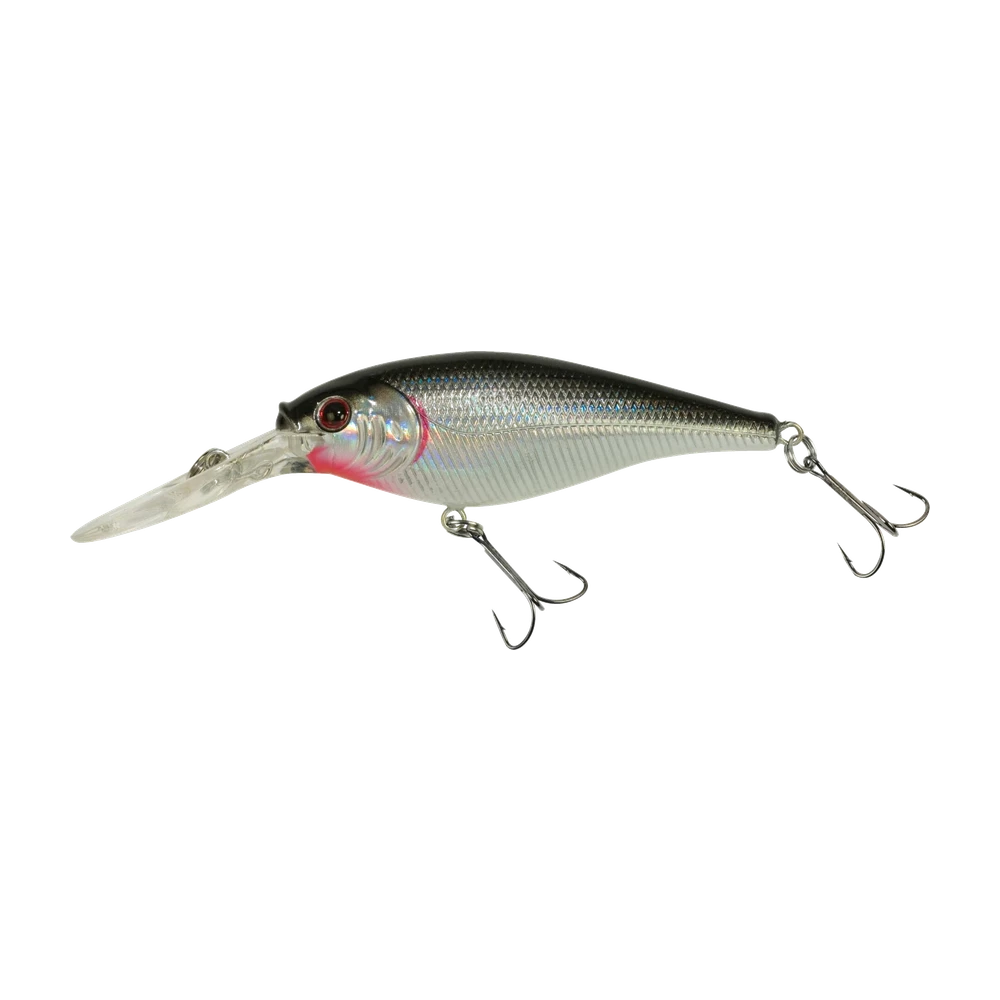
Berkley Flicker Shad: the crankbait whose model number tells you the depth
Rather not fish it blind? Photograph your spot — CarnaFish cross-checks the conditions and points you the right way.
In the US, zander are called walleye, and fishing for them gave rise to a whole culture of trolling suspending crankbaits that's fairly rare in France, where cast-and-retrieve dominates. Berkley's Flicker Shad is one of the flagship products of that culture, and it earns a spot in a zander angler's box even if you never troll.
The model number isn't random
At Berkley, every Flicker Shad size corresponds to a precise, documented depth range: the 1.5-inch runs 6-8 ft, the 2-inch runs 9-11 ft, the 2.25-inch runs 10-12 ft, the 2.75-inch and 3.5-inch both run 11-13 ft. That's not just marketing copy — it lets you pick the right model directly based on the spot's depth, without guessing or running through multiple trials.
| Model | Running depth |
|---|---|
| 1.5" (1/8 oz) | 6-8 ft |
| 2" (3/16 oz) | 9-11 ft |
| 2.25" (1/4 oz) | 10-12 ft |
| 2.75" (5/16 oz) | 11-13 ft |
| 3.5" (1/2 oz) | 11-13 ft |
There's also a Shallow version, better suited to margins and shallow water where the standard models would dive too deep.
Trolling: a technique worth borrowing from American anglers
Long-line trolling means letting the lure out behind the boat to a calculated distance to reach the target depth, then motoring slowly along a drop-off or a flat. It's a devastating technique for covering large areas and finding scattered zander, especially early and late in the season when fish spread across wide zones with no obvious holding spot. It requires a boat, which explains why it's far less common in France than in the US, but it's worth trying on big reservoirs and lakes.
On a lake with no obvious holding spot, trolling a Flicker Shad covers more ground in an hour than a full session of casting.
Cast-and-retrieve works just as well
Without a boat, the Flicker Shad remains an excellent standard cast-and-retrieve crankbait. The lure's internal weight transfer stabilises the cast and reaches solid distances despite its often modest size. A slow-to-medium retrieve, with a few pauses to exploit the lure's suspending trait, works well on both zander and perch.
Suspending: a detail that changes the retrieve
Unlike a standard floating crankbait, the Flicker Shad stays suspended at rest rather than rising back toward the surface. That lets you build in real pauses during the retrieve without losing the depth you've reached — a real plus on a hesitant zander that needs a moment to look the lure over before striking. It's fairly close in function to a soft plastic shad like the Squad Shad 65, but with the longer casts that hardbaits offer.
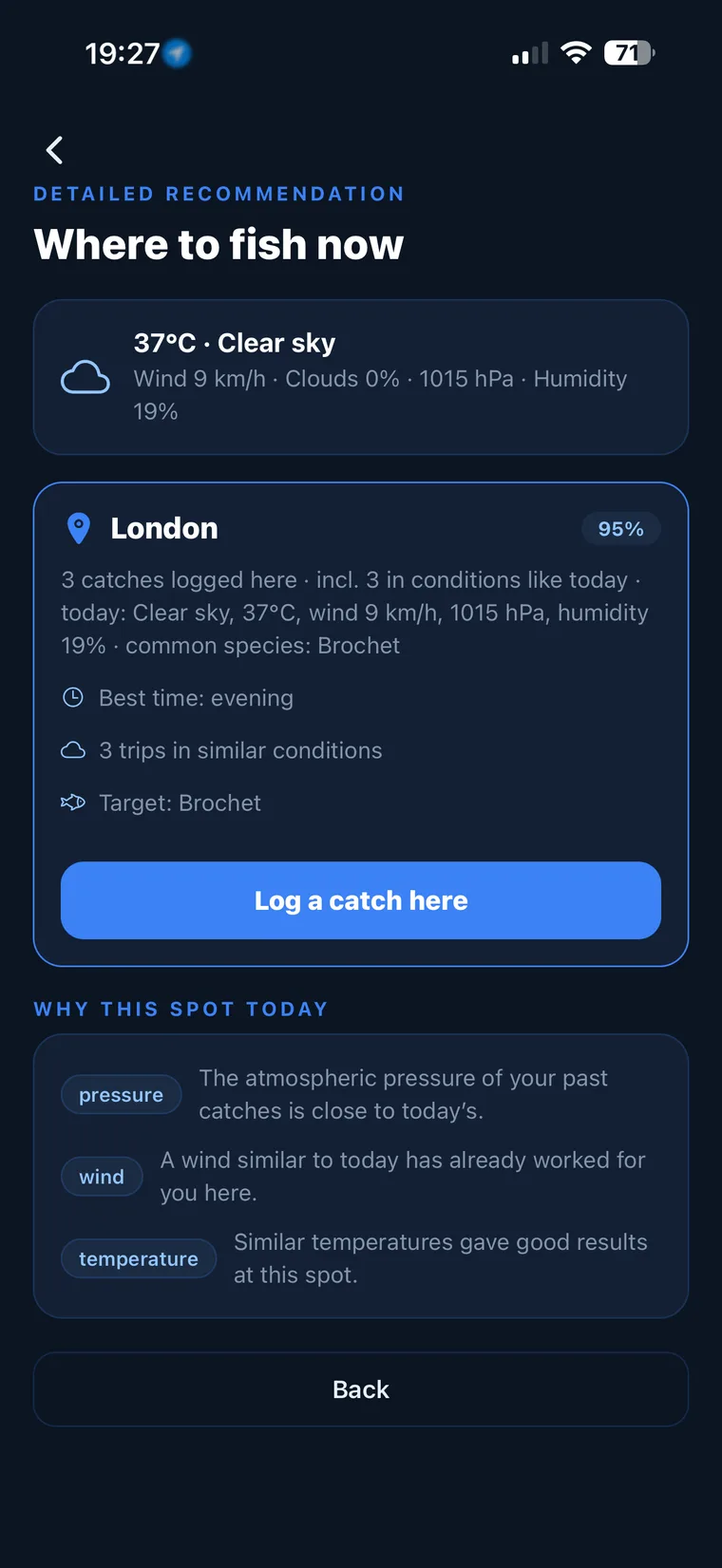
Not sure what to tie on?
Photograph your spot: CarnaFish reads the scene, cross-checks the conditions and gives you the zone, the lure and the retrieve. Free on iOS and Android.
Colour by water clarity
- Clear water: a natural tone that closely matches a local baitfish.
- Overcast skies: a slightly contrasting pattern to add visibility.
- Stained water: a bright colour, on top of an already-audible tight wobble.
Zander and perch: getting the depth right
For zander, picking the right model for the spot's depth is the single most important factor with this lure, more so than colour or retrieve. Our beginner's guide to zander fishing covers how to figure out that depth before picking your gear. For perch, the smaller models (1.5" and 2") fished as a standard cast-and-retrieve work well for prospecting a shallow drop-off.
Finding the right depth before even tying on a lure is exactly what CarnaFish simplifies: one photo of the spot is enough for the AI to read the scene and the day's conditions and suggest a starting zone and depth.
What we'd remember
- Every Flicker Shad size corresponds to a precise running depth — pick it by the spot, not by instinct.
- Long-line trolling, rare in France, covers large areas fast when zander are scattered.
- The suspending trait allows real pauses without losing the depth reached.
- A Shallow version exists for margins and shallow water.
FAQ
How do I choose the right Flicker Shad size by depth?
Every model corresponds to a precise depth range, from the 1.5-inch (6-8 ft) to the 3.5-inch (11-13 ft). Pick the model whose range matches the depth of the spot you want to fish.
Do I need a boat to use the Flicker Shad?
No, it works very well as a standard cast-and-retrieve lure. Long-line trolling needs a boat and covers more ground, but it isn't the only way to fish it.
What is a suspending crankbait?
It's a lure that stays suspended at rest instead of rising back to the surface like a standard floating crankbait, which allows real pauses during the retrieve without losing the depth reached.
What size Flicker Shad should I use for perch?
The 1.5" and 2" models are best suited, fished as a standard cast-and-retrieve over shallow drop-offs.
Is the Flicker Shad Shallow different from the standard model?
Yes, it's built to run shallower, suited to margins and shallow water where the standard models would dive too deep and risk snagging bottom.
What colour should I use in stained water with the Flicker Shad?
A bright colour, on top of the lure's already-strong tight wobble, to add a visual cue when turbidity limits how far a fish can see.
The full zander lure guideSeason-by-season strategy: which family of lure, when, and why.Go from theory to fish
CarnaFish reads your spot from a photo and gives you the game plan: zone, lure, retrieve. Free on iOS and Android.