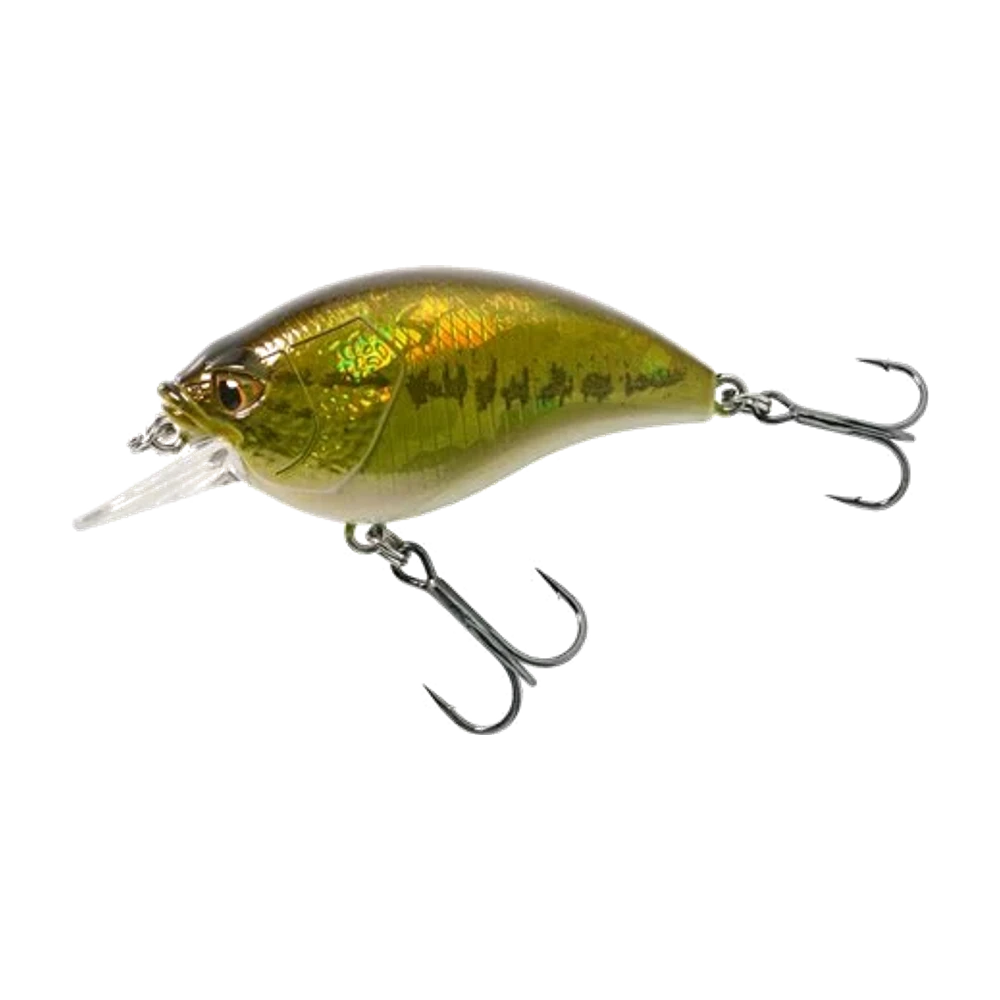
Caperlan Wixom: what a cheap crankbait does just as well as any other
Before tying this one on, it helps to know if the spot actually calls for it. CarnaFish reads the scene from a photo.
You are standing in front of a rack. On the left, a Japanese crankbait at twenty euros. On the right, a Wixom at a few euros. The real question is not "which one catches more fish", because the honest answer is: in ninety per cent of the situations you actually fish, the gap is small. The real question is: what exactly are you giving up, and does it matter to you today?
There is also a much more pragmatic reason to be interested in this type of lure, and it does not only concern beginners. A crankbait is fished in contact with the bottom and with obstructions. That is what it is for. Which means that a crankbait, whatever it cost, sooner or later ends up stuck in a stump or on rip-rap. Plenty of experienced anglers deliberately keep cheap cranks for the spots where they know they will leave some behind.
What you give up, and what you do not
Let us be precise, without either flattery or snobbery.
What is genuinely worse on an entry-level lure:
- Consistency between two examples. On low-cost production, two lures of the same model can swim slightly differently. You may have to tune the front eye to make one of them run straight.
- The stock hooks. This is weak point number one, by a long way. They are often soft or not very sharp, which costs fish on the soft takes of a zander.
- The finish. More fragile paint, less refined scale detail. That counts in very clear water on educated fish, and very little anywhere else.
- The durability of the lip and split rings after a few dozen contacts with rock.
What is equivalent:
- The basic geometry. A crankbait dives because of its lip and rolls because of its shape. Those principles work identically at three euros and at twenty.
- The ability to trigger a bite. A perch charging a crankbait that has just knocked into a stone does not check the price tag.
- Running depth, which depends on the lip and the line, not on the brand.
The real lesson: bottom contact
This is the skill this lure will teach you, and it is the one that really matters. A crankbait is not fished "in mid-water".
- Cast past the target zone and start immediately, fast enough to engage the dive.
- Rod low, almost at the water's surface. It should point at the lure. The higher you hold the rod, the shallower the lure runs.
- Wind steadily until the first contact. You will feel a clean knock through the rod tip: that is the lip touching.
- Correct nothing, keep going. The lure should scrape, bounce and deflect. Those unpredictable deflections are what trigger bites.
- Put in a one to two second stop after every solid contact. The floating lure rises while pivoting, which often clears the lip from an obstruction and produces a take straight afterwards.
- When it hangs up, release everything. Slack line for one second: a floating crankbait frees itself one time in two.
On the water: the best investment on an entry-level crankbait is not buying a dearer one, it is replacing its two trebles with quality hooks. For three euros you fix the only flaw that genuinely costs you fish, and you keep a lure you can leave in a stump without a second thought. Just check that the new treble weighs roughly the same as the old one, otherwise you change the buoyancy and the lure no longer rises on the stop.
Choosing the size by depth
| Model | Rough length | Running depth | Water |
|---|---|---|---|
| Small | around 4 cm | 0.8 to 1.5 m | margins, low weed, small perch |
| Medium | around 5 cm | 1.5 to 2.5 m | gravel-pit flats, rip-rap, the do-everything size |
| Large | around 6 cm | 2.5 to 3 m | drop-offs, hard bottoms, zander |
Two free adjustments to change depth without changing lure: finer line makes the lure run deeper (0.20 mm fluorocarbon easily gains twenty to thirty centimetres over 0.26 mm), and a longer cast gives more diving distance before the line starts lifting the lure back up.
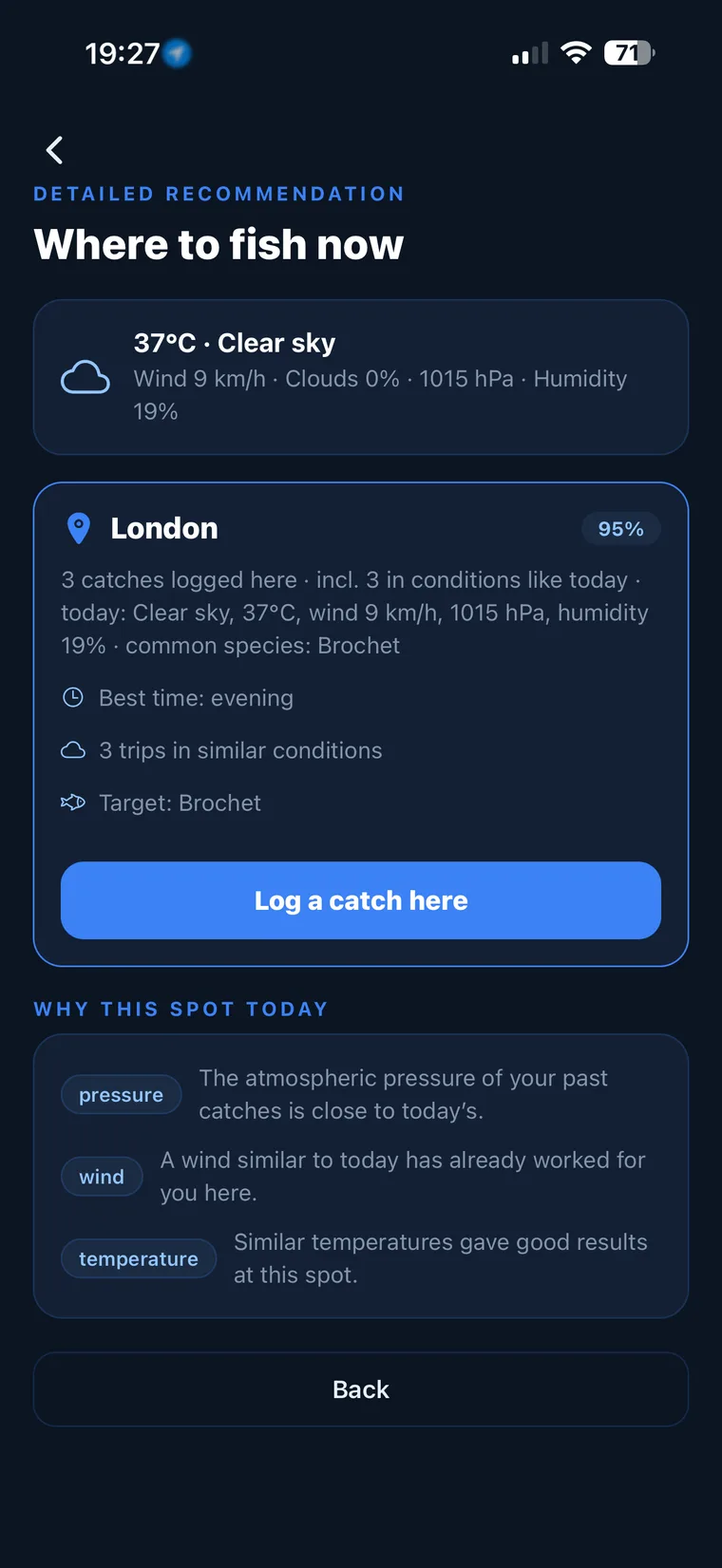
Not sure what to tie on?
Photograph your spot: CarnaFish reads the scene, cross-checks the conditions and gives you the zone, the lure and the retrieve. Free on iOS and Android.
Perch and zander: two different rhythms
Perch want movement and reaction. Wind at a medium, constant speed, look for contacts, and do not hesitate to accelerate suddenly when you sense a follow. The best spots are rip-rap, hard margins and the stone piles of gravel pits, in late summer and autumn.
Zander demand the opposite: a slower retrieve, longer stops and more systematic bottom contact. They often bite during the rising phase on the stop, with a very soft bite that feels like a slight extra weight. Strike on any anomaly rather than waiting for a knock. Favour hard, gravelly bottoms and low-light hours.
Wixom or a high-end crankbait: when the gap becomes real
The Rapala Shad Rap remains a reference for one precise reason: its action is remarkably stable at very low speed, which is hard to achieve and expensive to produce. If you fish cold water, with very slow retrieves, on apathetic fish, the gap shows.
It also shows in very clear water on fish that get fished for every week, where fineness of finish and consistency of action make a measurable difference.
Everywhere else — slightly stained water, lightly fished stocks, a normal retrieve, cluttered bottom — the Wixom does the job. And it lets you learn bottom contact without calculating on every cast what you stand to lose, which is probably the factor that will improve your fishing most this season.
For perch, another cheap and complementary approach is a weighted inline spinner such as the Rublex Ondex, which works the same margin on a counted drop. Our guide to predator tackle on a controlled budget covers where to put your money first. And if you are unsure which crankbait depth to tie on when you reach the bank, CarnaFish analyses a photo of the spot and answers.
Key takeaways
- Geometry and triggering ability are equivalent: it is consistency, finish and hooks that differ.
- Replace the stock trebles with quality hooks of the same weight: that is the only worthwhile fix.
- A crankbait is fished rod low, in contact with the bottom, with a stop after every knock.
- Perch: brisk rhythm and contacts. Zander: slow, long stops, soft bite on the rise.
- A cheap crank is also a rational choice for very snaggy spots, whatever your level.
FAQ
How deep does the Caperlan Wixom run?
Roughly one to three metres depending on the model and lip size. You can gain twenty to thirty centimetres by switching to finer fluorocarbon and lengthening your casts, without changing anything else in the rig.
Should I change the stock hooks?
It is the first modification to make, and the most rewarding. Choose quality trebles as close as possible in weight to the originals: too heavy a hook stops a floating lure rising on the stop, which removes a good part of its point.
Does a cheap crankbait catch fewer fish?
In most situations, no. The gap becomes real in very clear water on educated fish, and on very slow retrieves in cold water, where a high-end model's stability of action makes the difference.
How do I free a stuck crankbait?
Release the tension completely for one to two seconds: a floating model rises and clears itself very often. If that is not enough, change angle by moving along the bank rather than pulling harder on the same line.
Does the Wixom work for zander?
Yes, favouring the deepest-running models, a slow retrieve and marked stops over hard bottom. The bite is often just a sensation of extra weight during the rise: strike as soon as anything changes, without waiting for a knock.
Which colour to start with?
A natural perch pattern already covers most situations in clear to slightly stained water. Add one contrasting tone, orange or chartreuse, for murky water and low-cloud days, and you have the essentials.
The full perch lure guideSeason-by-season strategy: which family of lure, when, and why.Go from theory to fish
CarnaFish reads your spot from a photo and gives you the game plan: zone, lure, retrieve. Free on iOS and Android.