Berkley Froggin' Haul of Fame: four frogs and a box, what it is for
Not sure this lure fits YOUR spot today? CarnaFish tells you in 10 seconds, from a photo.
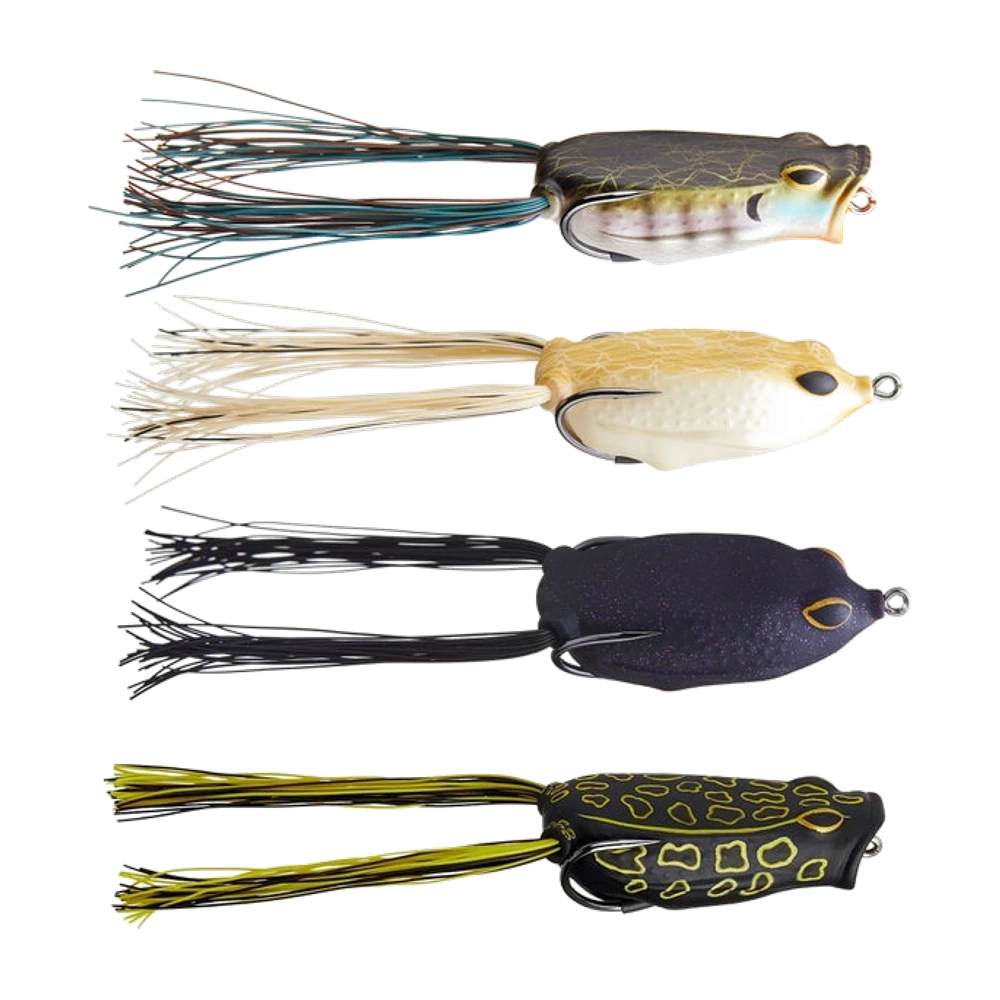
There is a moment in frog fishing where you stop watching the lure and start listening. The bait has disappeared behind a raft of duckweed, you roughly know where it is, and the sound that follows - that hollow, muffled thump - always arrives half a second before you are ready for it. That is what these four baits sell, and it is worth saying straight away what the kit really is: a gift assortment, not a technical range you picked colour by colour.
What is in the box, and what it is worth
Berkley states the contents plainly: two standard Swamp Lords, two Popping Swamp Lords, and a Plano 3700 StowAway open-compartment box. The size chart gives 2.6 in and 2/3 oz for the standard Swamp Lord, 2.4 in and 2/3 oz for the popping version - that is 6.6 cm and 6.1 cm for about 19 g, both listed as topwater.
Nineteen grams for six centimetres sounds like a lot until you have fished a frog. It is the norm on this kind of bait, and it is necessary: you need that weight to cast far into a headwind, to punch past a reed edge, and to keep the hollow body sitting flat on a mat of vegetation instead of sinking into it.
The Plano box is not a gimmick either. A hollow body frog cannot be crushed into a full box: the body keeps the dent, takes on water through the hole at the hook anchor, and loses its buoyancy. An open-compartment tray where each bait has its own slot is the only way to keep them intact between trips.
Two models, two ways to fish
The kit holds two different tools, and that is where its real value sits.
The standard Swamp Lord has a tapered nose. You fish it walking the dog: rod tip down, steady short taps with slightly slack line, and the body goes left, right, left. That is the retrieve for a solid mat, because a pointed nose skates over duckweed and pads instead of catching on them.
The Popping Swamp Lord has a cupped mouth. The same walking retrieve still works, but it mainly unlocks another register: one short sharp pull and the mouth throws a spray of water ahead of it with a clean knock. That is the open-water weapon - holes in the vegetation, clean edges, anywhere the sound carries and you want to pull a fish from three or four metres away.
Over a dense mat the popper is close to useless: the cup loads up with weed on the first pull and stops throwing anything. Save it for clearings, channels between weed beds and clean edges, and switch to the smooth version the moment it gets thick.
The double hook, and the reflex you have to learn
Both models carry a forged Berkley Fusion 19 double frog hook, set at a slightly opened angle. That angle is not cosmetic: on a frog both points lie flat against the back to stay weedless, and the gap directly determines what happens on the hookset. A double that is too closed struggles to clear the hollow body; opened up like this one, it finds purchase more often.
Then there is the timing. Do not set on the sound. That is the mistake that costs the most fish in frog fishing: the strike is spectacular, your hand goes before you do, and the bait comes whistling back over your head with nothing on it. The fish takes the bait in its mouth first, then goes back down with it. What you are waiting for is weight in the rod - a full second, sometimes two. When the line comes tight for real, you set hard and keep reeling.
That is why tackle matters as much as the lure here: 40 to 50 lb braid tied straight on, no fluorocarbon leader to soak up the hookset, and a powerful rod with a tip stiff enough to drag the fish straight out of the salad.
Where these frogs fish, in Europe and elsewhere
Berkley's description talks about frog eaters, and that is the right way to read it. Bass over pads, duckweed, surface weed beds and half-submerged timber remain the primary target. In Europe, though, the other half of the story has to be told: on those same spots it is often the pike that strikes. A double of this size holds one properly, as long as you accept chewed-up baits and check the hollow body after every fish.
The right window is water above 18 C, an overcast sky or the two hours either side of sunrise and sunset. At midday in summer on very clear water the frog still works, but only if you fish the shade of the vegetation rather than the middle of an open flat.
What the kit does not solve
You do not choose the colours. For a box of lures meant as a gift that hardly matters; if you are after one specific tone for your own water, buy the models individually. And four frogs do not make a tackle box: you are still missing a lighter inline bait for thin edges and a follow-up soft plastic for a fish that missed the strike. A soft Berkley Beat'n Paddle Frog on a Texas rig fills that second-cast role, which a hollow body simply cannot.
Not sure what to tie on?
Photograph your spot: CarnaFish reads the scene, cross-checks the conditions and gives you the zone, the lure and the retrieve. Free on iOS and Android.
Colours by light and bottom
- Clear water, bright sky: the natural mottled brown-green back from the photo, the closest thing to a real frog seen from below.
- Overcast sky, lightly stained water: the cream white, which looks like no frog at all but cuts a very readable silhouette against grey light - and the fish only ever sees a silhouette.
- Dense mats, low light, late in the day: the black or the gold-ringed black, the cleanest outline when the light comes from above and the bait is backlit.
Where it sits among other frogs
In an aisle holding dozens of hollow bodies, the Swamp Lord sits in the register of the bait that works well and is easy to find, not the specialist's bait. A Spro Bronzeye Frog goes further down the specialist road, with buoyancy and walking action tuned differently. If all you want is the popping version, the Berkley Swamp Lord Popping Frog is sold on its own, and that stays the better maths when only half the kit interests you.
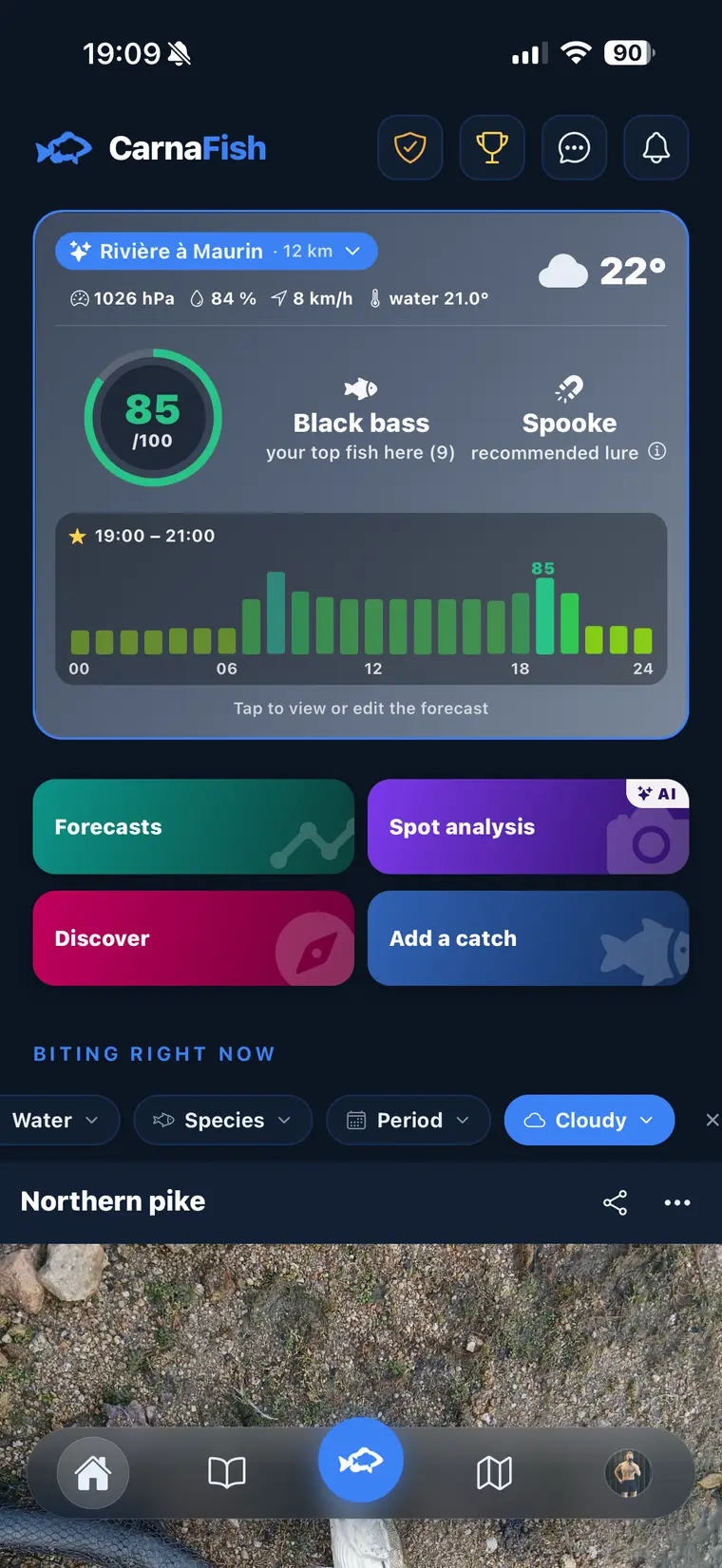
Spotting the weed edge that actually holds fish is worth more than the choice of model, and that is exactly what CarnaFish makes easier: one photo of the spot, and the AI suggests the zone to work, the depth and the lure type that suit the day's conditions. To build the rest of the method, our guide to getting started with bass fishing covers reading water and the basic tackle.
What to remember
- The kit holds four baits - two smooth Swamp Lords and two popping versions - plus a Plano 3700 box that keeps the hollow bodies from being crushed.
- 6.6 cm and 6.1 cm for about 19 g each: that weight is what makes the cast and the sit on the mat work.
- Smooth version over dense vegetation, popping version in holes and clean edges.
- Delay the hookset a full second after the strike, use heavy braid and a powerful rod, or your hook-up rate collapses.
FAQ
What exactly is in the Froggin' Haul of Fame?
Two standard Swamp Lord frogs, two Popping Swamp Lords and a Plano 3700 StowAway open-compartment box. Berkley lists 2.6 in and 2/3 oz for the smooth version, 2.4 in and 2/3 oz for the popper.
Can you choose the colours in the kit?
No, the assortment is fixed. That is the limit of the gift format: if you want one specific tone for your water, the models are also sold individually.
Do you really need braid for frog fishing?
Yes, and with no leader. The hookset has to travel through several metres of line and sometimes a wad of vegetation to push two points out of a hollow body. Monofilament or fluorocarbon stretches and soaks up most of that energy.
Why do I miss so many frog strikes?
In the vast majority of cases, because you set on the sound. Wait until you feel the weight of the fish in the rod, which usually takes a full second, then set hard and keep reeling.
Are these frogs any good for pike?
Yes, and in Europe it is frequently the pike that strikes on pad spots. A double hook this size holds one properly, but the hollow body suffers: check after every fish that it is not taking on water.
What is the difference between the Swamp Lord and the popping version?
The nose. The smooth version skates over vegetation and is fished walking the dog; the popper has a cupped mouth that throws water and carries its sound much further, but loads up with weed in the thick stuff.
The full bass lure guideSeason-by-season strategy: which family of lure, when, and why.Go from theory to fish
CarnaFish reads your spot from a photo and gives you the game plan: zone, lure, retrieve. Free on iOS and Android.