Berkley Power Blade Double Willow: the spinnerbait that bets on flash
Before tying this one on, it helps to know if the spot actually calls for it. CarnaFish reads the scene from a photo.
A bright day over clear water is the worst possible moment to reach for a spinnerbait with a big round blade: it turns slowly, it thumps hard, and the fish has all the time it needs to look at what it is about to eat. The double willow setup solves the problem from the other end - plenty of flash, very little low-frequency signal, and a retrieve you can run fast. That is exactly what the Power Blade offers.
Two willow blades: what that changes
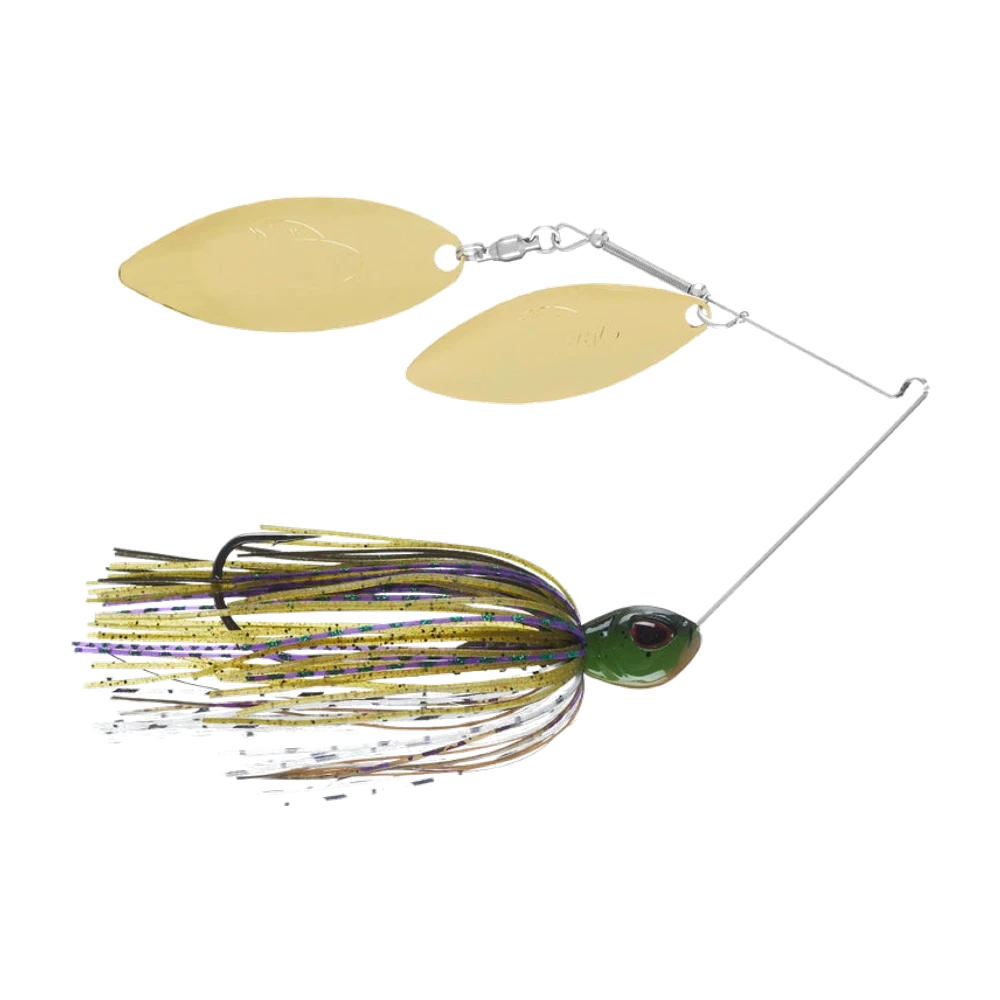
A willow blade is long, narrow and pointed. It spins closer to the shaft than a round colorado, it meets less resistance in the water, and it throws light along its whole length on every turn. Running two of them multiplies the effect: two offset reflective surfaces producing a continuous shimmer rather than one isolated flash.
Berkley states the aim plainly: more flash under a clear sky, and a wire that cuts through the water without dragging, so a bait built to cover water fast. That is accurate, and it is also the limit. The double willow puts out little low-frequency vibration: in dirty water, where fish hunt with the lateral line before the eye, a War Eagle Double Colorado does a far better job. The two setups are not rivals, they cover two different conditions.
In the photo the blades are gold. That is the logical choice in lightly stained water or low raking light - gold gives back a warmer, more diffuse glow. A nickel or silver blade gives a harder, sharper flash, better suited to clear water at midday.
The weight Berkley does not give
It needs saying plainly: the description contains no size chart. No length, no weight, no hook size. For a family of lures where weight governs everything - running depth, minimum speed, rod choice - that is a genuinely missing piece of information.
In practice you will read it off the packet in the shop, as with any spinnerbait. The usual references still hold: a light model is retrieved high and slow along a shallow edge, a heavy one is slow-rolled in contact with a drop-off or along a sunken tree. Choose on the depth you want to work, not on casting distance.
If you do not know what speed to use, look for the slowest one at which you can still feel both blades turning in the rod. That is almost always the right rhythm. As soon as the vibration goes vague in your wrist, you are too slow and the bait is sinking instead of working.
The hand-tied skirt and the bait keeper
Two build details are worth a word, because you notice both on the water.
The skirt is hand-tied and infused with PowerBait. Hand tying gives a skirt that opens and closes decisively on every change of speed, where a cheap moulded collar locks the strands in one position. The scent infusion deserves more caution: on a reaction bait moved quickly, the fish commits on sight and lateral line before it tastes anything. It may affect how long a fish holds the bait after the strike, not the decision to strike.
The moulded conical bait keeper on the shank is the most useful item day to day. It locks a soft trailer in place instead of letting it ride up to the head after three casts. A trailer changes the bait a lot: a paddle tail adds bulk and slows the fall, a twin-tail grub thickens the silhouette without slowing it. Both are worth trying on the same spot.
The mistake that costs fish
Setting the hook on the first contact. A spinnerbait gets hit without being eaten all the time: the fish swipes at the blades or the side of the skirt. Set then, and you rip the bait out of the zone. Keep reeling at the same speed instead - in most cases the fish comes back within the second and takes it properly. You set when you feel the weight, not when you feel the knock.
If fish follow and strike short repeatedly, add a trailer hook - a plain wide-eye single slipped onto the shank. It converts a good share of those misses into hooked fish, at the cost of a little more snagging in timber.
Where and when to use it, in Europe
The spinnerbait stays underused in Europe outside bass fishing, and that is a shame. Three situations suit it particularly well.
Spring on shallow edges, when fish push onto the flats and you have to cover hundreds of metres of bank to find the active zones. The double willow is built for that: it can be retrieved quickly without climbing.
Submerged weed and sunken timber, where the wire arm acts as a guard and the bait goes through places a crankbait would hang up. It is one of the few lures you can deliberately bump against a branch before carrying on.
And pike along the margins, which respond very well to that continuous flash. Here a wire or titanium leader is not optional: the single hook of a spinnerbait puts the fish's jaws directly against the line.
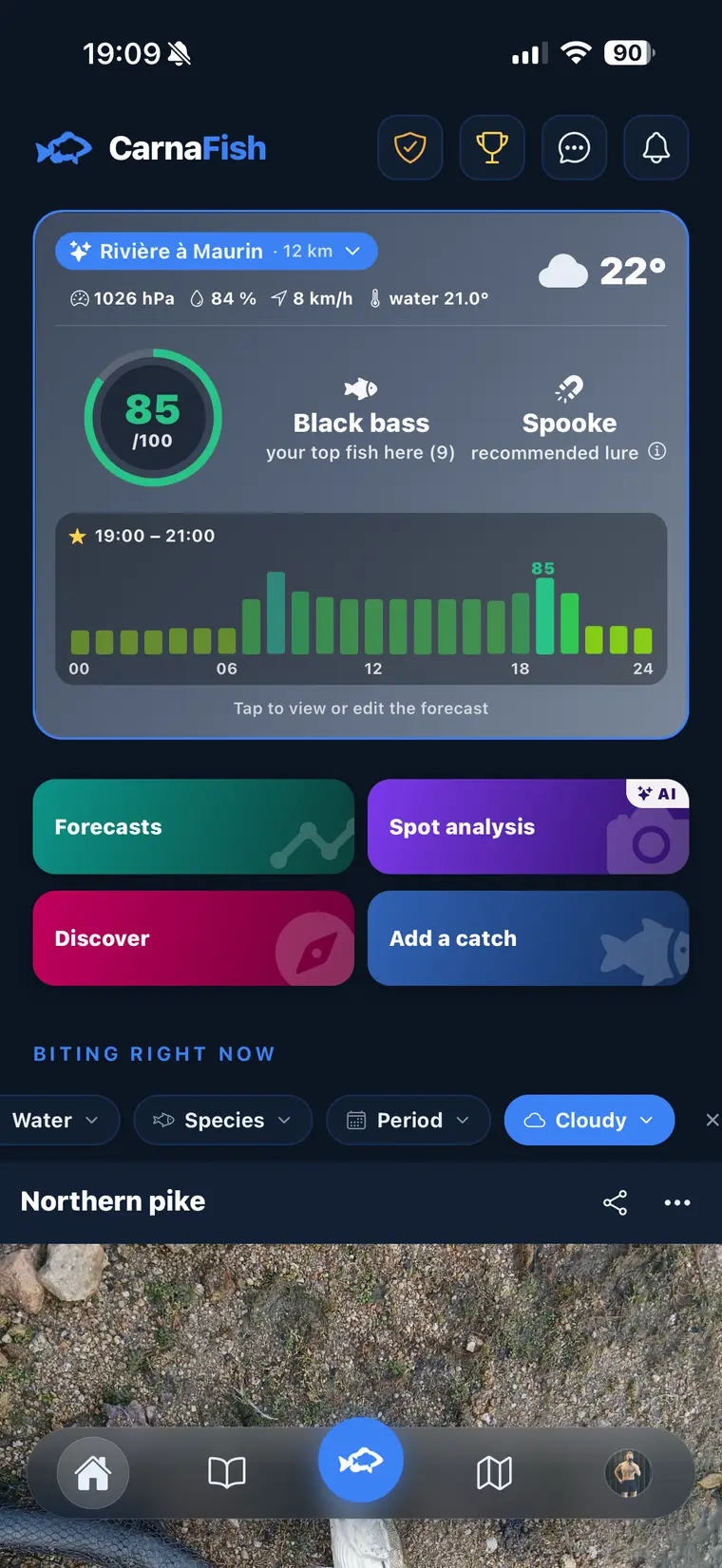
Not sure what to tie on?
Photograph your spot: CarnaFish reads the scene, cross-checks the conditions and gives you the zone, the lure and the retrieve. Free on iOS and Android.
Colours by light and water
- Bright sun, clear water: a natural green and gold like the one in the photo, whose purple and translucent strands break up the silhouette instead of giving it away.
- Overcast, clear to lightly stained water: a white and silver, the classic that reads as a cluster of baitfish and makes the most of any light going.
- Stained water, spring, rising levels: a chartreuse and white, the tone that stays visible when visibility drops below a metre.
Where it sits among other search baits
The Power Blade plays the role of the classic affordable spinnerbait, not the niche tool. Against a Booyah Covert Spinnerbait the register is the same, and the choice comes down mostly to the blade configurations and weights on offer. Against a Zman Chatterbait Jackhammer the split is sharper: the chatterbait thumps far harder and works dirty water better, while the spinnerbait goes through timber more cleanly and gives more flash.
Finding the right bank to work matters as much as what you throw at it, and that is exactly what CarnaFish makes easier: one photo of the spot, and the AI suggests the zone to work, the depth and the lure type that suit the day's conditions. To know which lure belongs to which time of year, our season-by-season guide to predator fishing lays out the full calendar.
What to remember
- Two willow blades mean plenty of flash and little vibration: this is a clear-water, fast-retrieve bait.
- Berkley publishes no weights: read the packet and choose on the depth you intend to work.
- The conical keeper holds the soft trailer in place, and the hand-tied skirt breathes on every change of speed.
- Never set on the first knock: keep reeling and wait until you feel the weight.
FAQ
What is the difference between willow and colorado blades?
A willow is long and narrow: it spins close to the shaft, drags little and throws a lot of light. A colorado is round and wide: it spins well off the shaft, pulls hard and produces a far more noticeable low-frequency thump. Willow for clear water and speed, colorado for dirty water and a slow roll.
What weight should I pick for the Power Blade?
Berkley publishes no weight chart for this reference, so you have to read the packet. The principle is unchanged: light for edges under a metre, heavy to slow-roll along a drop-off.
Should I fit a soft trailer?
Not compulsory, but that is what the conical keeper is for. A paddle tail adds bulk and slows the fall, a twin-tail thickens the silhouette without slowing it. Both deserve a try on the same spot.
Is the spinnerbait any good for pike?
Yes, very good, especially along margins and on shallow flats. Plan on a wire or titanium leader: with a single hook this size, the fish's jaws come straight onto the line.
Why do I feel bites without hooking fish?
Because the fish often swipes at the blades or the skirt before taking the bait. Do not set on the knock, keep reeling at the same speed. If it keeps happening, add a trailer hook on the shank.
Does the PowerBait infusion do anything on a fast-moving lure?
Little for the decision to strike, which happens on sight and lateral line. It may, however, lengthen the time a fish holds the bait after the strike, which buys you a fraction of a second to set the hook.
The full bass lure guideSeason-by-season strategy: which family of lure, when, and why.Go from theory to fish
CarnaFish reads your spot from a photo and gives you the game plan: zone, lure, retrieve. Free on iOS and Android.