Booyah Covert Spinnerbait: choosing the right blade and weight
Rather not fish it blind? Photograph your spot — CarnaFish cross-checks the conditions and points you the right way.
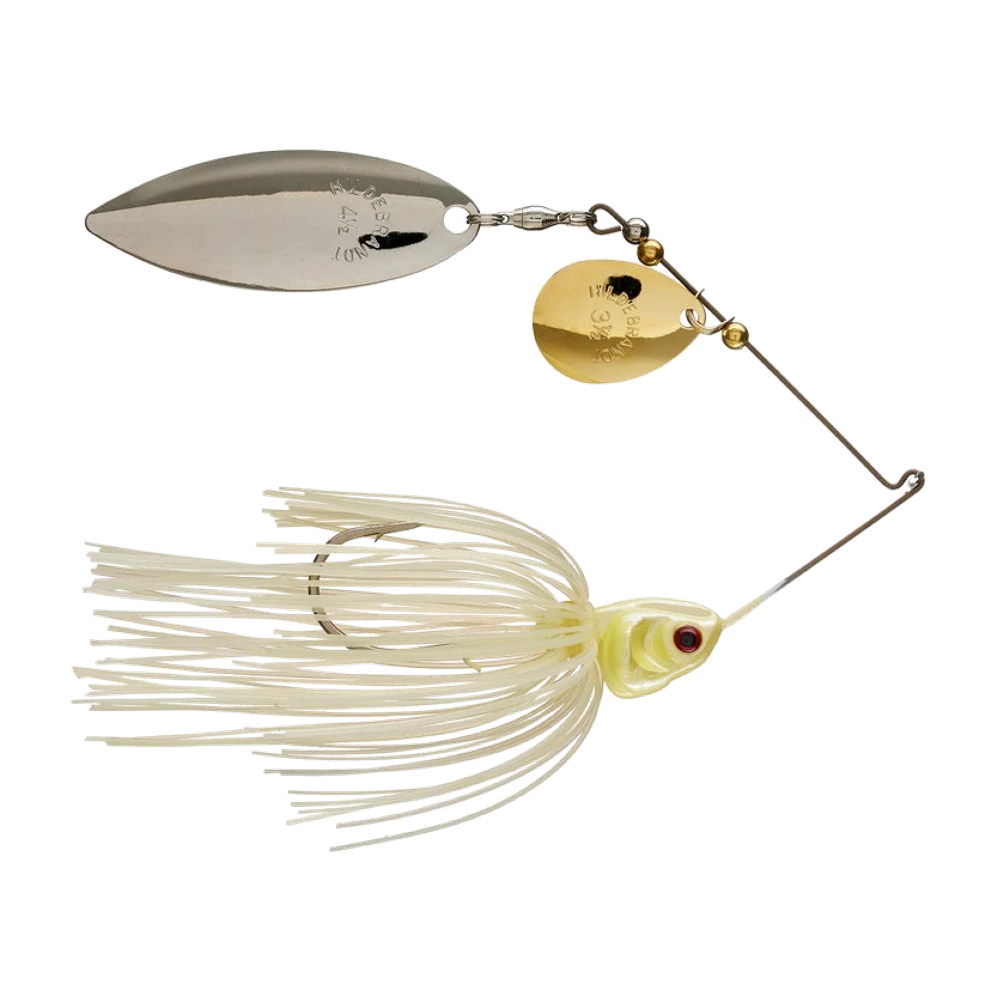
Spinnerbaits get a bad rap from finesse purists, yet it's often the first lure an American guide ties on when he doesn't know a lake yet. The Booyah Covert, designed with pro angler Jason Christie, spreads that logic across 72 head, skirt and blade combinations — plenty to get lost in if you don't understand the reasoning behind each choice.
Colorado, willow or tandem: the real difference
It isn't a matter of taste, it's a matter of conditions.
A Colorado blade (round, cupped) spins tight around its axis and produces strong vibration that a bass can feel through its lateral line even in dirty water. It's the blade for stained water, low light and slow retrieves.
A willow blade (long, leaf-shaped) spins faster with less bite: it's mostly flash, little thump, and slides through weed cover thanks to its slim profile. It's the pick for clear water, sunshine and fast retrieves.
A tandem setup (two blades, often a Colorado ahead of a willow, or two willows of different sizes) blends both effects and gives a bulkier profile — useful when you want to imitate a small baitfish school rather than a single prey item.
Field rule: clear water and sun call for a flashy willow; stained water or low light call for a thumping Colorado. When in doubt, a tandem covers both about 80% of the time.
Weight, matched to depth and wind
The Covert comes in 3/8, 1/2, 3/4 and 1 oz, and that choice drives both running depth and casting distance:
- 3/8 oz: shallow margins under 1 m, calm wind. Also the easiest weight to crawl slowly without sinking too fast.
- 1/2 oz: the all-rounder. Covers the 1-2 m band and casts fine even into a light breeze.
- 3/4 oz and 1 oz: for going past 2-3 m, or casting into a headwind. The 1 oz becomes mostly a fall lure, when bass follow baitfish deeper.
What sets the Covert apart from a generic spinnerbait
The frame uses unplated 17-7 stainless steel wire, stiffer than a standard wire, which transmits the Hildebrandt blades' vibration more directly up the line to your hand. The most useful detail is the flared gill molded into the head: it offsets the torque generated by the spinning blade and stops the bait from spiraling at high speed, a common flaw on budget spinnerbaits.
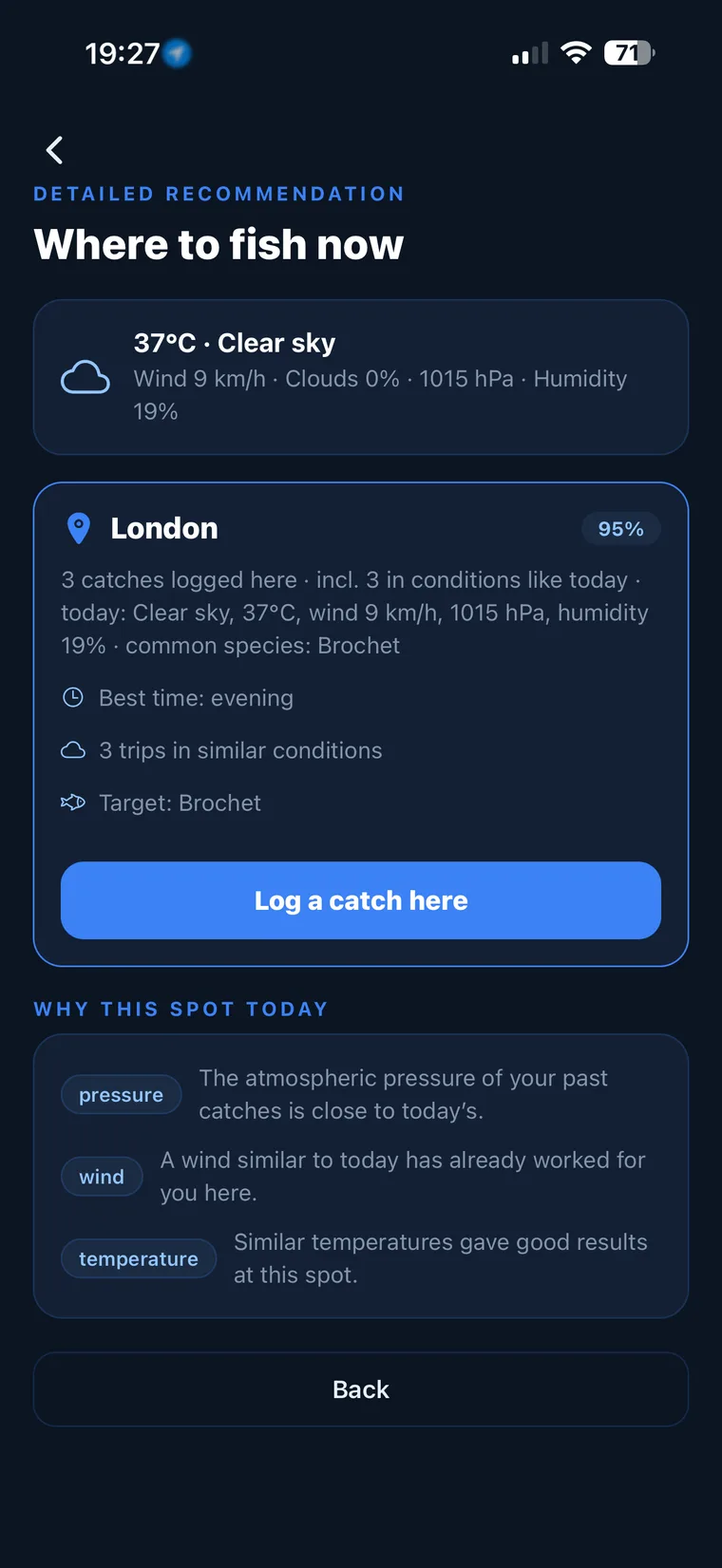
Not sure what to tie on?
Photograph your spot: CarnaFish reads the scene, cross-checks the conditions and gives you the zone, the lure and the retrieve. Free on iOS and Android.
Head and skirt colour by condition
- Cold water, early spring, stained water: red or orange head, white/chartreuse skirt. Red mimics an injured crawfish, very effective coming out of winter.
- Clear water, bright sun: natural-toned skirt (shad, grey/white) with a silver willow blade that flashes without overdoing it.
- Very stained water or after dark: black or black/blue skirt, Colorado blade — silhouette contrast matters more than exact colour at that point.
Three retrieves, from simple to technical
- Straight lift-and-wind: medium, steady speed, just under the surface. The starting point on an unfamiliar spot.
- Slow-rolling: a very slow retrieve, Colorado blade thumping near the bottom or along a drop-off. Deadly in cold water on inactive bass.
- Bump and rise: let the spinnerbait deflect off cover (a stump, rock, submerged wood) then pause a beat before resuming — the fall that follows the bump often triggers the strike.
Where it won't replace a chatterbait or a soft craw
The spinnerbait shines in open water, along a drop-off or beside a weedline — its exposed skirt and blade don't handle really dense brush as well as a chatterbait, which tracks lower and slips through cover more easily. And on a bass sitting dead-still on the bottom, a soft craw crawled slowly along the substrate usually out-produces any lure that's constantly in motion.
Before pulling out the spinnerbait box, you still need to know where to cast — that's exactly what CarnaFish does: it reads a photo of your spot and hands you a zone and a lure type suited to the day's conditions, instead of guessing by eye.
FAQ
What weight Booyah Covert Spinnerbait should a beginner start with?
1/2 oz is the best all-around choice: it covers the 1-2 m band, casts fine even into light wind, and handles every retrieve speed without needing specialised gear.
Colorado or willow for bass in clear water?
Willow, without question. Its blade produces mostly flash, subtle but effective in clear water and sunshine, while Colorado suits stained water better thanks to its stronger vibration.
How do you fish a spinnerbait in cold water?
Slow-roll it: a slow, steady retrieve with a Colorado blade that keeps thumping even at reduced speed, hugging the bottom or a submerged structure.
Does the Booyah Covert snag a lot in weed cover?
Less than a lure with a fully exposed hook, since the blade offers some protection, but in really dense vegetation a chatterbait or a Texas-rigged soft craw still handles it better.
Should you add a stinger hook to a spinnerbait?
Worth it if you're missing a lot of short strikes, especially with a bulky skirt that can hide the main hook. A small stinger hook clipped to the skirt boosts hookup rate without hurting the swim.
What head colour works best coming out of winter?
Red or orange: these tones mimic a crawfish beat up by the cold, one of the few prey items around that early in the season, and trigger strikes even from bass that are still sluggish.
The full bass lure guideSeason-by-season strategy: which family of lure, when, and why.Go from theory to fish
CarnaFish reads your spot from a photo and gives you the game plan: zone, lure, retrieve. Free on iOS and Android.