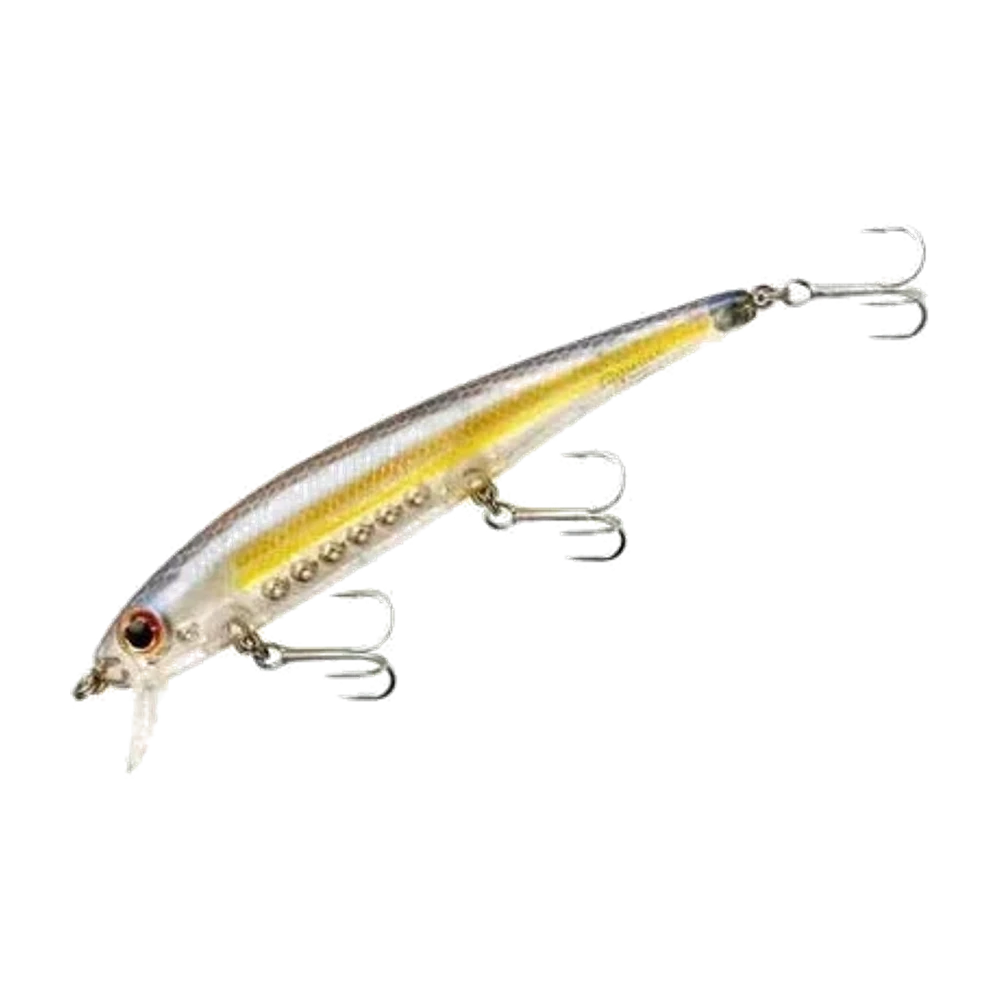
Bomber Suspending Pro Long A: the same minnow, minus the buoyancy
Before tying this one on, it helps to know if the spot actually calls for it. CarnaFish reads the scene from a photo.
On paper, the difference between a floating minnow and its suspending version comes down to a few grams. On the water, they are two almost unrelated ways of fishing.
The standard Bomber Long A floats. On the stop it rises — slowly, but it rises. That rise is sometimes a huge asset: it lifts the lure off an obstruction, it creates a vertical movement that triggers, and it lets you fish over weed without hanging up. It becomes a fault the moment a fish takes ten seconds to make up its mind, because in ten seconds the lure has left the layer.
The Suspending Pro Long A is that same slim profile brought down to near-zero buoyancy. It is not a "better" model: it is the same tool set up for a different problem. The whole question is which of the two problems you have that day.
What the weighting really changes
The suspending version is not just heavier: the weight is placed to keep the lure level on the stop. Three concrete consequences.
- The lure stays in its layer through the pause. It does not rise, it does not nose down. A pike sitting at 1.5 m that follows without committing sees the lure hold at eye level for as long as you wait.
- Casts gain distance and hold better in wind. The extra weight is concentrated, and the lure no longer flutters in flight. That shows clearly on a windy pond bank or in an estuary.
- The lure dives faster and settles sooner. Two handle turns bring it to its layer, against three or four for the floating version.
In return, you lose the saving rise. In branches or over weed that reaches the surface, the floater remains the right choice, and there is nothing wrong with keeping both in the box.
The slim profile: what it imitates
The Long A is a very elongated minnow — slim body, round section, a very long silhouette. That shape does not target the same forage as a chunky jerkbait.
A wide jerkbait imitates a roach or a small perch. A profile this slim suggests a bleak, a juvenile mullet or a garfish, depending on the water. In practice that means two things: it works particularly well where the forage is slim and long, and it gets past fish keyed on one precise prey better than a bulky lure.
The roll on the jerk is also more pronounced than on a wide body: the lure clearly shows its flank on each pull, producing a long flash rather than a brief glint.
The retrieve: two rhythms by species
The gesture is the same, the cadence changes.
- Cast and wind two turns to bring the lure down to its running depth.
- Two or three sharp wrist pulls, rod tip down and slightly to the side.
- Pause, length varying with species and temperature.
- Start again without ever winding during the pause — that is what shifts the lure and breaks the suspension.
| Situation | Pulls | Pause |
|---|---|---|
| Pike, water at 12-18 °C | 3 sharp | 2 to 4 s |
| Pike, water below 10 °C | 2 wide | 6 to 12 s |
| Sea bass in an estuary, current | 2 sharp | 1 to 2 s |
| Sea bass on a flat, calm water | 3 sharp | 3 to 5 s |
On the water: in current, a suspending lure does not suspend — it drifts. On a tidal or river spot, halve your pauses and cast upstream, otherwise your line belly drags the lure back towards you during the stop and kills exactly the effect you are after.
Making the suspension reliable
Three parameters are enough to turn a neutral lure into a sinking one, and all three are under your control.
The line. Fluorocarbon in 0.30 to 0.35 mm is the reference setting. Thicker floating nylon pulls the nose up and gives the lure a floater's behaviour again.
The wire leader. For pike it is compulsory, and it adds weight up front. Take a fine coated wire of 25 to 30 cm rather than a stiff cable: you limit the nose-down attitude and preserve the roll.
The hooks. If you fit heavy-wire trebles for pike, the lure will sink slowly. That is not always a problem — on fish sitting on the bottom, a very slow descent can even be preferable — but be aware that you have changed the lure's behaviour, not just its strength.
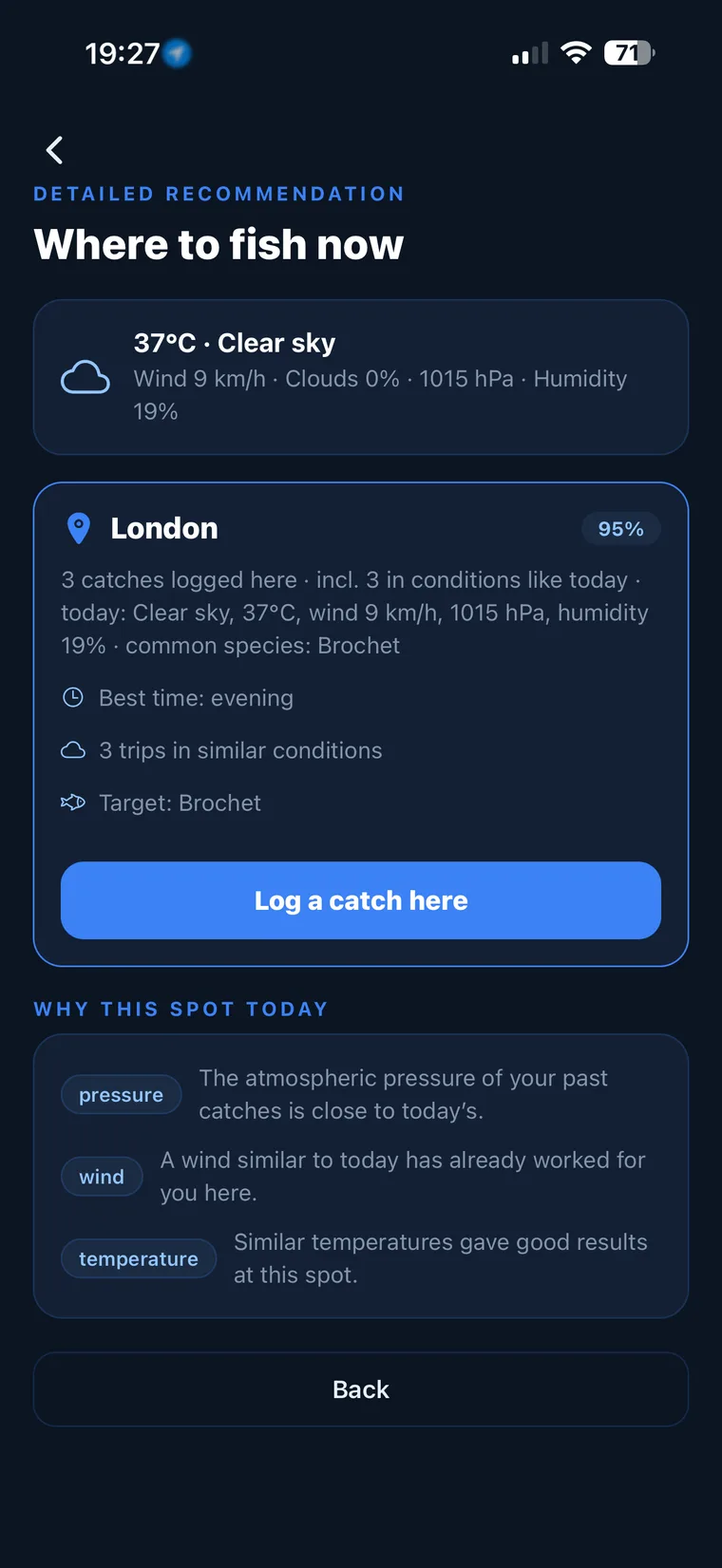
Not sure what to tie on?
Photograph your spot: CarnaFish reads the scene, cross-checks the conditions and gives you the zone, the lure and the retrieve. Free on iOS and Android.
Where it excels, where it does not belong
It excels in cold water on stationary fish: reed-bed margins in late winter, gentle pond drop-offs in spring, estuary current seams on the ebb. Its window is the fish that follows without attacking.
It is wrong in woody obstructions or weed that reaches the surface, where the lack of rise leaves it snagged. It is equally wrong in deep open water: it does not go beyond 1.8 m and will never replace a weighted lure. Finally, on very active fish hunting at the surface it is too slow — a search lure will pay better.
Suspending Pro Long A or a deeper jerkbait
The Smithwick Perfect 10 Rogue covers the same gesture but a distinctly lower layer, around 2.5 to 3 m: that is the one to take when zander or pike are pinned to a deep drop-off. The suspending Long A keeps the advantage between 1 and 1.8 m, and its slimmer profile gets past fish keyed on long, thin forage better.
Against the Rapala Husky Jerk, the difference comes down to roll: the Husky has a more settled action and a taller body, the Long A turns more on itself when jerked and gives a longer flash.
Our guide to choosing a pike lure places the suspending jerkbait among the other families. And if you are unsure between the floating and the neutral version when you arrive at a spot, CarnaFish analyses a photo of the spot and answers.
Key takeaways
- The suspending version holds the layer through the pause, the floating version rises: that is the whole difference.
- The floater is still better in timber and over weed that reaches the surface.
- A very slim profile: it imitates long, thin forage, not a roach.
- In current, halve your pauses — a suspending lure drifts there.
- Line, wire leader and hooks decide the real buoyancy.
FAQ
What is the difference between the Long A and the Suspending Pro Long A?
The profile is the same, the buoyancy is not. The Long A floats and rises on the stop, which helps in obstructions; the suspending version stays still in its layer, which counts when fish take their time deciding.
How deep does it run?
Between 1 and 1.8 m depending on line and cast length. Fine fluorocarbon and a long cast put it at the bottom of that range, thick line and a short cast at the top.
Do I need a wire leader for pike?
Yes, no argument. Take a supple coated wire of 25 to 30 cm rather than a rigid cable: you limit the nose-down attitude on the stop and keep the roll on the jerk.
How long should the pause be?
1 to 2 seconds in current, 2 to 4 seconds in temperate water, up to 10 or 12 seconds in cold water on apathetic pike. When in doubt, lengthen it: that is almost always the right correction.
Is it effective on sea bass?
Yes, especially in estuaries and over shallow flats. Its elongated profile matches slim saltwater forage well, and its weight lets you cast properly into the wind. Remember to switch to stainless hooks.
Can it be fished in branches?
Better not. With no rise on the stop, it stays in the obstruction. For that kind of spot, the floating version of the Long A is clearly the better call.
The full pike lure guideSeason-by-season strategy: which family of lure, when, and why.Go from theory to fish
CarnaFish reads your spot from a photo and gives you the game plan: zone, lure, retrieve. Free on iOS and Android.