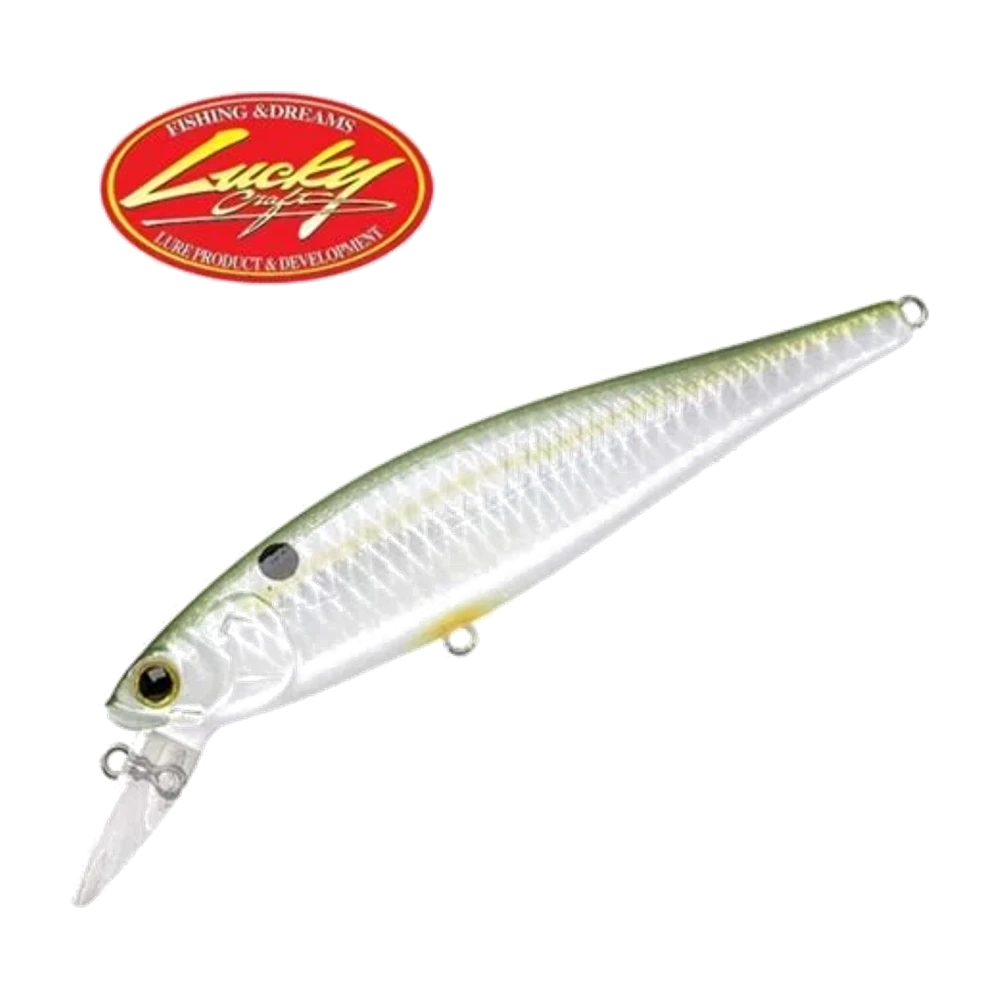
Lucky Craft Pointer 100: the jerkbait that made the long pause a standard
Before tying this one on, it helps to know if the spot actually calls for it. CarnaFish reads the scene from a photo.
Most so-called suspending jerkbaits do not really suspend. On the stop they rise slowly, or sink, or drift off to one side. On an active fish, nobody notices. On a cold-water fish that takes fifteen seconds to make up its mind, that drift ruins the take.
The Pointer 100 built its reputation on exactly that: it stays still, in the water layer, for as long as you want. That is a technical characteristic, not a marketing line, and it completely changes how you fish.
What "suspending" really means
A suspending jerkbait is tuned for neutral buoyancy. In theory it holds its depth. In practice, three factors make it drift:
- Water temperature. Water at 6 °C is denser than water at 20 °C. A lure tuned neutral in summer rises gently in winter.
- Line diameter. A 0.35 mm nylon floats and pulls the lure up. A 0.30 mm fluorocarbon sinks and pulls it down.
- The hooks. Swapping the stock trebles for heavier models is enough to make the lure sink.
The Pointer is tuned as finely as possible out of the box. That explains its reputation — and it is also why you should avoid changing everything on it without thinking.
The retrieve: the pause does the work
The movement is simple, it is the rhythm that counts.
- Cast and wind three or four turns of the handle to bring the lure to its running depth.
- Two sharp snaps, rod tip down, wrist only. The lure darts off to one side then the other.
- Pause. That is where it all happens. Genuinely count the seconds.
- Start again all the way to the bank, never shortening the pauses.
Pause length is set by temperature:
| Water | Pause |
|---|---|
| Above 15 °C | 1 to 2 seconds |
| 10 to 15 °C | 3 to 5 seconds |
| Below 10 °C | 8 to 15 seconds, sometimes more |
On the water: when you think you have waited long enough, wait another three seconds. In cold water nearly every bite comes during the pause, often just before you were about to snap it again.
Why the sideways dart matters
On every snap, the Pointer does not just move forward: it kicks hard to the side, then comes back. That horizontal zigzag produces two effects.
First, it presents each flank in turn. On a reflective finish, that creates two brief, separate flashes, far more visible than a single flank on a straight retrieve.
Second, it takes the lure out of the retrieve line. A fish holding off to one side sees the lure come towards it, then leave again. That unpredictable path triggers more than a steady swim, particularly on fish that have already refused a straight-running lure.
Where and when it takes the lead
The Pointer 100 is a late autumn, winter and early spring lure. That is its window.
- Clear, cold water, along rocky margins or drop-offs where fish sit without moving.
- Inactive fish that follow without attacking: the long pause turns a follower into a biter.
- A precise water layer between 1 and 1.5 m, typically over dead weed or along a drop-off.
Conversely, it is ill-suited to fast searching of large areas: the snap/pause rhythm forces a slow retrieve, and you cover little water per hour.
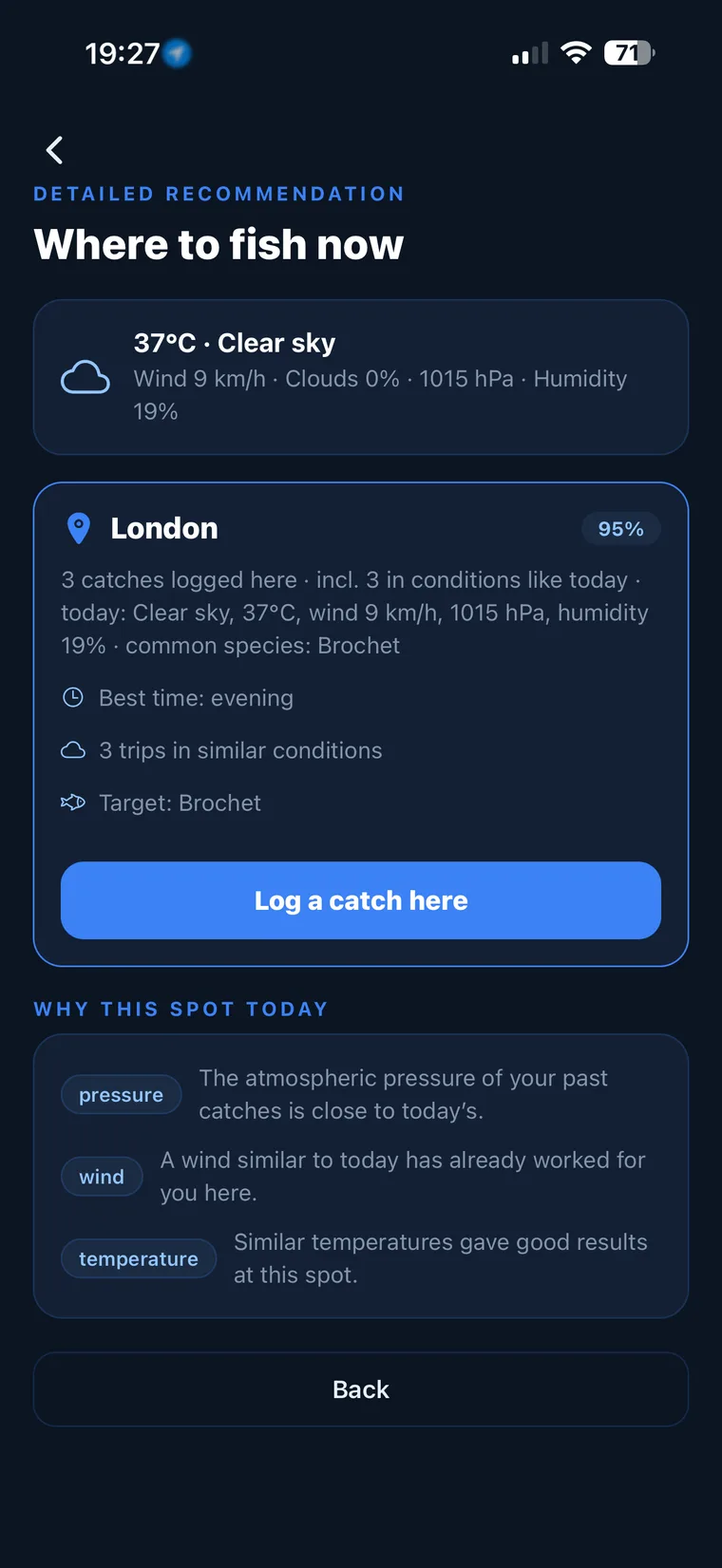
Not sure what to tie on?
Photograph your spot: CarnaFish reads the scene, cross-checks the conditions and gives you the zone, the lure and the retrieve. Free on iOS and Android.
Settings that change everything
The line. Fluorocarbon in 0.25 or 0.30 mm is the right compromise. Finer and you lose control on the hookset near cover. Heavier and you restrict the sideways dart and sink the lure during the pause.
The hooks. If you replace them, stay with an equivalent wire diameter. A heavier treble sinks the lure on the stop and removes precisely what you bought it for.
The snap. Unlike many slim jerkbaits, the Pointer takes a small quick snap very well. It does not spoil the action and saves you time on a spot where you are swapping models.
Pointer 100 or a smaller jerkbait
The Pointer 78 fills the same role on smaller fish or in even clearer water, with a profile less intimidating for perch. The Pointer 100 keeps the advantage as soon as you are after adult bass or pike, and whenever you have to cast far or into wind.
Against a Megabass Vision 110, the difference is mainly rhythm: the Vision favours a rollier swim and a long glide, the Pointer a crisper dart and a cleaner stillness. On apathetic fish, the Pointer often comes out ahead.
Our beginner's guide to bass fishing covers the periods when the suspending jerkbait beats everything else. And if you do not know what pause length to try when you reach the bank, CarnaFish analyses a photo of the spot and gives you a starting point.
Key takeaways
- Neutral buoyancy is real on this model: the lure stays in its water layer, motionless, for as long as you wait.
- The pause is the retrieve. Two snaps, then 3 to 15 seconds depending on temperature.
- The sideways dart presents both flanks and takes the lure off line: that is what triggers.
- Fluorocarbon 0.25-0.30 mm, hooks of the stock wire diameter. Change those two parameters and you break the suspension.
- A cold, clear water lure, not one for fast searching.
FAQ
Does the Pointer 100 really suspend on the stop?
Yes, provided you keep the stock setup. With 0.25 to 0.30 mm fluorocarbon and the supplied trebles, it holds its water layer without rising or sinking. Heavier line or heavier hooks are enough to make it drift downward.
How long should the pause be?
It is set by temperature: 1 to 2 seconds above 15 °C, 3 to 5 seconds between 10 and 15 °C, and 8 to 15 seconds below 10 °C. In cold water, lengthening the pause is almost always the right correction.
How deep does it swim?
Between 1.2 and 1.5 m with standard fluorocarbon. Finer line takes it slightly lower, a floating nylon holds it a little higher.
Can I use it with a snap?
Yes. The Pointer takes a small quick snap well with no loss of action, which is not the case with every slim jerkbait. Choose a light model so you do not weight the nose.
What is the difference with the Pointer 78?
The 78 is smaller and less intimidating: it suits perch and very clear water better. The 100 casts further, handles wind better and targets adult bass or pike.
Does it work in stained water?
Less well. It is a lure that relies heavily on flash and on the visibility of the sideways dart. In murky water, a strongly vibrating lure such as a lipless covers the ground better.
The full bass lure guideSeason-by-season strategy: which family of lure, when, and why.Go from theory to fish
CarnaFish reads your spot from a photo and gives you the game plan: zone, lure, retrieve. Free on iOS and Android.