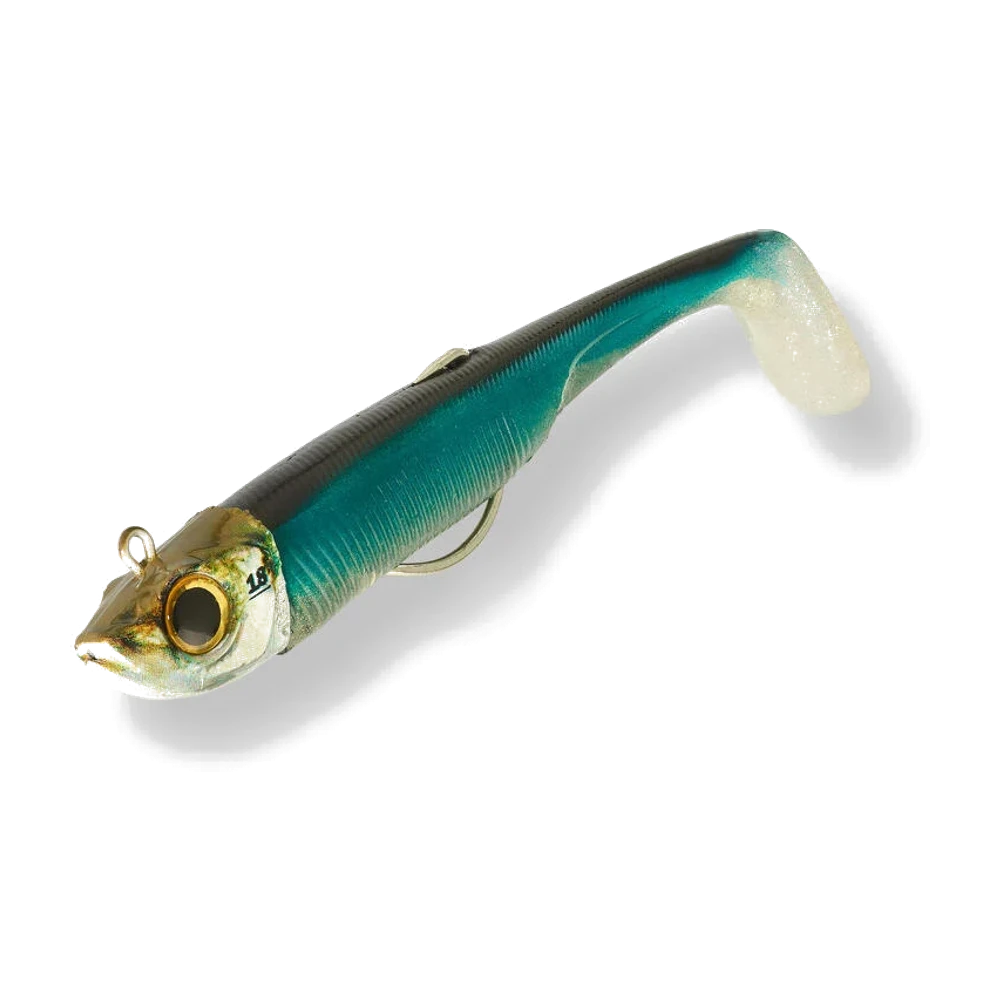
Caperlan Texan Shad: the shad you are willing to lose in the branches
The right lure in the wrong spot still catches nothing. CarnaFish spots the zone that works, from a single photo.
There is a moment every soft plastic angler knows: you spot a perfect spot — a drowned tree, a pile of branches, a margin carpeted with stumps — and you do not fish it. Not because you do not know how, but because you know you are going to leave three lures in there, and those three lures cost the price of a tank of fuel.
The result is always the same: you fish two metres off the spot, you work the open water, and the fish stay under the branches.
Caperlan's Texan Shad does not solve that problem with any particular technology. It solves it on price. It is a simple paddle-tail shad, sold in packs that cost a fraction of a Japanese lure, and that is exactly what you need to go and get fish where you used to refuse to go. So the real subject of this page is not the quality of the moulding: it is what having a lure you are willing to lose changes tactically.
What a "disposable" lure changes in how you fish
The cost of a lure changes your behaviour without you noticing. With a soft plastic at seven euros a piece, you keep a safety margin: you pass above the dead timber, you lift the rod too early, you give up on the margin after two hang-ups. Every one of those is a fish left uncaught.
With an entry-level shad, three things become possible:
- Fishing in real contact. You let the lure drop right to the bottom even when you know there are branches, because a loss of under a euro makes no difference to your day.
- Persisting. A cluttered spot often needs five or six passes from different angles. Nobody does that with an expensive lure.
- Testing sizes. Rigging a 15 cm to see, swapping it for an 11 cm ten minutes later, going back to the 15: that is tuning, and it takes stock to do it.
In return, do not expect premium finish. The plastic is firmer, the colours are bolder than realistic, and the tails take fewer fish before they tear. That is not a hidden defect, it is the deal.
The paddle tail and the body: what works, what could be better
The tail is a wide paddle on a thin stalk. That is the classic shad geometry, and it has the advantage of being forgiving: the paddle starts beating on the very first pulls, without needing a fast retrieve to get it going. That is valuable for zander, where most bites come on a drop or a slow pull.
The body is ribbed and fairly thick. Two practical consequences:
- It takes a Texas rig well, because the mass of plastic around the hook point holds it in place cast after cast.
- It folds properly on the take, which matters enormously with a Texas rig: if the body is too dense, the point does not come through on the hookset.
Its weak point is well known: the join between the body and the paddle stalk eventually gives out after several fish. A drop of superglue there, before you even use it for the first time, easily doubles the lure's working life.
Texas rigging, not a jig head
It is in the lure's name, and it is also its real reason for existing. On a standard jig head, this shad does the job but is nothing special against the competition. Rigged Texas-style, it becomes a margin tool.
The principle is covered in our Texas rig page, but here are the settings specific to this lure:
| Shad size | Texas hook | Weight | Context |
|---|---|---|---|
| 9 to 11 cm | Wide gap 3/0 to 4/0 | 3 to 7 g | Shallow margins, perch and zander |
| 12 to 13 cm | Wide gap 4/0 to 5/0 | 7 to 14 g | Drowned trees, 2 to 5 m of water |
| 14 to 15 cm | Wide gap 5/0 to 6/0 | 10 to 21 g | Pike, heavy timber, current |
Two weighting options: a screw-in weight keeps the whole thing compact for tight branches, while a sliding bullet ahead of a bead lets the lure glide longer on the drop — the one to favour on apathetic zander.
The retrieve, step by step
- Cast right onto the obstruction, not beside it. That is what a Texas rig is for: aim at the stump, the trunk, the pile of branches.
- Let it sink on a semi-tight line, following the drop with the rod tip. Count the seconds: most zander bites come here, and they usually show as a line that simply moves sideways or stops too early.
- Two short rod-tip pulls, no big sweeps. A pull of 30 to 50 cm is enough to make the paddle beat and lift the lure off the bottom.
- Let it settle and wait two to four seconds, line under control.
- When it hangs up, do not force it. Release the tension, let the lure drop back on its own, then start again gently: a properly rigged Texas comes free nine times out of ten.
- Strike hard and long. You have to drive through the plastic before you reach the fish's jaw: a soft hookset is the number one cause of dropped fish on a Texas rig.
On the water: fishing a Texas rig in dead timber, stop your retrieve the moment you feel the first contact with a branch, count two seconds, then start again. A lure that tumbles softly over the obstruction after a pause draws far more takes than one ripped off it with the rod tip — and it hangs up a great deal less.
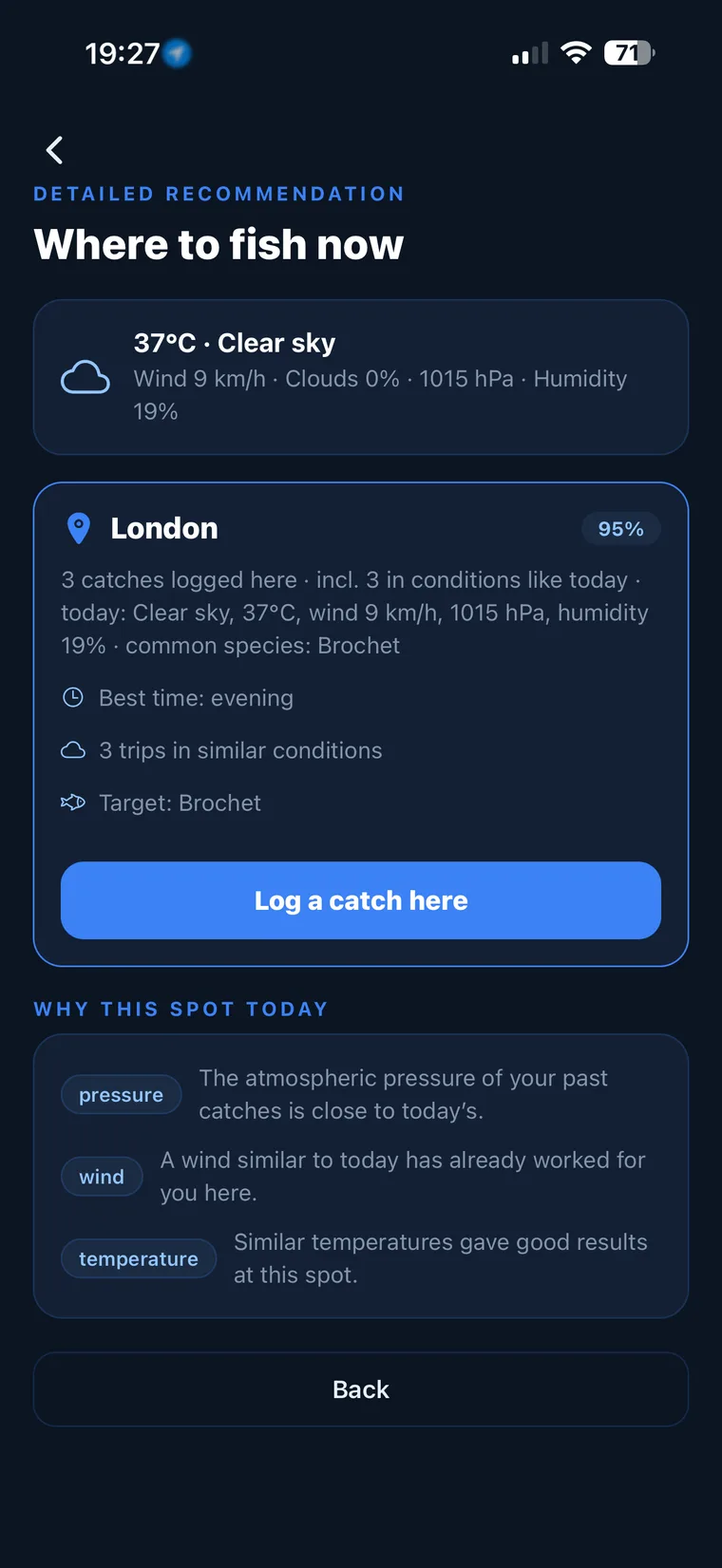
Not sure what to tie on?
Photograph your spot: CarnaFish reads the scene, cross-checks the conditions and gives you the zone, the lure and the retrieve. Free on iOS and Android.
Where it is good, and where it is not
Its windows:
- Snaggy ground: dead timber, stumps, rip-rap, dense weed. That is its reason for existing.
- High-volume searching: when you have hundreds of metres of margin to cover and you are inevitably going to leave tackle behind.
- Learning zander fishing, where breakages and losses are part of the apprenticeship. Our zander guide for beginners covers which spots to attack first.
Its limits:
- Very clear water and educated fish. The coarser finish and bold colours show, and a finer shad will get through better.
- Fine vertical fishing. The slightly firm plastic makes the lure less alive on micro-movements.
- Durability. Count on one to three decent fish per lure on pike. That is consistent with the price, but you need to stock up.
Texan Shad or a premium shad
A Westin Shad Teez or a Keitech Easy Shiner 4 play in another category: softer plastic, a more detailed action, finishes that stand up to inspection in clear water. On finesse zander fishing in a clear reservoir, on a jig head, they win without argument.
But that is not the same fishing. The Texan Shad does not compete on finesse: it gives you access to spots you do not fish with the others, because the economics change. Premium for open, clear water; the Caperlan for everything cluttered.
And if you are unsure whether to fish the cluttered margin or the open water when you reach the bank, CarnaFish analyses a photo of the spot and answers.
Key takeaways
- The real point of this shad is its price: it opens up the cluttered spots you used to avoid.
- It is designed for Texas rigging, not for a standard jig head.
- A drop of glue at the base of the tail before first use doubles its working life.
- A long, firm hookset is compulsory: you have to drive through the plastic.
- Not a clear-water or finesse lure — it is a tool for snaggy ground.
FAQ
Is the Caperlan Texan Shad as good as a branded soft plastic?
Not on finish or durability: a premium shad takes more fish and swims more finely in clear water. It is worth it exactly where you are going to lose tackle, meaning dead timber, stumps and rip-rap.
What size Texas hook should I use?
A wide gap 3/0 to 4/0 for the 9 to 11 cm sizes, 4/0 to 5/0 up to 13 cm, and 5/0 to 6/0 for the biggest pike models. The hook should come out just above the lure's back, without deforming it.
Why does the tail come off after a few fish?
The join between the body and the paddle stalk is the weak point of most entry-level shads. A drop of superglue there before use fixes it in the vast majority of cases.
Can it be fished on a standard jig head?
Yes, it swims properly. But in that role it has no particular advantage over the competition, and you lose its reason for existing. Keep it for the Texas rig and cluttered ground.
Which colour for zander?
Natural roach or bleak when the water is clear, solid white or chartreuse as soon as visibility drops below a metre. On this type of lure, the weight you use influences the result more than the colour.
Does it work for pike?
Yes, in the 13 to 15 cm sizes, on a 5/0 or 6/0 hook and behind a wire or titanium leader. Stock up: a decent pike often wrecks the lure in a single fish.
The full zander lure guideSeason-by-season strategy: which family of lure, when, and why.Go from theory to fish
CarnaFish reads your spot from a photo and gives you the game plan: zone, lure, retrieve. Free on iOS and Android.