Texas rig: the only way to fish the heart of the cover
Before tying this one on, it helps to know if the spot actually calls for it. CarnaFish reads the scene from a photo.
The best bass and pike spots are exactly the ones you cannot fish: sunken branches, dense weed, lily pads, stumps. A lure with trebles fouls up on the first cast.
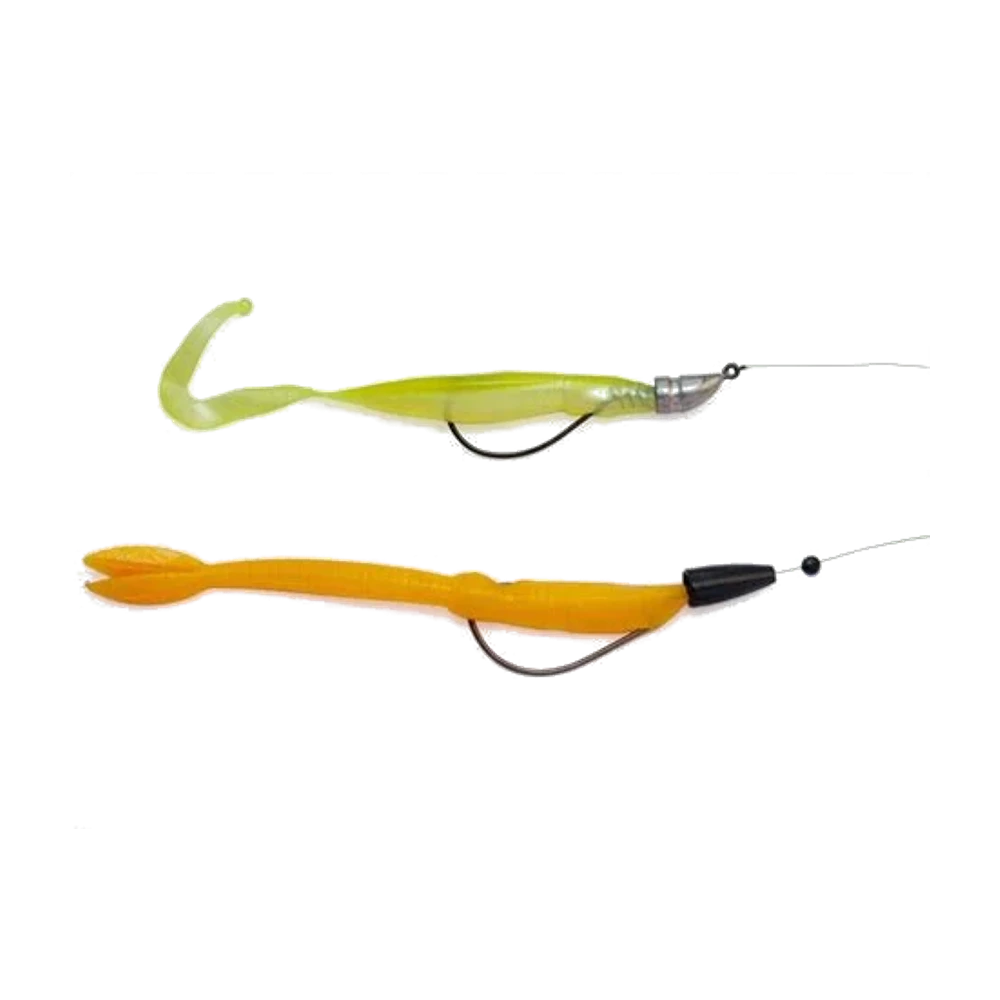
The Texas rig solves that with one simple idea: the hook point is buried inside the body of the bait. It only comes out on the hookset, when the pressure drives it through the plastic.
Rigging it, step by step
This rig tolerates no approximation. A badly rigged Texas swims crooked and snags anyway.
- Push the hook into the nose of the bait, 5 to 8 mm, then bring the point back out.
- Rotate the hook 180 degrees and slide it up until the eye sits flush with the nose.
- Measure the position: lay the hook alongside the bait to see where the point has to come out.
- Push the point through the body at that spot, then ease it slightly back to bury it just under the skin of the plastic.
- Check that the bait is straight. If it is bent, it will spin on itself on the retrieve.
On the water: a Texas-rigged bait with a bend in it is the number one cause of a blank day on this rig. Hold it out horizontally in front of you before casting: it has to be perfectly straight. If it is not, start again — it takes ten seconds.
The weight: sliding bullet or nothing
With a tungsten bullet, the bait sinks fast and will punch through dense vegetation or fish deep. Tungsten beats lead: more compact for the same mass and far more sensitive on bottom contact.
| Weight | Use |
|---|---|
| 3.5 to 5 g | Shallow margins, sparse vegetation |
| 7 to 10 g | General use, 2 to 4 m |
| 14 to 21 g | Dense vegetation, deep water, punching |
Weightless, the bait sinks very slowly and horizontally. That is the rig for stick worms in shallow water, where the slow fall is precisely the attraction.
A bobber stop (a small blocking bead) ahead of the bullet stops it sliding. Use it in very dense vegetation, so the whole thing stays compact and punches through as one unit.
The retrieve
The Texas is fished slowly, in contact.
- Cast into the cover, not next to it. That is the whole point of the rig.
- Let it sink while watching the line — a lot of bites come on the drop.
- Two short pulls of 20 to 30 cm, rod tip up.
- Let it drop back on a semi-tight line.
- Wait three to five seconds before starting again.
The hookset, the critical moment
This is where the Texas differs from every other rig. The point is buried: it takes force to drive it through the plastic and then into the jaw.
Do not strike on first contact. Drop the rod tip towards the fish, let it take the bait for a second, then set hard and long, rod up and back.
A soft hookset only brings the point halfway out and the fish comes off during the fight. It is the commonest beginner's mistake on this rig.
Your tackle has to keep up: a powerful rod (MH minimum) and braid are necessary. Monofilament stretches and absorbs the hookset; on a Texas rig, that is disqualifying.
Not sure what to tie on?
Photograph your spot: CarnaFish reads the scene, cross-checks the conditions and gives you the zone, the lure and the retrieve. Free on iOS and Android.
The right baits
- Creature baits and craws like the Crazy Flapper, for rocky bottoms and stumps.
- Stick worms in the weightless version, for shallow vegetation.
- Shads rigged Texas style, to swim straight through weed beds.
- Big worms for slow summer fishing in deep water.
Where nothing else will do
- Dense weed and lily pads, where no other rig gets through.
- Sunken branches and stumps, the big-fish spots par excellence.
- Cluttered margins that other anglers avoid, and which therefore see little pressure.
- Punching: driving through a mat of floating vegetation with a heavy bullet.
Our beginner's guide to bass fishing covers the spots where the Texas rig is the only answer. And if you do not know what bullet weight to fit in front of a weed bed, CarnaFish analyses a photo and answers.
Key takeaways
- The point buried in the plastic lets you cast straight into the cover.
- Check that the bait is perfectly straight before every cast.
- Tungsten rather than lead: more compact and more sensitive.
- Set hard and long, after waiting a second. A soft hookset loses fish.
- MH rod minimum and braid are compulsory.
FAQ
How do you rig a bait Texas style?
Push the hook into the nose for 5 to 8 mm, bring the point out, rotate the hook 180 degrees and slide it up until the eye is flush with the nose. Then work out where the point should exit, push it through the body, and bury it just under the skin of the plastic.
Why does my Texas-rigged bait spin?
Because it is rigged with a bend in it. Hold it horizontally before casting: it has to be perfectly straight. A slightly arched bait rolls on the retrieve and puts twist in your line too.
How do you set the hook on a Texas rig?
Drop the rod tip, let the fish take the bait for a second, then set hard and long, up and back. The point has to drive through the plastic before it reaches the jaw, and that takes force.
What bullet weight should I choose?
3.5 to 5 g in shallow margins, 7 to 10 g for general use down to 4 m, 14 to 21 g in dense vegetation or to punch through a floating mat. Tungsten is preferable to lead at the same weight.
Do I need a bobber stop?
In very dense vegetation, yes: it stops the bullet sliding and lets the whole rig punch through as one unit. In open water, leaving the bullet free gives a more natural presentation on the drop.
Can you fish a Texas rig on monofilament?
It is not advisable. Mono stretches and absorbs a large part of a hookset that has to be powerful enough to drive the point out. Braid and an MH rod minimum are necessary.
The full bass lure guideSeason-by-season strategy: which family of lure, when, and why.Go from theory to fish
CarnaFish reads your spot from a photo and gives you the game plan: zone, lure, retrieve. Free on iOS and Android.