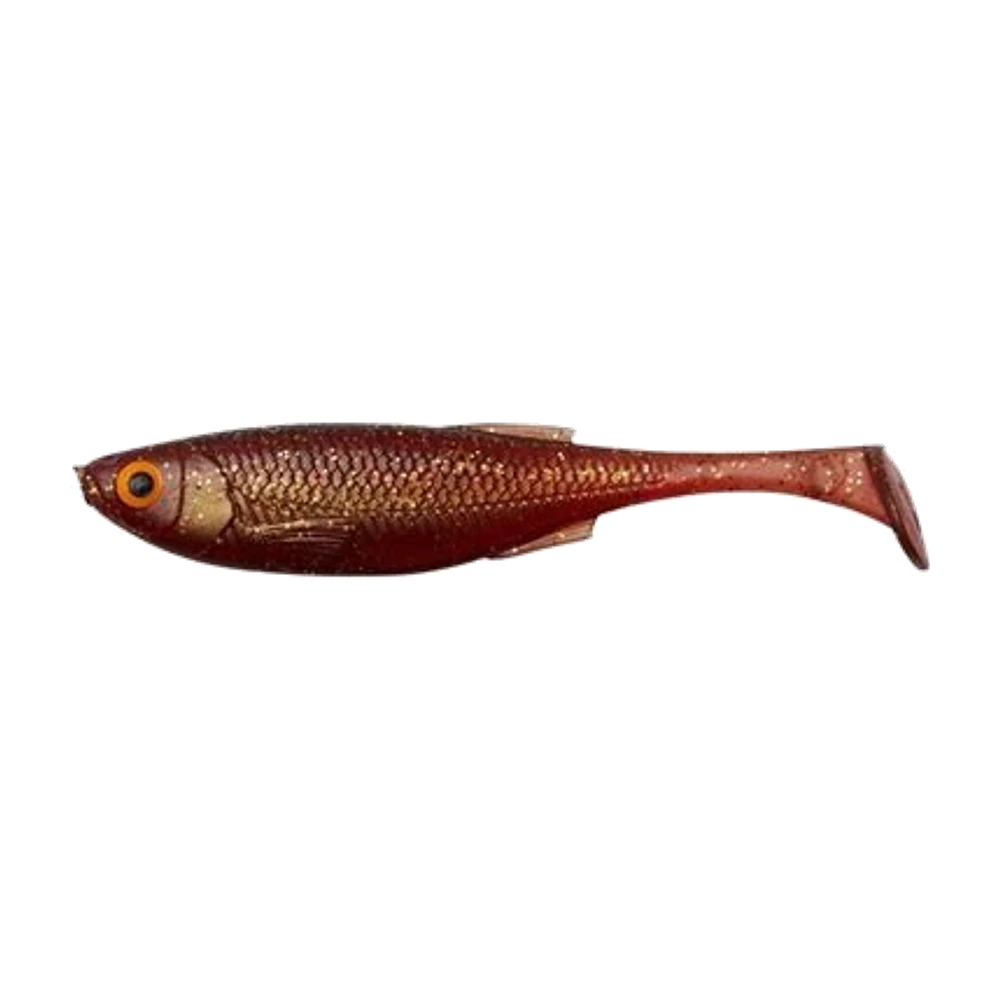
Savage Gear Craft Shad: the shad you dare to throw into the branches
Before tying this one on, it helps to know if the spot actually calls for it. CarnaFish reads the scene from a photo.
There is one kind of fishing almost nobody does properly, and the reason is not technical: it is the price. The best zander and perch spots are in sunken trees, rock armour, branches submerged at the foot of a bank. They are also the places where you lose three lures an hour.
So we cheat. We fish fifty centimetres from the snag instead of in it, we go lighter the moment something scrapes, and we give up eighty per cent of the fish on the spot.
The Craft Shad solves this from the right end: a soft shad good enough to catch fish seriously, and cheap enough that you stop counting. That is not a marketing line, it is a fishing condition. A lure you do not dare commit is useless.
A slim tail: little vibration, plenty of start-up
Do not get this shad wrong. Its tail is small and slim relative to the body. Two opposite consequences:
- It puts out little vibration. Do not count on it to call a fish from a distance in dirty water. This is not a big-paddle shad.
- It starts at almost zero speed. The tail is already beating while the lure is barely moving. That is exactly what you need on a cold-water zander or a stationary perch refusing anything quick.
The body itself is not very streamlined and relatively firm. It does not deform on the cast, it sits well on the hook, and it takes several fish before tearing at the collar.
What you lose in material quality against premium soft plastics, you get back in the number of casts you genuinely commit into the hard stuff. That is a deliberate trade.
The weight / depth table
The jig head is more than half the fishing. Here are starting points, to correct according to the current.
| Depth | Jig head | Shad size |
|---|---|---|
| 1 to 2 m | 5 to 7 g | 7 to 8 cm |
| 2 to 4 m | 7 to 10 g | 8 to 10 cm |
| 4 to 6 m | 10 to 14 g | 10 to 12.5 cm |
| 6 to 8 m, or marked current | 14 to 20 g | 10 to 12.5 cm |
The reliable marker: your shad should touch bottom three to five seconds after the cast. Faster and you are too heavy and missing bites on the drop. Slower and you lose contact and no longer know where your lure is.
Around snags, two rigging options:
- Round jig head with an exposed hook for clean bottoms and straight retrieves.
- Weighted Texas rig as soon as you get into the branches. You lose a little hooking efficiency, you gain the ability to fish where you should. Our page on the Texas rig covers hook choice.
The retrieve: two rhythms, no more
Zander fishing with this kind of shad comes down to two sequences, and an obsession with bottom contact.
- Cast and let it sink on a half-tight line, following the braid with your eyes. A bite on the drop is visible: the line stops dead or moves sideways.
- On bottom contact, lift the rod 30 to 50 cm only, slowly — not a sharp snap.
- Give slack back and let it drop to contact again. Count: two to three seconds of fall.
- Repeat, winding in just the slack between each pull.
The second sequence, for perch and for active zander: the slow straight retrieve just off the bottom. You retrieve continuously, very slowly, letting the shad touch bottom every five or six turns of the handle. That covers far more ground and lets you find the fish before working on them.
On the water: on a pull, never lift the rod more than 50 cm. A wide pull sends the shad a metre off the bottom, and a stationary zander will not raise its head for that. The fish comes for a lure that barely lifts off and falls back almost on the spot.
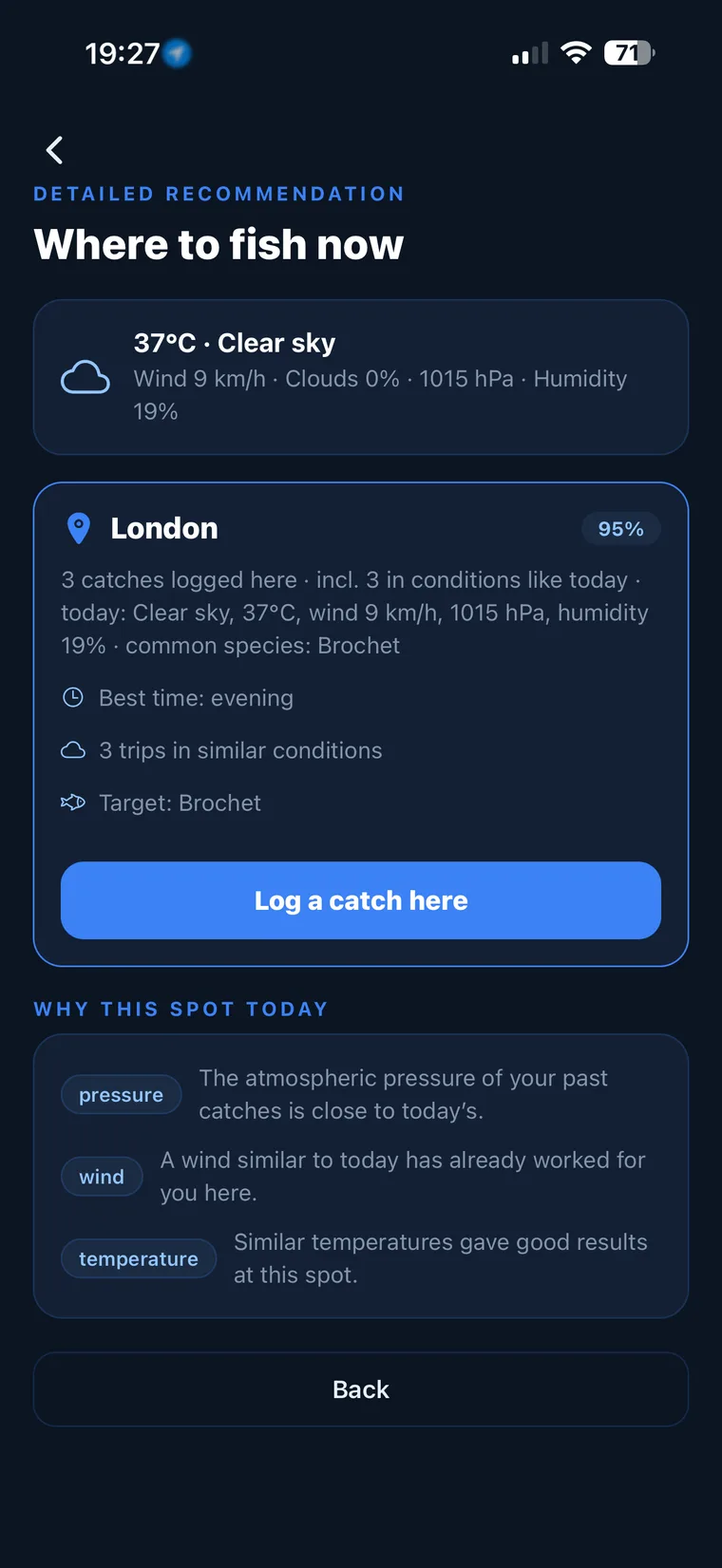
Not sure what to tie on?
Photograph your spot: CarnaFish reads the scene, cross-checks the conditions and gives you the zone, the lure and the retrieve. Free on iOS and Android.
Where it makes the difference, and where it disappoints
Its windows:
- Sunken trees and rock armour, because you can finally go in properly.
- Cold water and slow fish, thanks to a tail that starts at almost zero speed.
- High-volume casting days, searching a bank or drifting from a boat.
- Perch vertically or on a slow straight retrieve in the small sizes rigged light.
Its limits:
- Very stained or heavily coloured water: the vibration is too discreet for the fish to locate it. Switch to a wide-tailed shad, or a lure with a pronounced vibration.
- Strong current: the unstreamlined body gets pinned and the tail locks up beyond a certain flow speed.
- Big pike: this is neither the size nor the material for it.
Craft Shad or a premium shad
A Keitech Easy Shiner 4 is softer, saltier, with a swim that starts earlier still and much better acceptance in the mouth on a wary fish. On a clean spot, on a zander that refuses and spits, that is the one to tie on.
A Fox Rage Zander Pro Shad sits between the two, with a slimmer profile cut for zander.
The Craft Shad does not try to beat them on their own ground. It wins on a different parameter: the number of casts you dare make into the hard stuff. In practice, a well-thought-out box contains both — the premium soft plastic to work an identified fish, the Craft Shad to comb the snags and find where it is.
Our beginner's guide to zander lure fishing goes over head weights spot by spot. And if you are unsure which weight to tie on facing a cluttered bank, CarnaFish analyses a photo of the spot and answers.
Key takeaways
- A slim tail: little vibration, but a start-up at almost zero speed that is ideal in cold water.
- The real asset is economic: it lets you genuinely fish the snags.
- Set your head weight so the lure touches bottom three to five seconds after the cast.
- Short pulls of 30 to 50 cm maximum, never wide ones.
- In heavily stained water its discretion becomes a fault: take a wide-tailed shad.
FAQ
What jig head should I use on a Craft Shad?
5 to 7 g down to 2 m, 10 g around 3-4 m, 14 to 20 g beyond that or in current. The reliable marker is the sink time: aim for three to five seconds to bottom contact.
Is it suitable for zander in cold water?
Yes, that is one of its best windows. Its slim tail starts beating while the lure is barely moving, which allows very slow retrieves without the shad going dead.
Can it be Texas-rigged?
Yes, and it is recommended as soon as you fish in branches. You lose a little hooking efficiency compared with an exposed-hook jig head, but you reach the spots that genuinely hold the fish.
Is it durable enough?
It takes several fish before tearing at the collar, which is fair for its category. A dab of glue at the front of the body on the jig head noticeably extends its life.
Does it work in coloured water?
Less well. Its slim tail puts out little vibration, so the fish locates it badly when visibility drops. In that case, switch to a wide-tailed shad or a vibrating lure.
What size should I choose for perch?
The 5 to 8 cm sizes on a light 5 to 10 g jig head, on a slow straight retrieve just off the bottom or fished vertically. The bigger sizes are aimed at zander.
The full zander lure guideSeason-by-season strategy: which family of lure, when, and why.Go from theory to fish
CarnaFish reads your spot from a photo and gives you the game plan: zone, lure, retrieve. Free on iOS and Android.