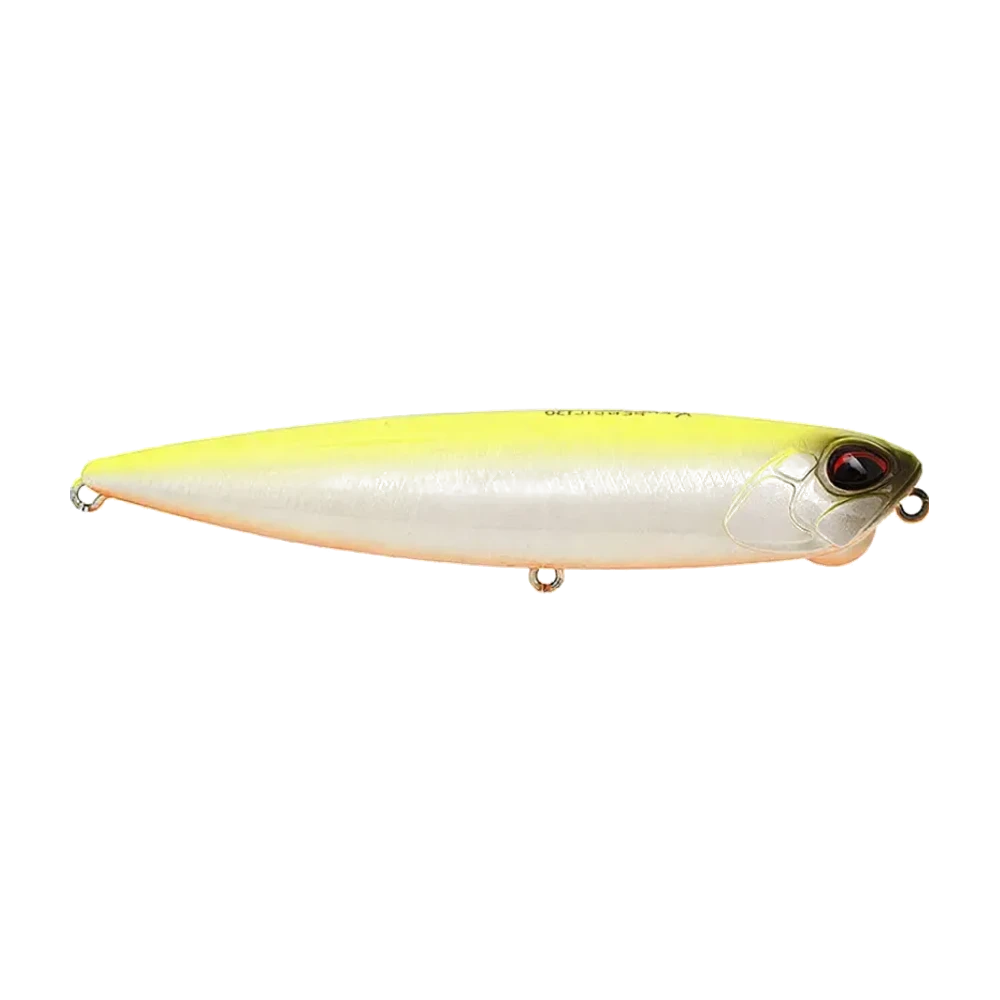
DUO Realis Pencil 130 SW: the topwater stickbait for sea bass
The right lure in the wrong spot still catches nothing. CarnaFish spots the zone that works, from a single photo.
A stickbait forgives almost nothing: fish it wrong and it just tracks straight ahead with zero life, and no bass will look twice. Fish it right and it's one of the most exciting ways to catch a fish, because the strike happens right in front of you, on the surface, often a rod-length away. The Realis Pencil 130 SW from DUO is one of the few saltwater stickbaits that forgives a slightly rough retrieve while still rewarding good technique — which is exactly why it earns a permanent spot in a serious bass box.
A walking bait built for saltwater conditions
Unlike a freshwater stickbait, the Pencil 130 SW has to cover distance: cast far, shrug off salt, and stay stable when the wind picks up over a beach or a rocky point. Its internal weight-transfer system (a ball bearing that slides rearward on the cast) adds several extra metres compared with a standard stickbait, without disturbing the swim once it's working. That lets you cover a rocky plateau or a beach bar without wading in close.
At 13 cm and nearly 32 g, the profile reads as a decent-sized baitfish — young mackerel, garfish, small mullet — exactly what a bass is hunting when it's actively working the surface rather than picking off fry.
Walking the dog, step by step
- Hold the rod low, almost skimming the water, tip pointed at the lure.
- Use short, sharp wrist snaps, not arm pulls. It's wrist rhythm, not force, that makes the lure zigzag side to side.
- Take up slack between snaps without ever pulling the line fully tight — a stickbait needs some slack to slap from one side to the other.
- Deliberately break the rhythm every few seconds: a one-second pause, then two quick snaps. That break is often exactly when the strike comes.
Field rule: if your stickbait is tracking straight instead of zigzagging, you're pulling too hard with the arm and not enough with the wrist. Slow down before you blame the lure.
When to fish it: light and tide come first
The Pencil 130 SW does its best work when bass are actively hunting on the surface — typically at dawn and dusk, or during a baitfish blitz. As with every bass lure, tide sets the window: a stickbait thrown on a slack high tide, with no current to scatter baitfish, works far less often than the same cast during a flood or ebb. Our guide to sea bass lure fishing covers coefficients and the best windows if you're new to this side of the game.
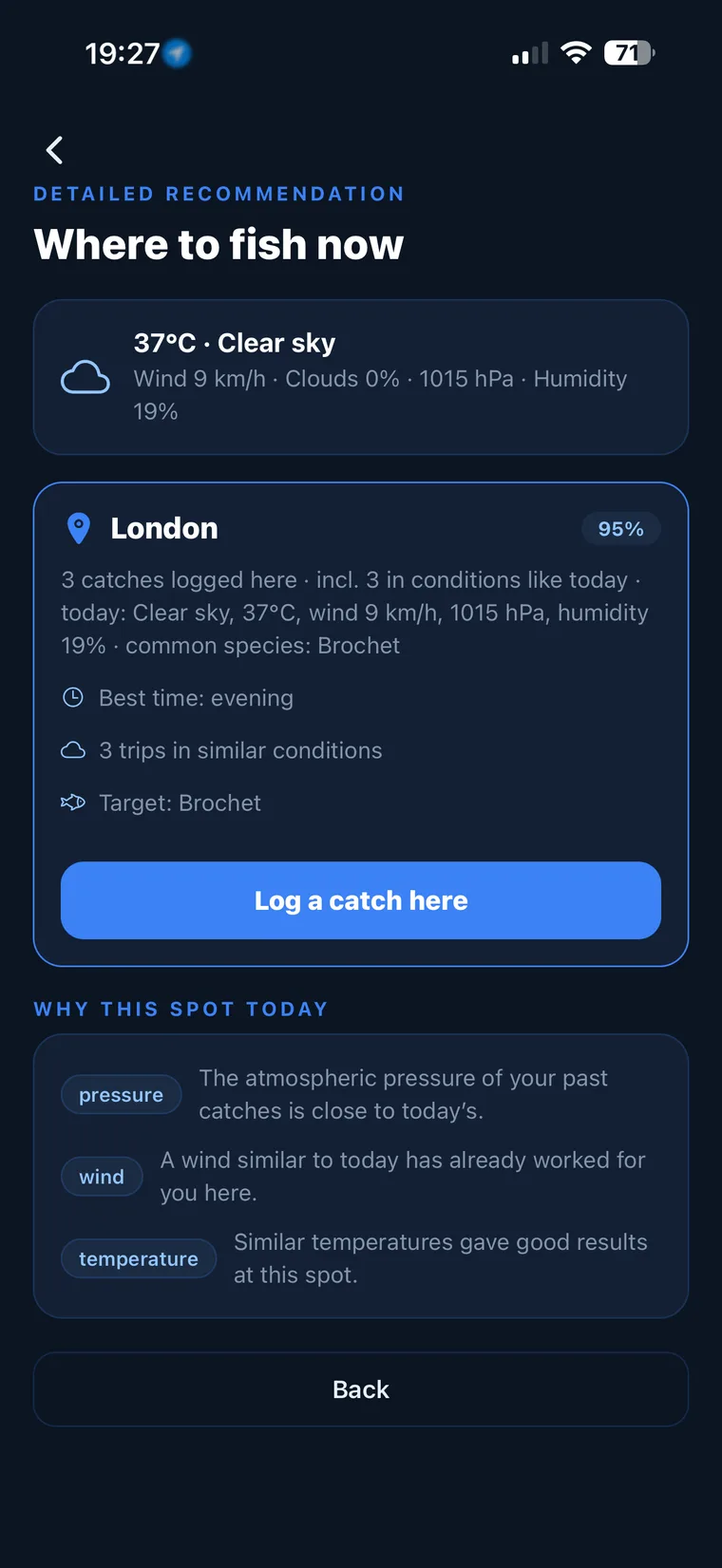
Not sure what to tie on?
Photograph your spot: CarnaFish reads the scene, cross-checks the conditions and gives you the zone, the lure and the retrieve. Free on iOS and Android.
The rigging detail that prevents failure
In saltwater, the number one enemy isn't the fish, it's corrosion. Split rings and the snap swivel need to be genuine stainless steel, not just coated — a rusted nose ring will kill a stickbait's action within a few outings. A snap with a wide gate also makes fast colour changes easier when the light shifts mid-blitz and you need to switch quickly.
Three mistakes that kill the action
- A rod that's too stiff: walking the dog needs a tip that absorbs part of the motion. A standard 10-40 g bass rod handles this well.
- Braid that's too thick: past 27 lb, drag through the water dampens the zigzag. Stay light — abrasion resistance comes from the fluoro leader, not the braid.
- Too fast a retrieve: the Pencil 130 SW zigzags better at a moderate pace than on a fast straight retrieve, where it eventually stabilises and loses its whole point.
Choosing the right lure never replaces reading the spot and the tide — that's exactly why CarnaFish exists: it reads a photo of your spot against the current conditions and tells you when and where a topwater retrieve is actually worth trying, instead of casting one blind.
If bass won't come up to the surface (flat calm, bright sun), a floating minnow like the Tide Minnow Slim takes over just under the surface — a natural next step rather than forcing a lure that doesn't fit the moment.
Key takeaways
- 13 cm, 31.6 g: a respectable baitfish profile built to cast far thanks to its internal moving weight.
- Walk the dog with the wrist, break the rhythm with pauses, never let it track straight.
- Best windows: flood and ebb tide, dawn and dusk, active surface blitzes.
- Split rings and swivel must be genuine stainless; rinse in fresh water after every trip.
FAQ
Is the Realis Pencil 130 SW beginner-friendly?
Yes, as long as you practise the motion first on grass or calm water: the wrist action needs building before you can rely on strikes to tell you it's working. Its casting stability helps a lot, unlike lighter stickbaits that struggle in any wind.
What rod works best for this stickbait?
A standard 2.40-3.00 m bass rod rated 10-40 g, with a tip soft enough to absorb the wrist snaps. Too stiff a rod kills the zigzag and tires your wrist for nothing.
Do you need a wire leader for sea bass?
No, sea bass don't have teeth sharp enough to be a real threat to properly sized braid or fluoro. A 30-40 lb fluorocarbon leader is more than enough, and far less visible than wire.
When should I fish the Pencil 130 SW instead of a minnow?
Whenever you see surface activity or fish feeding at dawn/dusk. On a flat, quiet sea with no visible activity, a minnow like the Tide Minnow Slim, running just under the surface, usually draws more strikes.
Why won't my stickbait zigzag properly?
Almost always the retrieve is too much pull and not enough wrist: the line stays tight instead of keeping a bit of slack between snaps. Slow down, shorten the motions, and let the lure breathe.
What tide is best for fishing this lure?
Favour the flood and ebb, when current is moving and pushing baitfish toward the surface. Slack high and low tide are usually calmer and less productive for this kind of retrieve.
The full sea bass lure guideSeason-by-season strategy: which family of lure, when, and why.Go from theory to fish
CarnaFish reads your spot from a photo and gives you the game plan: zone, lure, retrieve. Free on iOS and Android.