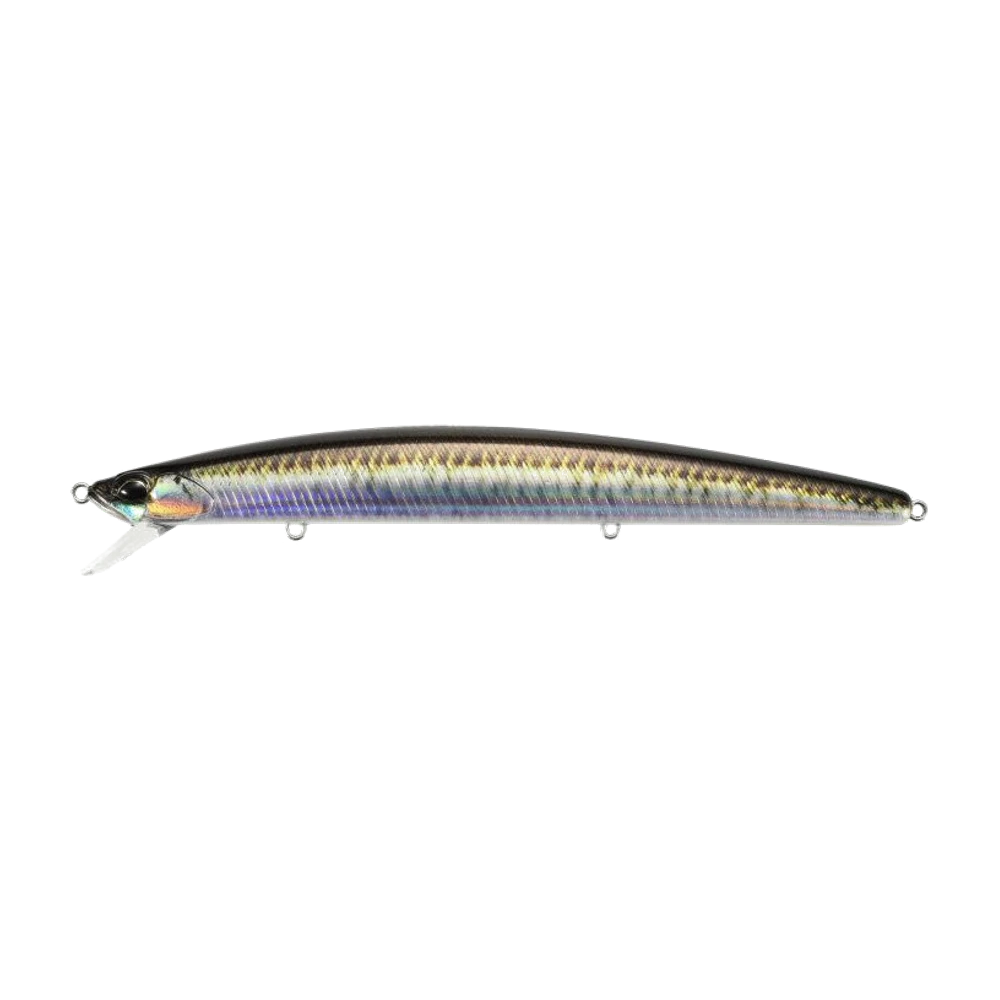
DUO Tide Minnow Slim: the floating jerkbait that covers the whole beach
Not sure this lure fits YOUR spot today? CarnaFish tells you in 10 seconds, from a photo.
On a beach or a jetty, there are days when bass want a noisy topwater lure, and days when they'll refuse anything that makes a splash. That's where the Tide Minnow Slim earns its keep: a slim profile, a subtle swim just under the surface, and casting range that a standard lipped minnow simply can't match, because it has none of the aerodynamic drag a bib creates. It has become one of the true essentials of light surfcasting, and not by accident.
Running depth and picking a size
The Tide Minnow Slim comes in several lengths (90, 140, 175, 200 mm depending on the range), but the 140 mm model is the most versatile starting point: 14 cm, 18-19 g, running between 0.6 and 1.2 m depending on retrieve speed. That's exactly the water column where bass most often patrol close to shore — just under the wash, where baitfish get pushed around.
With no lip, its swim depends mostly on body shape and internal weight distribution: retrieve fast and it digs deeper with a stronger vibration; keep it slow and straight and it stays high, rolling gently.
Retrieves: straight line and twitch
- Slow straight retrieve with short pauses: the baseline for scouting unfamiliar water. The body roll alone is often enough to trigger a strike with no extra input needed.
- Sharp twitching: two or three firm rod-tip snaps, then a one- to two-second pause. That break in rhythm reads as a wounded baitfish and pulls strikes from the wariest bass.
- Stop and go: useful in current, where letting the flow work the lure between snaps does most of the job for you.
Field rule: if the lure isn't kicking within the first few feet of the retrieve, your speed is too slow for this model — speed up slightly before writing it off.
Where it excels
The Tide Minnow Slim is built for surfcasting: barred beaches and gullies, wave-battered rocky points, harbour mouths. Its long casting range (the dense body makes up for having no lip) lets you reach the break lines where bass wait for baitfish tumbled by the surf, often well beyond the range of a lighter lure.
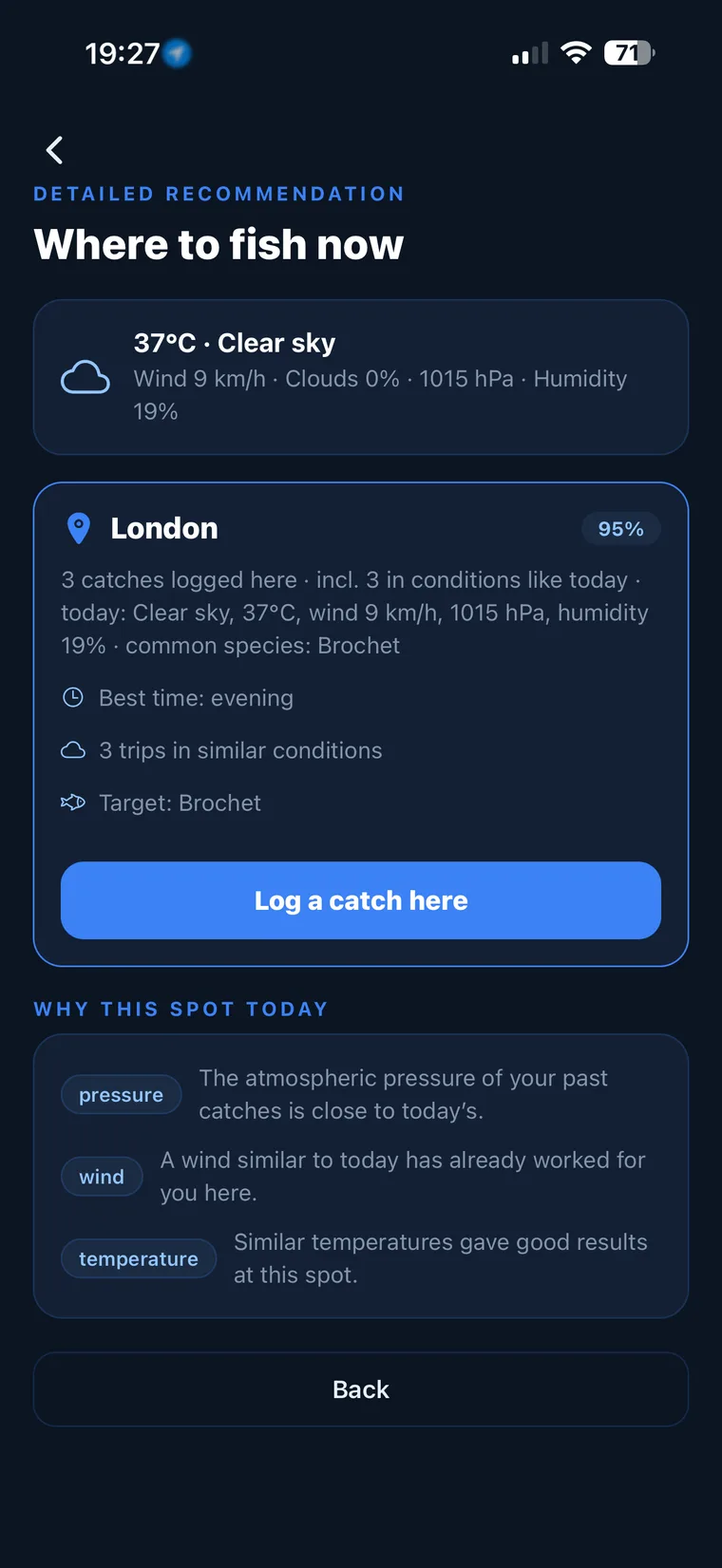
Not sure what to tie on?
Photograph your spot: CarnaFish reads the scene, cross-checks the conditions and gives you the zone, the lure and the retrieve. Free on iOS and Android.
Compared with a topwater stickbait
Unlike a stickbait such as the Realis Pencil 130 SW, the Tide Minnow Slim swims under the surface and stays effective even when the sea is too choppy, or too flat, for a walking-bait retrieve to work. In practice, most anglers switch between the two depending on what they see: stickbait on a visible blitz, minnow for scouting or when the surface offers no clues.
Three mistakes to avoid
- Leader too thick: past 25-30 lb fluoro, the swim loses amplitude. Stay light — that's more than enough strength for shore bass.
- Starting too fast: begin slow and build up gradually until you can clearly feel the lure kicking through the rod tip.
- Ignoring the tide: as with any bass lure, the flood and ebb remain the most productive windows. Our guide to sea bass lure fishing covers the coefficients worth watching.
The right minnow never replaces reading the spot and the moment — that's exactly what CarnaFish does: it reads a photo of your spot against the day's conditions and hands you a zone and a retrieve before you make your first cast.
Key takeaways
- 140 mm model, 18-19 g, running 0.6-1.2 m depending on speed.
- Dense lipless body: long, accurate casts even in a crosswind.
- Sharp twitch with pauses for wary bass, slow straight retrieve for scouting.
- Pairs well with a stickbait: minnow in chop or scouting, topwater on a visible blitz.
FAQ
What size Tide Minnow Slim should I start with?
The 140 mm model is the most versatile: big enough to cast far, subtle enough not to spook a wary bass. Smaller sizes (90-125 mm) work better in very clear water or on smaller baitfish.
How deep does the Tide Minnow Slim run?
Between 0.6 and 1.2 m depending on retrieve speed for the 140 mm model. Faster retrieves push it deeper; a very slow straight retrieve keeps it near the surface.
Should I twitch it or retrieve it straight?
Both work depending on how active the bass are. Start with a slow straight retrieve to scout; if strikes are scarce, switch to a sharp twitch with pauses to mimic a wounded baitfish.
Is this lure good for long-distance surfcasting?
Yes, that's one of its main strengths: the dense, lipless body improves ballistics and casts noticeably farther than a comparably sized lipped minnow.
How does it compare with a topwater stickbait for bass?
The minnow swims below the surface and stays effective even in chop or flat calm, while a stickbait needs a working topwater retrieve that mostly shines on a visible blitz or calmer water.
What leader diameter should I use?
A 25-30 lb fluorocarbon leader is plenty. Going heavier costs swim amplitude without any real strength benefit for shore bass fishing.
The full sea bass lure guideSeason-by-season strategy: which family of lure, when, and why.Go from theory to fish
CarnaFish reads your spot from a photo and gives you the game plan: zone, lure, retrieve. Free on iOS and Android.