Fox Rage Critter: the creature bait you fish over one square metre
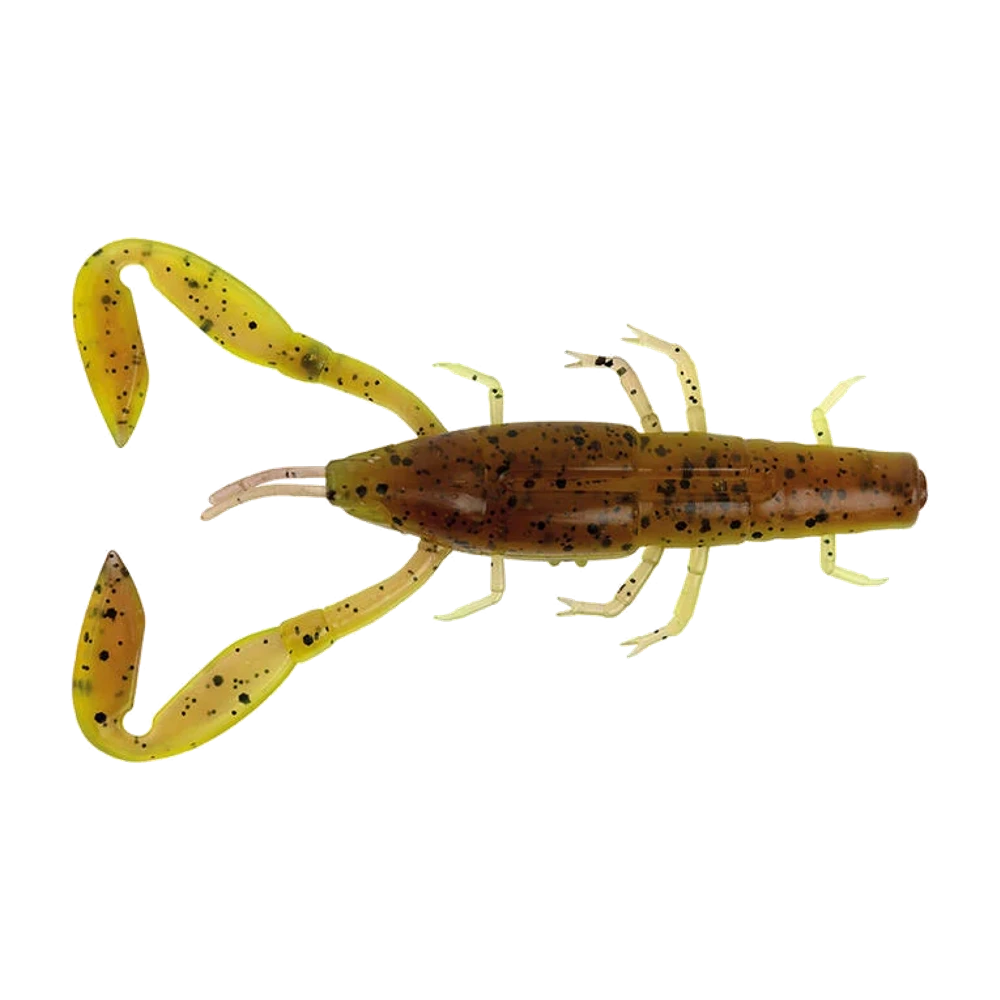
This lure shines under specific conditions. CarnaFish tells you in 10 seconds if today is one of them.
Some spots fit inside one square metre: the corner of a jetty, the base of a sunken willow, a lone boulder in the middle of sand. You know the fish is there, you get one pass at it, and any moving lure crosses the zone in two seconds.
That is exactly the problem a creature bait solves. The Critter is not built to cover ground: it is built to stay put and fake life while nothing moves forward. You drop it, you make it shiver, you wait. The fish eventually cracks — not because it saw a prey item go past, but because a prey item moved into its home and refuses to leave.
A profile that imitates nothing in particular
That is often seen as a flaw. It is actually the lure's main argument.
A shad imitates a fish, a craw imitates a crawfish. The Critter, with its stubby body, its side appendages and its fine claws, matches no identifiable prey. A fish that has refused three shads during the day has no reference point for refusing this one: it sees a mass that moves and does not flee.
Technically, three elements are at work:
- The flat side appendages, which catch water at the slightest movement and create a localised water displacement.
- The fine rear claws, soft enough to undulate on braid tension alone, without you moving the rod.
- A compact body, which lets it sit on a wide gap hook without the lure spinning around the shank.
The whole thing makes for a lure that is loud up close and invisible from a distance. It is not a searching tool, it is a closing tool.
Fishing without advancing: the retrieve
- Cast short and accurate. A creature bait is fished at ten metres, not forty. If you cannot place the lure at the foot of the cover, move to another spot.
- Let it sink on a semi-tight line, without fully controlling it. Plenty of bites come on the drop, but you also want the lure to fall roughly vertically.
- Once on the bottom, do nothing for five seconds. Genuinely nothing.
- Shake the rod tip on the spot, three or four small two-centimetre shakes, without moving the weight. The appendages work, the body stays where it is.
- Another five to ten second pause.
- Move it thirty centimetres with a gentle pull, and start the cycle again. A spot is worked in four or five cycles, not in one retrieve.
On the water: deliberately keep a slight belly in your line during the shakes. With tight braid, every movement of the tip drags the weight and you sweep the spot in thirty seconds. With two or three centimetres of slack, the same shake transmits nothing but vibration: the appendages work, the lure does not move a centimetre, and you hold the zone for two minutes.
Four rigs, four uses
| Rig | Weight | Situation |
|---|---|---|
| Texas rig on a 2/0 to 3/0 wide gap hook | 3 to 7 g bullet | Sunken wood, weed, cluttered margin |
| Ned rig, body trimmed short | 2 to 4 g head | Clean bottom, cold water, locked-up fish |
| Drop shot | 7 to 12 g weight | Fish off the bottom, vertical, drop-off |
| Jig or chatterbait trailer | Set by the host lure | Bulk up the silhouette and slow the fall |
The texas rig stays the default. For a clean texas rig on this kind of body, slide the hook in a centimetre, bring it out, rotate it, then bury the point just under the back without pushing through: the lure has to stay dead straight. A creature bait rigged crooked spins on itself and twists your line in three casts.
On the drop shot, rig it texas rather than nose-hooked if you are fishing against cover; on a clean bottom, a simple nose hook leaves the appendages more freedom.
The trailer role, often the best use
Plenty of anglers discover this kind of lure as a main bait and then drop it. Its other use, less obvious, is dressing a jig or a vibrating blade.
Two immediate benefits: the fall slows noticeably, which gives the fish more time to intercept, and the overall silhouette gains bulk without gaining weight. On a chatterbait retrieved slowly in cold water, that trail of appendages behind the blade often changes the bite count.
Trim the trailer to the length of the jig, no more: an over-long trailer generates short bites where the fish only grabs plastic.
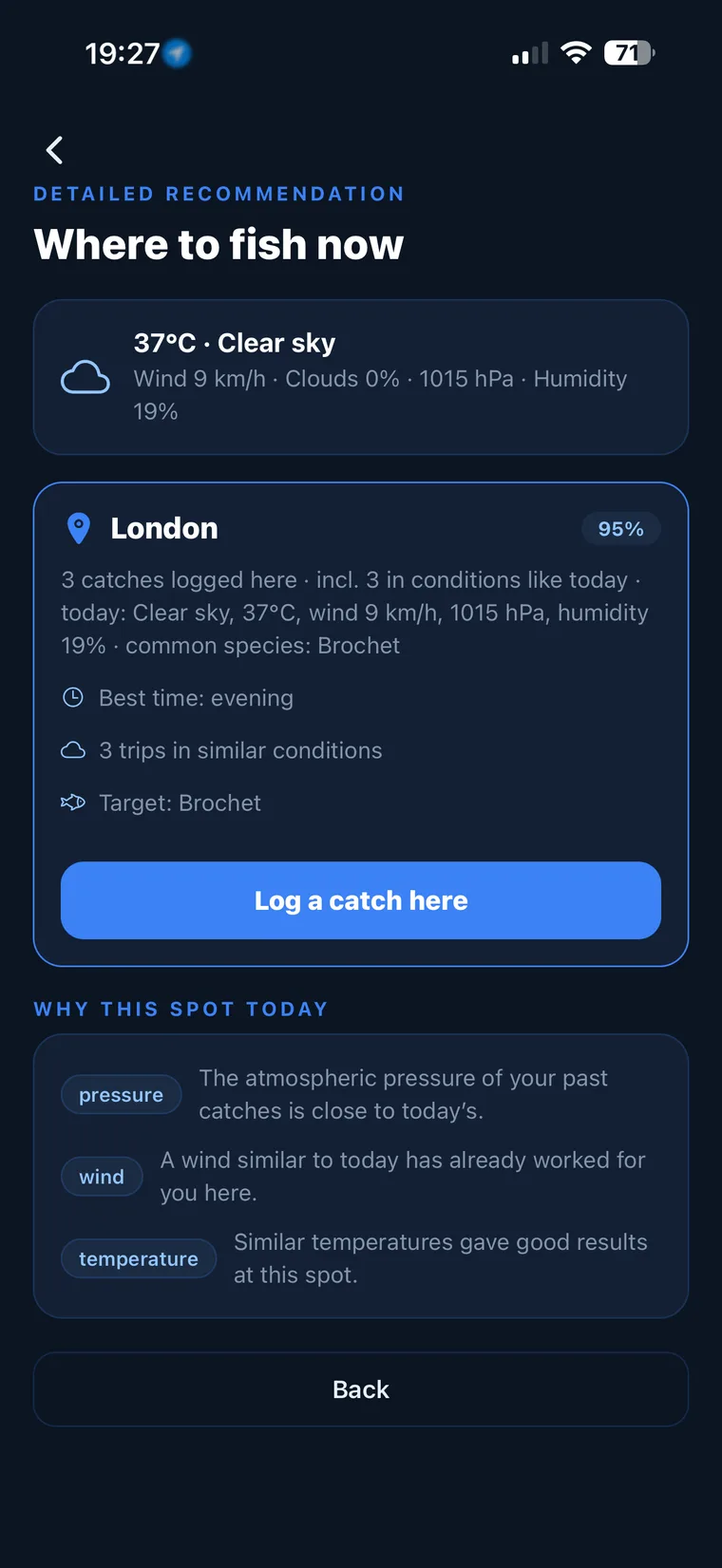
Not sure what to tie on?
Photograph your spot: CarnaFish reads the scene, cross-checks the conditions and gives you the zone, the lure and the retrieve. Free on iOS and Android.
Where it excels, where it has no business
Its windows:
- Precise, cluttered spots where a swimming lure cannot linger.
- The follow-up, when a fish has tracked a fast lure without biting: drop the Critter back in the same place thirty seconds later.
- Cold late-autumn and winter water, where only on-the-spot work is acceptable.
- Heavy fishing pressure, on waters where everybody is throwing shads.
Its limits:
- Searching. You cover five metres a minute. On a big unknown water, start with something else.
- Sustained current. The appendages flatten, the lure drifts, the effect disappears.
- Very murky water. The signal is too weak to be found; prefer a lure with a strong vibration.
Critter or classic craw
Against a Keitech Crazy Flapper, the difference is clear. The Crazy Flapper explicitly imitates a crawfish and its broad claws create strong resistance, almost swimming on the drop: it is happily fished on firm pulls. The Critter is more neutral, more discreet, and works better on the spot. Over a rocky bottom in spring, the outright crawfish takes the lead; on pressured fish or in midwinter, the Critter's ambiguity comes out ahead.
Against a pure drop shot soft plastic like the Fox Rage Fish Snax Dropshot, it is a question of bulk: the Fish Snax is a slim profile for difficult fish in open water, the Critter gives a wider silhouette better suited to bottom contact and cover.
For the rig itself, our texas rig page covers the hook placement step by step, and our beginner's guide to bass fishing places this kind of lure in the season. If you are torn between texas and drop shot when you arrive at a cluttered spot, CarnaFish analyses a photo of the spot and answers.
Key takeaways
- A closing lure for precise spots, never a searching one: five metres a minute at most.
- Work it with slack in the line so the appendages vibrate without the lure moving.
- The 2/0 to 3/0 wide gap texas rig is the default; the lure has to stay dead straight.
- Excellent jig or chatterbait trailer, trimmed to the length of the host lure.
- Useless in sustained current and in very murky water.
FAQ
What hook should I use to rig the Fox Rage Critter texas?
A wide gap hook from 2/0 to 3/0 depending on lure size. The gap has to stay clear despite the thick body, otherwise you bury the point in plastic and lose fish on the hookset.
How do you work a creature bait?
With short shakes on the spot, with a little slack in the line, broken up by five to ten second pauses. You move the lure thirty centimetres between cycles, no more.
Does the Critter work on a drop shot?
Yes, especially on drop-offs and on fish off the bottom. Rig it texas if you are fishing against cover, or simply nose-hooked on a clean bottom to give the appendages more freedom.
Which colour should I pick?
Brown, green-brown and craw patterns in clear water, especially over rock. Black-blue, or a spot of chartreuse on the claws, when the water colours up or under heavy cloud.
Can it be used as a trailer?
That is one of its best uses. Behind a jig or a vibrating blade, it slows the fall and adds bulk without adding weight. Trim it to the length of the host lure.
Should I set the hook immediately on the bite?
No. On a texas rig, let the fish move off for a second, drop the rod to come back into contact, then set firmly upward. Setting too early pulls the lure out of the mouth before the point has cleared the plastic.
The full perch lure guideSeason-by-season strategy: which family of lure, when, and why.Go from theory to fish
CarnaFish reads your spot from a photo and gives you the game plan: zone, lure, retrieve. Free on iOS and Android.