Googan Hummer Buzzbait: the holed blade that churns from the splashdown
The right lure in the wrong spot still catches nothing. CarnaFish spots the zone that works, from a single photo.
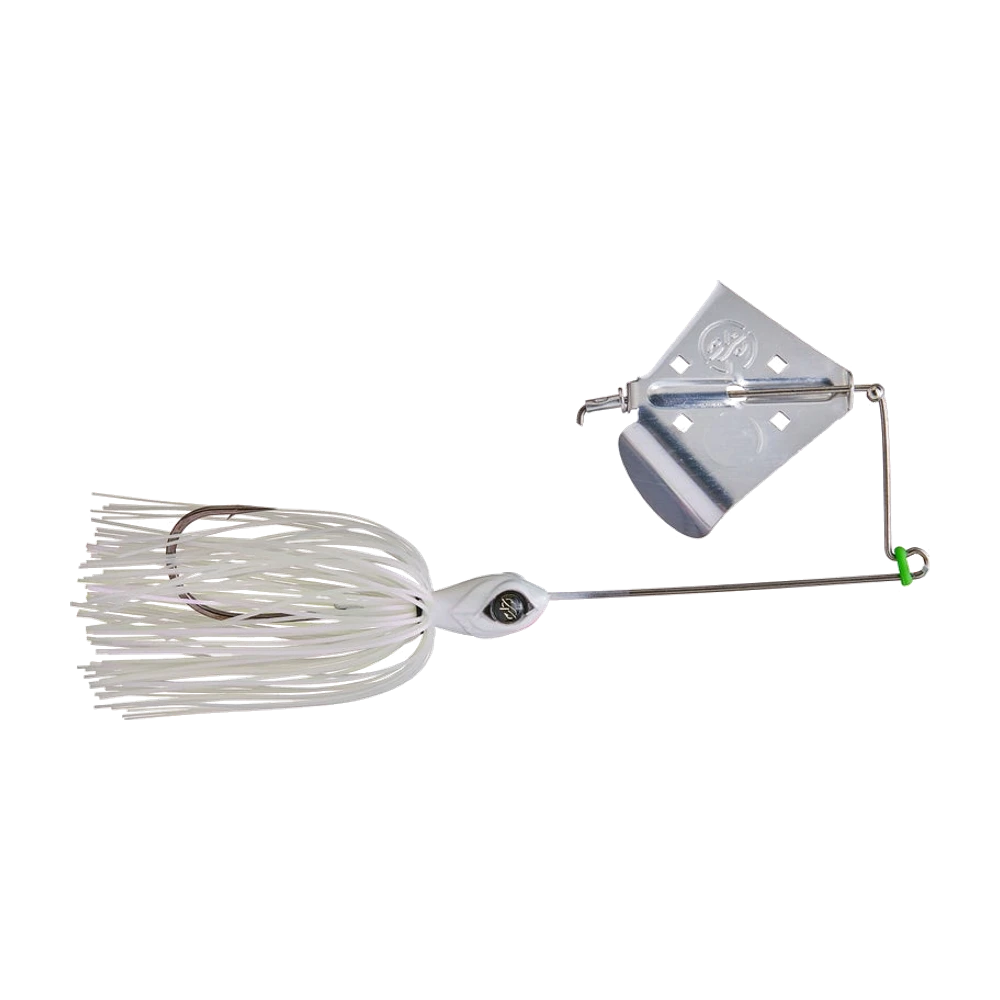
The buzzbait is the dumbest lure in the box, and that is exactly what makes it dangerous. No action to learn, no cadence to find: you cast, you reel, the thing makes an unreasonable racket and the fish decides. The Googan Hummer belongs to that family, with one detail worth stopping on — a blade pierced with four holes, which does more than just add noise.
A pierced blade that works the water
The Hummer's blade is a free-spinning two-winged prop mounted on a bent steel arm, turning around its rivet as soon as the bait moves. Nothing unusual there. What is less usual are the four diamond-shaped holes stamped into the metal. Each hole lets part of the water through instead of shoving all of it aside, and every pass of a wing leaves a trail of bubbles hanging behind the bait.
In practice that gives you two signals rather than one. The mechanical buzz, which carries a long way and which a fish locates with its lateral line. And the visual wake, a string of bubbles that extends the bait's passage for a good second after it has gone by. On a bass that comes up late, that wake is often what keeps it hunting long enough to come back and eat on the second cast.
Why it starts the instant it lands
This is the criterion that separates a good buzzbait from a poor one. On many models you need two or three meters of retrieve before the blade really spins — and those two meters are wasted, because that is precisely the contact zone against cover where the fish is waiting. The Hummer's blade turns freely on its axis and fires up immediately, which lets you drop the bait twenty centimeters off a laydown and have it working before the first turn of the handle.
That changes how you cast. Aim short, aim tight, and start reeling while the bait is still in the air so it touches down already moving. The noise starts at impact, and the bite often comes within the first two meters.
On a reed edge, do not cast parallel to the bank out of habit. Cast at an angle into the cover, let the bait land thirty centimeters off the edge, and bring it back diagonally. A fish sitting in the shade then sees prey fleeing toward open water, which is far more believable than a bait that tracks the bank and never leaves it.
Speed: the only real setting
A buzzbait has one parameter, and it is speed. It must be exactly the speed that keeps the blade turning and the bait on top, not one crank more. Too slow and the blade stalls and the bait sinks; too fast and it planes, skates sideways and becomes uncontrollable. The right speed is found within three casts, and it depends on the bait's weight — which the manufacturer does not publish in its description. That is a genuine limitation: check the packaging, because a heavier model will demand a noticeably brisker retrieve to stay up.
Two variations are worth the trouble. Slowing down right as you pass an obstacle, so the bait dips slightly then surges back up: that momentary stall triggers a lot of bites. And deliberately bumping the blade into a laydown or a lily pad — the abrupt change in sound pulls out fish that ignored a perfectly even retrieve.
The hookset, where it all goes wrong
This is the buzzbait's structural weakness: a single hook, a fish striking on top, and an irresistible urge to set the moment you see the blow-up. Do not set on sight. Wait until you feel the fish's weight in the rod, then sweep sideways rather than up. A set triggered by the eye pulls the bait out of a mouth that has not closed on it yet, nine times out of ten.
A rod with a moderate action helps enormously: it leaves an instant of delay between the strike and full tension, and that delay works in your favor.
The details that matter over a season
Three build choices deserve a mention. The skirt is hand-tied rather than held by a plain rubber band: it will not slide down the head or rot after a season in a hot box. The hook is a Mustad, sharp enough to compensate for the limits of a single. And a small rubber band seated around the line tie stops the line from sliding along the wire toward the bend — a slide that eventually creates an invisible weak point and costs you a fish.
For the setup, straight 30-40 lb braid is the norm: no stretch for a clean hookset, and the strength needed to pull a fish out of cover. A soft trailer on the double barbed keeper adds bulk and a little lift, which lets you slow down slightly without the bait dropping off the surface.
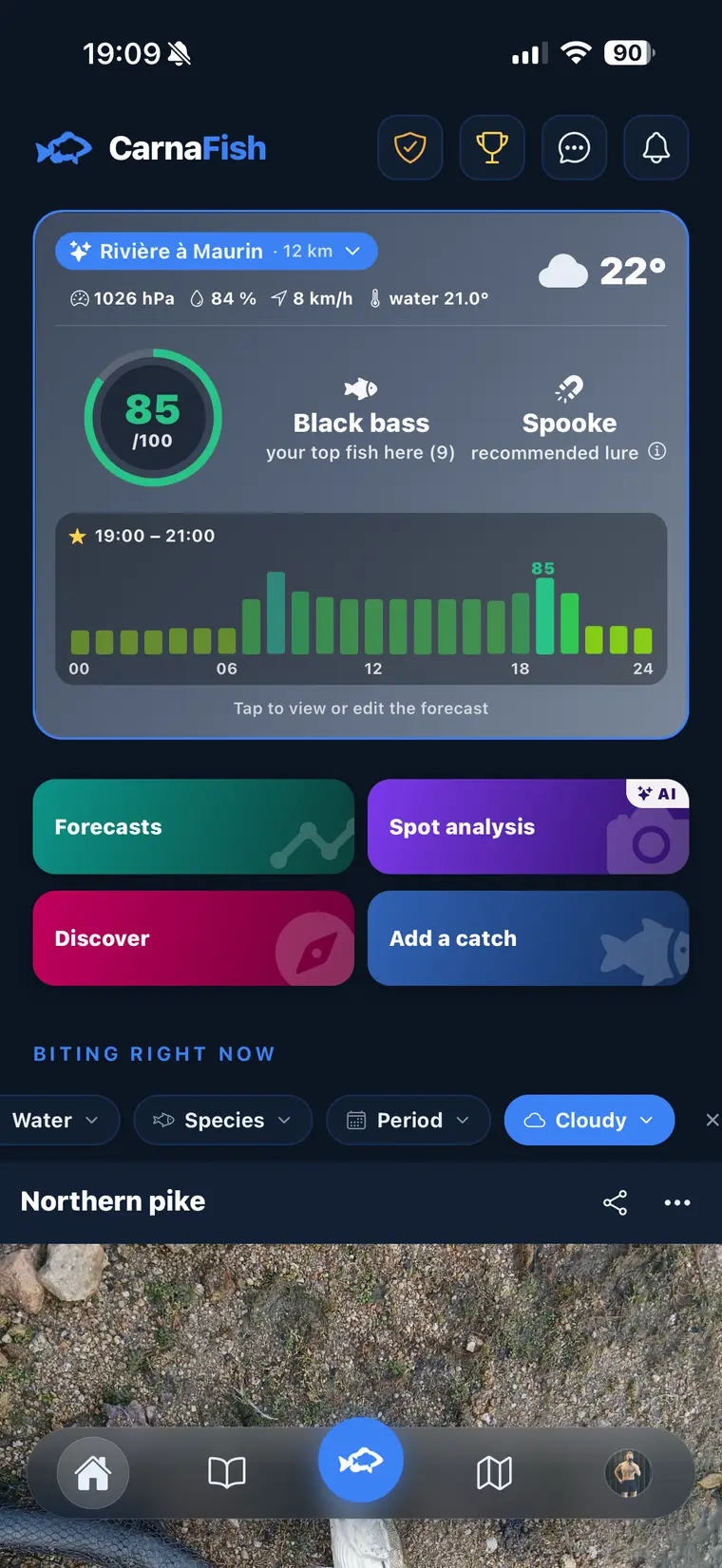
Not sure what to tie on?
Photograph your spot: CarnaFish reads the scene, cross-checks the conditions and gives you the zone, the lure and the retrieve. Free on iOS and Android.
Where and when to use it
The buzzbait is a window lure, not an all-day lure. The two best windows are dawn and dusk, when low light makes a surface silhouette very readable from below. Add grey, windy days, when the chop hides your mistakes and blurs the fish's view.
For spots: reed edges, laydowns, still-sparse pad fields, and grass topping out twenty or thirty centimeters below the surface. Once cover closes up completely the buzzbait fouls and you need to switch to a hollow body frog. And if fish are coming up without eating, try a slower pass with a swim jig just under the surface: sometimes the signal is right but the speed is not.
Colors by light
- Fish on shad, decent light: pearl white, as in the photo. It is the logical choice when the forage is pale, and it stays visible to you, which matters for steering the bait.
- Low light, late dawn or night fishing: black. On the surface a fish sees a backlit silhouette, and black is what cuts out best against a pale sky.
- Stained water, heavy cloud: chartreuse and white, a contrast that stays readable when visibility drops below a meter.
Reading the right window and the right spot matters more than the color choice, and that is exactly what CarnaFish sets out to simplify: one photo of the spot, and the AI suggests the zone, the depth and the lure type that fit the time of day. For the groundwork on gear and classic bass spots, our beginner's guide to bass fishing is still the right first read.
Key takeaways
- A free-spinning blade that starts instantly: the bait is working from the splashdown, which lets you land it extremely tight to cover.
- The four holes in the blade add a bubble wake that extends the bait's passage after it has gone by.
- One real control, speed: the one that keeps the blade turning, not a crank more.
- Never set on sight — wait until you feel the weight, then sweep sideways.
FAQ
How much does this buzzbait weigh?
The manufacturer's description publishes no weight, so you have to read the packaging. It matters, because a heavier buzzbait forces a faster retrieve to stay on the surface.
How fast should you retrieve a buzzbait?
At the slowest speed that keeps the blade turning and the bait on top. You find it in two or three casts. Going as slow as possible gives the fish more time to commit, so more strikes convert.
Why do I miss so many fish on a buzzbait?
Because you are setting the hook on what you see instead of what you feel. On the surface a fish often misses its first swipe. Wait for the weight in the rod, then sweep sideways: the conversion rate climbs sharply.
Should I add a trailer?
It is not mandatory, but it helps. A soft trailer on the double barbed keeper adds bulk, raises lift slightly, and therefore lets you slow down without the bait dropping off the surface.
Buzzbait or hollow body frog, how do I choose?
The buzzbait covers water quickly over open or sparse cover. As soon as the vegetation closes up completely it fouls, and you switch to a hollow body frog, which slides over the mat without ever penetrating it.
Does a buzzbait work in bright midday sun?
Far less well. It is a low-light or broken-surface lure. Under a clear midday sky you are better off dropping a layer with a subsurface bait and saving the buzzbait for the last two hours of the evening.
The full bass lure guideSeason-by-season strategy: which family of lure, when, and why.Go from theory to fish
CarnaFish reads your spot from a photo and gives you the game plan: zone, lure, retrieve. Free on iOS and Android.