Heddon Super Spook: the walking bait that casts the furthest
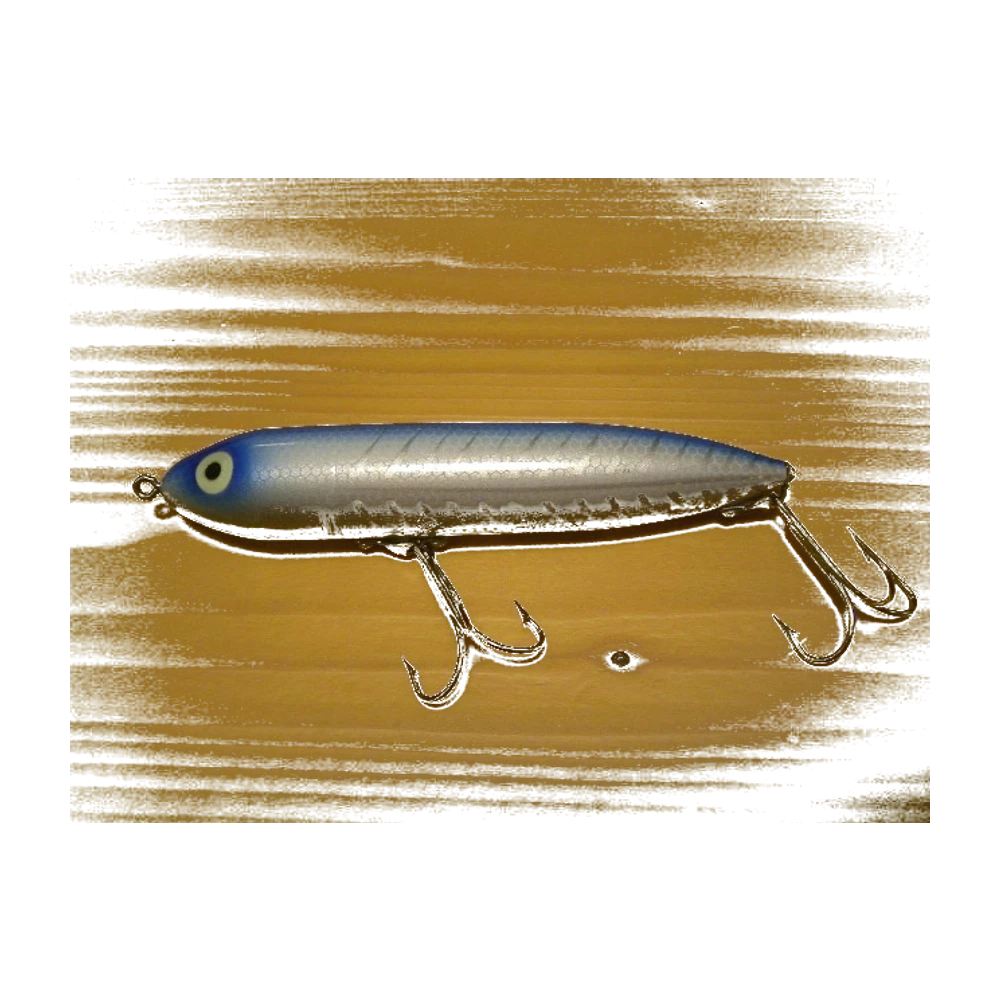
One lure, endless conditions. CarnaFish reads your spot from a photo so you are not just guessing.
Walk the dog is a retrieve everyone knows by name and few anglers genuinely pull off. The lure goes out to one side, comes back, goes again — or else it refuses to zigzag at all and just drags straight, pushing a useless wake.
The Super Spook is the lure to learn that gesture on. It is heavy, long, noisy and unusually forgiving: even an imperfect rhythm produces a workable zigzag.
Why this model rather than another
Three characteristics set it apart from slimmer walking baits.
The weight. At 22 g it casts distances no light topwater lure will reach. On a breakwater, a wide bay or a windy lake, that is decisive: you cover twice the ground per cast.
The internal rattles. The body contains large ball bearings that produce a deep, loud clatter. That sound carries a long way underwater and calls in fish that would never have noticed the lure by sight alone.
The inertia. Its mass means that once it is into its rhythm, it keeps going. A light walking bait loses its zigzag the moment you miss a beat; the Super Spook forgives.
The gesture: tip down, wrist, cadence
This is the only thing to master, and it takes ten minutes to learn.
- Rod tip pointed at the water, almost straight down, 30 cm off the surface.
- Short sharp regular wrist snaps, without moving your arm. The movement is short, 10 to 15 cm of travel.
- One turn of the handle between each snap, to recover the slack created by the lure's sideways travel.
- Never pull hard: too big a snap takes the lure off its axis and breaks the zigzag.
On the water: if the lure is running straight, your line is too tight. Walk the dog needs a bit of slack between each snap — it is that slack that lets the lure pivot instead of being towed.
On sea bass, a fast continuous cadence works best. On pike, slowing down and marking short hesitations every five or six zigzags provokes more.
Missed strikes are part of the game
A topwater lure generates plenty of spectacular refusals: the fish comes up, splashes, and nothing is hooked. That is normal and it can be managed.
- Do not strike on the sound. Wait until you feel the weight in the rod. Striking on sight is the commonest mistake and pulls the lure out of the mouth.
- Keep the retrieve going after a miss. A fish that has missed very often comes back within two seconds if the lure has not stopped moving.
- Change colour if the misses stack up over the day: sometimes a smaller profile, like the Super Spook Jr, converts where the big model only provokes.
Not sure what to tie on?
Photograph your spot: CarnaFish reads the scene, cross-checks the conditions and gives you the zone, the lure and the retrieve. Free on iOS and Android.
Where it takes the lead
- Big windy waters, at sea as much as on lakes, where its mass lets you cast far and keep contact.
- Choppy or rough water: its volume and its rattles stay perceptible where a small popper gets lost.
- Surface feeding on sea bass or pike, when you need to reach a distant patch of activity fast.
It is on the other hand too big and too noisy for a small, clear, calm water, where a discreet popper will suit better.
Rigging
Fluorocarbon in 0.30 to 0.40 mm straight through is the simplest rig and works well. Braid with a metre of fluoro leader gives more distance and a firmer hookset, at the cost of a slightly stiffer retrieve.
The stock trebles are decent but blunt quickly in saltwater. Moving to reinforced trebles is justified on sea bass, provided you stay with an equivalent weight so you do not alter the lure's attitude on the surface.
Our guide to lure fishing for sea bass places the walking bait among the other topwater approaches. And if you doubt whether a surface retrieve makes sense when you arrive at a spot, CarnaFish analyses a photo and answers.
Key takeaways
- 22 g: this is the walking bait that casts furthest, decisive on big water and in wind.
- Rod tip down, short regular wrist snaps, one turn of the handle between each.
- Leave a bit of slack: a line that is too tight equals a lure running straight.
- Never strike on the sound, wait for the weight.
- Too bulky for a small clear water: take the Jr or a popper.
FAQ
How do I get walk the dog right with the Super Spook?
Point the rod tip at the water, give short sharp regular wrist snaps of 10 to 15 cm, and recover the slack with one turn of the handle between each snap. The lure pivots thanks to the slack left in the line: a line that is too tight makes it run straight.
Why do fish miss the lure so often?
That is common on the surface. The most frequent cause is a hookset triggered by the sound or the sight of the take. Wait until you feel the fish's weight in the rod before striking, and keep the retrieve going after a miss: the fish often comes straight back.
Super Spook or Super Spook Jr?
The Super Spook casts further and calls from further away: it is the choice on big water, in wind or at sea. The Jr, smaller, converts better on wary fish or in clear water, and suits bass.
What line should I use?
Fluorocarbon of 0.30 to 0.40 mm straight through is simple and effective. Braid with a metre of fluoro leader gives more distance and a better hookset, with a slightly stiffer retrieve.
Does it work on pike?
Yes, very well. Slow the cadence down compared with sea bass and mark short hesitations every five or six zigzags: that break in rhythm is often what triggers the attack.
Should I change the stock hooks?
In freshwater, no. In saltwater, moving to reinforced trebles is justified by corrosion and the size of the fish, but keep an equivalent weight so you do not alter how the lure floats.
The full sea bass lure guideSeason-by-season strategy: which family of lure, when, and why.Go from theory to fish
CarnaFish reads your spot from a photo and gives you the game plan: zone, lure, retrieve. Free on iOS and Android.