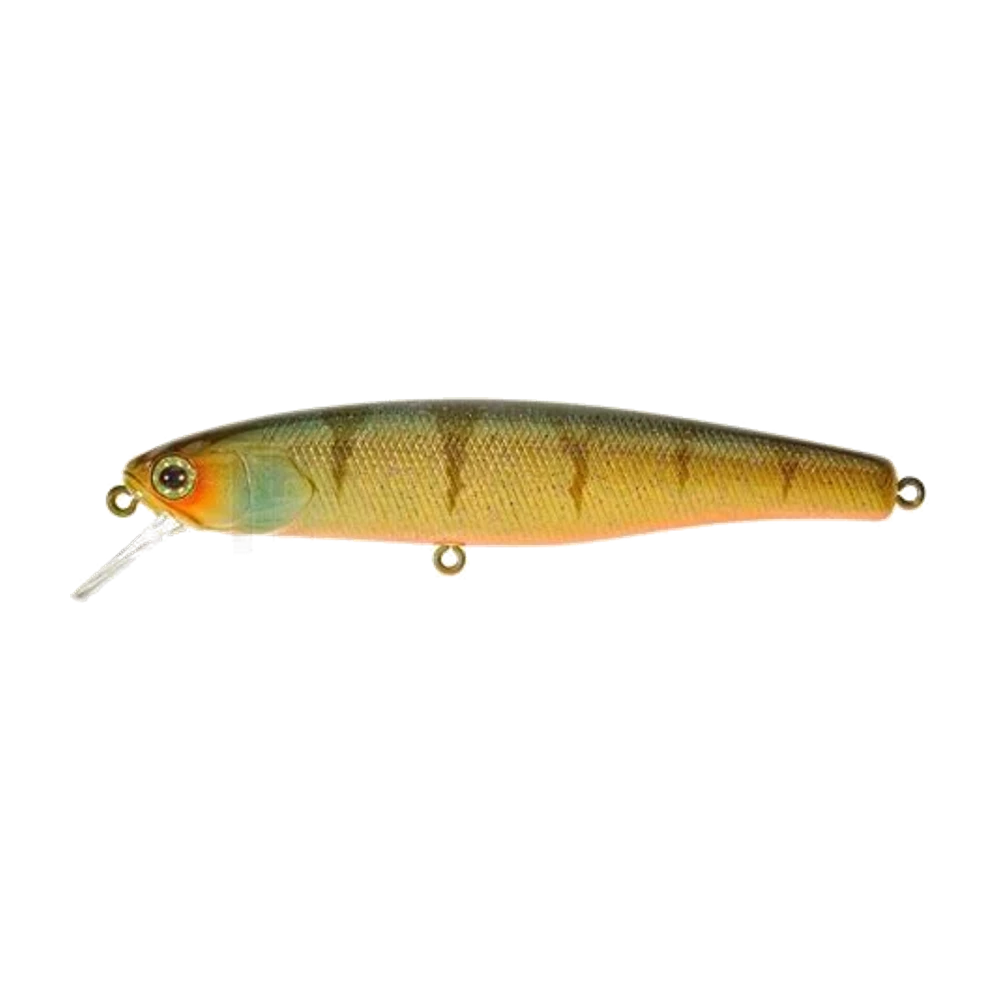
Illex Arnaud 100: the jerkbait built for French rivers
Rather not fish it blind? Photograph your spot — CarnaFish cross-checks the conditions and points you the right way.
Most Japanese jerkbaits were designed for deep, clear lakes. Move them to a French river — two metres of water, current, weed, average visibility — and they swim too deep and snag.
The Arnaud was drawn starting from the opposite problem. It is a jerkbait that swims high, answers short twitches and settles fast, built for shallow, cluttered spots.
Swimming high is not a flaw
A jerkbait that tops out at 1 m deep looks limited on paper. In a river, it is exactly what you need.
On a 1.50 m spot with weed rising to 80 cm, a jerkbait running down to 2 m spends its time in the vegetation. The Arnaud stays above it, in the band where the pike sits in ambush and looks upwards.
That shallow running depth also lets you fish very close to the margins, where the bottom rises, without touching. That is often where the active fish are holding.
The retrieve: short and nervous
Where a lake jerkbait asks for wide twitches and long pauses, the Arnaud answers better to a tight rhythm.
- Two or three short, sharp twitches, wrist only, rod tip down and slightly to the side.
- A one to three second pause depending on temperature and activity.
- Repeat, keeping a nervous cadence.
The lure produces tight darts rather than a wide lateral slide. The effect you want is a fish panicking on the spot, not a fish fleeing over ten metres.
On the water: in a river with current, cast upstream and work the lure across. The lure then works facing the current and stays longer in the productive seam, instead of being swept downstream in three seconds.
Current changes everything
This is the parameter lake anglers underestimate when they arrive on a river.
Casting downstream means the lure comes back pushed by the current: it swims too fast, higher than expected, and the retrieve loses all control.
Casting upstream or across lets you keep contact, control the lure's real speed relative to the water, and take it slowly past the holding spots. It is almost always the right option.
On a marked spot — an obstruction, a drop-off, an inflow — aim upstream of the obstruction and let the lure drift down the line with very little animation. The pike sitting behind it sees it arrive naturally.
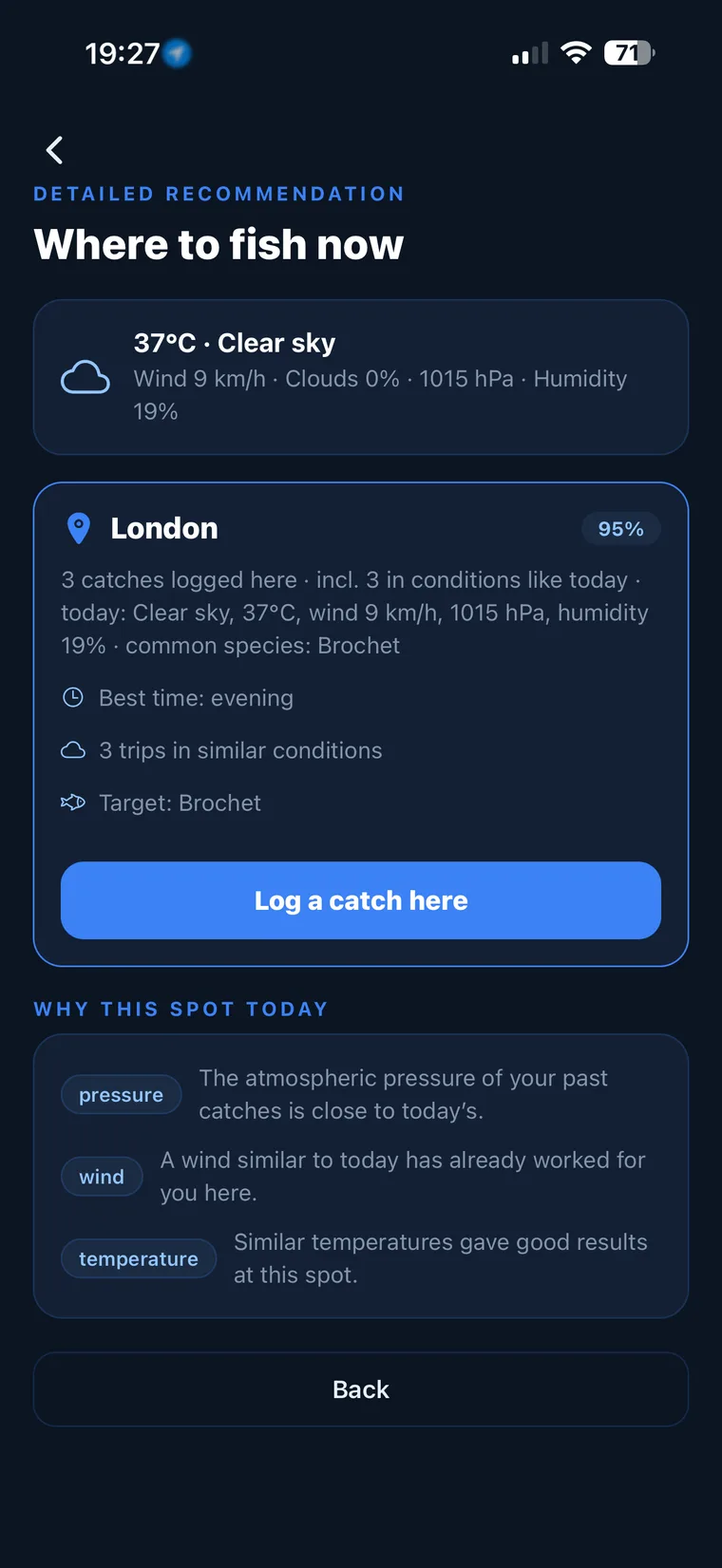
Not sure what to tie on?
Photograph your spot: CarnaFish reads the scene, cross-checks the conditions and gives you the zone, the lure and the retrieve. Free on iOS and Android.
Where it excels
- Rivers and small waterways of 1 to 2.50 m depth, with or without current.
- Weed bed edges, where its shallow running depth avoids constant snagging.
- Sea bass in estuaries and coastal rivers, where the same profile works perfectly.
- Fast searching along stretches of bank: it covers ground faster than a soft plastic.
It loses its point as soon as depth exceeds three metres or you need to reach a low band of water: a deeper-diving jerkbait or a soft plastic will suit better.
Arnaud 100 or Arnaud 60
The Arnaud 60 is the version for perch and trout: same philosophy, reduced size, for smaller spots and more modest fish. The switch happens on the target species, not on depth.
Against a lake jerkbait such as the Pointer 100, the difference is clear: the Pointer runs deeper, darts wider and asks for long pauses. The Arnaud stays high, nervous, and suits shallow, flowing water better.
Our guide to choosing a pike lure places the jerkbait among the other families. And if you are unsure whether the water column suits a jerkbait on a given spot, CarnaFish analyses a photo and answers.
Key takeaways
- Swims between 0.8 and 1.2 m: built for shallow rivers and weed bed edges.
- Short, closely spaced twitches, no wide lateral slides.
- In current, cast upstream or across — never downstream.
- Excellent for fast searching along a stretch of bank.
- No use beyond three metres of depth.
FAQ
How deep does the Arnaud 100 swim?
Between 0.8 and 1.2 m on standard fluorocarbon. That is deliberately shallow: the lure is built for shallow rivers and for passing over weed rather than through it.
What retrieve should I use?
Two or three short, sharp wrist twitches, followed by a one to three second pause. The rhythm is more nervous and tighter than on a classic lake jerkbait.
How do I fish it in current?
Cast upstream or across, never downstream. The lure then works facing the current, stays longer in the productive seam and keeps a speed you can control. A downstream cast brings it back too fast and too high.
Is it suitable for sea bass?
Yes, very much so, particularly in estuaries and coastal rivers. The profile and running depth match the shallow spots where sea bass hunt.
What is the difference with the Arnaud 60?
The 60 is the smaller version for perch and trout, on smaller spots. The choice is made on the target species rather than on the depth of the spot.
Can it be used in a deep lake?
It works, but loses its advantage. Beyond three metres of depth, a deeper-diving jerkbait or a soft plastic will reach the band where the fish are holding more effectively.
The full pike lure guideSeason-by-season strategy: which family of lure, when, and why.Go from theory to fish
CarnaFish reads your spot from a photo and gives you the game plan: zone, lure, retrieve. Free on iOS and Android.