Delalande Shad GT: holding the bottom when the river is pushing
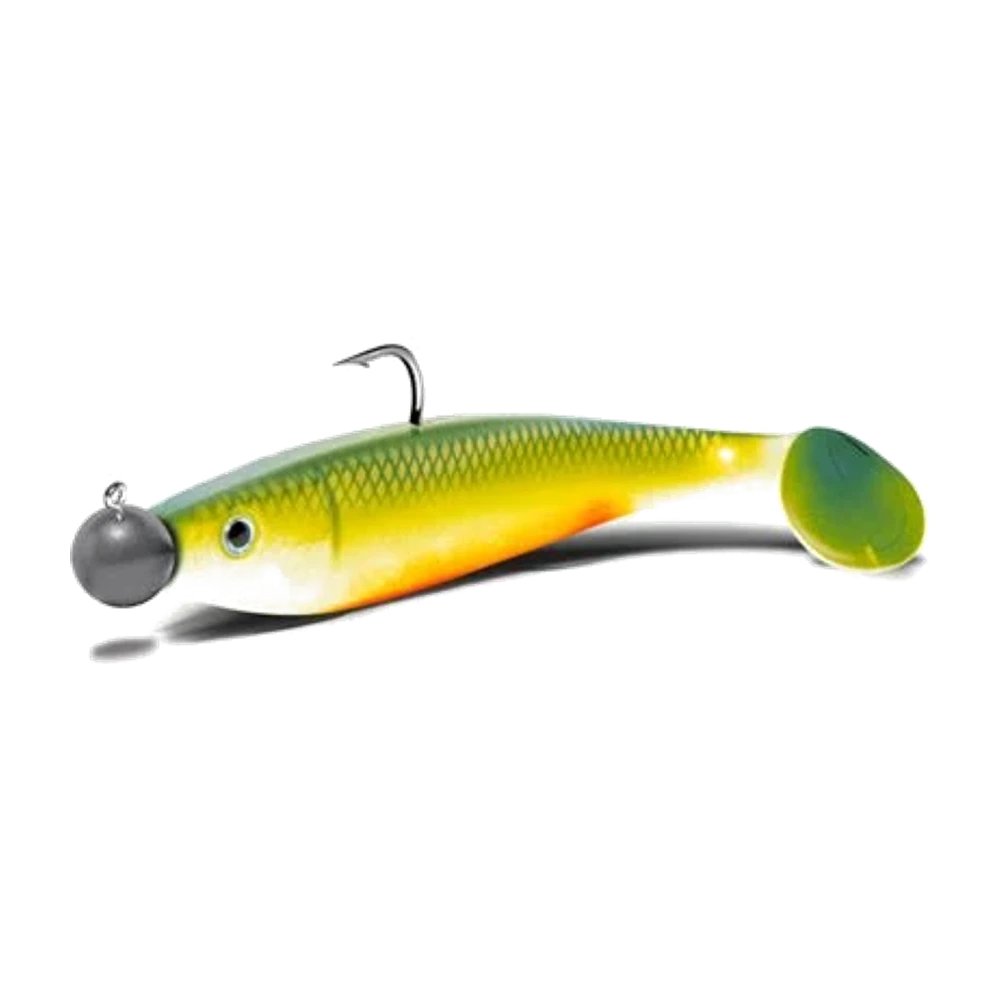
This lure shines under specific conditions. CarnaFish tells you in 10 seconds if today is one of them.
In a river, the problem is never finding a lure that swims. It is finding one that stays where you want it. You cast upstream, you start to feel the bottom, and three seconds later the current has taken the line, the lure lifts off, and you retrieve a shad swimming two metres above the zander. Go heavier and you lose the finesse. Go lighter and you lose the bottom.
The Shad GT is built for that trade-off. Its body is noticeably firmer than the average modern soft shad, and its paddle tail is calibrated to start working under very little input. Translated onto the water: it does not fold in the flow, it does not flag out when the current picks up, and it keeps beating even when you drag it along barely moving it at all.
What a firm body changes in current
A very soft shad is a wonderful thing in a lake. In river current, it is a handicap. Water pressure deforms it constantly: the body bows, the axis of the jig head and that of the tail fall out of line, and the action becomes a chaotic shudder.
The denser body of the Shad GT brings three precise advantages:
- The axis stays straight whatever the speed of the flow. What you feel in the rod genuinely corresponds to what the lure is doing.
- The paddle keeps its angle of attack. It beats instead of folding over, including when the lure is almost stationary and only the current is doing the work.
- The lure stays on the hook. On river zander spots, where you retrieve five times more casts out of the rocks than out of fish, a firm plastic does not tear after three snags.
The price: in still water and on a very slow retrieve, it is less "alive" than an ultra-soft plastisol. This is not a finesse lure for a pond.
The retrieve: let the current do half the work
The classic mistake in a river is casting square to the bank. You then spend the whole retrieve fighting the drift.
- Cast upstream, at 45 degrees to the current, aiming past the seam you want to fish.
- Let it drop following the line off the rod tip, without braking. The lure drifts as it sinks: it will touch bottom well downstream of where it landed.
- On contact, take up the slack only — you should feel the weight, not lift the head.
- A short twenty to thirty centimetre pull, rod tip only, then follow it back down. The current carries the lure towards you meanwhile: you often only need half a turn of the handle between pulls.
- When the line comes level with you and below, the lure lifts off: it is over, recast. Do not prolong it.
On a spot you know, you can also park the lure behind an obstruction: you let the current tighten the line, the shad holds in place at the same depth and the paddle beats on its own. That is deadly at the foot of a bridge pier.
On the water: count the seconds between your pull and the return of bottom contact. As long as that count is shrinking, you are moving towards a drop-off and you should slow down. As soon as it grows by more than two seconds, you are out of the hole and you can recast — no point retrieving the last twenty metres.
Weights: think in current speed
In a river, depth alone is not enough to choose. Cross it with the strength of the flow.
| Current | 3 to 4 m deep | 5 to 6 m deep | 7 to 8 m deep |
|---|---|---|---|
| Weak, low water | 10 to 14 g | 14 to 18 g | 18 to 21 g |
| Medium, normal flow | 14 to 18 g | 21 to 25 g | 25 to 30 g |
| Strong, after rain | 21 to 25 g | 28 to 32 g | 32 to 40 g |
Two settings that weigh as much as the lead itself. Braid first: go to 0.10 or 0.12 mm rather than 0.16 mm. The drag a thick braid takes over twenty metres of line is easily worth five grams of lost weight. Head shape next: a bullet head cuts the flow, a flat head makes the lure plane and lift. In a river, bullet every time.
For pike, the stinger rig is unavoidable in the big sizes: a 15 cm shad held by a single head hook lets one take in two go through.
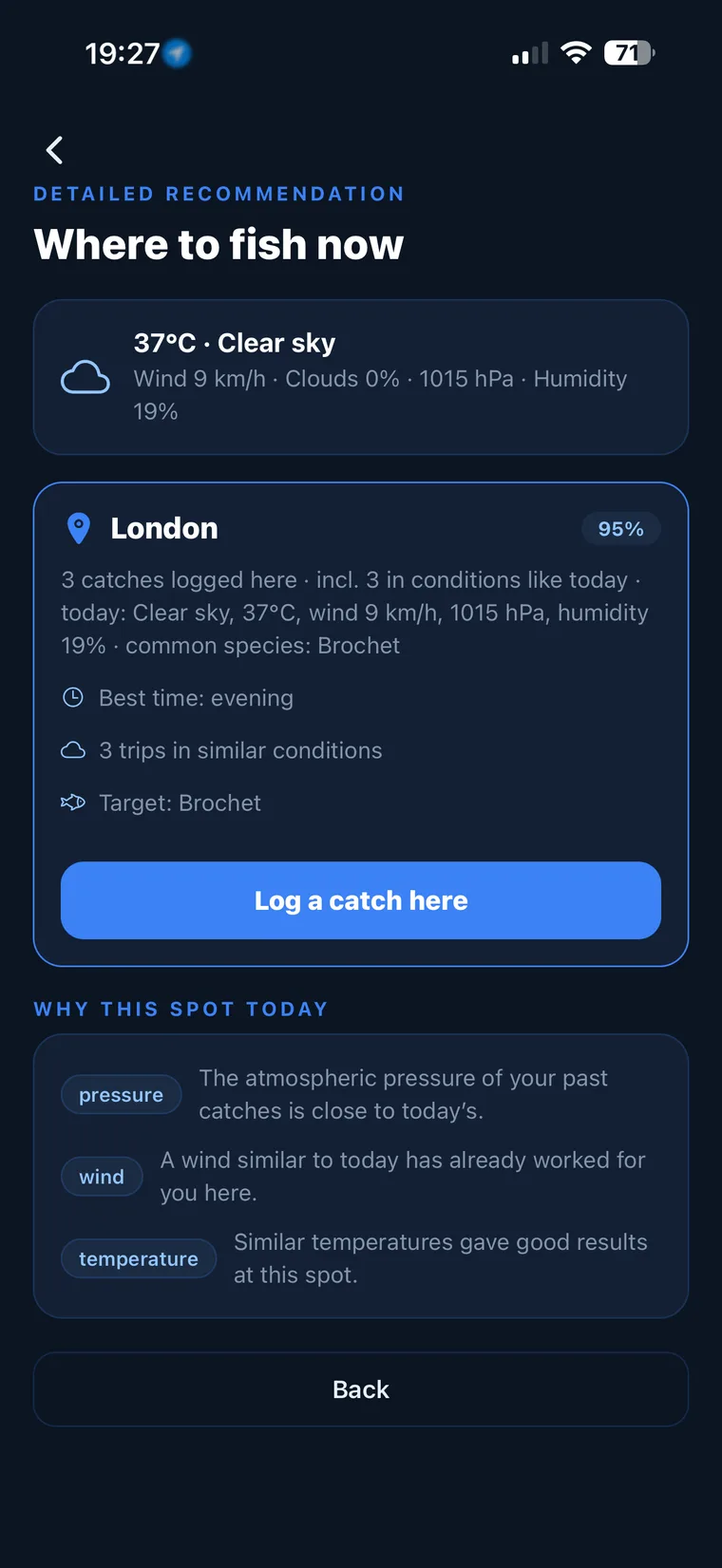
Not sure what to tie on?
Photograph your spot: CarnaFish reads the scene, cross-checks the conditions and gives you the zone, the lure and the retrieve. Free on iOS and Android.
Where it gives its best, where it has no business
Its ground:
- River holes and back-eddies, between 3 and 8 m, over cobble or gravel.
- Bridge piers and rock revetments, where you fish almost on the spot and let the current do the work.
- Coloured water after a rise, where its clean paddle gives zander a signal they can follow in poor visibility.
Its limits are clear-cut. In a pond or a lake with no current, on a very slow retrieve, a softer plastic will produce more life for the same energy. In very clear water on pressured fish, its pronounced vibration can become a flaw. And in deep vertical work, its firm body reacts very little to micro-movements of the rod.
Shad GT or the Sandra range
That is the natural question within Delalande, and the answer is not about size but about tail type.
The Sandra 12 carries a long curl tail. It undulates continuously, even at near-zero speed, and puts out a soft, swirling signal very different from a paddle beat. It is the tool for slow fishing, for soft pulls along the bottom in still water, and it remains unbeatable on apathetic zander in a lake.
The Big Sandra XXL transposes that principle to very large volume, for big pike and catfish: the giant curl shifts enormous amounts of water at low speed.
The Shad GT answers a different need: the paddle, not the curl. A clean, directional signal that stays readable in a flow. A curl tail in strong current flags out and spins on itself; a paddle does not. If you fish rivers, the Shad GT; if you fish slowly in still water, the Sandra. The same box can hold both without duplication.
Our guide to choosing a pike lure puts these two tail families back into a wider picture. And if you are unsure what weight to fit on the bank of a river you do not know, CarnaFish analyses a photo of the spot and answers.
Key takeaways
- Firm body: the lure's axis stays straight in current and the paddle keeps its angle of attack.
- Cast at 45 degrees upstream and let the current bring the lure back between pulls.
- Choose weight on current speed as much as on depth, bullet head every time.
- Thin braid at 0.10-0.12 mm: the drag on your line costs more than a few grams.
- A river and coloured-water lure. Little interest in a lake on a very slow retrieve or in finesse vertical work.
FAQ
What is the difference with the Delalande Sandra?
The tail. The Sandra carries a long curl tail that undulates at near-zero speed, perfect for slow fishing in still water. The Shad GT carries a paddle that produces a crisp, directional beat, and that stays readable in current where a curl flags out.
What weight for fishing in a river?
Cross depth with current strength: around 14 to 18 g for 3 to 4 m in normal flow, and up to 30 or 40 g over 7 to 8 m after a rise. The right weight is the lightest that still lets you feel the bottom after every pull.
Which way should I cast?
Upstream, at about 45 degrees. You then let the lure drift as it sinks: it reaches the bottom downstream of where it landed and you fish the zone bringing it back with the current, which costs you far less energy than a square cast.
Do I need a stinger?
On pike and on sizes from 13-15 cm up, yes. A single head hook lets a large share of rear-end attacks go through. On average-sized zander you can do without it if you set the hook quickly.
Is it effective in stained water?
Yes, that is one of its better windows. Its paddle sends out a clean vibration a zander can follow when visibility drops to a few dozen centimetres. Pair it with a high-contrast colour, chartreuse or orange.
Does it work in a lake?
It works, but without standing out. In still water and on a very slow retrieve, a softer plastic or a curl tail will produce more movement for the same energy. Keep the Shad GT for situations where current or wind demand that it holds its line.
The full zander lure guideSeason-by-season strategy: which family of lure, when, and why.Go from theory to fish
CarnaFish reads your spot from a photo and gives you the game plan: zone, lure, retrieve. Free on iOS and Android.