Illex Cherry 44: covering a bank in ten minutes
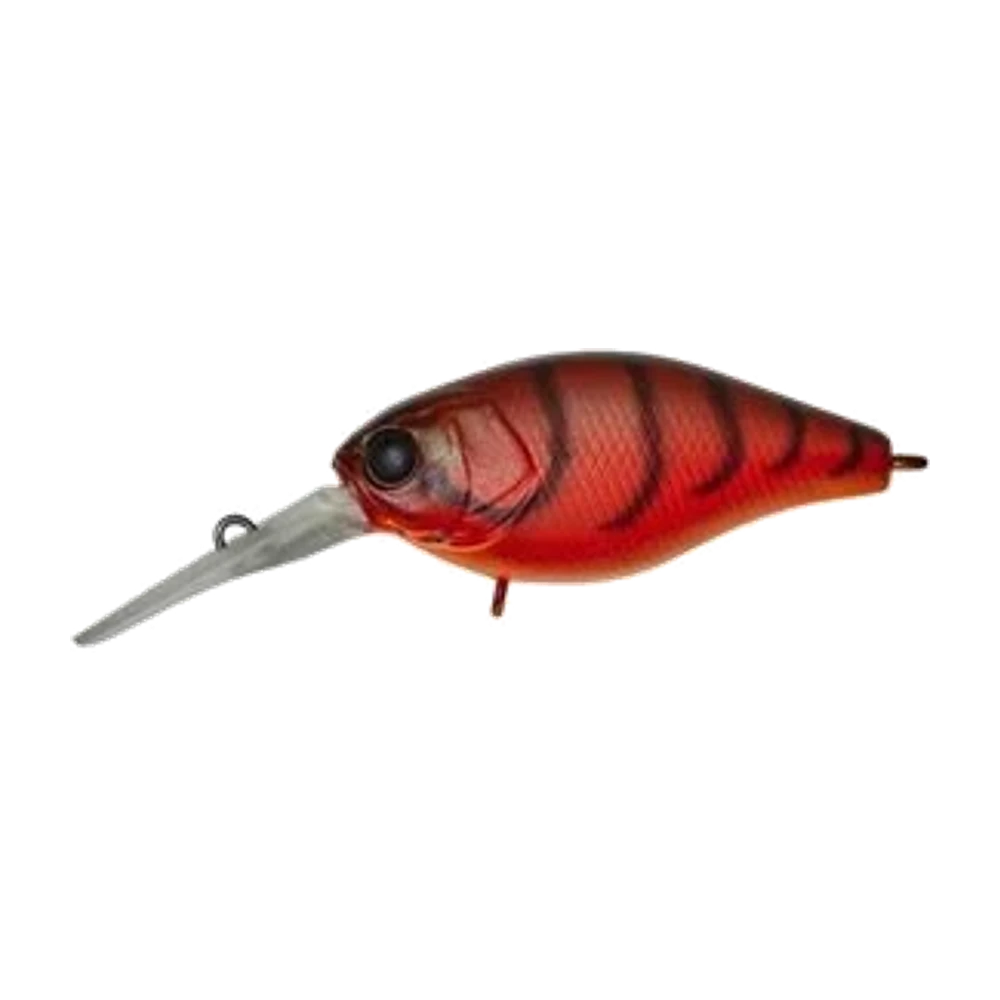
This lure shines under specific conditions. CarnaFish tells you in 10 seconds if today is one of them.
You arrive at a two-hundred-metre bank. You have two hours. Where do you put your casts?
Most anglers answer that question by fishing slowly everywhere, which amounts to spending forty minutes on the first fifty metres and never seeing the next hundred and fifty. It is the best way to miss the one zone where the fish actually were.
The Cherry 44 answers that question differently. It is a reconnaissance tool: a tiny crankbait, very dense for its size, that casts a long way on light tackle and crosses a bank quickly. You do not tie it on to catch the fish of the day. You tie it on to know within ten minutes where things are happening, then you come back with something else.
A small round body, but a real vibration
The common mistake with micro crankbaits is believing that a small lure necessarily produces a small signal. The Cherry 44 proves the opposite.
The body is short and fat, almost round. That section generates a very wide roll for 4.4 cm: the lure swings hard from flank to flank instead of vibrating tight. The signal produced is deep and broad, not high and discreet — so it carries far further than its size suggests.
The density is high. Relative to its volume, this lure is heavy. That is what lets you cast it twenty-five or thirty metres with a light rod, where a crankbait of the same length but lighter tops out at fifteen. On searching work, that distance changes everything.
It starts instantly. No need for three turns of the handle before the action kicks in: the lure works from the first centimetre. On a bank where the fish are glued to the margin, the first metre of retrieve is often the one that counts.
The retrieve: cross, do not dig
- Cast parallel to the bank, not perpendicular. You want to run along the living zone, not cross it in three seconds.
- Start reeling immediately, at a decent speed, around two turns of the handle per second.
- Keep the rod tip low and out to the side, pointed towards the bank: that keeps the lure close to the structure.
- Do not pause while you are in reconnaissance mode. You are looking for reactions, not opportunistic bites.
- Make three casts per ten-metre sector, then move on. If nothing happens, that sector does not interest you for now.
- As soon as you get a bite or a follow, stop the reconnaissance: mark the zone, slow down, and go back through with the same lure, adding a one-second stop every five turns of the handle.
On the water: a follow without an attack is information at least as valuable as a bite. Note the exact place, carry on searching to the end of the bank, then come back to that point twenty minutes later with a slower lure. The fish that followed is almost always still there, and it has had time to settle back in.
Floating or sinking version
The Cherry comes in versions of different density, and the choice is made on the depth of the margin.
| Context | Version | Layer worked | Speed |
|---|---|---|---|
| Margin of 50 cm to 1 m, cluttered bottom | Floating | 40 to 80 cm | 2 turns/s |
| Margin of 1 to 2 m, clean bottom | Sinking | 1 to 1.5 m | 2 turns/s |
| Headwind, distance needed | Sinking | variable | 2.5 turns/s |
| Visible fish on the surface | Floating | 30 to 50 cm | 2.5 turns/s |
The floating version has an underrated tactical advantage: when you feel an obstruction, you stop reeling and the lure rises, which almost always frees it. On a bank strewn with dead branches, that is what lets you keep fishing fast without losing three lures.
Where it excels, and where it is no use
- Lake and pond margins between 50 cm and 1.5 m, in summer and early autumn.
- Scattered feeding perch over a long stretch, when you have to find the shoal before working it.
- Small bass and juveniles along cluttered banks, where the small profile goes down better.
- Medium-sized rivers, searching downstream along an undercut bank.
On the other hand, it is useless at depth. Beyond a metre and a half it reaches nothing and you are fishing above the fish. It is poorly suited to cold water: a compact crankbait retrieved fast is a proposition for active fish, and in February you are wasting your time. Finally, it is not very relevant on heavily educated fish in crystal-clear water: its wide roll is a strong signal, quickly identified as artificial on an over-fished water.
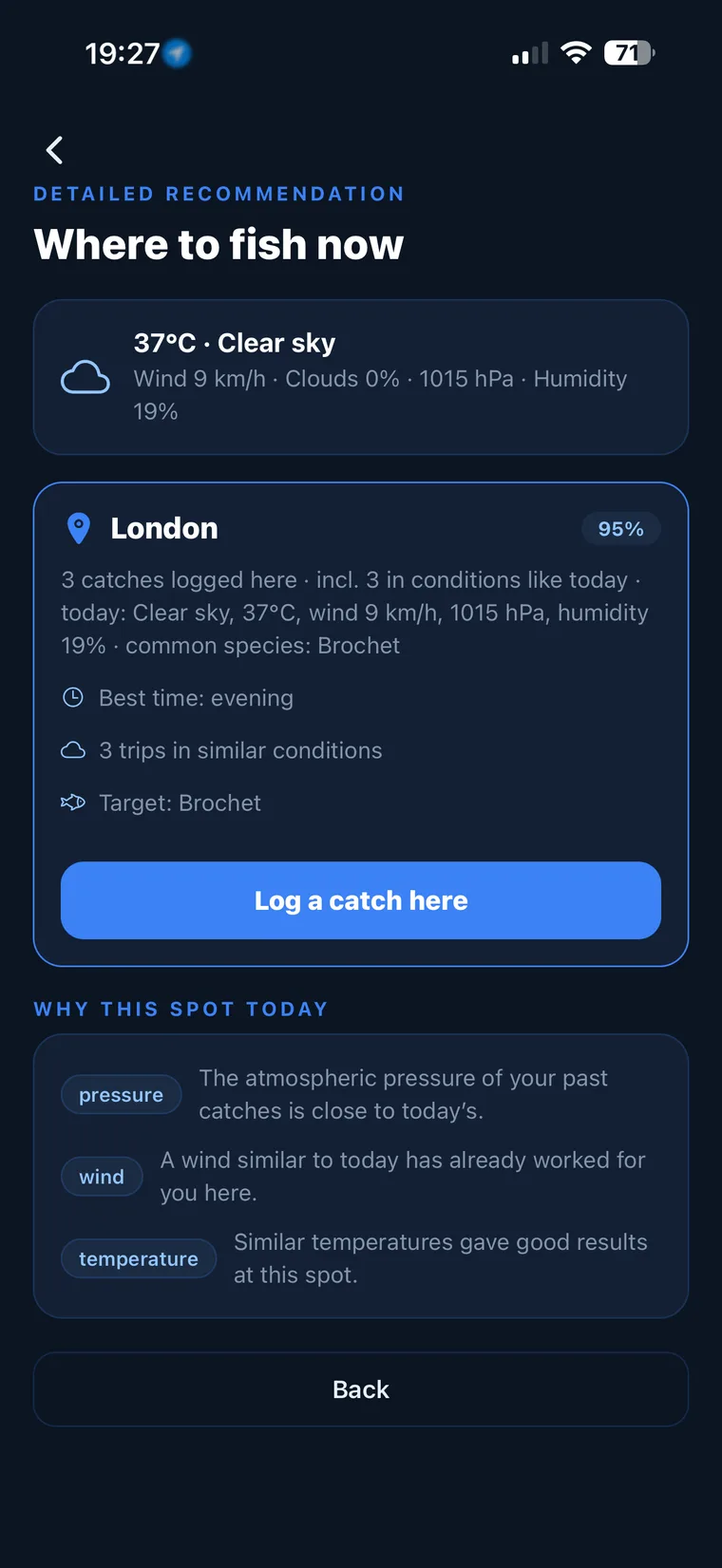
Not sure what to tie on?
Photograph your spot: CarnaFish reads the scene, cross-checks the conditions and gives you the zone, the lure and the retrieve. Free on iOS and Android.
Cherry 44 or Chubby 38: two philosophies of the small crankbait
The comparison is unavoidable, since these two Japanese micro crankbaits turn up in every perch box. Yet they are not for the same moment of the day.
The Illex Chubby 38 is shorter, lighter, with a tight action and a very pronounced floating behaviour. It is a finishing lure: you place it on an identified spot, work it slowly, insert pauses, and convince a fish you know is there. It excels in clear water and on wary fish.
The Cherry 44 is heavier, rounder, noisier, and above all it casts considerably further. It is a discovery lure. It covers in ten minutes what the Chubby covers in forty. The logical sequence is therefore to run the two in order: Cherry to find, Chubby to work.
When the margin is heavily cluttered with branches and you want to deliberately deflect off the obstructions, a squarebill crankbait such as the Strike King KVD Squarebill takes over in a bigger size class. Our guide to lure fishing for perch details the searching logic along a long stretch of bank. And if you are unsure which sector to attack first when you arrive at an unfamiliar bank, CarnaFish analyses a photo of the spot and answers.
Tackle and rigging
This lure needs light tackle to express its casting potential.
Rod: 1.95 to 2.10 m, light power, 3 to 12 g, moderate tip action. Too stiff a rod crushes perch bites and drops fish hooked in the edge of the mouth.
Line: fluorocarbon straight through in 0.18 to 0.22 mm, or fine braid with a one-metre fluoro leader. Straight fluorocarbon is preferable on fast fishing: its slight stretch forgives reflex hooksets.
Connection: a round micro snap is perfectly tolerated and saves you precious time when you alternate floating and sinking. Avoid barrel snaps, which are too heavy for this size class.
Hooks: keep the stock trebles, fine and sharp. Replacing them with heavier models sinks the floating version and removes its main anti-snag asset.
Key takeaways
- A reconnaissance tool: it is there to find the active zones, not to finish the job.
- Round, dense body: wide roll, deep signal, and unusual casting distance for 4.4 cm.
- Cast parallel to the bank, three casts per ten-metre sector, then move on.
- The floating version frees itself from branches when you stop reeling.
- Ineffective beyond a metre and a half, in cold water and on very educated fish.
FAQ
How deep does the Cherry 44 swim?
Between 40 and 80 cm for the floating version, and down to a metre and a half for the sinking version retrieved at medium speed. It is a margin lure, of no interest below that layer.
What retrieve speed should I use?
Around two turns of the handle per second while searching. This lure is built to cover ground quickly: slowing down only makes sense once you have identified a zone where a fish has reacted.
Should I use the floating or the sinking version?
The floater on shallow margins with a cluttered bottom, because it frees itself when you stop reeling. The sinker as soon as you need more than a metre of depth or more casting distance into a headwind.
What is the difference with the Chubby 38?
The Chubby is smaller, lighter, with a tight action: it is a finishing lure for an identified spot. The Cherry 44 is denser, noisier and casts far further: it is a discovery lure for a long stretch.
What rod for a micro crankbait?
A 1.95 to 2.10 m rod in light power, 3 to 12 g, with a moderate tip action. Too stiff a rod loses perch hooked in the edge of the mouth during a fast retrieve.
Does the Cherry 44 work on bass?
Yes, especially on medium-sized bass along cluttered margins, where a small profile goes down better than a standard crankbait. On big fish in deep water, though, it has nothing to offer.
The full perch lure guideSeason-by-season strategy: which family of lure, when, and why.Go from theory to fish
CarnaFish reads your spot from a photo and gives you the game plan: zone, lure, retrieve. Free on iOS and Android.