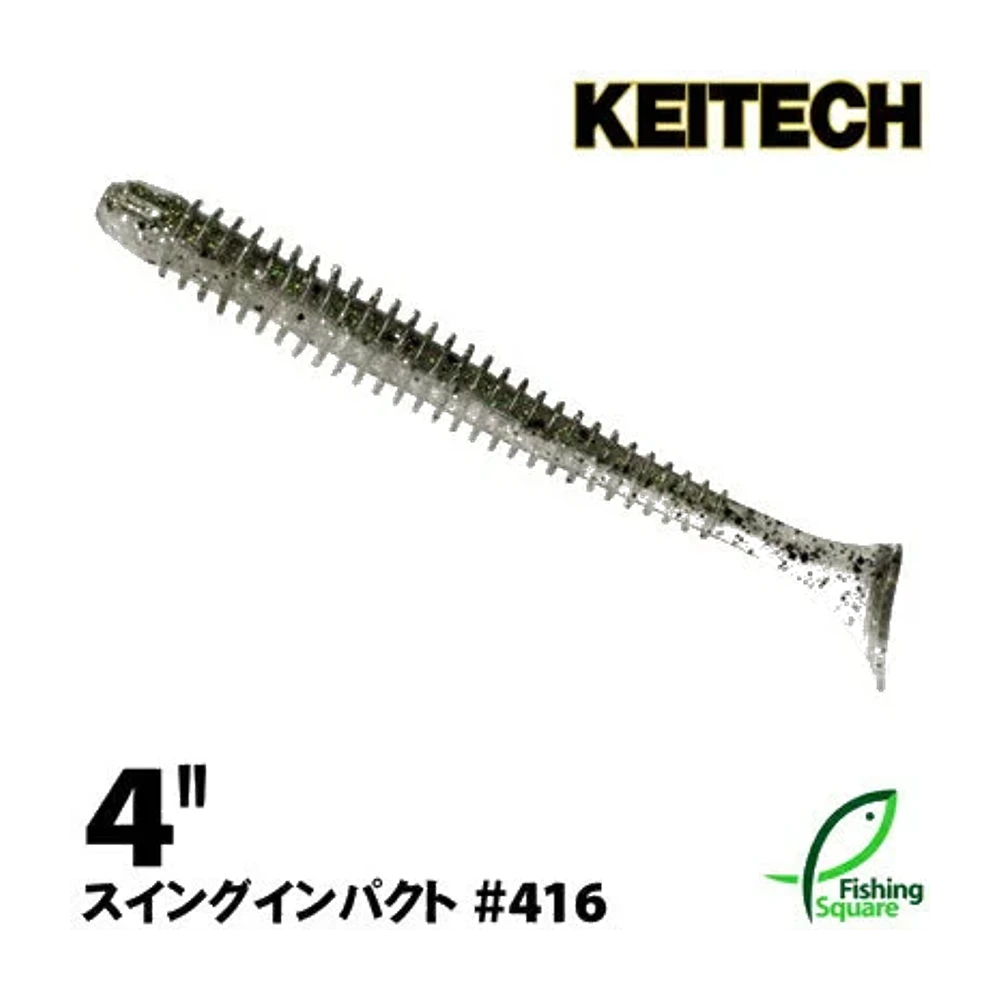
Keitech Swing Impact 4: the finesse shad that swims without being worked
Not sure this lure fits YOUR spot today? CarnaFish tells you in 10 seconds, from a photo.
There is a category of day when everything that vibrates hard catches nothing. Clear water, blue sky, angling pressure, fish glued to the bottom: in those conditions a stocky shad pushing water becomes a nuisance rather than an attractant. The 4-inch Swing Impact sits at the other end of the spectrum — it vibrates so little that it becomes credible, and that is exactly what makes it deadly on difficult fish.
A tiny paddle, and that is deliberate
Compared with a classic shad, the Swing Impact's tail is very small and mounted on an extremely thin wrist. The result is a discreet, high-frequency vibration, the opposite of the heavy beat of a wide paddle.
Three consequences:
- The action starts at a ridiculously low speed. You can retrieve almost in slow motion and the tail still works.
- The whole body undulates, not just the tail. Keitech's material is very soft and the slim body writhes along its full length, producing an overall movement rather than a localised beat.
- The lure does not announce itself from afar. That is a drawback in stained water, and a major advantage on a wary fish that flees anything sending too strong a signal.
Salt and scent: a genuine factor
Keitech plastic is heavily salted and flavoured. On this kind of lure that is not idle marketing: a zander that takes a finesse shad holds it in its mouth a fraction of a second longer if the taste does not repel it. In a style of fishing where takes are subtle and the strike often late, that fraction changes the success rate.
The trade-off is fragility: a heavily salted shad tears faster than a firm plastic. Treat it as a consumable.
Three rigs, three situations
Round jig head — the main use
5 to 14 g depending on depth. A round head leaves the body free to undulate and suits clean bottoms. This is the rig for searching a drop-off or a flat on a slow straight retrieve.
Drop shot — for fish sitting still
The shad nose-hooked, 20 to 40 cm above a weight. The lure hangs suspended, motionless, and its soft material moves by itself with the slightest movement of the line. This is the rig for when fish are glued to the bottom and will not move.
Weedless jig head
For cluttered margins. You lose a little hooking efficiency, but you reach spots others cannot fish.
The retrieve: slower than you think
- The slow straight retrieve: steady, very slow, at mid-depth or near the bottom. This is the baseline for perch.
- Gentle lift-and-drop: two turns of the handle, then a one to two second pause during which the lure falls back, undulating. This is the zander retrieve.
- Dragging: on clean bottom, simply drag the lure twenty or thirty centimetres, then stop. Effective in very cold water.
Field rule: on a finesse shad, if you think you are retrieving slowly, halve it again. The paddle works at speeds where you feel nothing is happening.
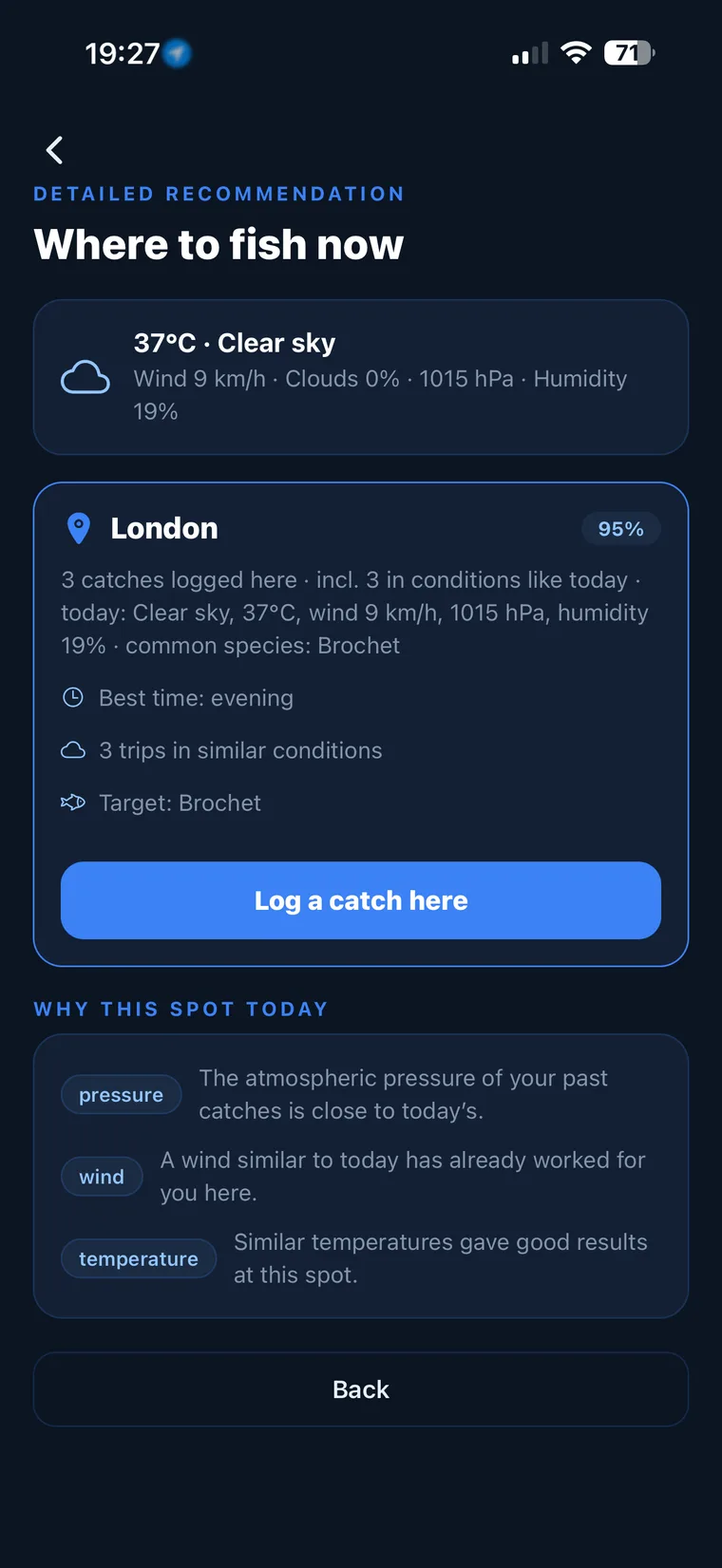
Not sure what to tie on?
Photograph your spot: CarnaFish reads the scene, cross-checks the conditions and gives you the zone, the lure and the retrieve. Free on iOS and Android.
Detecting takes
This is the hard part. On such a discreet lure, the take often is too. Three signals:
- A sharp tap in the rod — the most obvious, and the rarest.
- A sensation of weight appearing without any knock, as if the lure had become heavier.
- Line moving sideways, or line that stops falling during a pause.
On the last two, strike without hesitating: those are the most frequent zander takes on this kind of lure.
Colours
- Clear water: translucent, glittered tones that catch the light without creating a bulky silhouette.
- Slightly stained water: more opaque, with a defined back.
- Coloured water: this is no longer the right lure. Switch to a wide-paddle shad whose vibration carries.
Swing Impact or classic shad
A generalist shad such as the Cannibal vibrates strongly, is detectable from afar and forgives mistakes: the right choice in stained water, on active fish, and for learning. The Swing Impact takes the lead in exactly the opposite case: clear water, wary fish, slow technical fishing.
They are not competitors but two tools for two different days. For zander, our beginner's guide to zander lure fishing covers reading the spots. And on an unfamiliar water, CarnaFish analyses a photo and suggests a starting zone and retrieve.
Key points
- Fine paddle and very soft material: the action starts at almost zero speed.
- The whole body undulates, not just the tail.
- Salt and scent buy the fraction of a second that lets you strike.
- Round head for searching, drop shot for static fish, weedless for cluttered margins.
- A poor choice in coloured water: its signal does not carry.
FAQ
What jig head should I use?
5 to 14 g depending on depth and current. As with any soft lure, take the lightest that still lets you feel the bottom: too heavy a head crushes the action of this slim shad.
Why is the Swing Impact so fragile?
Because its plastic is heavily salted, which makes it soft and palatable but less durable. That is the price of its effectiveness on difficult fish: treat it as a consumable.
How do I detect takes on such a discreet lure?
Watch for three signals: a sharp tap, a sensation of weight appearing without a knock, or line moving sideways during a pause. The last two are the most frequent with zander.
Is the Swing Impact suitable for stained water?
Hardly. Its discreet vibration does not carry far enough in reduced visibility. In those conditions a wide-paddle shad will be far more effective.
Can it be rigged drop shot?
Yes, and it is one of its best uses. Nose-hooked above a weight, it hangs suspended and its soft material moves on its own, which suits fish sitting on the bottom perfectly.
What retrieve speed?
Far slower than instinct suggests. The fine paddle already vibrates at a speed where you feel you are doing nothing — that is precisely where you should stay.
The full zander lure guideSeason-by-season strategy: which family of lure, when, and why.Go from theory to fish
CarnaFish reads your spot from a photo and gives you the game plan: zone, lure, retrieve. Free on iOS and Android.