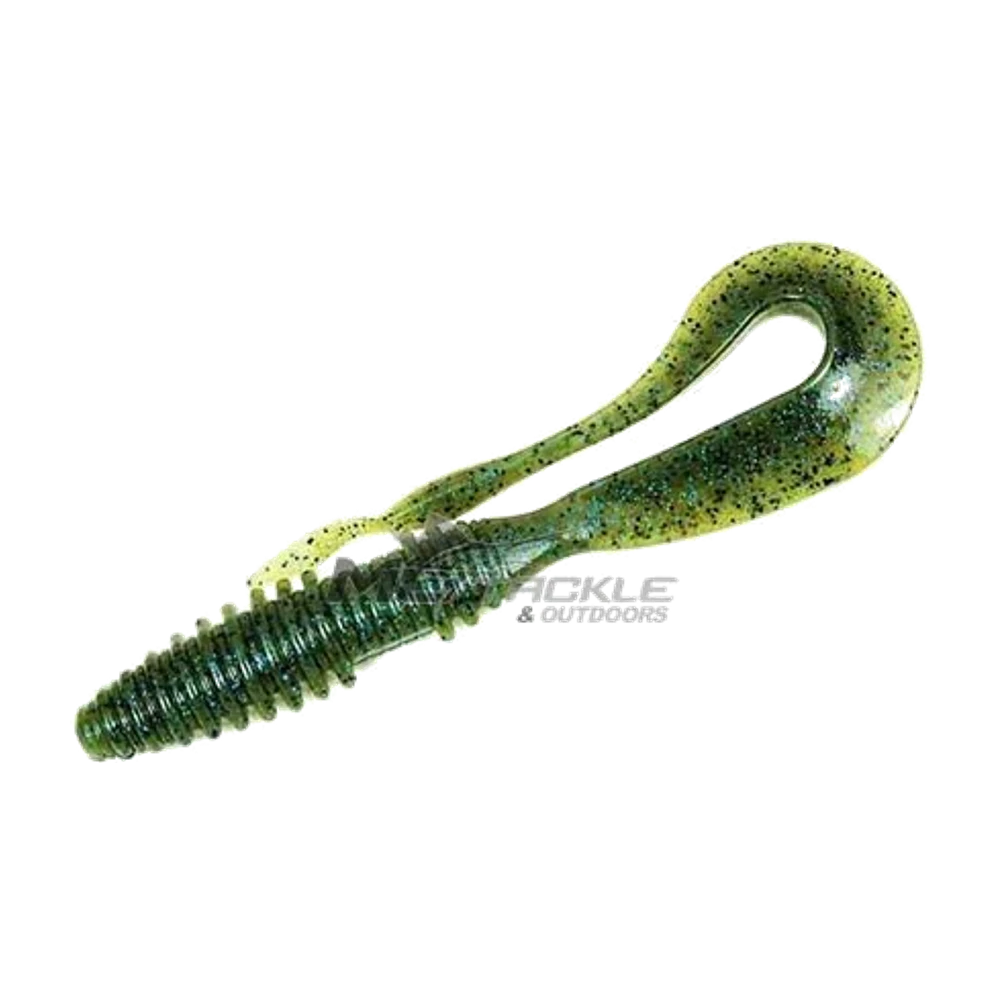
Keitech Mad Wag: the segmented worm that moves without being touched
Not sure this lure fits YOUR spot today? CarnaFish tells you in 10 seconds, from a photo.
There is a category of day where nothing works any more: the day after a cold front, rising pressure, water too clear, a water body fished too hard. The fish are located, you can see them on the sounder or you know where they are, and they refuse everything. In those conditions it is no longer the choice of lure that decides, it is your ability to keep something credible in front of their noses for a very long time.
That is the exact definition of a finesse worm. And on that ground, the Mad Wag's shape brings a measurable advantage: its ribbed body, along its whole length, sustains an undulation on a ridiculous amount of energy. It does not need you to work it. The slightest ambient water movement, or a micro-movement of your line, is enough to keep it alive.
Why the ribs change something
A smooth worm is hydrodynamically neutral: it slips through the water, and its undulation damps out quickly as soon as you stop asking anything of it.
The Mad Wag's segmented body does the opposite on three counts.
- It grips the water. Each rib creates a micro-turbulence. The bait brakes, which prolongs the movement after every impulse.
- It distributes the flex. The thin zones between the ribs bend more easily than the rest of the body, which concentrates the undulation where it is needed and stops it dying out.
- It increases the apparent surface without increasing the bulk. The bait stays slim — so it is not intimidating — while still presenting a readable silhouette.
The result is visible in a bucket: after a single flick of the wrist, a smooth worm stops dead in a second, while the Mad Wag keeps snaking for another two or three. On a fish that takes ten seconds to make up its mind, those are exactly the seconds that count.
The four rigs and what they bring
| Rig | Weight | What it brings |
|---|---|---|
| Drop shot | 5 to 14 g | bait held in open water, adjustable height |
| Ned rig | 2 to 5 g | tail-up posture on the bottom, very slow fishing |
| Wacky | 0 to 2 g | double undulation, gliding fall |
| Finesse Texas | 3 to 7 g | passage through cover |
The drop shot remains the reference rig. The drop shot rig lets you choose the exact height at which the bait works, which is decisive on fish holding above the bottom. A 20 to 40 cm tag covers most situations; stretch it to 60 cm on fish clearly holding high.
The ned rig is its best option on hard bottom. The ned rig holds the bait head down, tail up, in a posture that leaves the ribbed section exposed to the slightest water movement. Trim the Mad Wag to the right length for a classic ned rather than using it whole.
The wacky produces the richest movement: hooked through the middle, the bait works at both ends at once. It is the rig to reach for in shallow water, on fish along the margin. Add a rubber O-ring at the hook point, or you will tear the bait on the first fish.
The finesse Texas only comes in when the spot forces you through wood or vegetation. It costs you part of the undulation, because the buried point stiffens the front of the body, but it lets you fish places where the other three rigs would snag on the first cast. Use it as a constraint, not as a default choice.
The retrieve: do as little as possible
- Lower the bait without excessive tension and let it reach the depth you want. Watch the line, bites on the fall are common.
- Do not move the bait. Simply tighten the line by two or three centimetres, then release. The bait shivers on the spot.
- Wait five to ten seconds between each input. It feels long, and that is deliberate.
- Move thirty centimetres only, then start again. On a known spot, you can spend five minutes on two square metres.
- Set the hook by pulling sideways, with no big sweep. On a fine finesse single, a brutal set pulls out more than it hooks.
On the water: on a fish you can see that refuses, change neither bait nor colour — change the drop shot height. Going from twenty to fifty centimetres above the bottom converts more refusals than any shade change, because the problem is almost never what the bait looks like but which storey it is on.
Not sure what to tie on?
Photograph your spot: CarnaFish reads the scene, cross-checks the conditions and gives you the zone, the lure and the retrieve. Free on iOS and Android.
Tackle is not a detail
In finesse, the setup as a whole counts as much as the bait.
The rod. A tip action sensitive over the first thirty centimetres of the blank, rated around 2 to 10 g. You need to see the bite before you feel it.
The line. Fine 0.06 to 0.08 mm braid for transmission, a 0.16 to 0.22 mm fluorocarbon leader two to three metres long. In very clear water, drop to 0.14 mm and accept a few break-offs.
The hook. On a drop shot, a size 1 or 2 single, nicked through the head over one or two millimetres only. The further you thread the bait on, the more you choke the undulation — that is the commonest mistake.
Mad Wag or a classic straight worm
Against a smooth worm such as the Zoom Finesse Worm, the Mad Wag offers an undulation that lasts longer after every impulse and a stronger visual presence. The smooth worm keeps the edge on outright subtlety and on glide: on a free fall alongside an obstacle, it drops further and straighter.
Against a Yamamoto Kut Tail Worm, the difference is material and density, the Yamamoto being heavier and more salt-loaded, so better suited to a fast wacky fall, where the Mad Wag favours sustained movement on light weights.
In practice the choice is simple: smooth worm when you want the bait to sink, Mad Wag when you want it to stay and keep moving. On difficult perch and bass over a fixed spot, it is the second situation that dominates.
Our beginner's guide to bass fishing places finesse among the season's techniques, and our guide to lure fishing for perch covers the cases where dropping line diameter changes everything. If you are unsure what drop shot height to set up when you reach the bank, CarnaFish analyses a photo of the spot and answers.
Key takeaways
- The ribbed body prolongs the undulation by two to three seconds after each impulse.
- Drop shot to choose the height, ned rig on hard bottom, wacky along shallow margins.
- Work it on the spot: tighten the line by two centimetres, then wait five to ten seconds.
- Nick the hook through one or two millimetres only, or you choke the movement.
- On a refusal, change the bait's height before you change its colour.
FAQ
Which rig should I choose for the Mad Wag?
Drop shot for fish off the bottom, ned rig on hard bottom for very slow fishing, wacky along shallow margins, and finesse Texas in cover. The drop shot remains the most versatile.
How long should the drop shot tag be?
Between 20 and 40 cm for most situations, up to 60 cm on fish clearly high in the water column. Changing that height converts more refusals than a colour change.
How long should I wait between inputs?
Five to ten seconds. The ribbed body keeps undulating well after the input, so the apparent stillness is not really stillness. Stringing inputs together removes exactly the phase in which the fish makes up its mind.
Should the hook be threaded right into the bait?
No. On a drop shot, nick it through the head over one or two millimetres only. A bait threaded on too far loses most of its undulation, which is the commonest finesse mistake.
What line diameter should I use?
Fine 0.06 to 0.08 mm braid with a 0.16 to 0.22 mm fluorocarbon leader. In very clear water and on educated fish, 0.14 mm increases bites at the price of a higher risk of breaking off.
Mad Wag or smooth worm?
Smooth worm when you want a fast, straight fall alongside an obstacle. Mad Wag when you want the bait to stay put and keep moving for a long time, which is the case over a fixed spot with difficult fish.
The full bass lure guideSeason-by-season strategy: which family of lure, when, and why.Go from theory to fish
CarnaFish reads your spot from a photo and gives you the game plan: zone, lure, retrieve. Free on iOS and Android.