Keitech Shad Impact 3": when a paddle tail makes too much noise
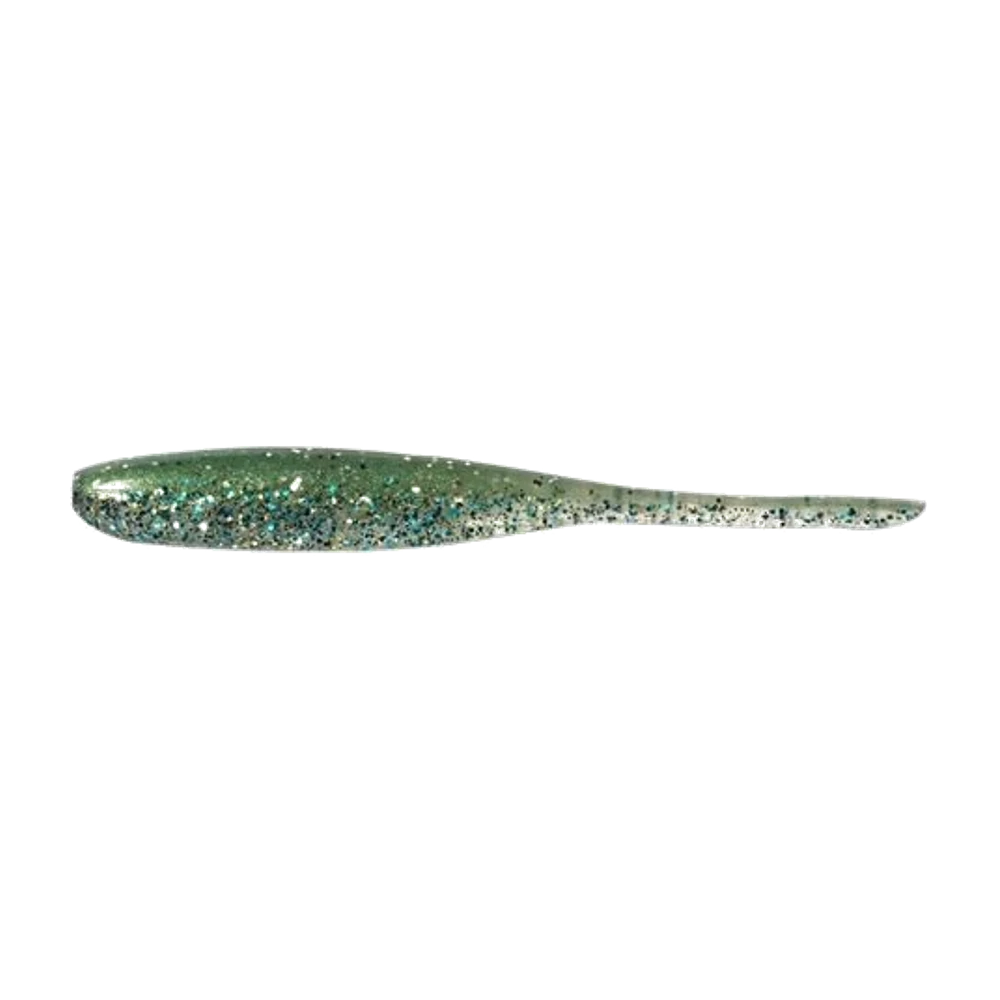
This lure shines under specific conditions. CarnaFish tells you in 10 seconds if today is one of them.
The paddle-tail shad has become the universal reflex. It vibrates, you feel it in the rod, it reassures. But that vibration has a cost few anglers identify: it fills the whole sound space. The fish picks the lure up from a distance, comes in, and what it finds on arrival looks like nothing natural — a fry does not shake the water for three metres around it.
On heavily fished waters, in the depths of winter, or in bright settled weather when perch are pinned to the bottom and refuse everything, that signature is often the reason for the refusal. The fish come to look and leave.
The Shad Impact replaces the paddle with a flat pintail, in line with the body. It does not kick. It shimmers, it undulates, it reacts to the slightest water movement, but it does not put out that steady thump that gives a lure away. At three inches, it is the size that covers both a good perch and a difficult zander.
What a pintail actually does
You need the mechanics to know when to pick it.
A paddle tail sits perpendicular to the body axis: it presents a large frontal surface, catches water on every movement and generates a torque that rocks the whole bait. The result is a low-frequency vibration that carries far.
A pintail is in line with the body and flattened laterally. It catches almost no water head-on. What it does instead:
- It flutters like a flag, as soon as there is even minimal current — including the current created by the bait simply sinking.
- It passes the undulation to the body rather than the other way round: it is the long body that snakes, not the tail that slaps.
- It keeps moving at a dead stop, which is impossible for a paddle. A bait sitting on the bottom, on a drop shot, keeps a living tail without you touching anything.
Add Keitech's material, salt-loaded and scented, and you get a bait fish hold in their mouths longer than a neutral plastic.
The rigs, from most discreet to most searching
| Rig | Weight | Use |
|---|---|---|
| Drop shot | 5 to 12 g sinker | Located, settled fish, vertical or short cast |
| Ned rig | 2 to 4 g head | Hard bottom, winter perch, almost no input |
| Light jighead | 3 to 7 g | Classic sawtooth, zander on a drop-off |
| Light Texas | 3 to 7 g bullet | Cluttered margins, branches, rock |
The drop shot is the rig that exploits the pintail best: the bait is held off the bottom, suspended, and the tail works continuously with no input at all. On perch spotted on the sounder but sitting still, it is the reference combination.
For a jighead, choose a model with a slim head and a fine-wire hook. A big 10 g round head on a 2 g bait unbalances the whole thing and kills the body's undulation.
The retrieve: do as little as possible
- Sink it on a semi-tight line. Do not hold the line too tight, you would remove the glide. The tail is already shimmering during that phase.
- One second of stillness on bottom contact.
- One single short pull, 20 to 30 cm, rod tip low. Not two, not three.
- Pause of three to five seconds, rod still. The tail carries on by itself.
- Repeat, taking up the slack between sequences.
For zander in cold water, stretch the pauses further — up to eight or ten seconds. On active perch you can switch to a very slow straight retrieve at mid-depth: the body snakes and the tail flutters, giving a continuous but weak signal.
On the water: with a pintail shad, stop trying to feel the bait. With a flat tail, almost no vibration travels back up the rod — the absence of feel does not mean the bait is not working. If you go heavier on the jighead to "feel it better", you destroy exactly what you came for.
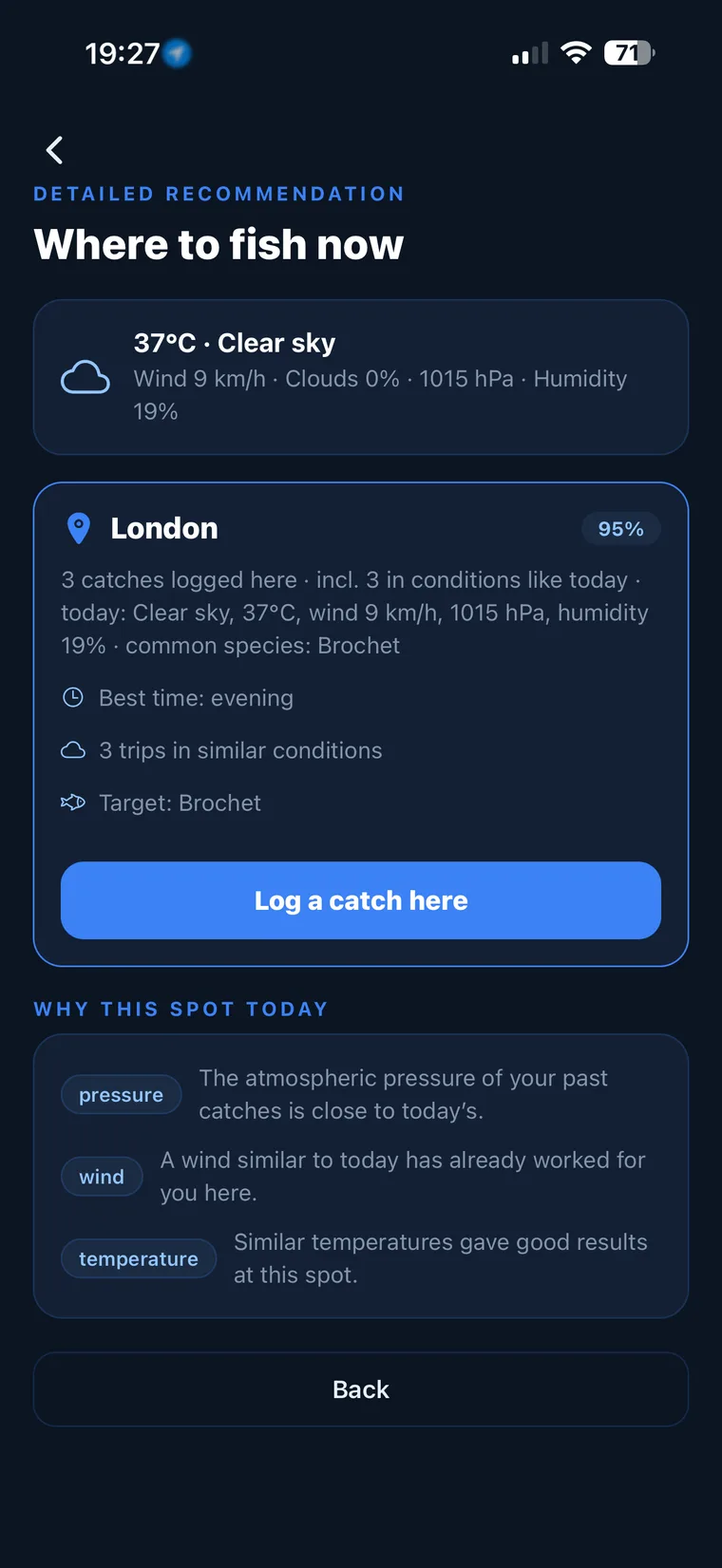
Not sure what to tie on?
Photograph your spot: CarnaFish reads the scene, cross-checks the conditions and gives you the zone, the lure and the retrieve. Free on iOS and Android.
Where it shines, and where not to force it
Its best windows:
- Clear, heavily fished water, where everyone else is throwing paddles.
- Cold water, from November to March, when fish no longer move for a strong signal.
- Located fish, on the sounder, on sight, or on a known spot: this is a lure you present, not a lure that calls.
- Hard, clean bottom: gravel, sand, rock armour, where the bait stays visible.
Its contraindications:
- Very stained water or night fishing, where the fish needs a vibration signal to home in: a paddle is objectively better.
- Fast searching over large areas, where you need casting distance and a call at range.
- Strong current, which pins the tail flat and kills the flutter.
- Dense weed and soft silt, where the bait disappears into the background.
Shad Impact 3" or 2"
The Keitech Shad Impact 2" works on the same flat-tail principle, but the size gap changes three things fundamentally.
Casting distance. With about a gram more material, the 3" casts noticeably better on a light jighead. The 2" often forces you to go heavier, which limits its rigs for shore fishing.
The fish targeted. The 2" is a perch bait, including small perch, and it excels in ultra-finesse. The 3" moves into zander and good-perch territory: seven and a half centimetres is the size of a late-season young-of-the-year fry, and it is above the threshold at which a zander will move.
The usable weight. The 3"'s longer body carries a 5 to 7 g head without losing its undulation, which opens up four to six metres and moderate current. The 2" tops out well before that.
In practice you do not swap one for the other: the 2" for difficult perch in shallow water, the 3" as soon as you go deeper or zander enter the equation. For a stronger signal on the same spots, a Keitech Easy Shiner 3" goes back to a paddle tail, and a Savage Gear Craft Cannibal offers a middle ground. Our beginner's guide to lure fishing for zander covers retrieve regimes season by season. And if you are torn between pintail and paddle on a given spot, CarnaFish analyses a photo of the spot and answers.
Key takeaways
- A flat tail: a continuous shimmer instead of a thump, including at a dead stop.
- Drop shot and ned rig are the rigs that exploit it best.
- One single pull, then three to five seconds of motionless pause.
- Do not go heavier on the head to "feel it better": that destroys the undulation.
- A bad choice in very stained water, at night, or when searching fast.
FAQ
What is the difference between the Shad Impact 3" and the 2"?
The 3" casts better, carries a heavier jighead without losing its undulation, and moves into zander and good-perch territory. The 2" stays a pure finesse bait for difficult perch in shallow water.
Which rig should I choose for the Shad Impact 3"?
Drop shot for a located, motionless fish, ned rig on hard bottom in winter, a slim 3 to 7 g jighead for classic sawtooth work, light Texas along cluttered margins. The drop shot is the one that exploits the flat tail best.
Why can I barely feel anything with this bait?
That is normal: a pintail generates no low-frequency vibration, so nothing travels back up the rod. The absence of feel does not mean the bait is not working — whatever you do, do not go heavier on the head to compensate.
Paddle or pintail, which catches more?
It depends on the conditions. In stained water, at night or when searching fast, the paddle is clearly better because it helps the fish home in. In clear or cold water, or on educated fish, the pintail gets through where the paddle is refused.
What jighead weight should I use?
Between 2 and 7 g depending on depth: 2 to 4 g down to three metres, 5 to 7 g beyond that or in light current. Above 7 g, a 7.6 cm body no longer snakes properly.
Does it catch zander or only perch?
Both. The 7.6 cm size matches a young-of-the-year fry and sits above the threshold at which a zander will move, particularly in cold clear water, with pauses stretched to eight or ten seconds.
The full perch lure guideSeason-by-season strategy: which family of lure, when, and why.Go from theory to fish
CarnaFish reads your spot from a photo and gives you the game plan: zone, lure, retrieve. Free on iOS and Android.