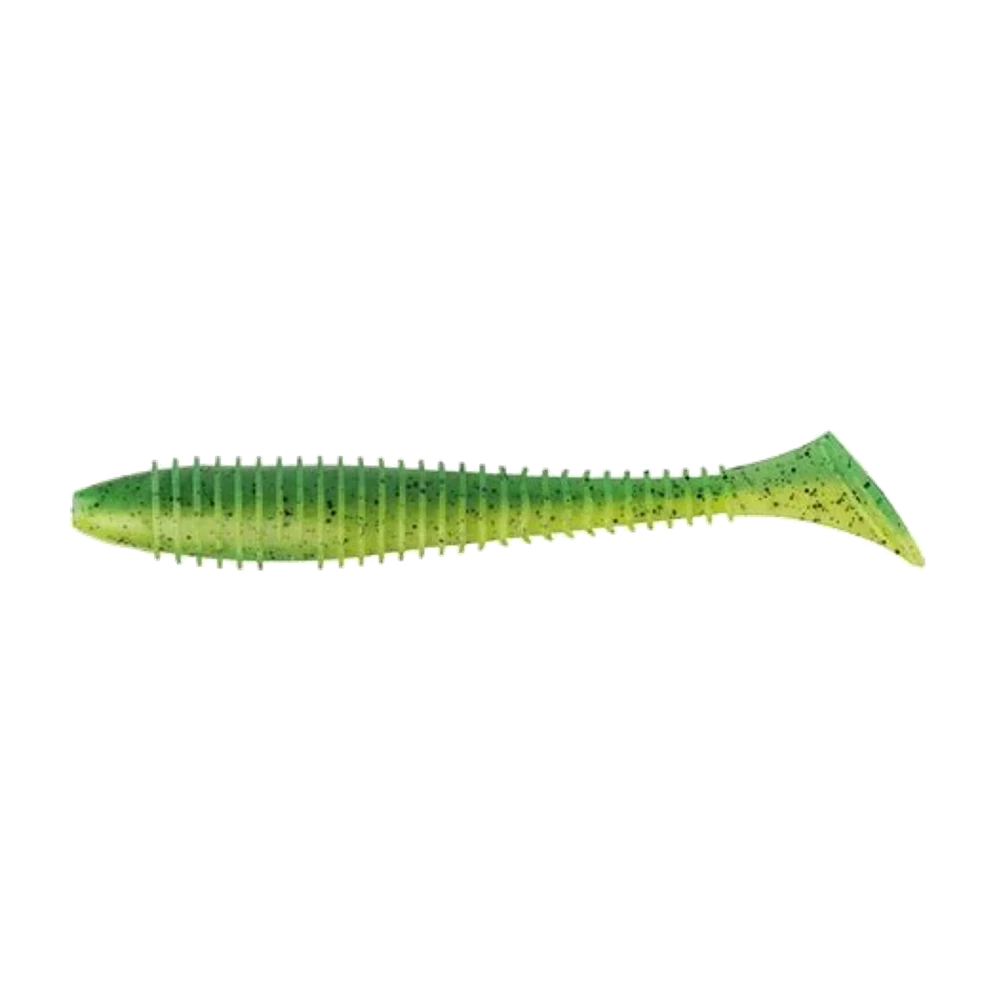
Keitech Swing Impact FAT 3.8: the shad that doubles as a trailer
Before tying this one on, it helps to know if the spot actually calls for it. CarnaFish reads the scene from a photo.
Every soft plastic box has two or three sizes that never get used. The 2 inch is too small as soon as there is any current, the 5 inch is too big for half your sessions, and you end up fishing the whole year with the same middle size. You may as well pick the right one.
The Swing Impact FAT in 3.8 inch sits exactly on that pivot. At around 9.7 cm, it matches the dominant baitfish size on most of our waters — young roach, this year's bleak, small perch — while still being bulky enough to move water.
But its real value lies elsewhere, and plenty of anglers miss it: it is also the ideal format to use as a trailer behind a chatterbait or a spinnerbait. One bag then covers two completely different styles of fishing.
Use 1: rigged on its own, on a jig head
This is the classic job, and the head choice decides everything.
| Head weight | Target depth | Situation |
|---|---|---|
| 5 to 7 g | 0.5 to 1.5 m | margins, weed beds, slow fall for bass |
| 10 g | 2 to 3 m | default setting when you do not know the spot |
| 14 g | 3 to 4 m | drop-off, moderate current, zander on the bottom |
| 18 g and up | 4 to 5 m | strong current or heavy crosswind |
Two retrieves cover almost everything.
The slow straight retrieve, for bass and active zander: a continuous, reduced-speed wind, just fast enough to feel the tail thumping. You adjust depth by varying speed, not head weight.
Lift-and-drop, for zander sitting on the bottom: touch down, two or three turns of the handle, a dead stop, then let it drop back on a semi-tight line. The bite comes on the fall, almost always as a light knock or a line that goes slack when it should not.
Use 2: as a trailer on a bladed lure
A bare chatterbait or spinnerbait produces vibration but no profile. The trailer gives it a body, a volume and a swimming tail — and on the 3.8, the wide paddle adds a thump the blade alone does not deliver.
Three things have to be right for it to work:
- Thread it dead straight. A trailer rigged off-centre will spin the whole lure within three turns of the handle. Lay the shad alongside the hook before threading to find the exact exit point.
- The body must stay in line, with no folds or compression. If the shad bunches up, you have pushed it on too far: back it off half a centimetre.
- Set the tail horizontally. A vertically mounted tail thumps up and down, which fights the chatterbait's side-to-side movement.
On a chatterbait, the 3.8 is almost always better sized than the 4.8: it does not smother the blade's vibration, whereas an oversized trailer drags and damps the movement.
On the water: when you rig a shad as a trailer, trim about a centimetre off the front of the body before threading it on. You move the hook exit point back, the tail ends up further behind the blade, and you recover thump amplitude. It is a five-second detail that changes the action of the whole lure.
Salt in the plastic: what it actually changes
The plastic is loaded with salt, which has two concrete effects on this size.
It weights the tail. The thump starts at lower speeds than on a standard plastic of the same shape, which matters enormously on slow lift-and-drop work for cold-water zander.
It makes fish hold the lure longer. A zander that nips the bait spits it in a fraction of a second if it feels inert plastic. With a salted body the delay is slightly longer — just enough for a hookset that went a quarter of a second late to still find purchase.
The trade-off: salt makes the plastic heavier and a little more prone to tearing at the nose. Pierce the hook exit hole cleanly rather than forcing the point through, and the body will survive several more fish.
Colours: three families are enough
There is no point carrying fifteen shades. In this size, three families cover the year.
- A glitter translucent for clear water and bright sun. It lets light through and does not present a solid silhouette to a fish inspecting the lure up close.
- A natural roach or ayu, grey-green back and pale flanks, for everything else. It is the colour that takes the most fish over a year, simply because it matches what zander and bass actually eat on our waters.
- A contrasting opaque, plain white or chartreuse, for coloured water, late evenings and days with very low cloud. In poor visibility it is the silhouette that counts, not the detail.
The rest is personal preference. If you are torn between two colours on a spot, change head weight or speed instead: both have far more effect on the number of bites.
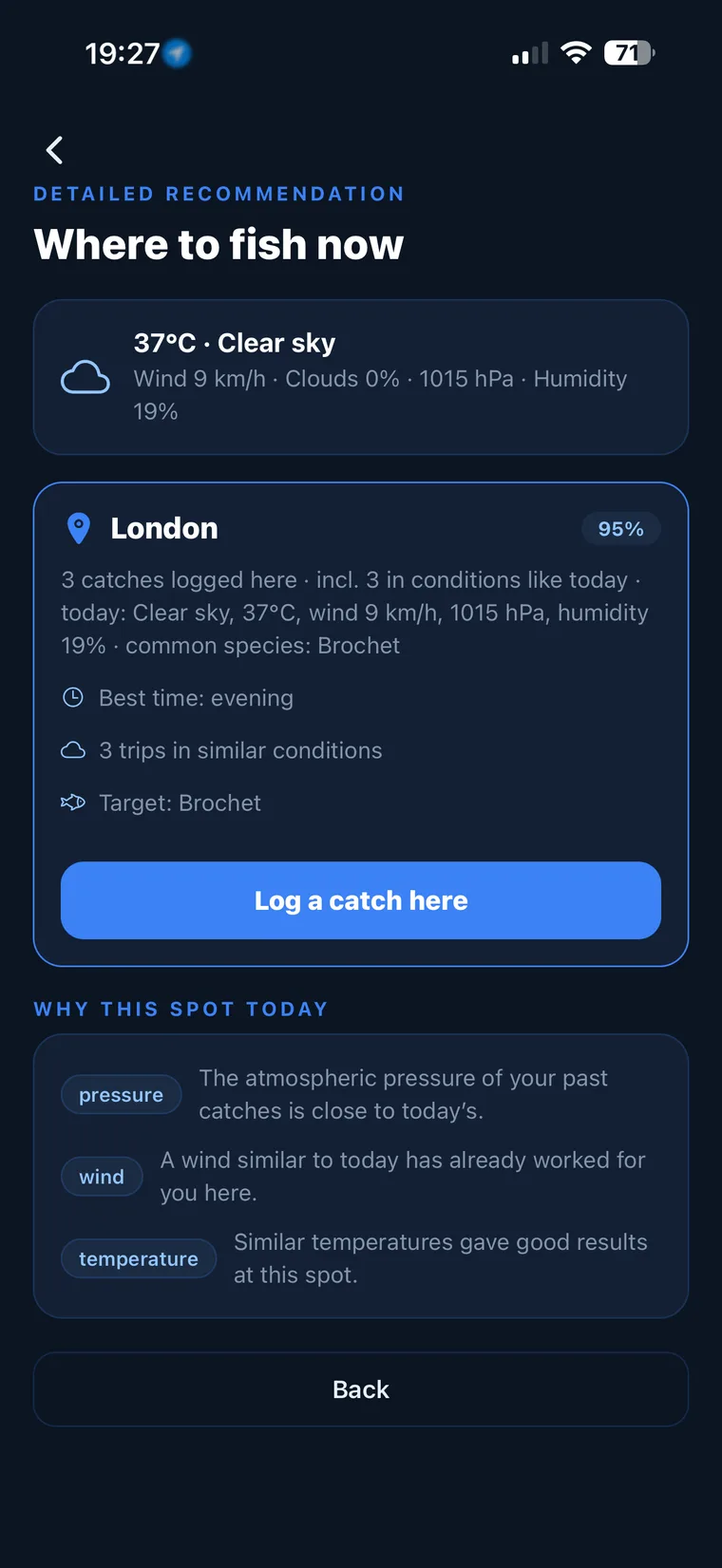
Not sure what to tie on?
Photograph your spot: CarnaFish reads the scene, cross-checks the conditions and gives you the zone, the lure and the retrieve. Free on iOS and Android.
Neighbouring sizes: when to switch
- Drop down a size when bites get scarce in clear cold water, or when you are targeting perch alongside zander.
- Step up to the 4.8 inch when you are specifically after big fish, in stained water, or when you are fishing for pike rather than zander.
- Stay with the 3.8 for everything else, which covers the majority of inland freshwater sessions.
For zander specifically, the plain jig head rig remains the most effective. In snaggy ground, a Texas rig on a wide gape hook goes anywhere, at the cost of a few missed hooksets.
Swing Impact FAT or a slim-tailed shad
Against a slimmer-bodied shad such as the Keitech Easy Shiner 4, the difference comes down to displaced volume. The Swing Impact FAT's wide body generates more vibration and holds up better in stained water or current, but it puts off wary fish more in very clear water. The Easy Shiner is more discreet and quicker to work.
The most reliable tipping point is water clarity. Below one metre of visibility, take the wide body. Above two metres, the slim body converts better. In between, both work and retrieve speed decides.
Our beginner's guide to lure fishing for zander covers head weight choices spot by spot. And if you are unsure what size shad to rig when you reach the bank, CarnaFish analyses a photo of the spot and answers.
Key takeaways
- A pivot size around 9.7 cm: it matches the dominant baitfish on most waters.
- A 10 g head by default, 5 to 7 g in the margins, 14 to 18 g on a drop-off or in current.
- An excellent chatterbait trailer, better sized than the bigger model.
- Trim a centimetre off the front before threading it as a trailer: you gain tail amplitude.
- Salt weights the tail, so the action starts slower and the fish holds the lure longer.
FAQ
What jig head for a Swing Impact FAT 3.8?
A 10 g head covers most situations between 2 and 3 m. Drop to 5 or 7 g for margins and slow falls, go up to 14 or 18 g on a deep drop-off, in current or in a crosswind.
Does the 3.8 work as a chatterbait trailer?
Yes, and it is often the best size choice. A bulkier trailer damps the blade's vibration, whereas the 3.8 adds a tail thump without dragging the lure.
How do I stop the shad spinning as a trailer?
Thread it perfectly straight, with no folds or compression of the body, and set the tail horizontally. Lay the shad alongside the hook before threading to find the right exit point.
Swing Impact FAT 3.8 or 4.8?
The 3.8 for zander, bass and trailer use, which covers most sessions. The 4.8 when you are specifically targeting big fish, in stained water, or for pike.
Why is the plastic salted?
Salt weights the body, which makes the tail start thumping at lower speed, and it encourages the fish to hold the lure a fraction of a second longer. The trade-off is plastic that is slightly more fragile at the nose.
Can it be rigged Texas style?
Yes, on a wide gape Texas hook set into the back of the body. That is the answer in weed or dead wood, at the cost of a slightly lower hook-up rate than a jig head with an exposed hook.
The full zander lure guideSeason-by-season strategy: which family of lure, when, and why.Go from theory to fish
CarnaFish reads your spot from a photo and gives you the game plan: zone, lure, retrieve. Free on iOS and Android.