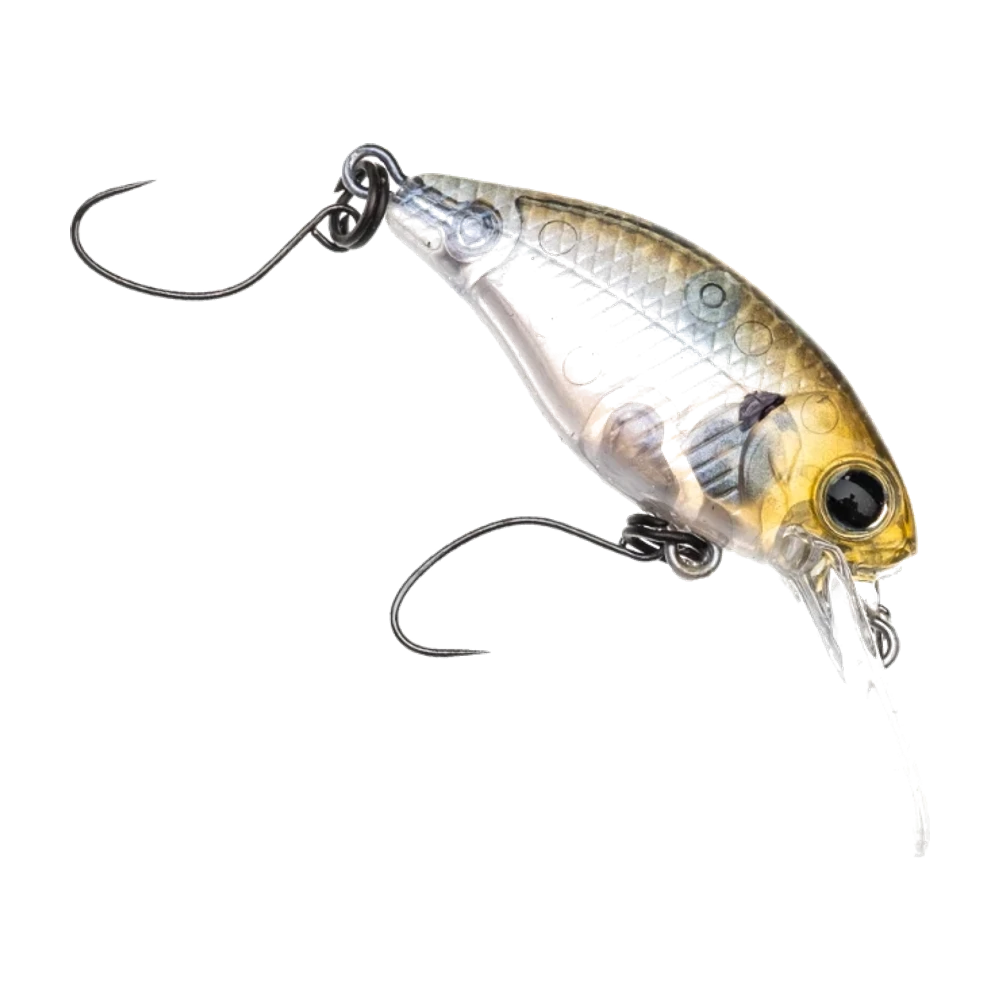
Lucky Craft Flat Cra-Pea: the flat-sided crankbait for cold, clear water
One lure, endless conditions. CarnaFish reads your spot from a photo so you are not just guessing.
March, water at nine degrees, a crystal-clear gravel pit. You run a round crankbait along a stony margin: the rod thumps heavily, the lure shoves a lot of water, and nothing happens. Two hours later you have seen one follow.
That is not a colour problem or a depth problem. It is a signal problem. A round-bodied crankbait sends out a wide, low-pitched vibration designed to call from a distance in coloured water or to active fish. In cold, clear water that signature is too strong: the fish picks it up perfectly, comes over, and refuses.
The Flat Cra-Pea is built for the other end of the spectrum. Its sides are flat and its body is thin, and it produces a narrow, fast vibration paired with a wide flank flash. Little water displacement, plenty of light. It is the crankbait for situations where the fish sees everything and is no longer impressed.
Flat sides: two effects that come together
The geometry of a flat-sided crankbait produces two behaviours at once, and it is their combination that makes it worthwhile.
- A tight, fast vibration. A thin body presents little frontal area to the water: it oscillates over a small amplitude at high frequency. In the rod you feel a fine buzz rather than a hammering.
- A pronounced roll. This is the apparent paradox of these lures: they move little sideways but roll a lot on their long axis. On every roll the flat surface of the flank tips over at once and throws back a wide, sharp flash, like a playing card being turned. A round body never presents a flat surface, and its flash is diffuse.
The result is a lure that is discreet to a fish's ear and very visible to its eye. That is exactly the profile you need in clear, cold water, where visibility is good and a fish with a slowed metabolism is convinced far more easily by a visual stimulus than by noise.
One rigging consequence: a thin body is light for its volume, so it is wind-sensitive. Cast over the shoulder on a flat trajectory rather than lobbing it, and thumb the spool at the end of the cast.
The retrieve: slow, steady, and above all contact
The general crankbait rule applies here even more strictly: this lure has to hit something.
- Cast beyond the structure you are targeting — a stony margin, a stump, a bridge pillar, a rock head.
- Retrieve slowly and steadily, at the slowest speed at which you still pick up the buzz in the rod tip. No pulls, no snaps.
- Keep going when the lure touches. Do not try to avoid it: bouncing off a rock or a branch interrupts the swim abruptly and kicks the lure sideways.
- Stop for one second right after the contact. On a floating version, the lure rises a few centimetres as it rights itself, which presents the flank while stationary. That is where most bites land.
- Start again slowly and carry on all the way to the bank.
On the water: in cold water, do not set the hook on the strike. Crankbait takes at this time of year are soft — the fish inhales rather than hits — and the fine trebles on this kind of lure hook themselves. Simply keep turning the handle while the rod absorbs, held at 45 degrees. A sharp hookset on a fish barely held by fine wire tears the hook out nine times out of ten.
Choosing the version and the depth
The Flat Cra-Pea comes in several lip lengths, which determine its running lane.
| Version | Cruising depth | Typical use |
|---|---|---|
| Short lip | 0.8 to 1.2 m | margins, low weed, shallow flats |
| Medium lip | 1.5 to 2 m | gentle slope, rock head, bridge pillar |
| Long lip | 2.5 to 3 m | drop-off, gravel shelf, deep margin |
The principle to remember holds for every crankbait: pick the version that dives a little deeper than the bottom you are targeting. A lure running at 1.5 m over a 2 m bottom touches nothing and triggers nothing. Contact is half the effectiveness.
For line, fluorocarbon in 0.20 to 0.25 mm gives the best compromise between depth and control. Finer and you gain 20 cm of depth but risk abrasion on the rocks; heavier and you restrict the action of a light lure. Tie it straight: on a flat-sided crankbait, a snap that is too heavy is enough to unbalance the swim.
The stock trebles are fine and well sized. If you replace them, stay with the same wire diameter — heavier wire unbalances a light body and makes the lure run on its side.
Its windows, and what it cannot do
- Cold water, February to April, along gravel margins and rocky shelves. This is its reference window.
- Clear, heavily fished water, all year round, when a noisy crankbait has stopped working.
- Perch on rock piles, on a slow retrieve with repeated contact on the stones.
- Late autumn, when the temperature drops and fish group up on hard bottoms.
It is poorly armed for three things, though. Very murky water: with no wide vibration or marked noise it does not call from a distance, and a round rattling crankbait will do far better. Fast searching of large areas, because its working speed is inherently low. And dense vegetation: two exposed trebles and a short lip do not forgive.
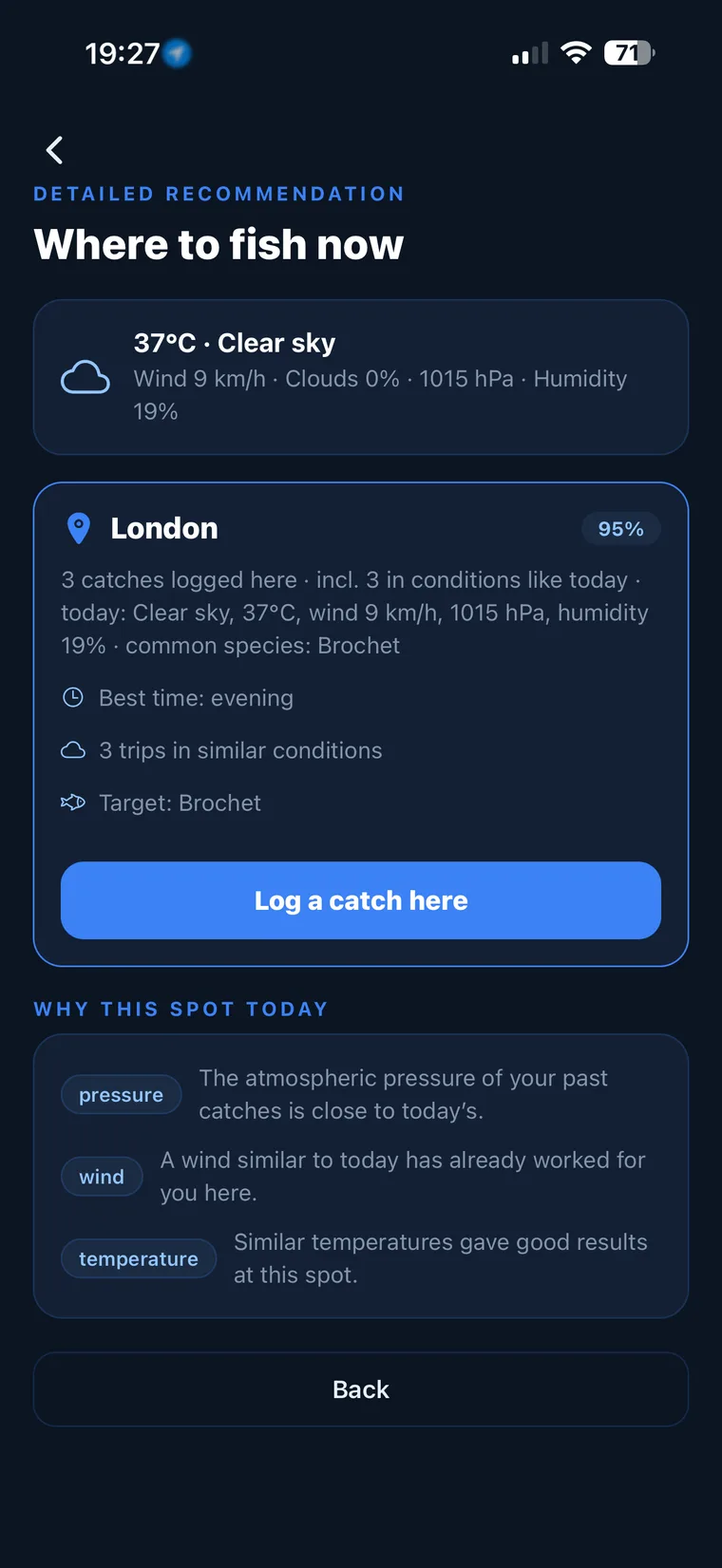
Not sure what to tie on?
Photograph your spot: CarnaFish reads the scene, cross-checks the conditions and gives you the zone, the lure and the retrieve. Free on iOS and Android.
Flat Cra-Pea or a round crankbait
The most telling comparison is the Rapala Fat Rap, which embodies the other philosophy. A round, bulky body, a wide action, heavy water displacement, and strong buoyancy that brings it back up fast after a contact. It is an excellent lure for calling an active fish in stained water, or for raking a margin in spring as the temperature rises.
The Flat Cra-Pea takes the lead exactly where the other saturates: clear water, cold water, fish that have already watched ten lures go past. They are not competitors, they are complementary in the same box, and the choice between them comes down to two criteria only — water clarity and temperature.
Within the flat-sided family, the Berkley Frittside fills a neighbouring role with a slightly different profile; if you already own one, the Flat Cra-Pea mainly adds a more compact format suited to perch and shallow water. Our guide to lure fishing for perch covers the situations where the crankbait beats soft plastics. And if you are unsure which lip version to tie on in front of an unknown margin, CarnaFish analyses a photo of the spot and answers.
Colours
- Clear water, full daylight: translucents and natural roach or bleak tones. The flank flash already does the signalling.
- Gravel bottom, late winter: brown and crawfish red, the seasonal reference over hard bottoms.
- Overcast sky or slightly coloured water: dark back and pale belly, to reinforce contrast seen from below.
- Very clear water and educated fish: a matt, plain finish with no glitter. The roll is enough to create the flash.
Key takeaways
- Flat sides: a tight, discreet vibration, but a wide flank flash on every roll.
- A cold and clear water lure, where a round crankbait scares fish off rather than attracting them.
- Contact with the bottom or a structure is half the effectiveness; pick the lip that dives below your bottom.
- Stop for one second after every deflection: the bite almost always lands there.
- In murky water and for fast searching, a round crankbait does better.
FAQ
What is a flat-sided crankbait for?
For producing a discreet vibration and a marked visual flash, the opposite of a round crankbait that shoves a lot of water. It is the sensible choice in cold, clear water, when the fish detects everything and refuses a signal that is too strong.
How deep does the Flat Cra-Pea swim?
Between 0.8 and 3 m depending on the lip length of the version you choose. Always pick the one that dives slightly deeper than the bottom you are targeting, so the lure makes contact with the structure.
Should I set the hook on bites in cold water?
No. Winter takes are soft and the fine trebles hook by themselves. Keep turning the handle while the rod absorbs at 45 degrees; a sharp hookset tears the hook out in most cases.
What retrieve speed should I use?
The slowest at which you can still feel the buzz in the rod tip. A fast retrieve adds nothing to this lure and removes the bottom-contact phase that produces the bites.
What is the difference with a round crankbait like the Fat Rap?
The round body sends out a wide, low-pitched vibration that carries far in stained water and suits active fish. The flat side vibrates tight and flashes wide: it is built for clear water, cold water and wary fish.
Is it suitable for perch?
Very much so, in its compact format, over rock piles and gravel margins on a slow retrieve. Repeated contact with the stones and the one-second stops that follow make the best sequence for that fish.
The full perch lure guideSeason-by-season strategy: which family of lure, when, and why.Go from theory to fish
CarnaFish reads your spot from a photo and gives you the game plan: zone, lure, retrieve. Free on iOS and Android.