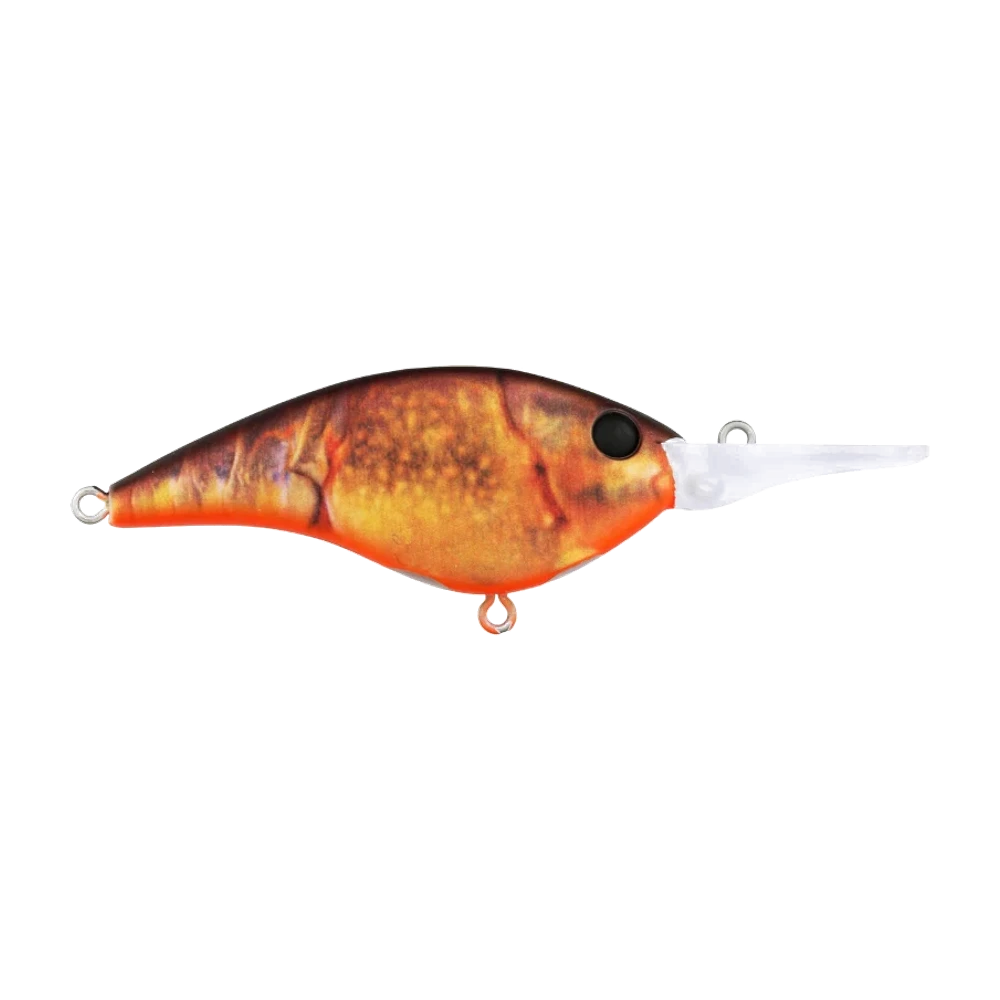
Berkley Frittside: the flat side crankbait for cold, clear water
One lure, endless conditions. CarnaFish reads your spot from a photo so you are not just guessing.
March, water at 10 °C, a clear reservoir. You are working a rocky margin with a round-bodied crankbait and nothing is happening. Yet you can see fish on the sounder, at the right depth, on the right structure. The lure passes in the right place and nobody reacts.
The reflex is to change colour. The problem is elsewhere: a round-bodied crankbait sends out a wide, low-frequency vibration designed to call from a distance in water where nothing can be seen. In clear, cold water that signal is simply too strong. The fish pick it up at ten metres, come in, and refuse at the last moment because what they see does not match what they heard.
The flat side crankbait fixes that mismatch. It produces far less vibration and far more flash, at a higher frequency. That is the family the Frittside belongs to, and it has a very precise window of use.
Flat side against round body: the physics in two sentences
A round body has a cylindrical section. When the lip makes it oscillate, it rolls widely around its axis and displaces a lot of water: that is the wide, low-frequency thump you feel in the blank.
A flat body has vertical flanks and a narrow section. It cannot roll as widely: it oscillates through a shorter angle, but much faster. What you get in practice:
- A weak, high-pitched vibration, almost a continuous shiver. You barely feel it in the rod, which regularly fools anglers into thinking the lure is dead.
- Fast, repeated side flash. Flat flanks are genuine reflective surfaces, and at high frequency they produce a dense shimmer rather than isolated glints.
- A brisk rise when you stop, thanks to the high buoyancy of a thin body. The lure planes up quickly, which lets you free it from an obstruction simply by stopping the reel.
- A clean track at slow speed. A round crankbait tends to come off its axis when you slow down; a flat side holds its line at much lower speeds.
That last property explains its reputation in cold water: you can retrieve it slowly, at a speed matched to inactive fish, without it stopping working or blowing out.
The retrieve: regularity, then deflections
This is not a lure you animate, it is a lure you send through. The full sequence:
- Cast past the structure you are targeting, so the lure has reached its depth by the time it gets there.
- Wind steadily, at a moderate constant speed. No twitches, no variations.
- Look for contact. The aim is to make the lip touch rocky bottom, a stump, a boulder. You feel it as a brief catch followed by a release.
- Pause for one to two seconds immediately after every contact. The lure floats up a few tens of centimetres, rolling as it goes. That is the most triggering phase of the whole retrieve.
- Resume the straight retrieve right after the pause and carry on to the bank.
In warmer water or on active fish you can drop the pauses and pick up the pace: the flat side accepts speed, it simply loses part of its advantage over a round crankbait.
On the water: if you feel your flat side crankbait vibrating strongly in the tip, you are retrieving too fast for the situation you chose it for. The right rhythm, in cold water, is the one where you barely sense a shiver — just enough to know the lip is loading up. Most anglers used to round crankbaits fish this lure 30 % too fast out of pure tactile habit.
Sizes, depths and fine-tuning with line
| Approximate size | Indicative weight | Depth on 0.25 mm fluorocarbon | Use |
|---|---|---|---|
| 5 cm | 7 to 9 g | 1.2 to 1.7 m | Perch, shallow margins, very clear water |
| 7 cm | 11 to 13 g | 1.7 to 2.2 m | The all-round bass size |
| 9 cm | 16 to 18 g | 2.2 to 2.7 m | Drop-offs, deep plateaus, fish away from the bank |
Line is your fine depth adjustment. A 0.20 mm fluorocarbon takes the lure twenty to thirty centimetres deeper than a 0.30 mm, because it offers less resistance and sinks. On a drop-off where you only want to scrape the top of the plateau, changing diameter is often more effective than changing lure size.
A small round snap is acceptable and does not degrade the wobble. Avoid a tight knot on the ring, though, as it restricts the already short amplitude of this kind of body.
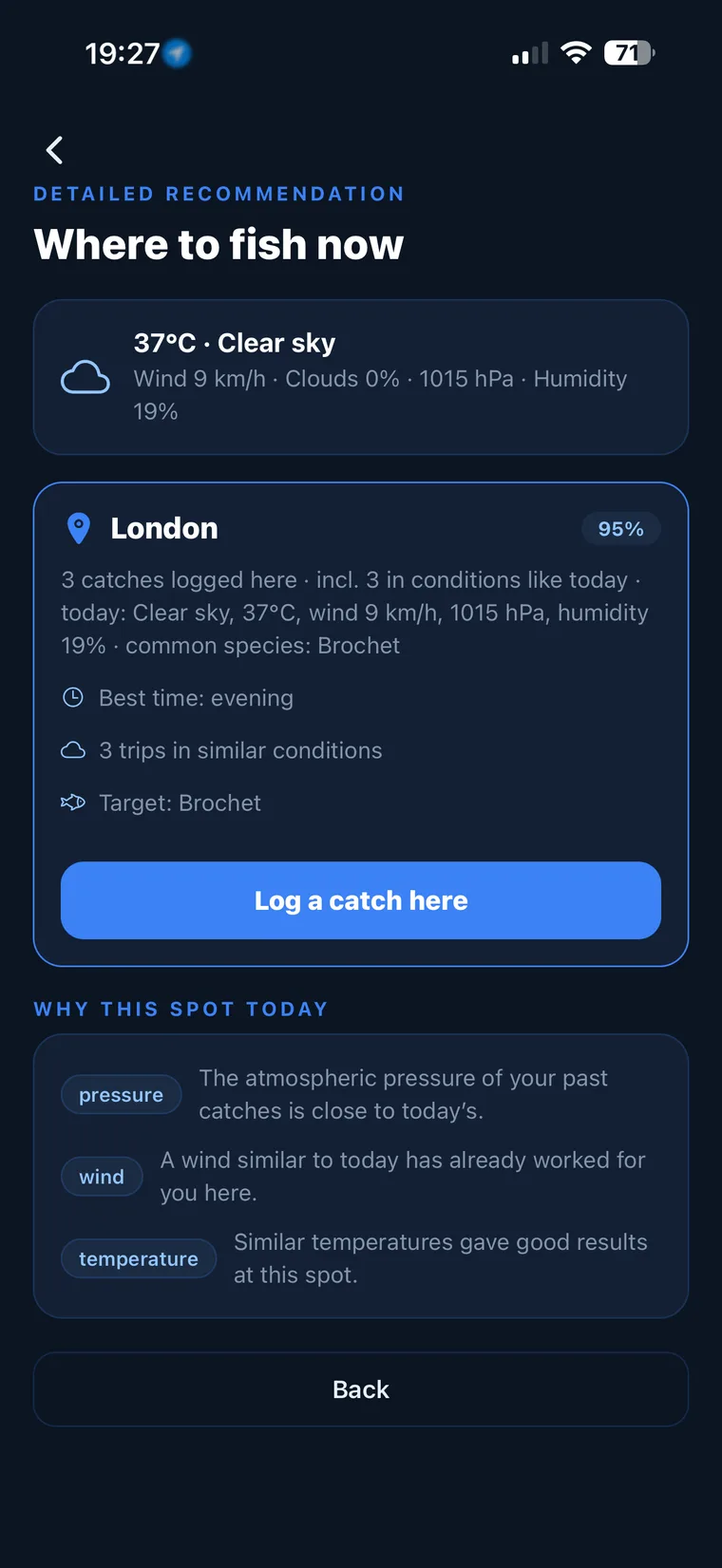
Not sure what to tie on?
Photograph your spot: CarnaFish reads the scene, cross-checks the conditions and gives you the zone, the lure and the retrieve. Free on iOS and Android.
Where it takes the edge — and where not to use it
Its window:
- Clear, cold water, typically 8 to 15 °C, in late winter and early spring.
- Rocky margins, gravel plateaus, rock-armoured dykes, where contact with the bottom is possible and regular.
- Educated fish on heavily fished waters, that have learnt to avoid round crankbaits.
- Searching for perch, where the tight flash of the 5 cm size is very effective on shoals sitting along a drop-off.
Conversely, three situations where it is the wrong call. In dirty or stained water it does not put out enough signal to be found: a round crankbait or a lipless covers the ground far better. In dense sunken wood or vegetation, its flat body and lip do not deflect as well as a square lip, and you multiply the snags. And beyond 3 m you are outside its range: it is not built to go deep.
Frittside, squarebill or classic crankbait
The Strike King KVD 1.5 Squarebill is its functional opposite. The square lip is built to knock into and bounce off obstructions, and its round body sends a strong signal through dirty water. It is the right lure in stained water, over wood, in warm water, on active fish. The Frittside takes over in exactly the mirror case: clear water, cold water, clean rocky bottom, fish that have already refused a strong signal.
The Rapala Shad Rap is closer on paper, with a tight wobble and a thin body, but the comparison is about material and profile: the balsa of the Shad Rap gives it lively buoyancy and a very natural action on a slow straight retrieve, whereas the genuinely flat flank of the Frittside prioritises side flash. In practice the Shad Rap often does better on clean straight-retrieve searching, the Frittside as soon as there is bottom contact and you exploit the pauses after a deflection. If you want more depth on the same bottom-contact logic, the Rapala DT6 covers another band.
Our beginner's guide to bass fishing covers the periods when the crankbait beats everything else. And if you are torn between a flat side and a squarebill when you arrive at a margin, CarnaFish reads a photo of the spot and answers.
Key takeaways
- Flat side: little vibration, a lot of flash, at high frequency. A discreet signal, not a powerful one.
- It holds its track at slow speed, which makes it usable in cold water.
- Look for bottom contact, then pause for one to two seconds: that is where the bites come.
- Line diameter is your fine depth adjustment, before you even think about size.
- Wrong in dirty water, in dense wood, and beyond 3 m.
FAQ
How fast should a flat side crankbait be retrieved?
Slowly and steadily, until you sense only a light shiver in the tip. If you feel a firm vibration, you are fishing too fast for the cold-water conditions this lure is most relevant in.
Why do I feel almost nothing with this lure?
That is normal. A flat body oscillates through a short angle at high frequency: it displaces little water and therefore transmits little vibration to the rod. The absence of feel does not mean the lure is not working.
How deep does the Frittside run?
Between 1.2 and 2.7 m depending on size and line. Thin fluorocarbon takes it twenty to thirty centimetres deeper than a heavy diameter, which lets you fine-tune without changing lure.
When should I prefer a squarebill?
As soon as the water is stained, the bottom is full of wood, or the fish are active in warm water. A squarebill deflects better off obstructions and puts out a stronger signal, where the flat side is too discreet to be found.
Does it work on perch?
Yes, very well, especially in the shortest sizes. The tight, fast flash matches the way shoals of perch sitting along a drop-off or a gravel plateau react in clear water.
Should I use a snap?
A small round snap does not degrade the action and makes size changes easier. Avoid a tight knot directly on the ring, though, as it restricts the already short oscillation amplitude of this kind of body.
The full bass lure guideSeason-by-season strategy: which family of lure, when, and why.Go from theory to fish
CarnaFish reads your spot from a photo and gives you the game plan: zone, lure, retrieve. Free on iOS and Android.