ZipBaits Khamsin: the tall flat-sided crank that plays on flash
The right lure in the wrong spot still catches nothing. CarnaFish spots the zone that works, from a single photo.
In clear cold water, most crankbaits become too loud. They shove a lot of water, they rattle, they wobble widely — and on a venue with two metres of visibility in March, holding grouped but sluggish perch, all that racket does exactly the opposite of what you want. You watch fish follow to the bank then peel off a metre out. The problem is not that they fail to detect the lure: it is that they detect it far too well and have time to analyse it.
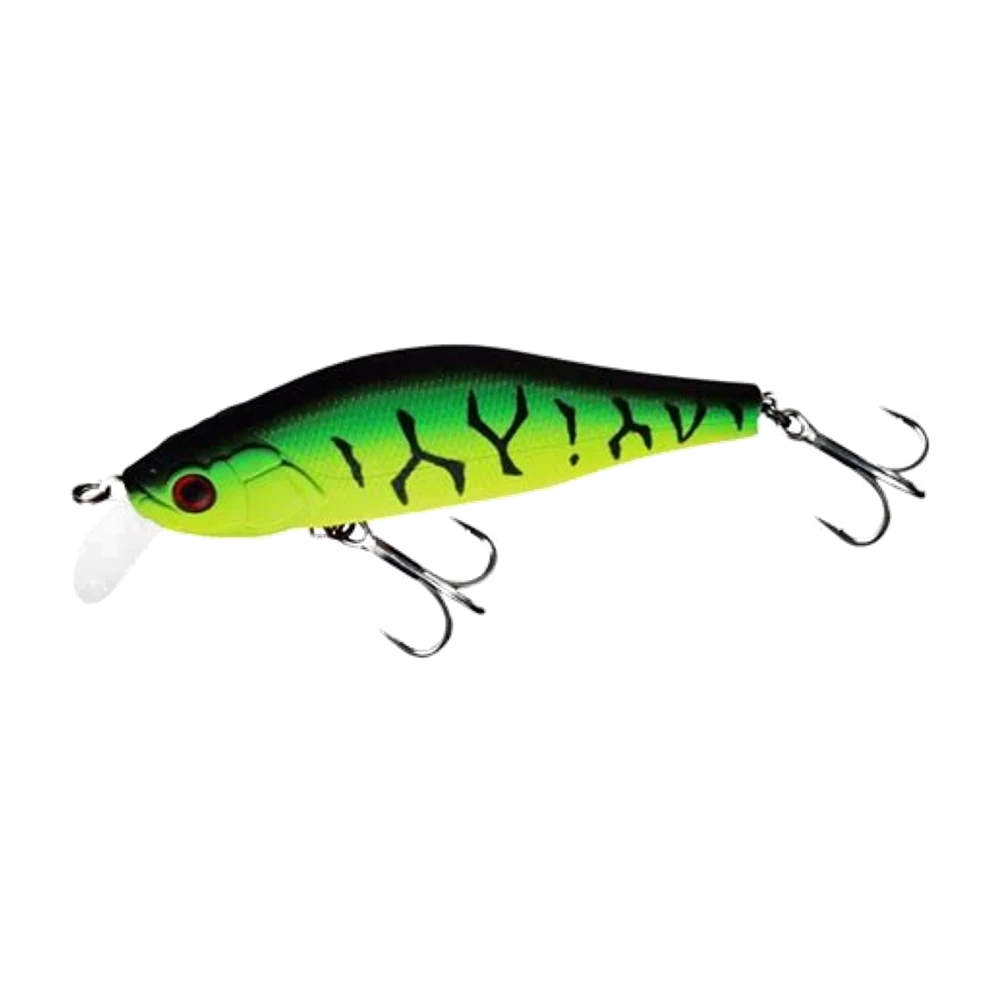
The Khamsin belongs to a less common family: flat-sided crankbaits, tall through the flank and thin through the body. That format completely changes the nature of the signal. Instead of shifting water sideways, the lure rolls on its axis. The vibration stays tight, almost discreet, but the flank tips one way then the other on every beat and sends back an alternating flash.
In other words, you go from a lure that makes itself heard to a lure that makes itself seen. That is exactly the right trade when the water is clear and the fish are paying attention.
Flat, tall, light: the trio of a finesse crankbait
Three features of the profile combine.
The compressed section. A flat, tall body has a lot of rotational inertia relative to its frontal resistance. Result: instead of a wide sideways wobble you get a pronounced roll, presenting each flank in turn. On a reflective finish, that means two separate flashes per beat, very visible from a distance in clear water.
The low vibration amplitude. What you lose in water displacement, you gain in credibility. The hydrodynamic signature resembles that of a small fish swimming, not an object forcing its way through. On educated perch, that is often the difference between following and biting.
The low density. A body of this shape stays light for its size, so it starts working immediately. You can retrieve it very slowly, at a speed where a chunky crankbait is not yet swimming. That is decisive in cold water, when the fish's own speed drops.
The trade-off is accepted: this lure casts less far than a compact crank of the same length, and it catches the wind. That is the price of the profile.
The retrieve: slow, steady, with micro-breaks
- Cast and let the lure reach its depth in three or four normal turns of the handle.
- Switch to a very slow, perfectly steady retrieve. You should feel a continuous, fine vibration in the blank. That is cruising speed.
- Every five or six seconds, stop for half a second, then start again. The lure floats, rises a few centimetres and dives off again: that micro-break breaks the regularity without changing register.
- When you touch a branch or a rock, make a clean one-second stop. The deflection followed by the rise is this model's most reliable trigger.
- Finish the cast slowly, right until you can see the lure. On perch, followers often strike in the last two metres — a sideways flick of the rod tip the moment you see the fish behind is often enough to make up its mind.
In genuinely cold water, below 10 °C, slow down further and stretch the stops to two or three seconds. The lure then rises noticeably, creating a sawtooth path that works very well on fish sitting tight.
On the water: on a crankbait with a strong roll, the finish matters more than the colour. In clear water and low light, a mirror or holographic finish multiplies the effect of the roll, whereas an opaque matt colour cancels it completely. Under heavy cloud the opposite becomes true: matt with a dark back wins because there is no light left to bounce. Choose the finish first, the colour second.
Setting depth and line
| Situation | Version | Line | Depth reached |
|---|---|---|---|
| Perch over a cobble flat, 1 m | Small size, short lip | 0.20 mm fluoro | 0.8 to 1 m |
| Edge of dead weed, winter | Mid size | 0.22 mm fluoro | 1 to 1.2 m |
| Bass on a gentle drop-off, 1.5 m | Larger size | 0.25 mm fluoro | 1.2 to 1.5 m |
| Headwind, need for distance | Larger size | 0.22 mm fluoro | 20 % loss of distance, unavoidable |
Two rigging points.
The stock hooks are fine wire and that is deliberate. On a light, flat-sided lure, swapping the trebles for heavier ones is enough to kill the roll and make the lure sink at rest. If you have to change them because they are worn, stay at the same wire diameter.
No heavy clip. A big clip on the nose of such a light body restricts the rotation. Tie direct, or use a small fine clip if you change lures often.
On the rod, a soft tip helps enormously: it absorbs the head shakes of a perch hooked five metres out on a lure carrying two trebles, where a stiff blank tears the hook out of the lip.

Not sure what to tie on?
Photograph your spot: CarnaFish reads the scene, cross-checks the conditions and gives you the zone, the lure and the retrieve. Free on iOS and Android.
Where it shines, where it is the wrong tool
It shines in clear cold water, typically from November to April, on grouped perch or bass sitting tight. It also shines in shallow water over hard bottom — cobble flats, slabs, drowned rip-rap, edges of dead weed — where its slow action and its flash do the job without you having to plough the bottom.
It shines, finally, on pressured fish, on venues where everybody runs the same shads and the same noisy cranks: changing the signature is often enough to restart a session that had stalled.
It is the wrong tool in three cases. In coloured water: its low water displacement means the fish cannot locate it from a distance, so you need a wide-action lure or a lipless. In strong wind: its flat profile catches the wind on the cast and you lose too much distance. And as soon as you need to go below a metre and a half: that is simply not its range, and forcing it with very fine line will not compensate.
Khamsin or classic crankbait
It is worth placing it against two other crankbaits already covered on the site, because all three answer different questions.
The Sakura Naja is a chunky, firmly floating crankbait: it is made to go into obstacles and free itself unaided, in a range from a metre and a half to three metres. It is a contact lure for drowned timber. The Khamsin is not after permanent contact: it works higher, more slowly, and plays on visibility.
The O.S.P Blitz Max DR answers a third question, that of reaching depth quickly. It drops to three or four metres within a few metres of retrieve. Nothing to do with the Khamsin, which stays in the first metre and a half.
Finally, against the Illex Diving Chubby 38, the sizes are close but the philosophies opposite: the Chubby is short, round and vibrates hard for such a small body, while the Khamsin is tall, flat and bets on the roll. On clear-water perch that follow without biting, try switching from one to the other before you move spot.
Our guide to lure fishing for perch covers how to find shoals in cold water. And if you are torn between a loud lure and a flashing one in front of an unknown margin, CarnaFish analyses a photo of the spot and answers.
Key takeaways
- Tall, flat-sided profile: the lure rolls on its axis instead of shoving water sideways.
- Tight, discreet vibration, but alternating flash off both flanks: it is seen, not heard.
- Its window: clear cold water, shallow depth, hard bottom, pressured fish.
- Finish beats colour — mirror in good light, matt with a dark back under cloud.
- Fine stock hooks and no heavy clip, or you kill the roll.
FAQ
What is a flat-sided crankbait?
A crankbait that is tall through the flank and thin through the body, as opposed to chunky round models. That format produces a pronounced roll on the long axis rather than a wide sideways wobble, so plenty of flash and little water displacement.
What depth does the Khamsin run at?
Between eighty centimetres and a metre and a half depending on version and line diameter. It is a shallow lure: beyond that, change model rather than trying to force it with very fine line.
When should you prefer it to a classic crankbait?
In clear cold water, in the shallows, and above all on pressured fish that follow without attacking. Its quieter signal and pronounced flash get through where a strong vibration puts the fish on alert.
Why should you not change the hooks?
Because the lure is light and its balance is set very finely. Heavier trebles make it sink at rest and remove the roll, which is exactly the feature that justifies this model. Stay at the same wire diameter.
Does it work in coloured water?
Badly. It displaces little water, so the fish cannot locate it from a distance when visibility is poor. In those conditions a wide-action crankbait or a rattling lipless will cover the ground far better.
What retrieve speed should you hold?
Slow and perfectly steady, with a half-second micro-break every five or six seconds. Below ten degrees, slow down further and stretch the stops to two or three seconds to create a sawtooth path.
The full perch lure guideSeason-by-season strategy: which family of lure, when, and why.Go from theory to fish
CarnaFish reads your spot from a photo and gives you the game plan: zone, lure, retrieve. Free on iOS and Android.