Lucky Craft LC RTO 1.5: the squarebill you kill dead after the knock
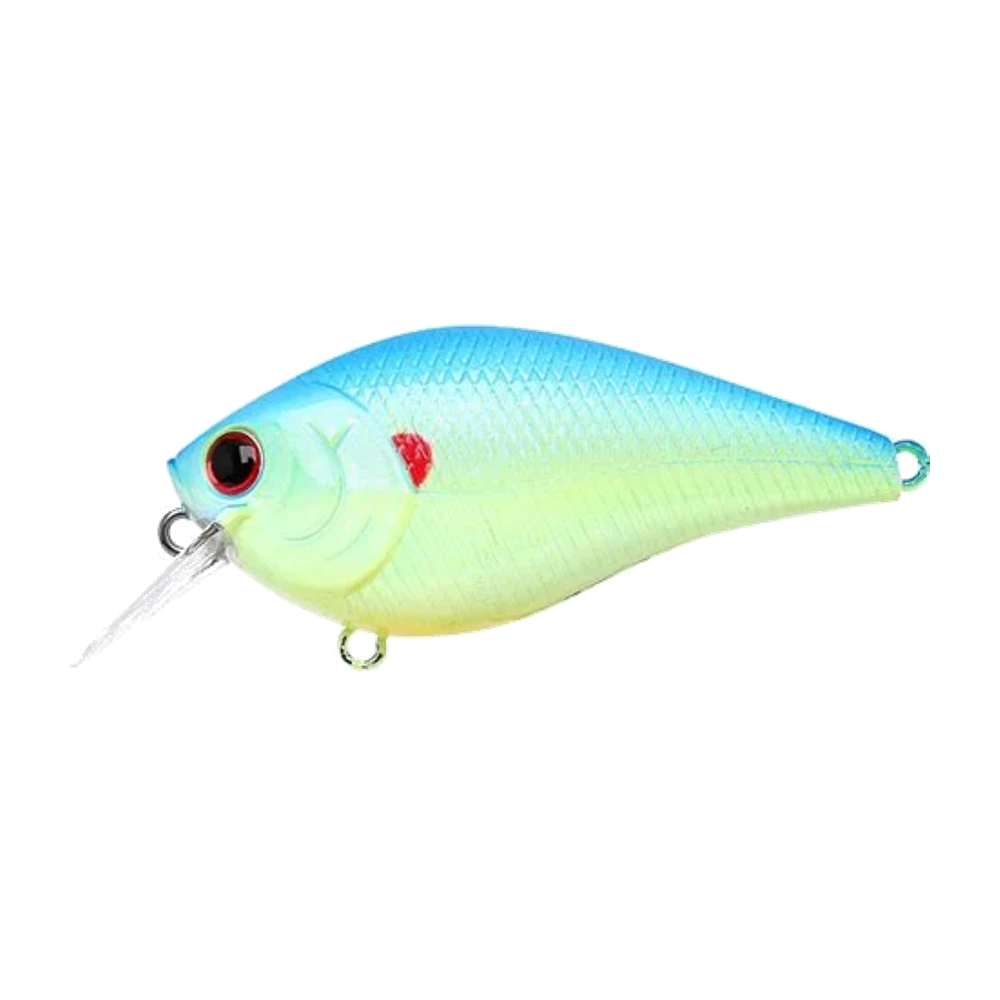
The right lure in the wrong spot still catches nothing. CarnaFish spots the zone that works, from a single photo.
Everyone knows the first half of the squarebill technique: target cover, force the contact, let the square lip kick the lure away. It is written everywhere, and it is true.
The second half is practised far less, and it is often the missing piece. The moment the lure smacks into the stump, most anglers keep winding. The crankbait deflects, carries on sideways, and the bass sitting under that stump watches something go past that is already leaving.
A floating squarebill allows something else: on contact, you stop everything. The lure rears up, rises twenty or thirty centimetres, frees itself from the cover on its own, and hangs there for a second right above the spot. That is where most attacks come from, and it is what the LC RTO 1.5 does particularly well because its swim stays controlled and predictable right up to the stop.
A controlled swim rather than a wild one
There are two schools among squarebills.
The first goes for a deliberately unstable action that wanders everywhere and kicks violently at the slightest contact. That is very effective in stained water and on active fish: the lure makes noise, thrashes about, and triggers by aggression.
The second, which the LC RTO 1.5 belongs to, keeps a swim that is wide but steady. The lure vibrates strongly but holds its line, and it only deflects when it genuinely hits something. That difference has three practical consequences.
- You control your pass. The lure follows the line you give it, which matters when you want to shave a jetty by twenty centimetres without sticking to it.
- You can slow down. An unstable action needs speed to come alive. A controlled action stays readable on a slow retrieve, which is decisive early in the season and in cold water.
- Deflection becomes information. Since it only deflects on genuine contact, every kick tells you something about the bottom you are fishing.
In very clear water, on bass that have already refused everything that went past, that restraint is an advantage. In coloured water on active fish, a more aggressive squarebill will take the lead.
The retrieve: knock, kill, restart
- Cast beyond the cover, never onto it. You want the lure to already be at its running depth when it reaches it.
- Three or four fast turns to make the lure dive, then settle into your cruising speed.
- Look for contact: a stump, a rock, a jetty pile, but also simply the bottom. A squarebill that touches nothing is only half working.
- On the knock, stop dead. Lock the handle, drop the rod tip slightly, count one or two beats. The lure rises and frees itself.
- Restart with one sharp turn. The abrupt pick-up after the rise is the real trigger.
- Repeat until the lure comes out, never neglecting the last two metres under your feet.
The only seasonal adjustment is the length of the dead time. In warm water, half a beat is enough. Under fifteen degrees, stretch it to two full seconds: the fish is slow and it needs that delay.
On the water: if you are fishing a line of piles or a row of jetties, cast deliberately so as to hit each pillar rather than pass between them. Then count a full second of stop against each pillar before restarting. A clean pass between two piles takes you across the zone without ever giving a reason to bite; it is the knock followed by the stillness that turns a spot you crossed into a spot you fished.
Tuning depth without changing lure
A class 1.5 squarebill runs around one metre to one metre fifty. That is not a fixed figure: three parameters shift it markedly.
| Parameter | To gain depth | To stay high |
|---|---|---|
| Line diameter | Fine fluorocarbon, 0.25 mm | Heavy fluorocarbon, 0.35 mm, or nylon |
| Rod position | Tip pointed at the water | Tip raised to eleven o'clock |
| Speed | Moderate and steady | Fast, or very slow |
| Cast length | Long, the lure has time to get down | Short |
With a little practice you easily cover sixty centimetres to a metre sixty with the same lure, simply by playing with those four variables. It is quicker than changing model, and it is what lets you follow a margin whose depth keeps changing.
Two rigging points to respect: no snap on a crankbait this size, it weights the nose and muddies the swim; and do not replace the trebles with heavier models, or you lose the buoyancy that makes the whole stop-after-contact technique possible.
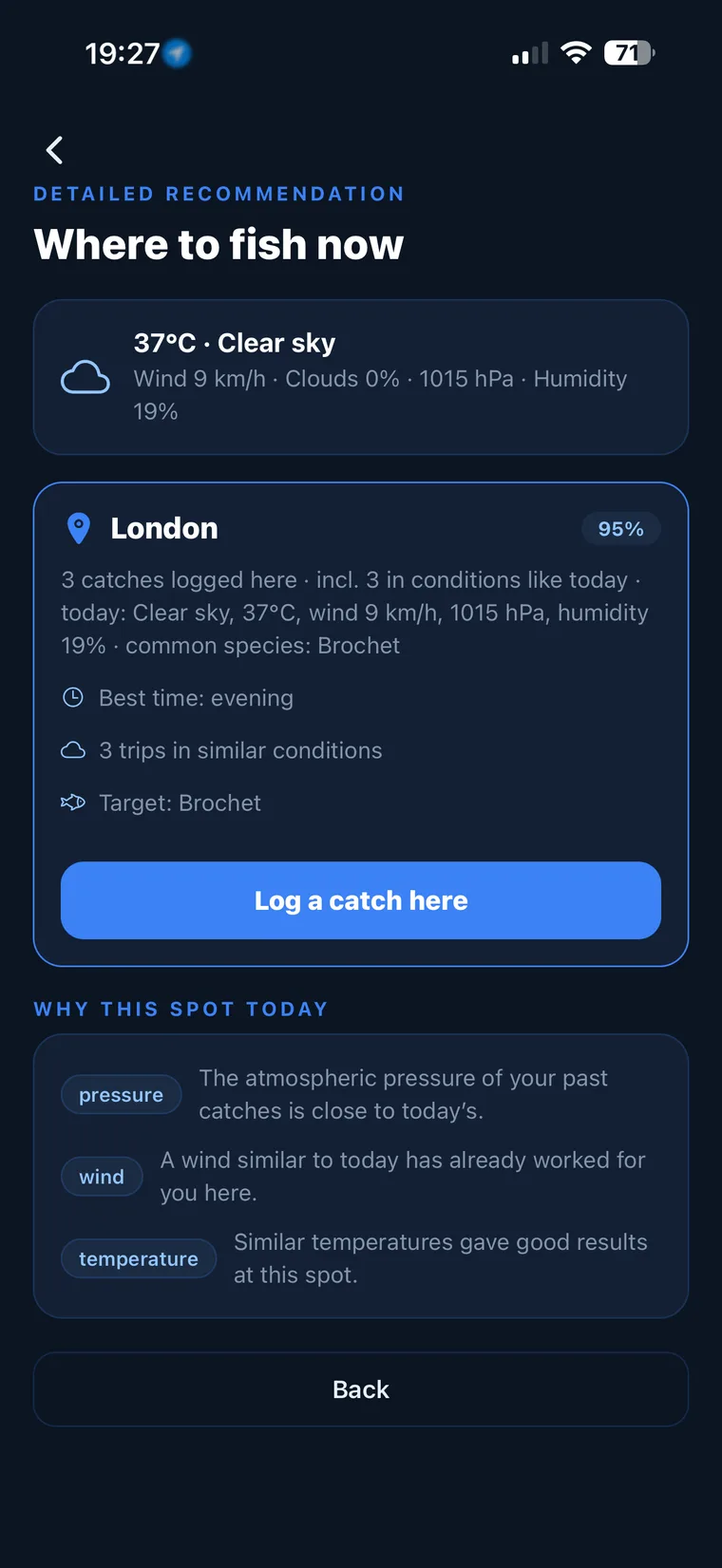
Not sure what to tie on?
Photograph your spot: CarnaFish reads the scene, cross-checks the conditions and gives you the zone, the lure and the retrieve. Free on iOS and Android.
Where it excels, where it is out of place
Its ground is shallow, snaggy water from late spring to early autumn:
- Margins with sunken wood, stumps and submerged branches between fifty centimetres and a metre fifty.
- Rows of jetties and piles, where the contact pass makes all the difference.
- Stony shelves and hard bottoms, where the lure scrapes and skids along.
- Clear to slightly stained water, where its controlled swim and its finishes work in the lure's favour.
It is out of place as soon as you have to fish beyond two metres — switch then to a deeper-diving crankbait such as a Rapala DT6, built to hold a lower layer. It is also out of place in dense weed, where even a square lip ends up loading with vegetation, and in very cold water under ten degrees, where a suspending jerkbait or a bottom lure will do better.
LC RTO 1.5 or KVD 1.5 Squarebill
Both belong to the same class and cover the same depth. The difference is in the character of the swim and what you intend to do with it.
The Strike King KVD 1.5 Squarebill is built around deflection: a wide, deliberately unstable swim, a violent kick at the slightest contact, a strong signal. It is the right choice in stained water, on active fish, and when you want to sweep a margin fast looking for the aggressive reaction.
The LC RTO 1.5 banks on a more controlled swim and a clear buoyancy that makes the stop after contact genuinely usable. It takes the lead in clear water, on fish that have watched a lot of lures go past, and in every situation where the precision of the pass counts more than the volume of noise.
In practice, plenty of bass anglers keep both: the aggressive squarebill to open up the zone, the more controlled one to come back over the spots that produced a follow. Our beginner's guide to bass fishing covers how to work a margin methodically. And if you are unsure what depth to target when you reach the bank, CarnaFish analyses a photo of the spot and answers.
Key takeaways
- The technique does not end at the contact: it is the stop right after it that triggers.
- A controlled, steady swim: it takes a slow retrieve and a precision pass.
- Depth adjustable from 0.6 to 1.6 m through line, rod and speed, without changing lure.
- No snap, no heavier trebles: you would break the buoyancy that makes it work.
- A shallow, snaggy-water lure for clear conditions, pointless beyond two metres.
FAQ
Do I really have to bang a squarebill into cover?
Yes, that is the whole principle of the square lip: it makes the lure deflect on contact instead of letting it snag. But contact alone is not enough — it is the marked stop right after it, during which the lure rises and frees itself, that produces most of the attacks.
How long should the stop be?
Half a beat in warm water, up to two full seconds under fifteen degrees. The colder the water, the longer the fish takes to decide, and the longer the pause has to be.
How deep does it swim?
Between 0.8 and 1.5 m in normal use, but you can stretch that range from 0.6 to 1.6 m by playing with line diameter, rod position and cast length, without changing lure.
Can I use it with a snap?
Better avoided on a crankbait this size. The snap adds weight at the nose, alters the attitude and muddies a swim whose whole value lies in its steadiness. Tie it straight to fluorocarbon.
What is the difference with the KVD 1.5 Squarebill?
The KVD has a deliberately unstable swim and deflects violently: it excels in stained water and on active fish. The LC RTO 1.5 keeps a more controlled swim and clear buoyancy, which makes it better in clear water, at slow speed and on a precision pass.
When should I switch to a deeper-diving crankbait?
As soon as the fish are beyond two metres. A squarebill is built for shallow, snaggy water; to hold a lower layer, a long-lipped crankbait is the right tool, with a geometry designed to dive rather than to deflect.
The full bass lure guideSeason-by-season strategy: which family of lure, when, and why.Go from theory to fish
CarnaFish reads your spot from a photo and gives you the game plan: zone, lure, retrieve. Free on iOS and Android.