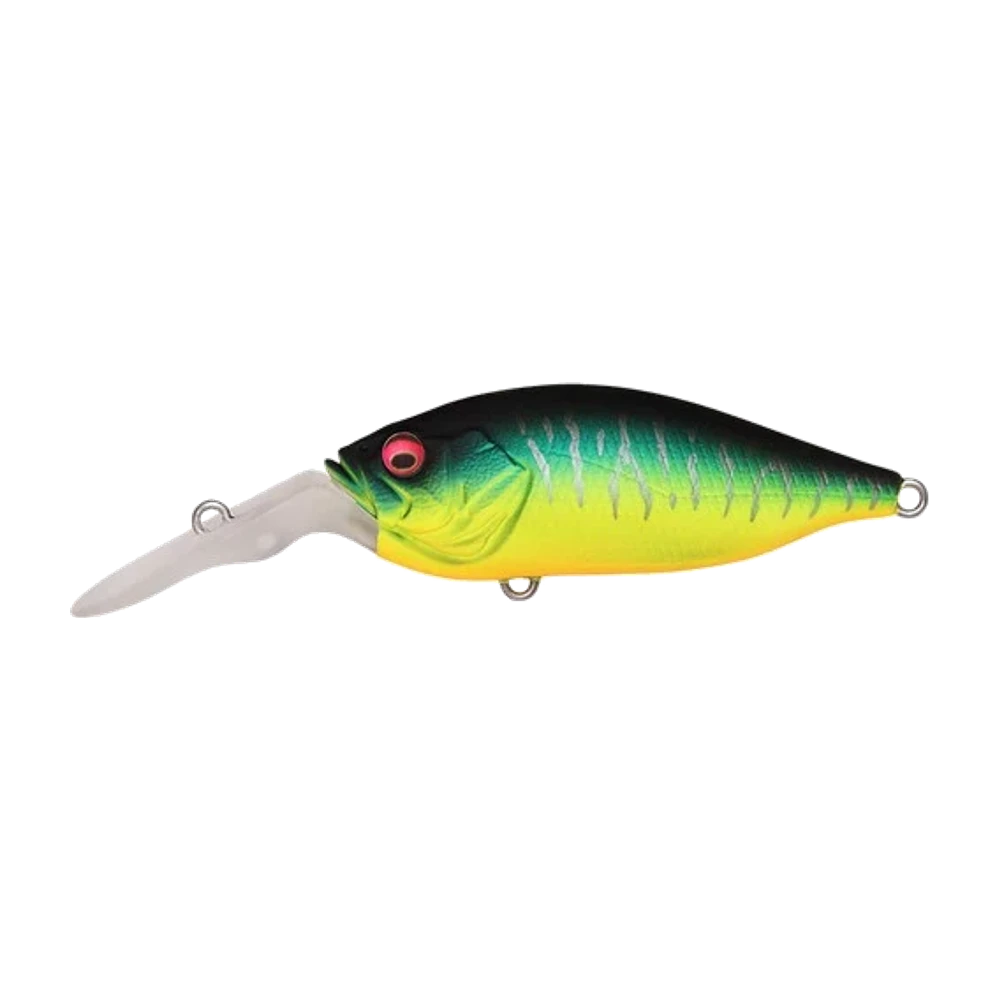
Megabass Deep-X 300: three metres from a very small body
One lure, endless conditions. CarnaFish reads your spot from a photo so you are not just guessing.
On a heavily fished water, the fish in the three-to-four-metre band have seen the same thing all season: a big American crankbait, wide body, broad roll, ten centimetres of silhouette. It is an excellent lure, and that is precisely the problem — it is no longer a surprise to anyone.
The usual alternative is to drop into finesse, therefore soft plastics, therefore slow. You go from searching to point-by-point fishing, and you lose the ability to cover a whole plateau in an hour.
The Deep-X 300 fills the missing slot: seven centimetres of body, three to four metres of running depth, and a vibration nothing like that of the big divers. You keep the crankbait's searching speed with a signal those fish have not heard.
The depth-to-volume ratio
Making a crankbait dive to four metres is easy: all it takes is a big lip and a big body to carry it. That is why deep crankbaits are almost all bulky — body size is not an aesthetic choice, it is a mechanical consequence.
Getting to the same depth with a seven-centimetre body means compensating elsewhere: a long, narrow lip rather than a wide one, a high body density, and very precise balance so the whole thing does not spin out under the pull. That is exactly what this model does.
Three practical consequences:
- You present a 7 cm silhouette at 3.5 m, which barely exists anywhere else in the box.
- The resistance on the retrieve is much lower than that of a big deep crank. You fish longer without wearing yourself out, on lighter tackle.
- The zone of influence is narrower: the lure attracts from less distance. You have to pass close to the fish, so you need to read the plateau properly.
Tight vibration, not a wide roll
A big deep crankbait produces a wide, low-frequency roll: a heavy vibration that carries far, perfect in stained water or to call scattered fish. The Deep-X 300 does the opposite, with a short, fast movement closer to a shiver than a sway.
That high-frequency signal has two specific advantages. It looks more like a stressed baitfish than an object cutting through the water, which counts in clear water. And above all, it is not in the repertoire of lures the fish in that zone are used to refusing. On a water where the big crank is the norm, changing frequency is often worth more than changing colour or depth.
On zander, this point is decisive. A zander sitting on a three-metre plateau reacts very well to a lure that passes fast and vibrates tightly right next to it, where a big roll tends to lift it off without committing it.
The retrieve: look for contact
- Cast long. The depth reached depends directly on the length of the retrieve: on a short cast, you do not have the distance to get down.
- Rod low, tip towards the water or even in it if you want the last few centimetres.
- Retrieve steadily, with no twitching, until you feel the first contact with the bottom or an obstacle.
- On contact, keep turning without speeding up. The lure will deflect violently to the side: that deflection is the main trigger, not the steady swim.
- After a clean deflection, pause for a second. The lure floats and rises slightly, often unhooking itself from the obstacle — and that is almost always when the bite comes.
On the water: if you are not touching anything with a deep crankbait, it is almost never because it is too deep. It is because it is not touching anything. A crankbait that travels through three metres of open water without ever hitting the bottom, a stump or a rock only catches active fish. Choose a lure depth slightly greater than the bottom you are fishing, and accept that you will scrape.
Actually reaching the stated depth
| Parameter | Effect | Advice |
|---|---|---|
| 0.20 mm fluorocarbon | Maximum depth | Open zones, clear water |
| 0.30 mm fluorocarbon | 40 to 60 cm shallower | Snaggy zones, safety margin |
| 40 m cast | Nominal depth reached | Reference setting |
| 15 m cast | About 1 m less | Margin fishing, no interest here |
| Rod held high | 30 to 50 cm shallower | To be avoided, except to clear an obstacle |
Line diameter is the most effective and most often overlooked parameter: going from 0.30 to 0.20 mm gains more depth than any amount of speed correction.
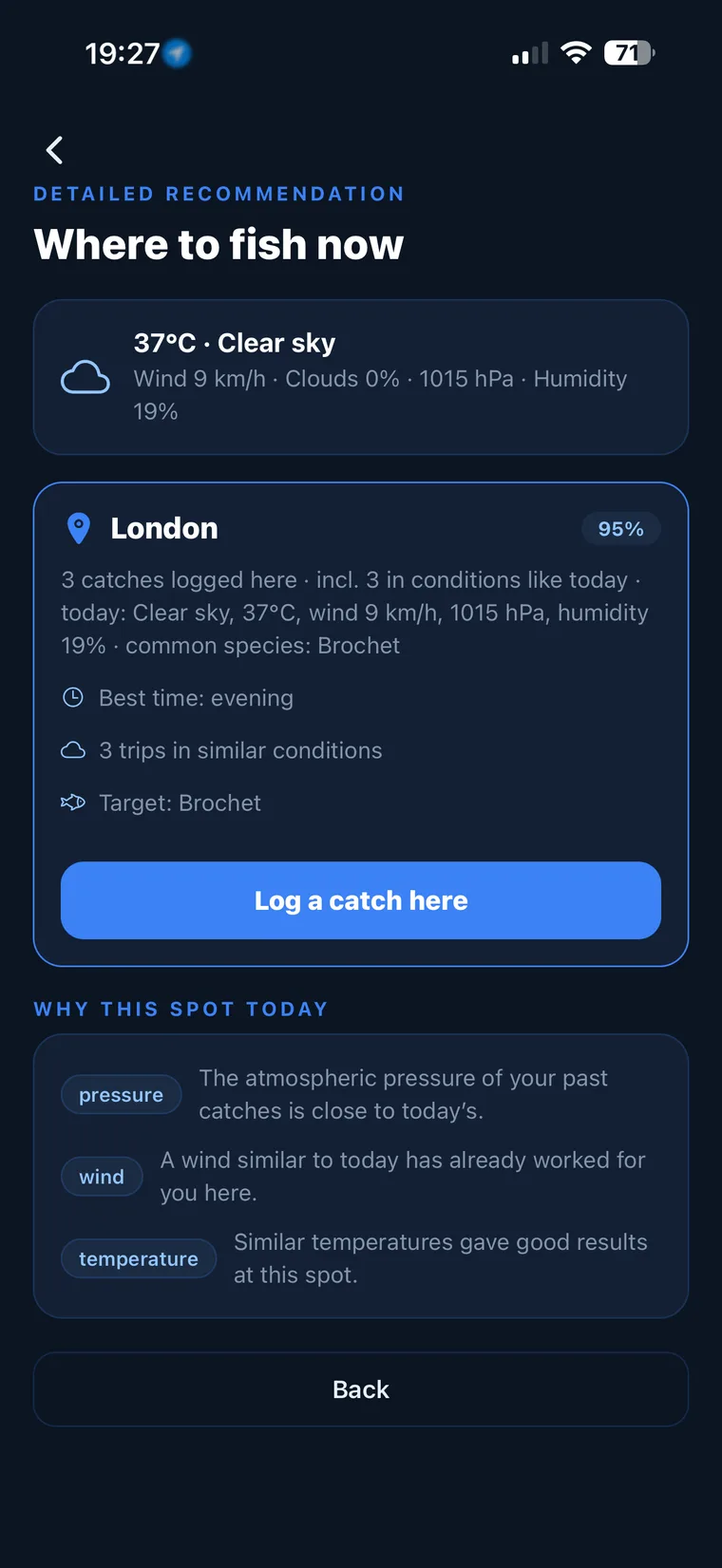
Not sure what to tie on?
Photograph your spot: CarnaFish reads the scene, cross-checks the conditions and gives you the zone, the lure and the retrieve. Free on iOS and Android.
The tackle it does not demand
This is one of its real arguments. A big deep crankbait forces you onto a long, powerful rod and an exhausting retrieve. The Deep-X 300 pulls far less.
A rod of 2 m to 2.10 m, medium power, progressive action, is plenty. The progressive action matters more than the power: with trebles and a fish fighting at three metres, a rod that is too stiff loses fish. A medium-ratio reel, around 6, helps you hold a constant speed without forcing it.
Against the big deep crankbaits
The Strike King 5XD covers the same depth band with a far bulkier body, a wide roll and a signal that carries. In stained water, on scattered fish or when you need to find them fast, it is still ahead: it calls, the Deep-X 300 does not.
The Strike King 10XD plays somewhere else again, at six or seven metres, in a band the Deep-X does not claim to reach.
So the question to ask yourself is simple: are you trying to find fish, or to persuade one you have already located and which is refusing? In the first case, take the big crank. In the second, a seven-centimetre body vibrating tightly at three and a half metres is a proposition very few anglers make on these waters. Our beginner's guide to zander fishing with lures explains how to find these plateaus. And if you are unsure which crankbait depth to tie on in front of an unknown zone, CarnaFish analyses a photo of the spot and answers.
Key takeaways
- 7 cm of body for 3 to 4 m of depth: a rare combination, outside the usual repertoire.
- Tight, high-frequency vibration instead of the wide roll of big deep cranks.
- Deflection off the bottom or an obstacle is what triggers, not the steady swim. Look for contact.
- Line diameter sets the depth more effectively than speed; 0.20 mm to get down as far as possible.
- It does not call from a distance: it is a lure to convince, not to find.
FAQ
How deep does the Deep-X 300 really run?
Between 3 and 4 m on a long cast with fine fluorocarbon. On a short cast or with 0.30 mm line, count on 50 cm to 1 m less. A crankbait's depth depends as much on the length of the retrieve as on the lip.
Why choose a compact crankbait over a big one?
For the signal. A small body vibrating tightly at three metres presents a silhouette and a frequency that fish on busy waters are not used to seeing, whereas the big wide-rolling crankbait is used there all year.
Does it work on zander?
Yes, on plateaus and drop-offs between two and four metres. Zander respond well to a fast, vibrating pass right next to them, provided the lure touches bottom regularly.
What line should I use?
Fluorocarbon of 0.20 to 0.25 mm. The 0.20 gets you to maximum depth, the 0.25 gives a safety margin in snaggy zones. Avoid braid straight through, which makes the hookset too violent on trebles.
Do I need a dedicated crankbait rod?
Not essential with this model, unlike the big divers. A rod of around 2 m, medium, with a progressive action does the job: the progressive action stops you losing fish hooked on trebles at three metres.
What if it snags too often?
Go up a line diameter to lift it a few tens of centimetres, and raise the rod slightly as you approach the cluttered zone. On contact with an obstacle, do not pull: give it a second of slack and the lure floats up and usually frees itself.
The full bass lure guideSeason-by-season strategy: which family of lure, when, and why.Go from theory to fish
CarnaFish reads your spot from a photo and gives you the game plan: zone, lure, retrieve. Free on iOS and Android.