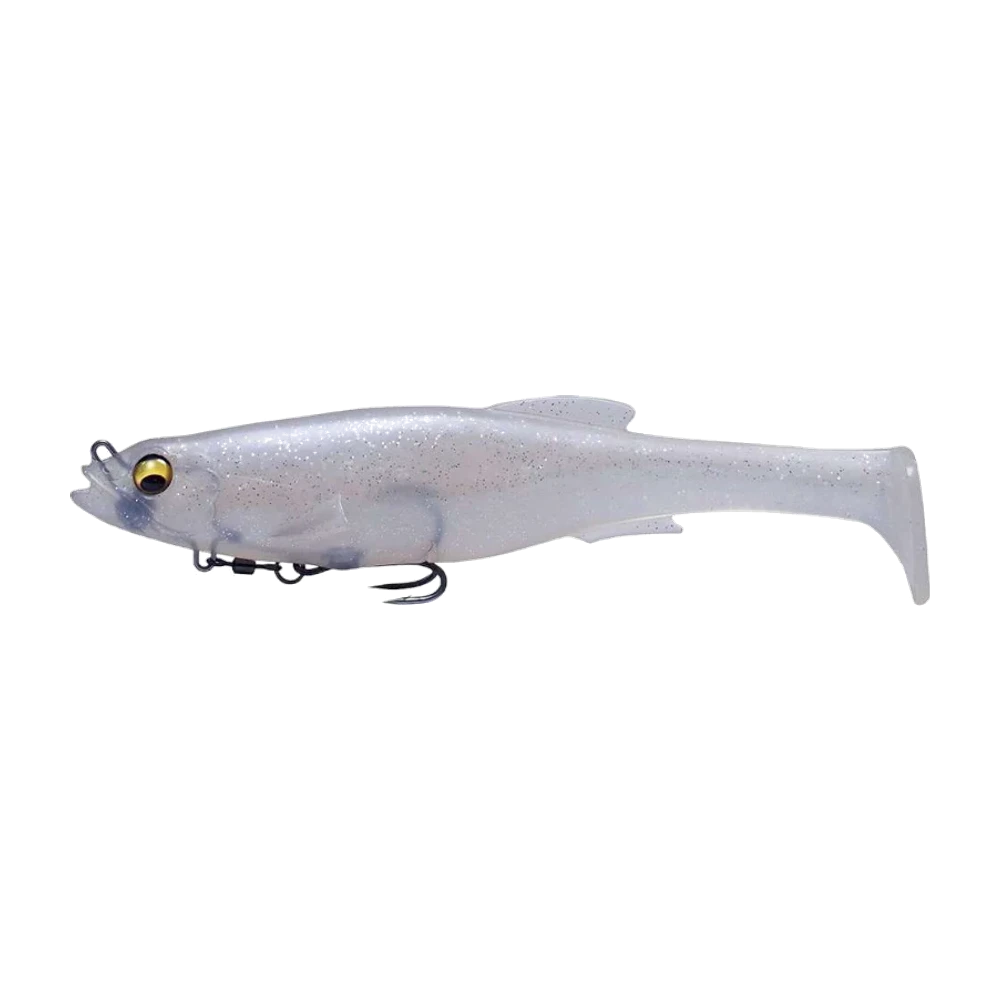
Megabass Magdraft: the ready-rigged soft swimbait that never spins
Rather not fish it blind? Photograph your spot — CarnaFish cross-checks the conditions and points you the right way.
Soft swimbaits were long reserved for well-equipped, patient anglers: you had to pick a harness, insert it correctly, check the alignment, and start over the moment the lure shifted. A crooked rig gives you a spinning action, which is unfishable.
The Magdraft removes that step. The soft body comes factory-mounted on a harness held by a magnet, which guarantees perfect, permanent alignment.
What the magnet solves
The internal harness is fixed to a magnet housed in the lure's head. That answers two classic soft swimbait problems.
Alignment. The dorsal hook stays exactly in line with the body, however many casts and strikes it takes. A conventional swimbait shifts progressively and ends up rolling over.
Repositioning after a bite. When a fish hits without getting hooked, the soft body usually slides along the harness and has to be pushed back by hand. Here, the magnet pulls it back into position automatically.
The gain is not trivial: over a swimbait session, you spend less time straightening your lure than fishing it.
The retrieve: straight, slow, nothing else
Like all swimbaits with a clean action, the Magdraft asks for no rod work.
- Cast and let it sink to the depth you want — a few seconds depending on the version.
- Retrieve at a constant, slow speed. The body rolls and the tail beats on its own.
- Do not work it with the rod. A twitch breaks the action and adds nothing.
- Finish with a figure-of-eight under the water as the lure comes to the bank.
On the water: the correct speed is the slowest one at which you can still feel the tail beating through the rod. As soon as you stop feeling it, you are too slow; as soon as the lure rises, you are too fast. That window is narrow and it is the only setting that really matters.
A useful variation: mark a one-second stop every ten seconds. The lure stalls slightly then picks its action back up, which triggers followers.
The versions and their uses
The Magdraft comes in floating and sinking, which changes the use completely.
The floating version rises slowly on the stop. It is fished just under the surface, over weed beds and along the margins. It is the most versatile in France.
The sinking version reaches 2 to 2.5 m and lets you fish along drop-offs or over deep structure. Count the sink as you would on any sinking lure.
| Size | Use |
|---|---|
| 12.5 cm / 28 g | Bass, average pike, cluttered spots |
| 15 cm / 57 g | All-round pike |
| 20 cm / 113 g | Big pike, large waters |

Not sure what to tie on?
Photograph your spot: CarnaFish reads the scene, cross-checks the conditions and gives you the zone, the lure and the retrieve. Free on iOS and Android.
The gear
Unlike jointed hard swimbaits, the Magdraft stays manageable. The 12.5 cm can be fished on a sturdy standard pike setup. From 15 cm up, a dedicated rod becomes necessary:
- A casting rod of 2.10 m minimum, rated 60 to 120 g depending on the model.
- 0.35 to 0.45 mm braid, to take the casting load.
- A titanium or 0.60 mm fluorocarbon leader for pike — the soft body is destroyed fast without protection.
The single dorsal hook limits snags, which lets you fish closer to cover than with a treble-armed swimbait.
Magdraft or a jointed swimbait
A multi-jointed swimbait like the Platypus produces a very realistic S action, but it is still a hard lure: it snags more easily and demands heavier gear.
The Magdraft offers a soft body, which feels more natural in the mouth and encourages the fish to hold the lure a fraction of a second longer — which improves the hook-up rate. It is also more forgiving on gear and technique, which makes it a good first swimbait.
Our guide to choosing a pike lure places swimbaits among the other families. And if you are unsure whether to pull out a big lure on a spot, CarnaFish analyses a photo and answers.
Key takeaways
- The magnetic harness keeps the lure aligned and repositions it by itself after a bite.
- Slow straight retrieve, no rod work. The closing figure-of-eight converts followers.
- Look for the minimum speed at which you can still feel the tail beating.
- Floating version for just under the surface, sinking for drop-offs.
- Soft body and a single dorsal hook: good hook-up rate, few snags.
FAQ
What is the Magdraft's magnet for?
It keeps the internal harness perfectly aligned with the soft body and pulls the lure back into position after a missed bite. That avoids the spinning action of badly rigged soft swimbaits and removes the constant manual adjustments.
Do you need to work the Magdraft?
No. A slow, steady straight retrieve is enough: the body rolls and the tail beats on its own. Adding twitches breaks the action. Finish with a figure-of-eight under the water at the bank to convert followers.
How fast should you retrieve?
At the slowest speed at which you can still feel the tail beating through the rod. If you cannot feel it any more, it is too slow; if the lure rises to the surface, it is too fast.
Floating or sinking?
The floater is fished just under the surface over weed beds and along the margins: it is the most versatile in France. The sinker reaches 2 to 2.5 m and suits drop-offs and deep structure.
What size should you choose for pike?
The 15 cm covers most situations. The 12.5 cm suits cluttered spots and bass, the 20 cm is reserved for big waters and big fish.
Is it a good first swimbait?
Yes. It is ready to fish, forgiving on technique, asks for no rod work, and the 12.5 cm can be fished on a sturdy standard pike setup without investing in a dedicated swimbait rod.
The full pike lure guideSeason-by-season strategy: which family of lure, when, and why.Go from theory to fish
CarnaFish reads your spot from a photo and gives you the game plan: zone, lure, retrieve. Free on iOS and Android.