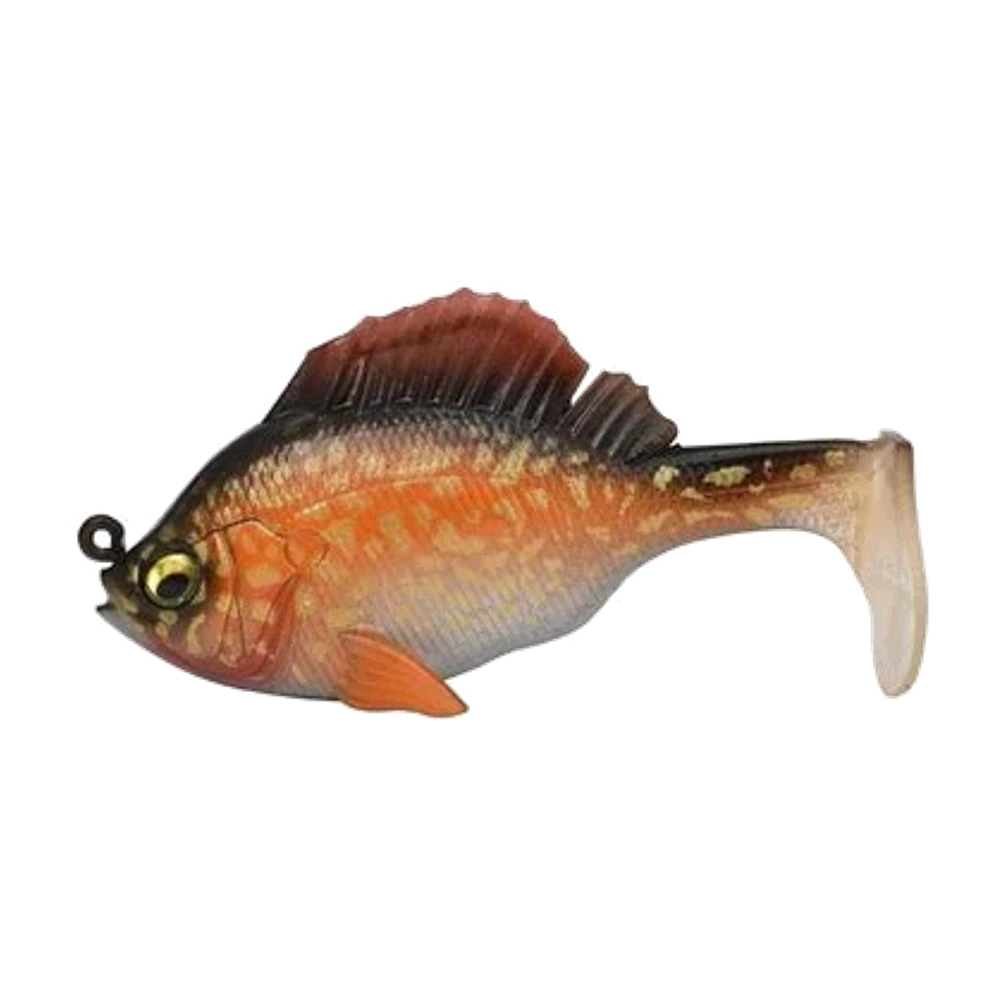
Megabass Sleeper Gill: the swimbait that stands up on the bottom
One lure, endless conditions. CarnaFish reads your spot from a photo so you are not just guessing.
When a bass refuses everything, there is one question we rarely ask: am I showing it the right scene? Almost every lure we put in front of it tells the same story — a fish crossing, running, fleeing. That story works well on a hunting bass. It makes no sense at all to a bass parked under a jetty in the middle of August, watching bluegills graze the bottom fifty centimetres away for the last two hours.
That bass is not looking for prey that escapes. It is waiting for prey to make a positioning mistake.
The Sleeper Gill tells that second story. It is a weighted swimbait imitating a bluegill, designed to settle and stand upright, nose down, exactly the way a fish rooting through the substrate does. It does not flee, it loiters.
A weighting that decides the posture
The whole design turns on one point: where the ballast sits inside the body.
On a conventional swimbait, the weight is spread to keep the lure horizontal while swimming. Here, the mass is placed low and forward, which produces three linked behaviours.
On the drop, the lure noses down and descends at an angle rather than planing flat. It reaches the bottom quickly and without drifting far from your casting line.
At rest on the bottom, it does not fall over on its side. It props itself on its nose and pelvic fin, body tilted up, tail raised. That is the posture of a grazing bluegill, and it is the whole point of the lure.
On the restart, a short pull lifts it off, producing a small cloud of particles, then it settles back into position. That lift-and-settle cycle is the main retrieve.
The single hook is mounted on the back, point up and generally clear of the body. That is what lets the lure stand on the bottom without the point fouling, while keeping good penetration on the hookset.
The retrieve: two turns, a stop, ten seconds
The rhythm is disconcerting the first time, because it is made of more stopping than moving.
- Cast and let it drop on a semi-slack line. Follow the line with your eyes: a bite on the drop is common on marked spots.
- Wait for bottom contact, then feed a little line so the lure settles back upright.
- Do nothing for five to ten seconds. The lure is visible, motionless, in a credible posture. That is the key phase.
- Two slow turns of the handle, just enough to lift the lure off and make it swim a metre.
- Cut it dead. The lure drops back and settles.
- Another pause, then repeat all the way to the bank.
On vertical spots — a jetty piling, a standing stump, a riprap wall — you can drop the swimming phase entirely and just pump on the spot: lift twenty centimetres, let it fall back, wait. That is extremely effective in high summer.
On the water: when the lure is standing still on the bottom, keep your rod tip low and the line slightly slack. A bass inspecting a settled bluegill takes it from behind and turns; if your line is tight, it feels the resistance and lets go before you have set the hook. Give it two seconds to turn, then set by pulling backwards rather than lifting.
Choosing the size and reading the refusals
| Context | Indicative size | What you adjust |
|---|---|---|
| Small water, bass of 30-40 cm | 9 to 10 cm | Less intimidating profile, longer pauses |
| Clear lake with plenty of bluegills | 11 to 13 cm | Matching the real prey |
| Stained water or cluttered margin | 11 to 13 cm | Visible volume, clearer silhouette |
| Fish that have been caught before | 9 to 10 cm | Drop one size before changing lure |
Two signals worth reading. If the bass follows then leaves, your pauses are too short: stretch them by five seconds before changing anything else. If the bass hits without getting hooked, you are setting too early or your line was too tight at the moment of the take.
On the rig, braid with a metre of 0.30 to 0.35 mm fluorocarbon leader works well. You need the sensitivity of braid to detect a take on a motionless lure, and the discretion of fluorocarbon because this is often clear-water fishing at close range.
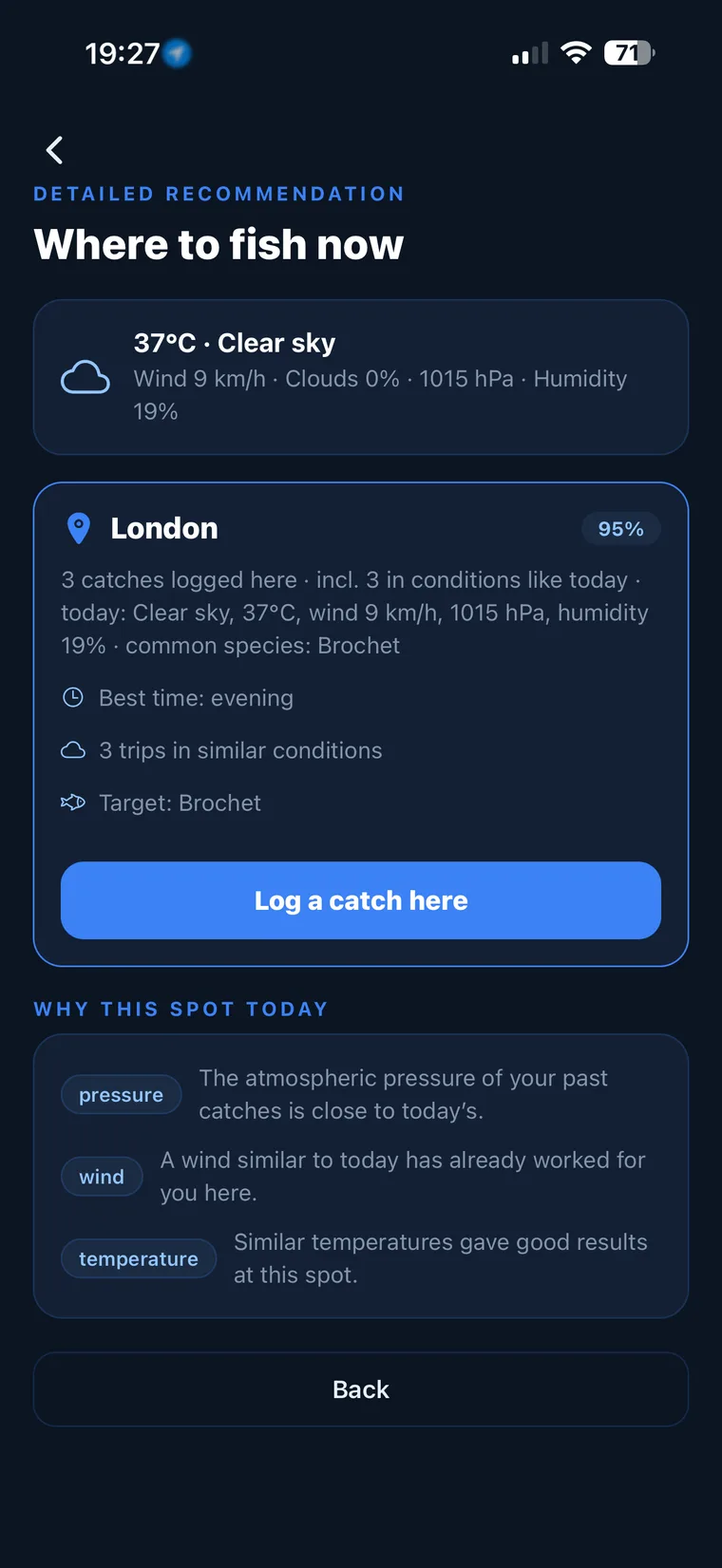
Not sure what to tie on?
Photograph your spot: CarnaFish reads the scene, cross-checks the conditions and gives you the zone, the lure and the retrieve. Free on iOS and Android.
Where it excels and where it is useless
It is at its best in precise situations:
- On bluegill spots, jetties, sparse weed, gravel margins, wherever that prey is genuinely present.
- In high summer, on parked, inactive bass that ignore everything moving fast.
- On post-spawn fish, territorial and aggressive towards anything loitering near the bottom.
- In clear water, where the posture and the realism of the profile are actually perceived.
Conversely, it is beside the point in three setups. On a bass hunting actively at the surface, it is too slow and too deep. In dense weed or tight flooded timber, the exposed dorsal hook eventually finds cover despite its position. And on a big water to search, its rhythm of one retrieve every two to three minutes makes covering ground impossible.
This is a spot lure, not a searching lure. You use it when you know where the fish are.
Sleeper Gill or a straight-swimming swimbait
The difference with other swimbaits is not about quality but about the story on offer.
A Megabass Magdraft is a straight-retrieve swimbait: it swims continuously, at mid-depth, and imitates a baitfish crossing. It searches well, it covers ground, and it triggers active or travelling fish. On a settled, inactive bass, it often passes by with no effect.
The Sleeper Gill occupies the other extreme. It crosses nothing, it moves in. It loses all searching ability but wins on the fish that has refused everything else.
Plenty of anglers work the two together along the same margin: the Magdraft to identify the zones holding fish, then the Sleeper Gill to grind slowly on the two or three spots that reacted. Our beginner's guide to bass fishing explains how to find those spots before slowing down on them. And if you are unsure what size to tie on as you walk up to a jetty, CarnaFish analyses a photo of the spot and answers.
Key takeaways
- The low, forward weighting makes the lure stand on the bottom, nose down, tail up.
- The retrieve is two turns of the handle for five to ten seconds of complete stop.
- Slightly slack line during the pause: a bass feels the tension and lets go.
- Set backwards, never by lifting, and give the fish two seconds to turn.
- A known-spot lure, not a searching one: useless on active fish or over a big area.
FAQ
Why does the Sleeper Gill stand up on the bottom?
Because its internal ballast is placed low and forward. At rest, the lure props itself on its nose and pelvic fin, body tilted, tail raised — the exact posture of a bluegill grazing the substrate.
How long should you leave the lure motionless?
Five to ten seconds between each swimming phase, and longer on a marked spot such as a jetty piling. If a bass follows without committing, lengthening the pause is almost always the right correction.
Does the dorsal hook snag much?
Not much on gravel, sand or a clean margin, since the point stays turned upwards. In dense weed or tight flooded timber, though, it does eventually find cover: this is not a weedless lure.
What is the difference with a straight-retrieve swimbait?
A straight-retrieve swimbait imitates a fish crossing, searches well and triggers active fish. The Sleeper Gill imitates a settled fish rooting on the bottom: it does not search, but it convinces inactive bass that ignore everything else.
Should you set the hook immediately on the bite?
No. Give the fish two seconds to turn with the lure, then set by pulling backwards with the rod low. Setting too early, or lifting sharply, is the main cause of lost fish on this kind of rig.
What size should you choose in clear water?
Match the real size of the bluegills present, often 11 to 13 cm. On fish that have been caught before or on a small water, dropping to 9 or 10 cm frequently gives better results than a complete change of lure.
The full bass lure guideSeason-by-season strategy: which family of lure, when, and why.Go from theory to fish
CarnaFish reads your spot from a photo and gives you the game plan: zone, lure, retrieve. Free on iOS and Android.