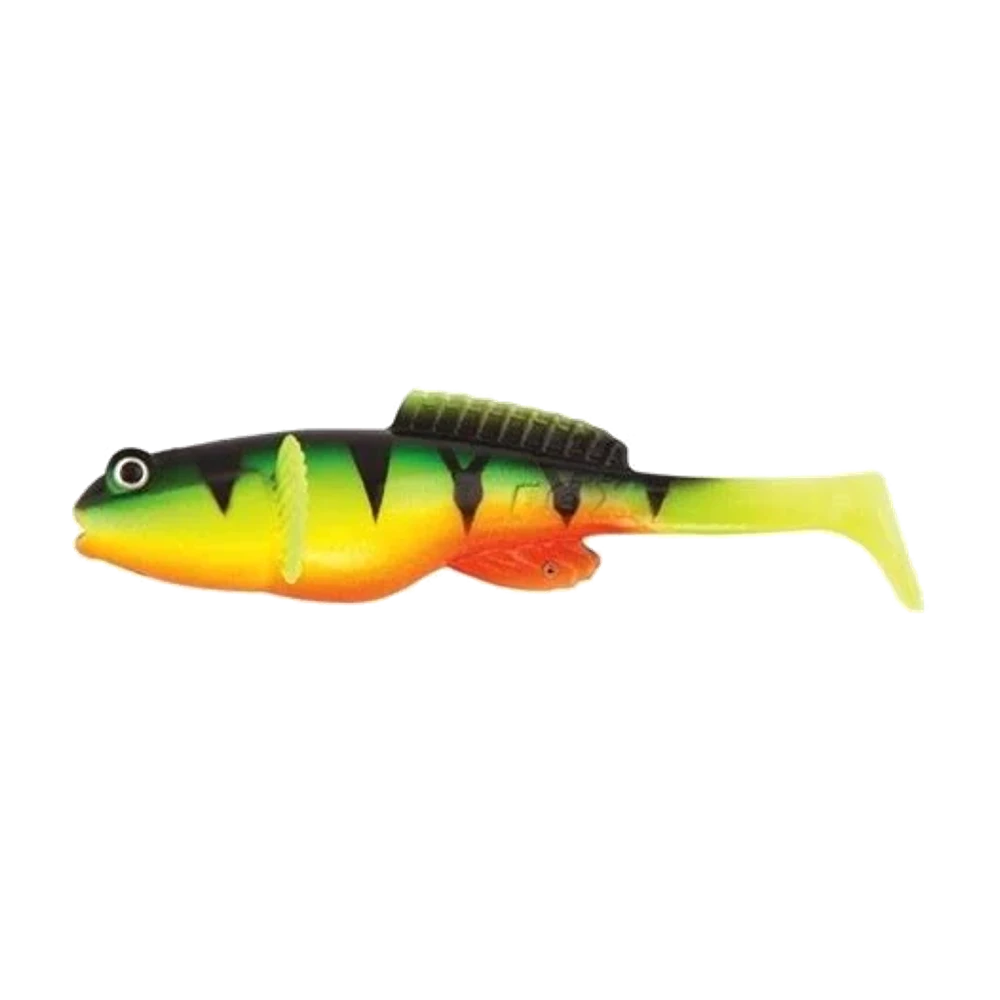
Fox Rage Fish Snax Impact: the shad that still swims when you slow down
Not sure this lure fits YOUR spot today? CarnaFish tells you in 10 seconds, from a photo.
There is a precise moment, every year, when zander stop answering worked retrieves. Not lifts, not sawtooth, not a normal straight wind. You see arches, you pass over them, nothing happens. The classic fix is to slow down — except that most paddle tail shads stop swimming before you have slowed down enough. Your lure then crosses the zone like a dead piece of plastic.
That is the whole point of the Fish Snax Impact. Its tail is sized to start kicking at a speed where many shads have already gone dead. You can wind it back almost at a crawl and it keeps sending out a steady signal. On a fish that will no longer chase, that single difference changes the bite count.
So this page is about one thing: fishing slow without fishing dead.
What makes it swim at a crawl
Three parameters determine the start-up speed of a paddle tail, and the Impact combines them the right way.
- The ratio between the paddle area and the section of the tail wrist. A wide paddle on a slim wrist tips over under minimal water pressure. That is what triggers the kick at low speed.
- The softness of the plastic. Plastic that is too firm needs speed to deform; soft plastic responds immediately. The Impact is clearly on the soft side, with shorter lure life on toothy fish as the trade-off.
- Body volume. A slim body offers little drag and lets the energy go into the tail instead of dissipating it in roll.
The result in hand is obvious: you feel the tail working through the rod while you are barely turning the handle. That tactile feedback is a tuning tool, not a detail — it is what tells you whether you are at the right speed.
The retrieve: finding the stall point
The whole job is to fish just above the speed at which the tail stops.
- Cast and count the sink down to bottom contact, line slightly tight. Note the number of seconds — you will use it to reproduce the depth.
- Lift off with two or three turns of the handle, until you feel the kick set in.
- Slow down progressively until the vibration disappears from the rod. You have just found the stall point.
- Come back up one notch: a barely perceptible, steady vibration. That is your working speed.
- Hold that pace through the whole retrieve, dropping the rod a notch every five or six metres to let the lure sink back toward the bottom.
No lifts, no twitches. The retrieve is consistency. When you want to trigger a follower, do not break the rhythm abruptly: cut the retrieve for a second and a half, let the lure nose down, then pick up at exactly the same speed.
On the water: on inactive zander, set the hook on the disappearance of the vibration, not on a thump. A zander that inhales a soft plastic on a slow straight retrieve does not pull: it sucks the lure in and holds it, and the only thing you perceive is the tail kick stopping. If the vibration dies without you having slowed down, that is a bite.
Weights: the head decides your minimum speed
The trap with a slow straight retrieve is over-weighting. The heavier the head, the faster you have to go to avoid scraping the bottom, so the further you get from the window you actually want.
| Depth / current | Head weight | Body size |
|---|---|---|
| 1.5 to 3 m, calm water | 3 to 7 g | 7 to 9 cm |
| 3 to 5 m, light current | 7 to 10 g | 9 to 12 cm |
| 5 to 6 m or sustained wind | 10 to 15 g | 10 to 12 cm |
Two rigging notes. A classic round head leaves the body free and suits a pure straight retrieve. A forward-eye head lifts the nose slightly and helps keep the lure just above the rocks when you slow right down.
The stinger is debatable. On solid bites it is pointless and increases snagging. On zander nipping the tail in February, a treble rigged behind the body on a short link recovers a significant share of the misses.
On the line side: 0.12 to 0.14 mm braid, 0.28 to 0.30 mm fluorocarbon leader, sensitive rod tip. A setup that is too stiff stops you feeling the tail, and you lose your main indicator.
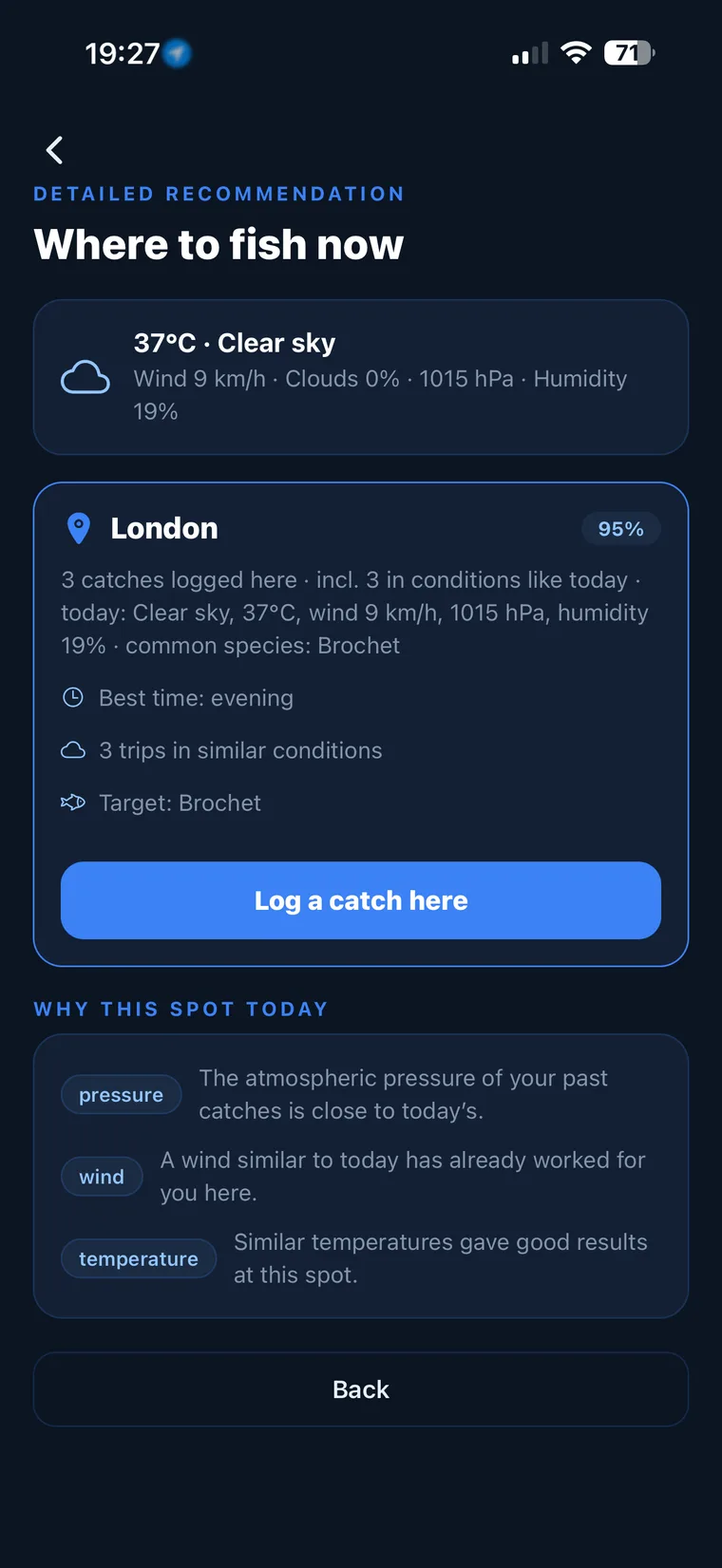
Not sure what to tie on?
Photograph your spot: CarnaFish reads the scene, cross-checks the conditions and gives you the zone, the lure and the retrieve. Free on iOS and Android.
Its windows, and where it disappoints
The Impact takes the lead exactly where you need to slow down.
- Cold water, December to March, on zander sitting on flats or gentle breaks.
- Fish seen on the sounder but inactive, glued to the bottom without lifting.
- Slow rivers or canals, where steady current lets you hold a very low speed on a tight line.
- After fishing pressure, when a zone has already been worked with an active retrieve.
Conversely it is out of place when you need to search fast: at that speed you cover very little water per hour, and a lure with more vibration will sort the fish more efficiently. It also suffers where there are pike: the soft plastic does not survive two attacks, and without a wire leader you lose the whole rig. Finally, in strong current, the weight needed to hold bottom takes you out of the low-speed window.
Against the other Fox Rage soft plastics
The Fox Rage Spikey Shad bets on a segmented body and a stronger signal: it is a lure for active work, lifts and restarts, and it takes the lead on fish that are still reacting. The Pro Shad Firetails plays the visual contrast card with its coloured tail, very useful in stained water and when searching.
The Impact replaces neither: it fills the continuous slow straight retrieve slot, with no twitches, on lethargic fish. In the same range, the Fish Snax Dropshot covers vertical finesse on a precise spot, when you no longer want to move at all.
If you want a zander shad with a denser, deeper profile rigged differently, look at the Molix Jugulo Shad: comparing the two rigs is instructive. Our beginner's guide to zander fishing with lures lays out the basics of the straight retrieve. And if you are unsure what head weight to rig when you reach the bank, CarnaFish analyses a photo of the spot and answers.
Key takeaways
- The tail starts at very low speed: that is the only argument that counts on lethargic zander.
- Find the stall point of the vibration, then come back up one notch. That is your working speed.
- Set the hook on the kick disappearing, not on a solid thump.
- Use the lightest head compatible with the depth: too heavy forces you to fish too fast.
- Poorly suited to fast searching, strong current and pike water without a wire leader.
FAQ
How fast should I retrieve the Fish Snax Impact?
As slowly as you can while still feeling the tail kick through the rod. In practice that often works out at one turn of the handle every two to three seconds, in calm water and with a light head.
What jig head should I use?
A round head of 3 to 15 g depending on depth and current, with a 2/0 to 4/0 hook matched to the body length. The rule is simple: take the lightest head that still lets you keep bottom contact.
Should I add a stinger?
Only if you are missing bites. In cold water, zander often nip the back of the lure and a stinger set back turns those attacks into fish. The rest of the time it mostly adds snags.
How do you detect bites on a slow straight retrieve?
The signal is negative: the steady tail vibration stops. A zander inhales the lure without pulling, and that loss of contact is the only information available. Set the hook immediately, without waiting for confirmation.
What is the difference with the Spikey Shad?
The Spikey Shad is built to be worked, with a stronger signal and restarts; it targets fish that are still reactive. The Impact aims at the opposite: a continuous swim at very low speed for fish that no longer chase.
Does the plastic hold up to pike?
No, not for long. The soft plastic that allows the low-speed kick is the same one that tears quickly. On mixed water, carry spare bodies and a thick fluorocarbon or wire leader.
The full zander lure guideSeason-by-season strategy: which family of lure, when, and why.Go from theory to fish
CarnaFish reads your spot from a photo and gives you the game plan: zone, lure, retrieve. Free on iOS and Android.