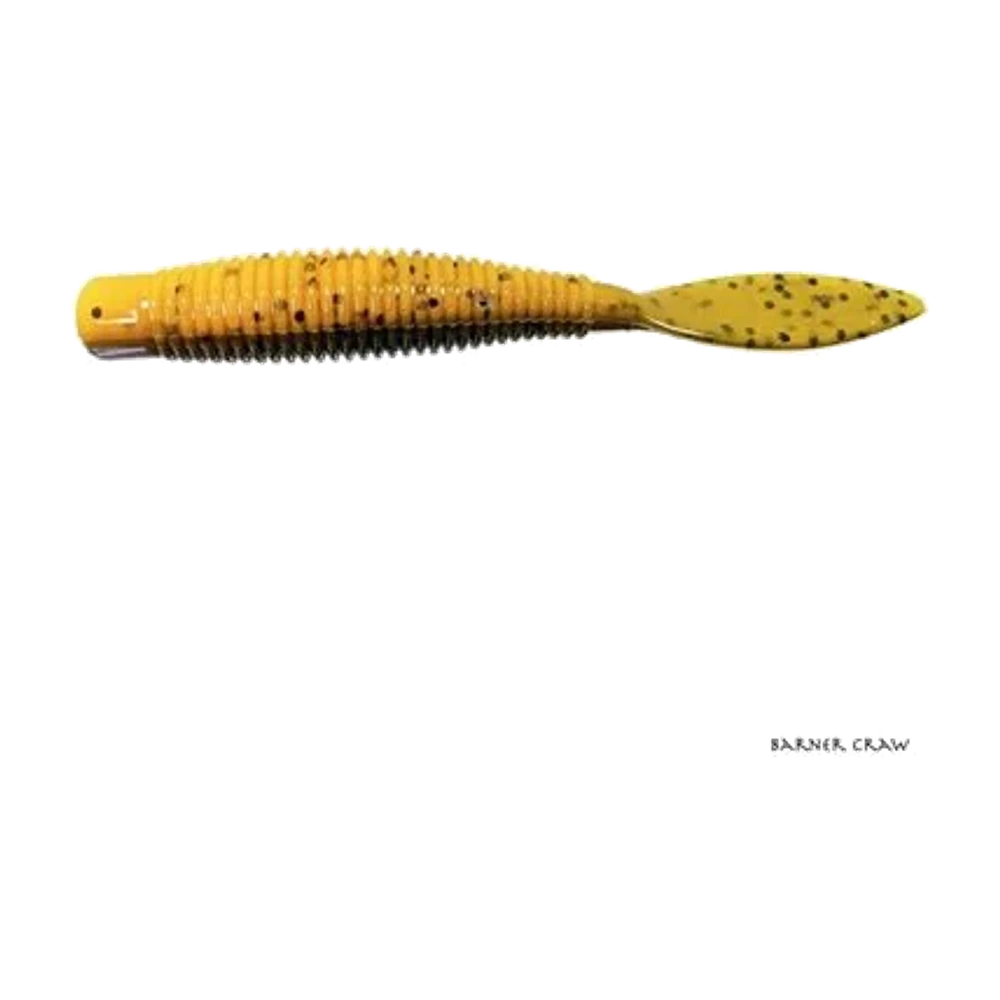
Missile Baits Ned Bomb: the Ned rig that drags instead of standing up
Before tying this one on, it helps to know if the spot actually calls for it. CarnaFish reads the scene from a photo.
The Ned rig took hold with a very precise image: a small piece of buoyant plastic threaded on a mushroom head, standing vertically on the bottom, tail up, rocking on the spot. That posture has become the definition of the rig.
It also has its limits. A bait standing upright on a stump or a stone is perfect over a clean bottom with a stationary fish. On a sloping gravel bottom, in a light current, or facing a perch hunting by rooting through the substrate, that verticality is no longer the right signal — and above all, buoyant plastic lifts off at the first obstacle instead of following the contours.
The Ned Bomb takes the other road. It is a Ned bait moulded in standard, non-buoyant plastic, which lies down on the bottom and follows it. That makes it a dragging bait rather than a vertical one, and it opens up situations that buoyant Ned baits cover badly.
What non-buoyant plastic changes
The difference comes down to one sentence: a Ned bait in ElaZtech or equivalent is less dense than water, a Ned bait in standard plastisol is denser.
In practice, on the bottom:
- The bait stays lying down instead of pointing at the surface. It shows its whole silhouette in profile, not a vertical tail.
- It follows the contours. On a gravel slope it slides and rolls with the substrate. A buoyant bait lifts off and passes over the dips, exactly where a perch is rooting.
- It reads the bottom better. With no parasitic lift, every change in substrate comes up the blank more sharply.
- It tears faster. That is the price: standard plastisol has none of the elastic toughness of ElaZtech. Count on one bait for two or three fish, not twenty.
The body is heavily ringed along its whole length, which produces a useful side effect: on the drag, those rings grip the substrate and make the bait roll slightly around its axis. That micro-roll is the Ned Bomb's main movement, and it is a horizontal one.
The retrieve: the continuous drag
Forget hops. On this bait the sequence is a slow dragging presentation, closer to a light Carolina than to a classic Ned rig.
- Cast and let it drop on a tight line. Count the seconds and you will know what depth you are working.
- Rod at 9 o'clock, and pull slowly from 9 to 11 over three or four seconds. No sharp jerk: a continuous, steady drag.
- Lower the rod back while picking up slack, never letting the line go completely loose. The bait settles back on the bottom.
- Hold a two-second stop. The bite very often comes right there, as a simple weight that settles on the line.
- Repeat. On a precise spot, alternate one long drag with two very short twenty-centimetre pulls.
On the water: over gravel or rock, close your eyes for two seconds during the drag. What you are listening for is not the steady buzz of the bait, it is the moment it stops. A Ned rig that suddenly goes silent in the hand is almost always being held by a fish.
Jig heads: the matching table
The Ned rig is tuned to the gram. Too light and you lose the bottom and stop fishing altogether; too heavy and you kill the slowness that is the whole point of the rig.
| Depth / context | Mushroom head | Line |
|---|---|---|
| Margin, 1 to 2 m, calm water | 1.8 to 2.5 g | 0.16 mm fluorocarbon |
| 2 to 4 m, clean bottom | 2.5 to 3.5 g | 0.18 mm fluorocarbon |
| 4 to 6 m or light current | 3.5 to 5 g | 0.20 mm fluorocarbon |
| River, strong current | 5 g minimum | 0.10 mm braid + 0.22 mm leader |
The rig itself, with the hook choice and the way to thread the bait dead straight, is covered in our Ned rig page. Two points specific to the Ned Bomb: thread it on the ringed section and not the thin end, and don't hesitate to shorten it by a centimetre or two for perch — the plastic cuts cleanly with a blade.
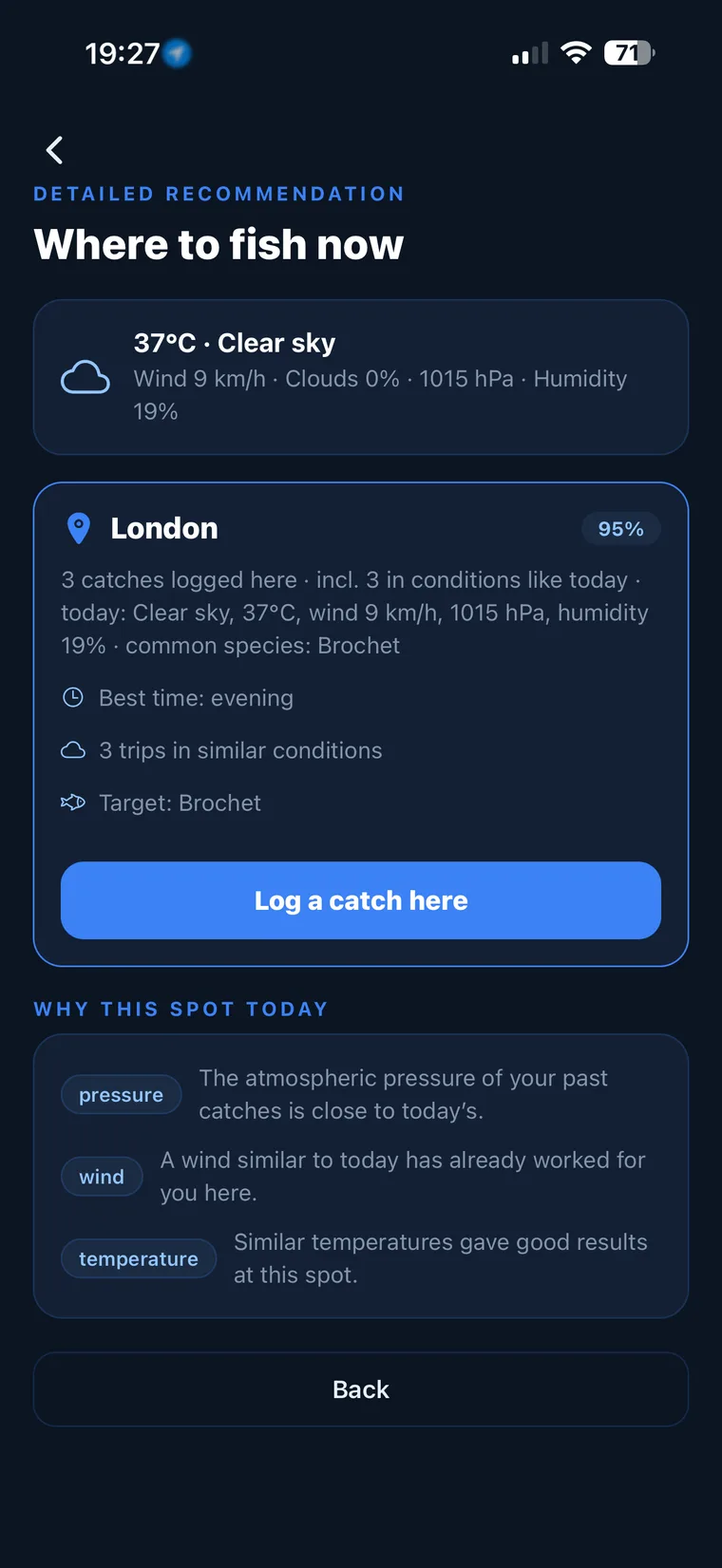
Not sure what to tie on?
Photograph your spot: CarnaFish reads the scene, cross-checks the conditions and gives you the zone, the lure and the retrieve. Free on iOS and Android.
Perch and bass: two uses
For perch, this is the bait's best window. A Ned Bomb trimmed to six centimetres, on a 2.5 g head, dragged over a gravel bottom between two and four metres, covers exactly what a perch does when it is rooting. The bites are positive, often at the end of the drag.
For bass, it becomes a fallback weapon in tough conditions: clear water, fish seen and refusing, middle of the day. Full size, on 3.5 g, dragged along a drop-off or the edge of a jetty, it convinces fish that have already turned down everything else.
It is, on the other hand, unsuited to three situations: dense weed beds, where it snags for want of a weedless rig; very dirty water, where its subtlety becomes a fault; and fast searching, since a slow drag only covers a few dozen square metres an hour.
Ned Bomb or ElaZtech TRD
The ZMan TRD remains the benchmark of the genre and it wins on two objective points: it stands vertically on the bottom, which is deadly on a settled, stationary fish, and it survives a number of fish beyond comparison. Over a day on shoaling perch you will change baits ten times less often.
The Ned Bomb takes the lead as soon as you want a horizontal presentation that follows the contours, in current, on a slope or over an irregular bottom. It also wins when you want a longer, slimmer profile, since it can be trimmed freely with a blade, something that is awkward with elastic plastic.
If, conversely, you are after a craw profile on the same rig, the Missile Baits D Bomb covers the creature register in a heavy version, but on a completely different rig. Our guide to lure fishing for perch details the bottoms where a slow drag beats hopping retrieves. And if you are unsure which head weight to fit for the current you are facing, CarnaFish analyses a photo of the spot and answers.
Key takeaways
- Non-buoyant plastic: the bait lies down and follows the contours instead of standing up.
- A slow, continuous dragging retrieve, no hops.
- The bite often shows as the vibration stopping, not as a knock.
- Trim it with a blade for perch, leave it full length for bass.
- Less durable than an elastic Ned bait: carry spares.
FAQ
Does the Ned Bomb float like a ZMan TRD?
No. It is moulded in standard plastic that is denser than water, so it lies down on the bottom instead of standing tail-up. That difference is what makes it a dragging bait rather than a vertical one.
Which jig head should I choose?
1.8 to 2.5 g along margins, 2.5 to 3.5 g between two and four metres, and 3.5 to 5 g beyond that or in current. The right weight is the one that lets you feel the bottom constantly without speeding up the drag.
Can you cut it down?
Yes, and it is even recommended for perch. A clean blade is enough, and trimmed to around six centimetres the bait still sits perfectly balanced on a mushroom head.
Does it work in rivers?
That is one of its best arenas. Its density stops it lifting off in the current, and it follows the dips of a gravel bottom where a buoyant Ned bait passes over the top. Fit at least 5 g as soon as the current is strong.
How many fish does one bait last?
Two to three on average, sometimes fewer on well-hooked fish. That is the accepted trade-off of standard plastisol against elastic plastics, far tougher but buoyant.
Does the Ned rig work in winter?
Yes, it is one of its best periods, provided you slow down further: five-second drags and five to ten second pauses. In cold water most of the bites happen during the stillness.
The full bass lure guideSeason-by-season strategy: which family of lure, when, and why.Go from theory to fish
CarnaFish reads your spot from a photo and gives you the game plan: zone, lure, retrieve. Free on iOS and Android.