Missile Baits D Bomb: the creature bait that works on the fall
The right lure in the wrong spot still catches nothing. CarnaFish spots the zone that works, from a single photo.
You are fishing a drowned tree. You drop your Texas rig against the trunk, you follow the line, it settles on the bottom in two seconds. Nothing. You pitch again forty centimetres further along, same result. Ten casts later you have covered the whole spot without a single bass having had time to decide anything.
The problem is almost never colour or size. It is how long the lure stays visible and alive in the water column. A bass sitting under a branch at two metres does not move for an object that crosses its field of vision in a second and a half.
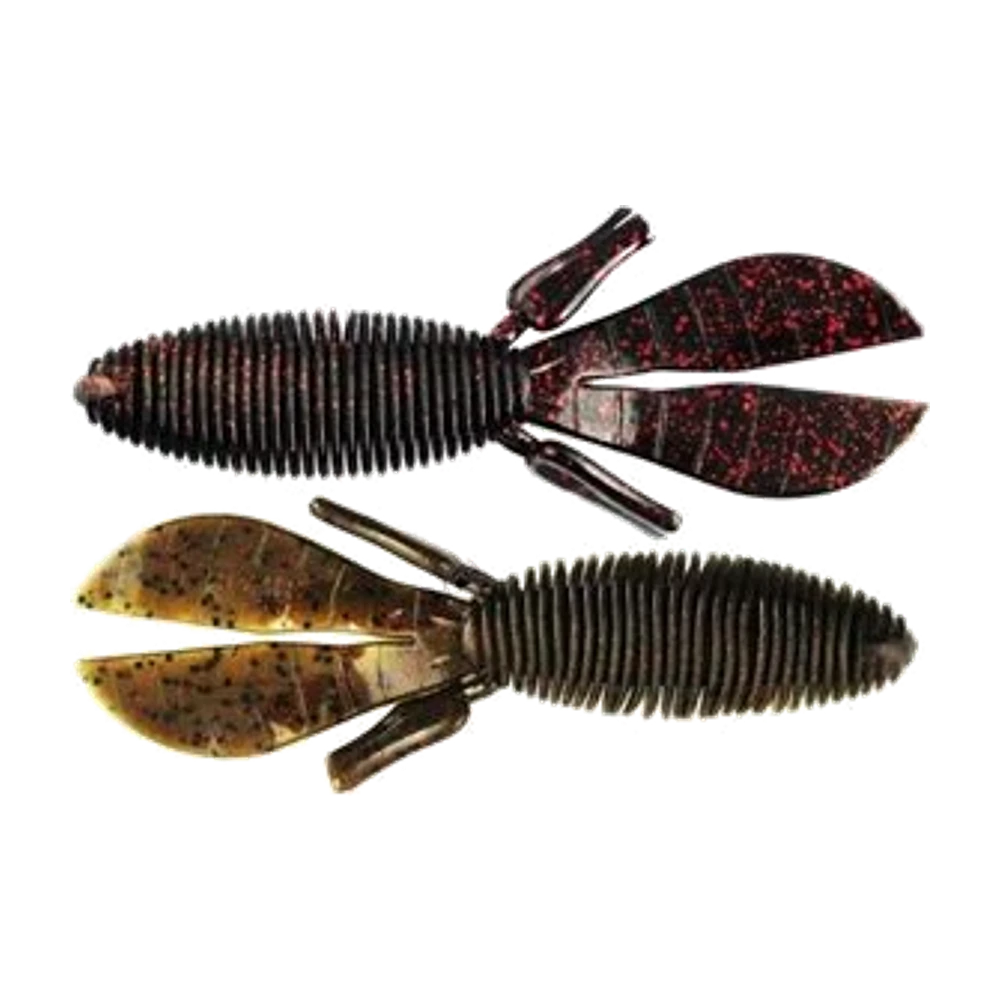
The D Bomb is built to stretch that moment out. Its thick, heavily ribbed body brakes the drop, its appendages flap through the whole fall, and the whole thing hangs around long enough for a slow fish to get up.
The ribbed body: a brake, not decoration
Most creature baits have a smooth or lightly veined body. The D Bomb has a bulky body covered in deep rings along its whole length, and that geometry has three consequences you can measure on the water.
First, it increases drag. At the same weight, a ringed creature sinks noticeably slower than a smooth one. Over three metres of water that easily means one to two extra seconds of presence per cast. Across forty casts in one tree, that is a full minute of visible lure gained.
Second, it stabilises the fall. The ribs spread the resistance over the whole body, which stops the lure from spiralling or keeling over. The D Bomb goes down flat, appendages up, in a readable posture.
Third, it holds scent. If you dip your baits, the rings keep the liquid far longer than a smooth surface. That is not trivial in stained water or on slow fish.
Two planes of movement, not one
The D Bomb carries flat, ringed appendages that do not all work on the same axis. The longest ones flap sideways during the drop, producing a wide, slow displacement of water. The smaller ones, close to the body, buzz at a higher frequency at the slightest current or the slightest movement of the line.
The result is a signal at two superimposed frequencies: a low component that carries a long way in dirty water, a high one that closes the deal at short range.
That is also why the D Bomb works remarkably well as a jig trailer. Rigged behind a football head, it doubles the jig's volume without softening it: the appendages keep flapping through the pauses on the bottom, when the jig skirt has stopped doing anything.
The retrieve: three casts per spot
The D Bomb is not a retrieve lure. It is fished flipping and pitching, spot by spot, and the sequence comes down to a few moves.
- Place the bait, don't cast it. A low pitch that enters the surface without a splash. The aim is for the first thing the fish registers to be the fall, not the impact.
- Follow the drop with the rod tip, line half-tight. Slack line and you never see the bite; over-tight line and you pull the bait off its axis and speed up the fall.
- Wait two to three seconds once it is down, doing nothing. A good share of the bites come at exactly that moment.
- Two small twenty-centimetre lifts, then another free fall. You recreate the signal without moving the bait off the spot.
- Reel in and pitch elsewhere. Three casts maximum on the same point: if a fish was going to react, it has.
On the water: when you are running through spots without a touch, don't go heavier to move faster — go one size lighter. A slower fall on twenty well-chosen spots produces more than a fast fall on sixty skimmed ones, and that is exactly the opposite of the reflex you get when nothing is biting.
Weight, hook, line
You set this up around how thick the cover is, not around depth.
| Situation | Tungsten bullet | Hook |
|---|---|---|
| Open margin, 1 to 2 m | 7 to 10 g | Wide gap 4/0 |
| Flooded timber, scattered branches | 10 to 14 g | Wide gap 4/0 or 5/0 |
| Dense stumps, 3 to 5 m | 14 to 18 g | Wide gap 5/0, heavy wire |
| Matted vegetation to punch | 18 to 21 g | Straight hook with a reinforced eye |
Three points that matter:
Tungsten rather than lead. At the same weight it is more compact, so it slips between branches better, and it transmits the nature of the bottom far more clearly through the blank.
The bobber stop. Pegged against the head of the bait, it keeps everything compact for punching through. Left free over fifteen centimetres, it separates the weight from the bait, which then glides for much longer. Use that second setting when the fish are slow.
The line. 0.30 to 0.40 mm braid in thick cover, no leader. 0.35 to 0.40 mm fluorocarbon when the water is clear and the cover more open.
Not sure what to tie on?
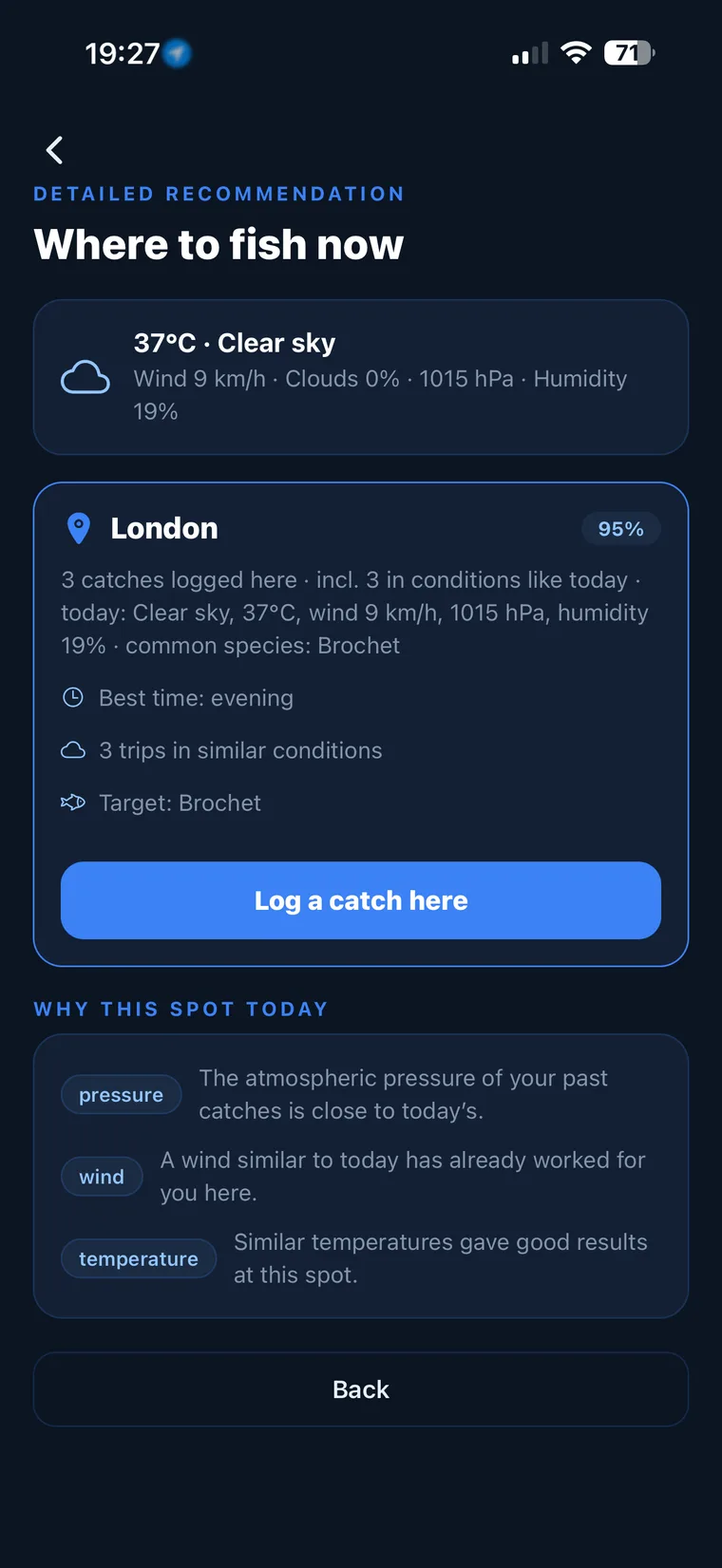
Photograph your spot: CarnaFish reads the scene, cross-checks the conditions and gives you the zone, the lure and the retrieve. Free on iOS and Android.
Where it excels, where it is beside the point
Its window is clear-cut. Flooded timber, stumps, jetties, reed edges, structured weed beds: anywhere the fish is glued to an obstacle and has to make a quick decision about an object falling beside it. It peaks in warm water, from spring to the end of summer, when the bass are on cover.
It is, on the other hand, unsuited to searching. Over a big sandy plain with no relief, you will spend ten times longer fishing than with a search bait, for fewer contacts. It is also too bulky for very cold water, where a slim, discreet profile takes over, and completely beside the point for perch or zander.
D Bomb, Brush Hog or Sweet Beaver
The Zoom Brush Hog is the historical benchmark of the genre: slimmer, softer, with longer and floppier appendages. It slips through stringy vegetation better, but it sinks faster and tears faster too. The D Bomb is the choice when you want to slow the fall down and firm the signal up.
Against the Reaction Innovations Sweet Beaver, the contrast is sharper still: the Sweet Beaver is a smooth, compact profile built to punch through a vegetation mat without catching anything, with very little action of its own. The D Bomb does exactly the opposite — it brakes, it flaps, it occupies space. Over a thick duckweed mat, take the Beaver; in a drowned tree at three metres, take the D Bomb.
The base rig is the same for both and it is covered in our Texas rig page, as are the seasonal windows in our beginner's guide to bass fishing. And if you are unsure which weight to fit when you pull up in front of a drowned tree, CarnaFish analyses a photo of the spot and answers.
Key takeaways
- The ringed body slows the fall by one to two seconds per cast: that is the whole point of the bait.
- It is fished pitching, spot by spot, three casts maximum per point.
- If nothing is biting, go lighter on the weight rather than heavier.
- Excellent jig trailer: the appendages keep flapping through pauses on the bottom.
- A cover-and-warm-water bait, pointless for searching over bare bottom.
FAQ
What weight should I use with the D Bomb?
7 to 10 g on an open margin, 10 to 14 g in flooded timber, and up to 18 or 21 g to punch a vegetation mat. Take tungsten rather than lead: more compact, it slips between branches better and reads the bottom more clearly.
What hook size for a D Bomb?
A 4/0 wide gap for everyday work, 5/0 in heavy wire as soon as you fish thick timber or step up to heavy braid. The body is thick: a hook with a narrow gap hooks badly.
Does the D Bomb work as a jig trailer?
Yes, it is one of its best uses. It adds volume without softening the jig, and its appendages stay active through pauses on the bottom, when the skirt has stopped moving.
How long should you leave the bait on the bottom?
Two to three seconds after contact, doing nothing. Plenty of bites come during that stillness, right after the fall ends, and they often show up as nothing more than the line going slack.
Which colour should I pick?
Green pumpkin and watermelon cover most situations in clear to lightly stained water. Switch to black/blue or june bug as soon as visibility drops below fifty centimetres or you are under very dark cover.
Can you fish it away from cover?
You can, but it rarely pays. Over bare bottom its slowness becomes a handicap and a search bait will cover far more ground. Keep it for precise spots where the fish is glued to an obstacle.
The full bass lure guideSeason-by-season strategy: which family of lure, when, and why.Go from theory to fish
CarnaFish reads your spot from a photo and gives you the game plan: zone, lure, retrieve. Free on iOS and Android.