Molix Vindex Craw: the soft craw with three ways to rig it
The right lure in the wrong spot still catches nothing. CarnaFish spots the zone that works, from a single photo.
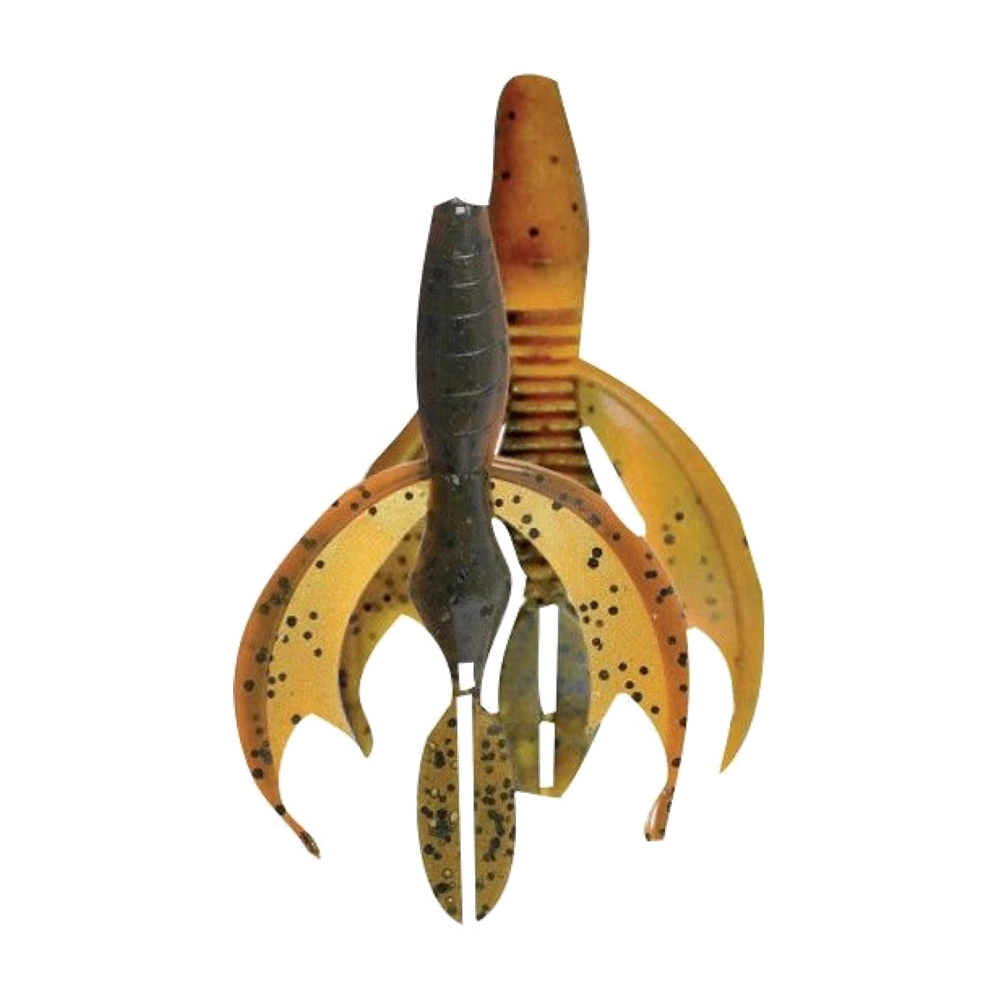
A soft craw that still holds its shape after three strikes in a row isn't a small thing — most budget soft plastics tear or lose a claw within a few bites. The Vindex Craw owes its durability to a dual-density plastic build — a softer body for movement, harder claws to keep their shape — which makes it a solid pick for rigs that take the most punishment from structure contact.
What separates a good soft craw from a generic imitation
At rest, the Vindex Craw's claws naturally rise into a defensive position, exactly like a real crawfish that feels threatened. That visual detail matters most on the fall and at a dead stop, the two moments when a bass or perch tends to watch longest before committing. The bait is also infused with a shrimp amino-acid scent, meant to hold a fish an extra second at the moment of the hookset — useful on the hesitant bites typical of this kind of prey.
Rig 1: jig trailer, the primary use
The Vindex Craw is designed first and foremost as a trailer for a weighted jig (Molix Tenax or Kento style): added at the back, it slows the fall, adds bulk, and keeps the claws moving once the jig settles on bottom. It's the most productive combination over rocky spots or areas with natural crawfish.
Rig 2: Texas rig for flipping and pitching
Without a jig, a Texas rig with a 7-14 g bullet weight depending on depth lets you flip or pitch it straight into brush piles and dense vegetation. The hook tucked inside the body protects against snags, a decisive advantage in that kind of cluttered cover.
Rig 3: finesse approach for perch
On a light 3-7 g jighead, the Vindex Craw becomes a credible finesse option for perch, especially in clear water where its compact 9 cm size stays proportional to the species' mouth. A very slow retrieve, almost vertical under the boat or from an overhanging bank, matches perch's bottom-hunting behaviour well.
Field rule: with a soft craw, the strike almost always comes on the fall or at a dead stop, never during a fast retrieve. Slow down before blaming the lure for not working.
Not sure what to tie on?
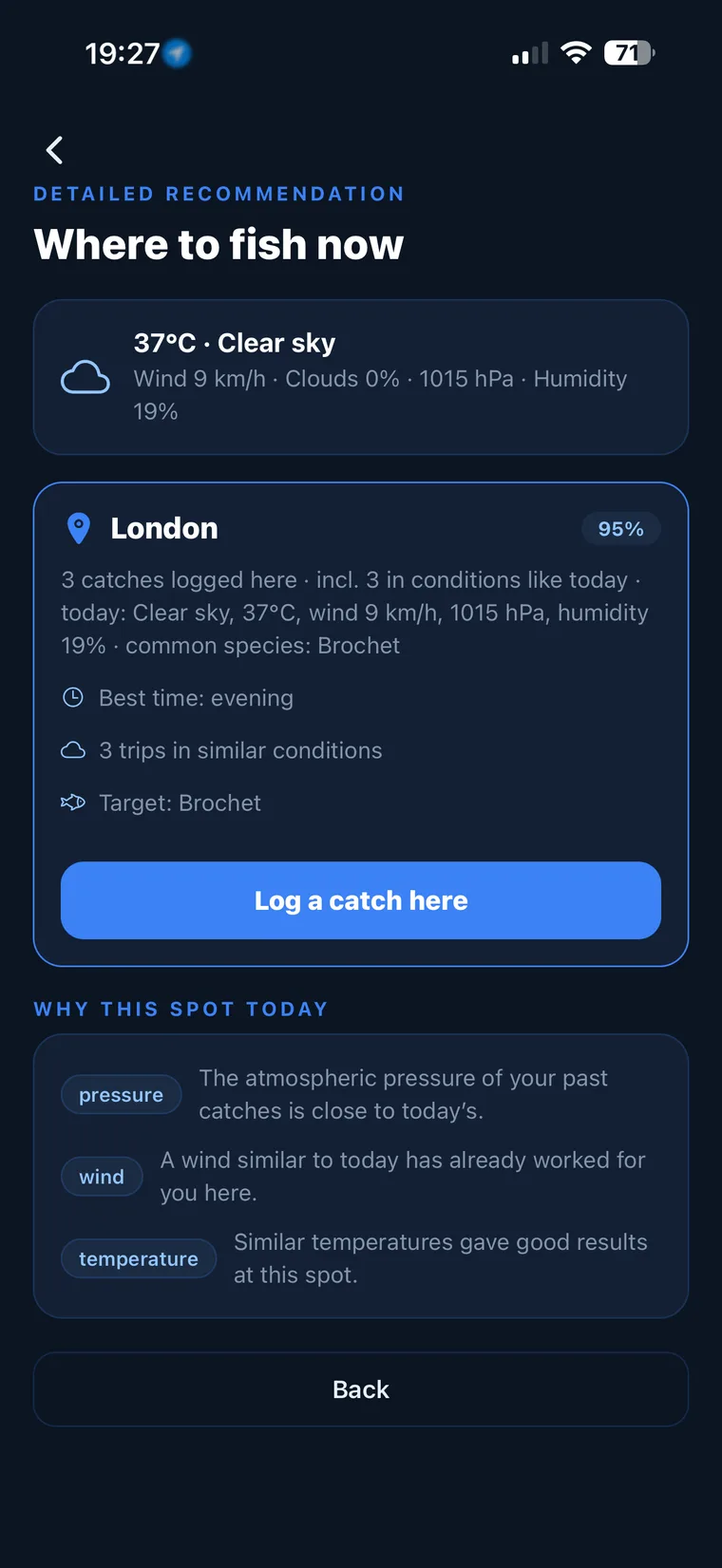
Photograph your spot: CarnaFish reads the scene, cross-checks the conditions and gives you the zone, the lure and the retrieve. Free on iOS and Android.
Colour by water clarity
In clear water, stick to natural tones — green pumpkin, brown, amber — that closely match local crawfish. In stained water, switch to black/blue for a sharp silhouette contrast, or fluorescent orange, which mimics a molting crawfish, a prey item bass recognise easily even in murky water.
The retrieve that changes everything: slow down further
The classic mistake is fishing a soft craw like a shad, with steady pulls. The Vindex Craw does its best work with very small rod movements, a few centimetres at a time, followed by a long pause on bottom contact — it's during that pause that the claws keep moving and the strike usually comes.
Where another lure does better
Over a spot where fish are active and moving to hunt, a craw fished too slowly loses ground to a Strike King Rage Craw, whose vibrating tail draws attention even on a faster retrieve. And in open water, away from any structure, a Molix RA Shad suits the situation better than a craw designed around bottom contact.
Knowing which lure family fits the spot on a given day is exactly what CarnaFish is for: a photo of your spot is enough for the AI to hand you a matching zone and technique instead of guessing. To go deeper on perch fishing, see the perch lure guide.
FAQ
How do you rig the Molix Vindex Craw as a jig trailer?
By adding it to the back of a weighted jig such as a Tenax or Kento: it slows the fall, adds bulk, and keeps the claws moving once the jig settles on bottom, making it the most productive rig over rocky spots.
What weight should you use for a Texas rig with this craw?
A 7-14 g bullet weight depending on target depth, with the hook tucked inside the body to limit snags while flipping or pitching into brush piles and dense vegetation.
Does the Vindex Craw work for perch?
Yes, rigged on a light 3-7 g jighead. Its compact 9 cm size stays proportional to a perch's mouth, fished with a very slow, almost vertical retrieve.
When do fish bite a soft craw?
Almost always on the fall or at a dead stop, when the claws keep moving under their own weight. A retrieve that's too fast or too steady sharply reduces the strike rate.
What colour works in stained water?
Black/blue for a sharp silhouette contrast, or fluorescent orange, which mimics a molting crawfish — a colour bass recognise well even in murky water.
Should you use a soft craw or a chatterbait over a rocky spot?
It depends on how active the fish are: a slowly worked craw along the bottom suits a bass or perch that's holding and inactive, while a chatterbait covers the spot faster when fish are moving to feed.
The full bass lure guideSeason-by-season strategy: which family of lure, when, and why.Go from theory to fish
CarnaFish reads your spot from a photo and gives you the game plan: zone, lure, retrieve. Free on iOS and Android.