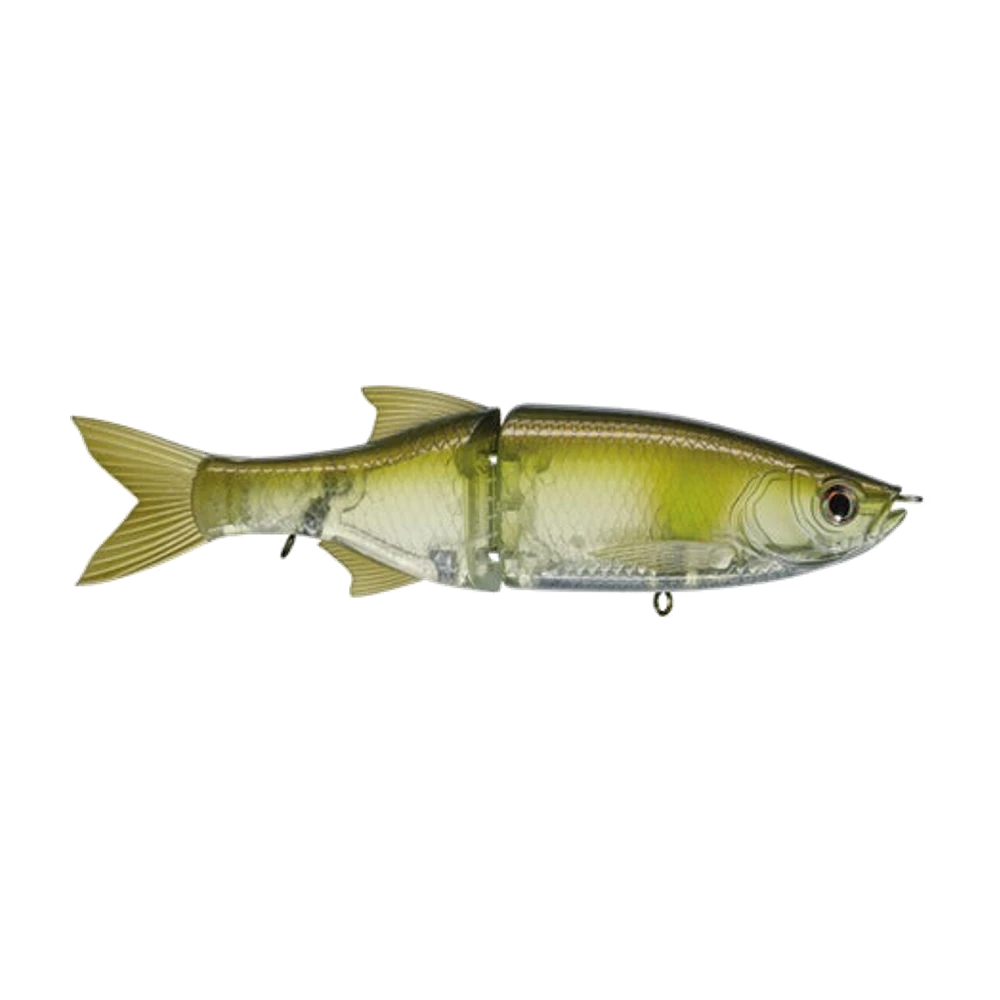
Molix Glide Bait 130: the jointed swimbait that mimics a wounded pike's S-swim
The right lure in the wrong spot still catches nothing. CarnaFish spots the zone that works, from a single photo.
Molix's Glide Bait 130 isn't just another jointed swimbait in an already crowded aisle: its wide S-glide, borrowed from Japanese glide bait design, makes it a genuine tool for waking up a big pike that's grown bored of standard lures.
Glide baits: a category of their own
Unlike a standard swimbait that swims straight with a steady undulation, a glide bait like the Glide Bait 130 slides side to side in a wide S with every rod pulse. Its center joint is looser than a standard swimbait's, allowing that wide angle without ever breaking the body's overall line — the lure keeps a continuous silhouette even mid-turn, exactly like a wounded fish zigzagging to escape.
Why it works on big pike
Big pike, often the wariest, have seen hundreds of standard lures in their lifetime. The Glide Bait 130's S-motion looks visually different from anything a shad or a jerkbait can offer, making it an excellent change-up lure when the usual suspects stop working on a spot known to hold fish.
The retrieve: an underwater "walk the dog"
The technique resembles a surface stickbait's, applied just below the surface:
- Cast, let it settle for a few seconds.
- Work it with short, sharp, regular wrist pulls, never one hard yank.
- Pause every so often for 2-3 seconds: the glide bait then sits almost motionless, drifting slightly — often the fatal moment for a pike that had been following close behind.
A glide bait worked too fast loses its whole appeal: it's the slowness of the zigzag that sells it, not speed.
The right gear for the job
At 28g for 13cm, the Glide Bait 130 demands properly sized gear: a heavy rod (40-80g casting weight), a sturdy reel, and at least 30-40 lb braid. A wire or titanium leader is non-negotiable on a pike spot, and double or treble hooks need to be reinforced to handle the lure's weight without opening up mid-fight.
Not sure what to tie on?
Photograph your spot: CarnaFish reads the scene, cross-checks the conditions and gives you the zone, the lure and the retrieve. Free on iOS and Android.
Versus another glide bait
Compared to the Westin Swim Glidebait, softer plastic and therefore more forgiving on the strike, the Molix Glide Bait 130, being hard-bodied, transmits a sharper vibration and holds up better against pike teeth over time. For an even more spectacular surface presentation, the Gan Craft Jointed Claw remains the Japanese benchmark in this category, at a noticeably higher price.
Colors and reading the water
- Clear water: natural perch or roach tones, staying believable to a pike watching closely.
- Stained water: white or chartreuse, which maximize the visible silhouette even in coloured water.
- Overcast sky: a light belly contrasted against a dark back carries well across most in-between conditions.
A lure this specific doesn't get thrown at random: you need an open spot, enough depth for a surface presentation, and a potentially wary pike. That's exactly the kind of read CarnaFish makes easier: photograph the spot, and the AI tells you whether conditions call for a surface technique like this one rather than a more standard lure. For the full strategy on this species, our pike lure guide is essential reading alongside this sheet.
The rundown before the big cast
- Its jointed S-motion sets it apart from any standard swimbait: a genuine change-up lure on big, wary fish.
- Work it slowly with short wrist pulls, with long pauses where the lure sits nearly motionless.
- Gear must be beefed up accordingly: a heavy rod, thick braid, wire or titanium leader.
FAQ
Is the Glide Bait 130 a good fit for someone new to topwater lures?
Yes, as long as you accept a short learning curve on the retrieve: the wrist-driven zigzag takes more practice than a plain straight retrieve, but there's no complicated rig to master. A few sessions are usually enough to find the right tempo.
How do you work a glide bait like the Glide Bait 130?
With short, sharp, regular wrist pulls, never forcing it, pausing for 2-3 seconds at a time where the lure sits nearly motionless. The zigzag's slowness is what sells the motion, not the speed of the retrieve.
What gear should I use with this kind of lure?
A heavy rod (40-80g casting weight), a sturdy reel, and at least 30-40 lb braid. A wire or titanium leader is essential on a pike spot, as are reinforced hooks sized to the lure's weight.
Why use a glide bait instead of a standard shad?
On a big, wary pike that's already seen plenty of standard lures, the glide bait's very distinctive S-motion offers a visual break that can revive interest where a regular shad no longer works.
Does the Glide Bait 130 work in deep water?
No, it's a surface and just-under-the-surface lure, effective between 0.3 and 1.2 m. To fish deeper, turn to a sinking swimbait or a deep-diving crankbait instead of this lure family.
What color should I choose in stained water for a glide bait?
White or chartreuse maximize the silhouette's visibility in coloured water, where natural tones lose contrast and become harder for pike to spot.
The full pike lure guideSeason-by-season strategy: which family of lure, when, and why.Go from theory to fish
CarnaFish reads your spot from a photo and gives you the game plan: zone, lure, retrieve. Free on iOS and Android.