Free rig: the weight hits the bottom, the bait keeps falling
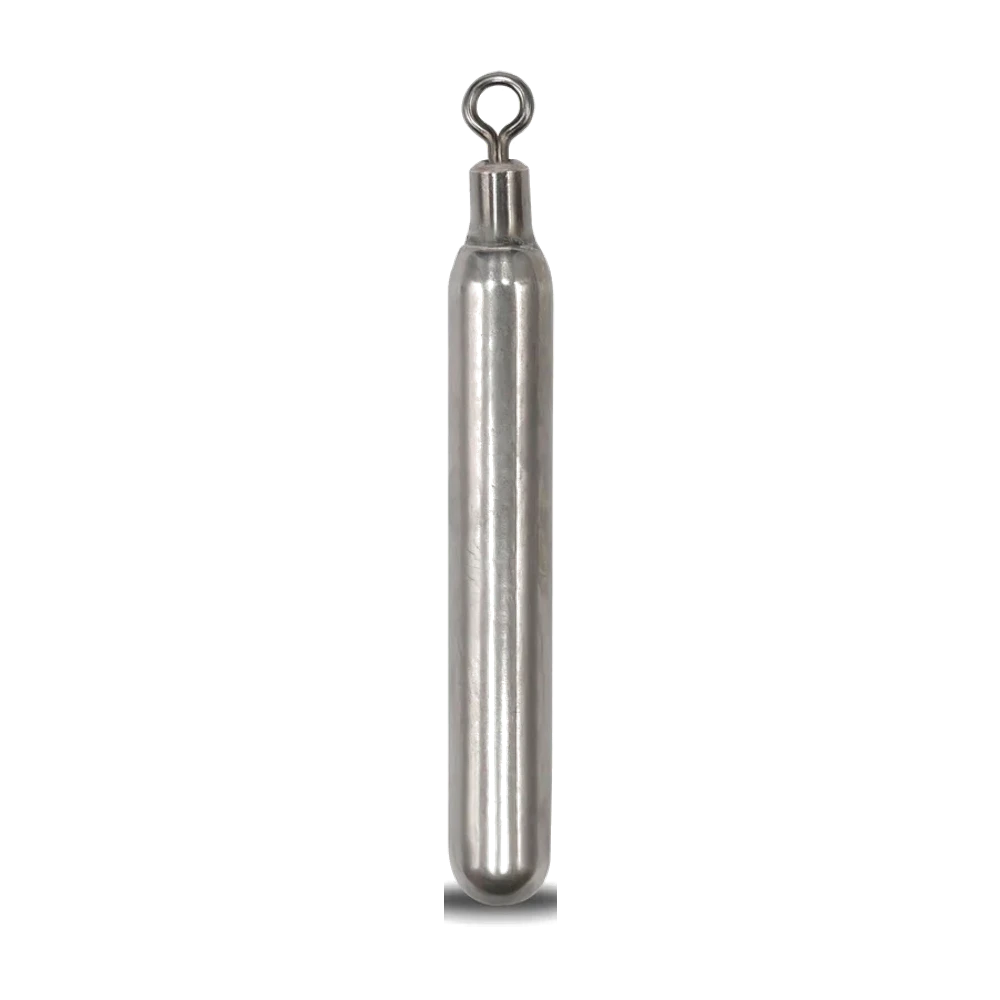
One lure, endless conditions. CarnaFish reads your spot from a photo so you are not just guessing.
Tie a classic Texas rig, cast it, and picture what happens underwater. The bullet weight sits jammed against the nose of the bait, the whole thing forms a single projectile, and it goes down like one: fast, straight, saying nothing at all. The bait only starts to work once it has landed, when you give it that first pull.
Yet for a bass sitting halfway down under a branch, or for a zander following the drop with its eyes from the bottom, those three seconds of falling are the best moment of the entire cast. And on a Texas rig they are wasted.
The free rig fixes that in a way that is both simple and radical. The weight is no longer against the bait: it is a cylindrical weight fitted with a ring, and the line runs freely through it. On the drop it goes on ahead, picks up speed, hits the bottom — and at that instant the line keeps sliding through the ring. The bait carries no lead at all. It stays up in the water and comes down on its own, slowly, gliding, for another one to three seconds.
That second phase, decoupled from the first, is what this whole rig is about.
The fall in two stages
Stage one, the weight drops. Heavy and compact, it runs straight down. You follow the slack line with the rod tip. The knock of the contact is sharp and you feel it perfectly, since nothing sits between the weight and your rod to cushion it.
Stage two, the bait drops. The weight is down and motionless. The line slides through its ring. The bait, unweighted, glides towards the bottom with its own buoyancy and its own profile: a finesse worm wobbles, a creature bait spreads its appendages, a craw comes down flat waving its claws. That descent lasts one to three seconds depending on depth and on the bait, and that is where most of the bites come.
The practical consequence is counter-intuitive: on this rig, you have to wait after you have felt the bottom. The universal reflex — feel the weight touch down, then start working the bait — is a mistake here, and it throws away half the point of the rig. The weight hitting bottom is not the end of the fall, it is the start of the part that counts.
Tying a free rig
- Thread the weight onto the main line, through its ring. No bead, no stop, nothing that limits its travel: the word "free" is the whole rig.
- Tie the hook at the end of the line. A weedless offset hook, usually a little stronger than what you would use on a drop shot, since the hookset often happens at distance with slack in the line.
- Leave the travel free. Some anglers pin the weight at a fixed distance with a stop float: that turns the free rig into a kind of short Carolina and kills the decoupled fall. Only do it if you specifically want to control the height, and know that you have changed rigs.
- Rig the bait strictly weedless. This rig is built to be cast into hard, cluttered ground, and a point sticking out will cost you a snag every cast.
The retrieve, or rather the absence of one
- Cast and follow the drop with the rod tip, keeping the slack line just visible, never tight.
- Wait for the knock of the weight. It is clean, you cannot miss it.
- Do not move. Count three seconds. That is how long the bait takes to come down in its turn. Watch the line: if it moves sideways, tightens on its own or stops sinking, set the hook.
- One slow pull of thirty centimetres, then let everything settle back down and count three seconds again. You have just repeated the same sequence a little further along.
- Two or three repeats are enough per cast. Beyond that you are out of the interesting zone; cast again instead.
On the water: the real adjustment on this rig is not the weight of the sinker, it is the density of the bait. A bait that sinks fast will come down almost as quickly as the weight and you lose the decoupling; a floating or near-neutral bait will hang for three or four seconds and produce exactly the effect you are after. If you are getting nothing on a free rig, switch to a less dense bait before you change anything else — that is the parameter that drives the whole thing.
The weight, matched to the depth
| Situation | Weight | Expected glide | Rhythm |
|---|---|---|---|
| Margins, 1 to 2 m | 5 to 7 g | 1 to 2 s | 2 pulls then cast again |
| Flat, 2 to 4 m | 10 g | 2 to 3 s | 3 pulls, pauses of 5 s |
| Drop-off, 4 to 7 m | 14 g | 3 s | 2 pulls, constant contact |
| Deep or current, 7 m and more | 18 to 21 g | 3 s and more | Almost vertical fishing |
Always take the heaviest weight that still lets you feel the contact. Unlike most slow rigs, going heavier does not shorten the presentation here: the bait comes down at its own speed anyway once the weight is on the bottom. A heavy weight simply gives you better contact and a better cast, at no cost to the finesse.
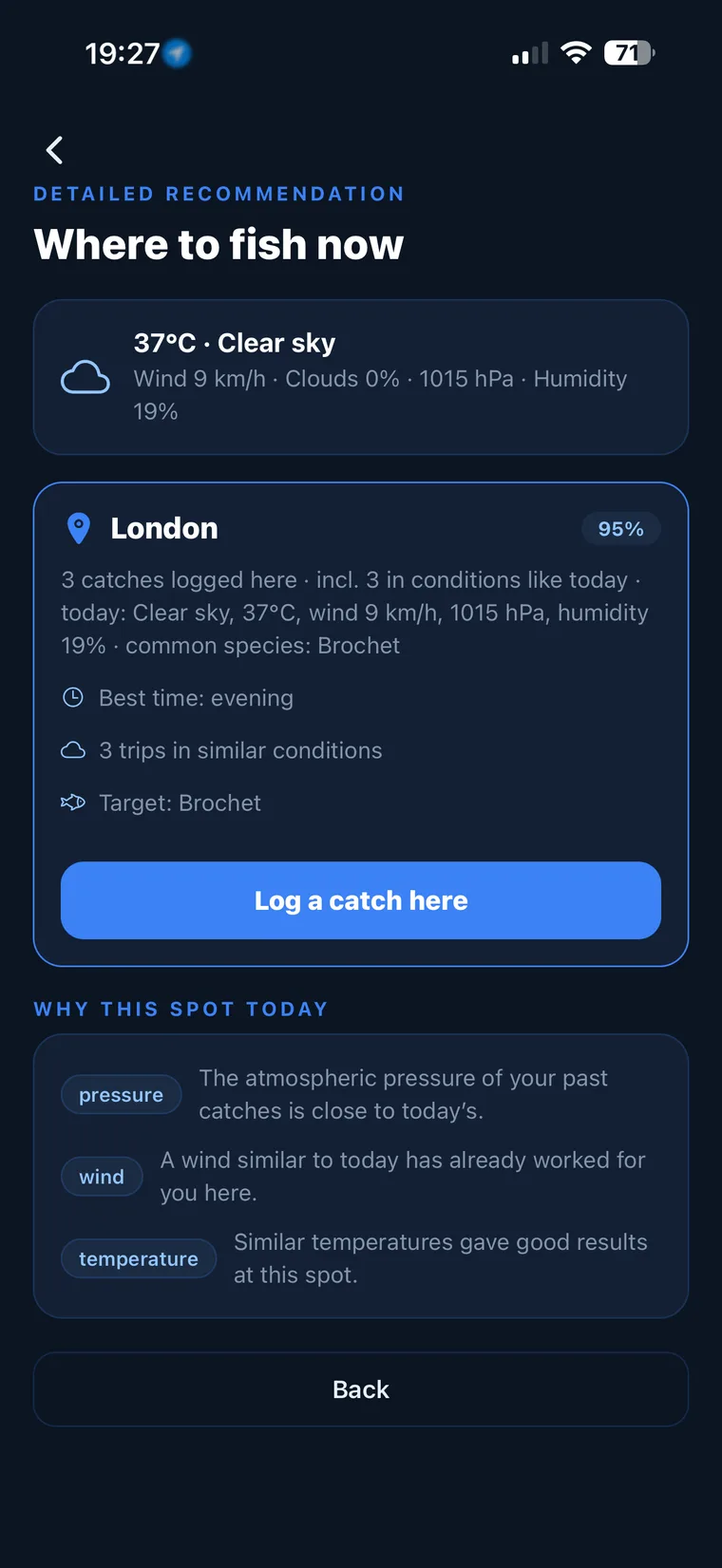
Not sure what to tie on?
Photograph your spot: CarnaFish reads the scene, cross-checks the conditions and gives you the zone, the lure and the retrieve. Free on iOS and Android.
Where it wins, where it is the wrong tool
It is excellent over hard bottom — gravel, flat rock, stones — where the fall of the bait stays clearly readable and the weight does not sink in. It shines on steep margins and sharp drop-offs, where three seconds of glide cover the whole useful depth. And it is deadly on suspended fish, which refuse a bait lying on the ground but happily intercept prey on its way down.
Leave it aside in three cases. Over soft silt: the weight sinks in, the bait ends up lying in it, and the glide finishes in the soup. In very dense branches: the free weight slides and wedges itself in the forks independently of the bait, so you double your snagging points. When searching fast: every cast means waiting, and you cover very little water.
Free rig, Texas rig or Carolina rig
All three slide a weight on the line, and yet they fish nothing alike.
The Texas rig keeps the weight against the bait. It is the most snag-free and the most accurate to cast, the one you send under low branches. Its fall is fast and of no interest, but it goes where nothing else goes.
The Carolina rig separates the weight from the bait with a long leader, sometimes a metre. It is built to sweep a bottom horizontally, over long distances, not to exploit a fall.
The free rig owns the vertical ground between the two: the weight on the bottom, the bait coming down on its own just above it. If you fish drop-offs or steep margins over hard bottom and you suspect fish holding off the bottom, it is the most productive of the three. Our beginner's guide to bass fishing puts these rigs into a logical progression, and if you are torn between attacking a drop-off with a free rig or a Carolina, CarnaFish analyses a photo of the spot and gives you an answer. For the same suspended-bait idea but with the weight fixed to the hook, have a look at the jika rig.
Key takeaways
- The weight slides freely on the line: it hits the bottom first, then the bait comes down on its own.
- The bite almost always comes during those one to three seconds after the weight touches down.
- After the knock, do not move and count three seconds. It is the most important rule on this rig.
- The adjustment that matters is the density of the bait, not the weight of the sinker.
- Avoid it over soft silt, in dense branches and when searching fast.
FAQ
What is the difference between a free rig and a Texas rig?
On a Texas rig, the weight stays jammed against the nose of the bait and the whole thing falls as one block. On a free rig, the weight slides freely, reaches the bottom first, and the bait keeps coming down on its own for one to three seconds.
Why do you have to wait after feeling the bottom?
Because the weight touching down is not the end of the fall. The bait, unweighted, is still gliding one to three seconds behind it, and that phase is when the vast majority of bites happen.
Which bait should I use on a free rig?
A low-density bait, floating or close to neutrally buoyant: finesse worm, creature bait, craw with appendages. A bait that sinks fast comes down almost as quickly as the weight and removes the whole point of the rig.
Should I pin the weight with a stop float?
No, unless you deliberately want to control the height — and in that case you are really fishing a short Carolina. A free rig assumes the weight slides completely freely.
What weight should I use?
Five to seven grams along the margins, ten grams on a flat, fourteen grams on a drop-off, eighteen to twenty-one grams deep or in current. Take the heaviest that still lets you feel the contact clearly.
Does it work for zander?
Yes, particularly on hard-bottomed gravel pit drop-offs. Zander often intercept the bait during the glide, and the bite then shows on the line rather than in the rod.
The full bass lure guideSeason-by-season strategy: which family of lure, when, and why.Go from theory to fish
CarnaFish reads your spot from a photo and gives you the game plan: zone, lure, retrieve. Free on iOS and Android.