Carolina rig: covering big flats without giving up finesse
Not sure this lure fits YOUR spot today? CarnaFish tells you in 10 seconds, from a photo.
When you have to cover a big three-metre flat with no visible structure, no finesse rig will do: a drop shot and a Ned rig search far too slowly, and a Texas rig drops and lifts without covering any distance.
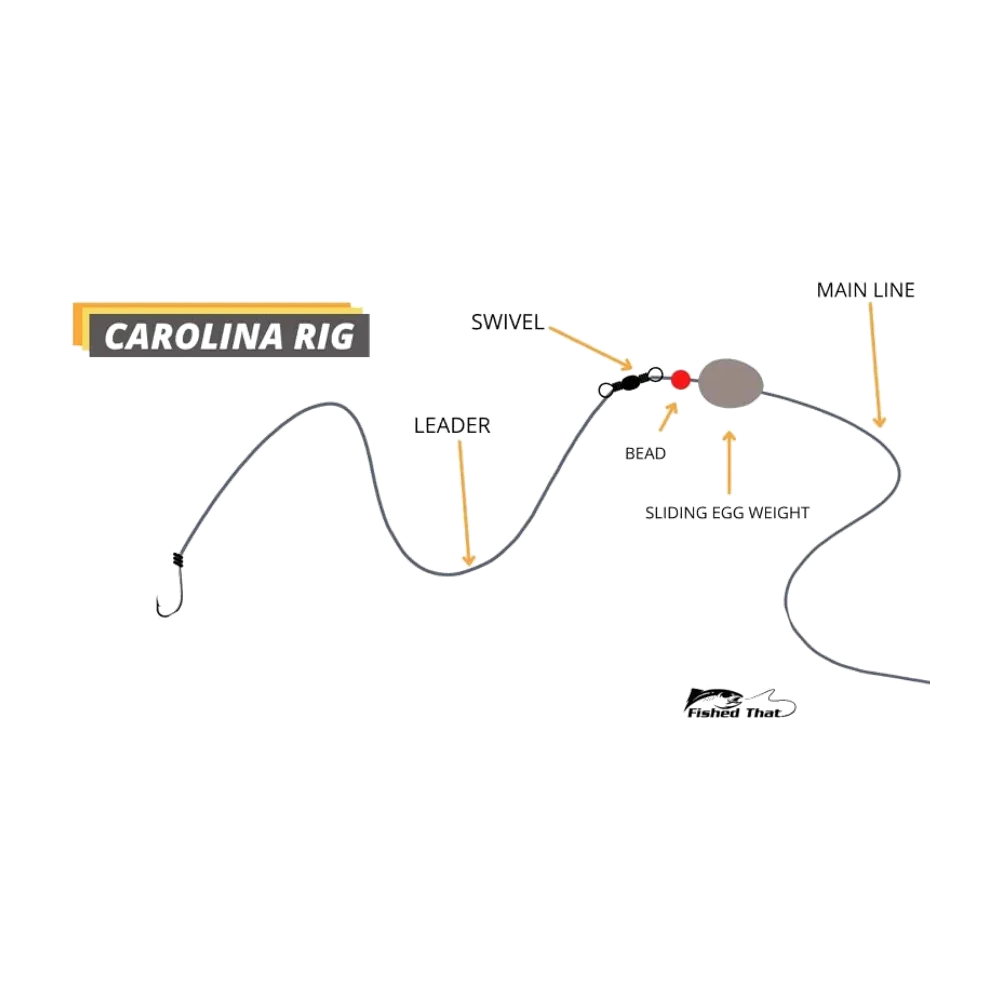
The Carolina rig is built for that. It separates the weight from the bait, which lets you drag a heavy sinker along the bottom while keeping a soft, free presentation trailing behind it.
The principle: two independent parts
On a Texas rig, the weight sits against the bait: the two move together and the bait carries the load.
On a Carolina, the weight slides on the main line and is separated from the bait by a leader of 50 cm to 1.5 m. The two parts become independent.
Three practical consequences.
The weight reads the bottom. As it scrapes along, it tells you whether you are crossing sand, gravel, rock or silt. You read the bottom through the rod, without a sounder.
The bait stays free. Unweighted, it rides slightly behind, undulates on every pull and settles back slowly on every pause. It keeps the action of a weightless rig while being fished in ten metres of water.
You cover ground. A 20 g weight dragged along the bottom travels far more distance per unit of time than any stationary presentation.
The rig
In order, on the main line:
- The bullet weight, drilled and sliding, 10 to 30 g.
- A bead in glass or hard plastic, which protects the knot and produces a click against the weight.
- A swivel, which stops the whole assembly and limits line twist.
- The leader, 50 cm to 1.5 m of fluorocarbon.
- The weedless hook and the bait, rigged with no weight.
On the water: leader length is the real adjustment on this rig. Short (50 cm), the bait stays near the bottom and follows its variations: that is the choice on fish glued down. Long (1.2 m and up), it rides higher and drifts more: that is the choice on fish holding off the bottom or in clear water.
The retrieve: drag, don't pull
This is slow, continuous dragging, not to be confused with the pulls of a Texas rig.
- Cast a long way and let the weight reach the bottom.
- Drag sideways with the rod, slowly, over a metre or two. Rod held horizontal.
- Pick up the slack with the reel while repositioning the rod.
- Hold a pause of three to five seconds — the bait settles back down gently.
- Repeat.
The bite almost always comes during the pause, as the bait glides down. It registers as a weight, or as a line moving off to the side.
Reading the bottom
This is a skill this rig builds better than any other.
| What you feel | Bottom |
|---|---|
| Steady, muffled sliding | Silt or sand |
| Dry, irregular scratching | Gravel |
| Sharp knocks, brief stops | Rock or rip-rap |
| Soft resistance that gives way | Vegetation |
That information steers the fishing: transitions between two bottom types are where fish concentrate, and that is exactly what the Carolina lets you find.
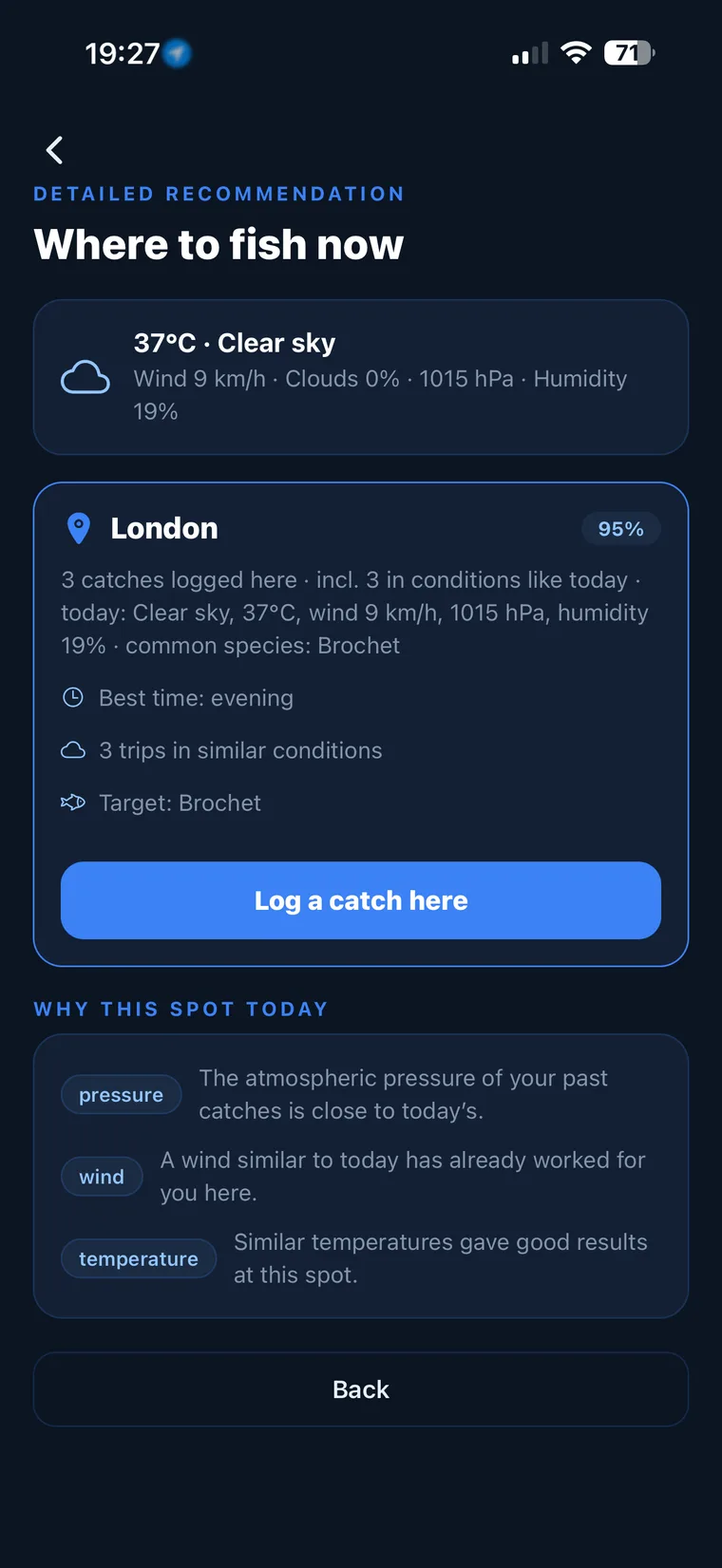
Not sure what to tie on?
Photograph your spot: CarnaFish reads the scene, cross-checks the conditions and gives you the zone, the lure and the retrieve. Free on iOS and Android.
The right baits
The bait has to float or sink very slowly to make the rig work:
- Creatures and craws such as the Crazy Flapper, which undulate on every pull.
- Lizards and worms of 10 to 15 cm, the historic choice for this rig.
- Flukes and slim shads, for a baitfish silhouette.
Heavy, compact baits do not suit it: they drag on the ground instead of gliding.
When to use it
- Big featureless flats, where you need to cover water.
- Late spring and summer, when fish are scattered over the plateaus.
- Scouting the bottom on an unfamiliar water, before coming back with a finer approach.
- Zander on lakes, over plateaus of 4 to 8 m.
It is poorly suited to cluttered spots — the rig is long and tangles — and to shallow margins, where a Texas rig or a wacky rig will be more direct.
Our beginner's guide to bass fishing covers reading plateaus. And if you are not sure how to tackle a big flat area, CarnaFish analyses a photo of the spot and suggests an approach.
Key takeaways
- The sliding weight is separated from the bait by a leader of 50 cm to 1.5 m.
- The weight reads the bottom, the bait stays free and keeps the action of a weightless rig.
- Short leader on fish glued down, long leader on fish holding off the bottom or in clear water.
- Drag sideways, don't pull. The bite comes during the pause.
- A big-flat rig, unsuited to cluttered spots.
FAQ
How do you tie a Carolina rig?
Thread a sliding bullet weight onto the main line, then a bead, then tie on a swivel. Next attach a fluorocarbon leader of 50 cm to 1.5 m, finished with a weedless hook and a bait rigged with no weight.
What leader length should I choose?
50 cm when the fish are glued to the bottom, up to 1.2 m and beyond when they are holding off it or the water is clear. It is the main adjustment on the rig: short, the bait follows the bottom; long, it rides higher and drifts.
How do you work a Carolina rig?
By dragging sideways with the rod, slowly, over one or two metres, then picking up the slack with the reel and holding a pause of three to five seconds. The bite almost always comes during the pause.
What is the bead for?
It protects the swivel knot from the repeated impact of the weight, and produces a click on contact that adds a sound signal. A glass bead is louder than a plastic one.
Which baits should I use?
Baits that float or sink slowly: creatures, craws, lizards, worms of 10 to 15 cm, flukes. Heavy, compact baits drag on the ground instead of gliding behind the weight.
When should I prefer a Texas rig?
In cluttered spots and shallow margins. The Carolina is long, tangles in vegetation, and gives its best over big open flats where you need to cover distance.
The full bass lure guideSeason-by-season strategy: which family of lure, when, and why.Go from theory to fish
CarnaFish reads your spot from a photo and gives you the game plan: zone, lure, retrieve. Free on iOS and Android.