Nichols Rado Series Double Colorado: the dirty-water spinnerbait
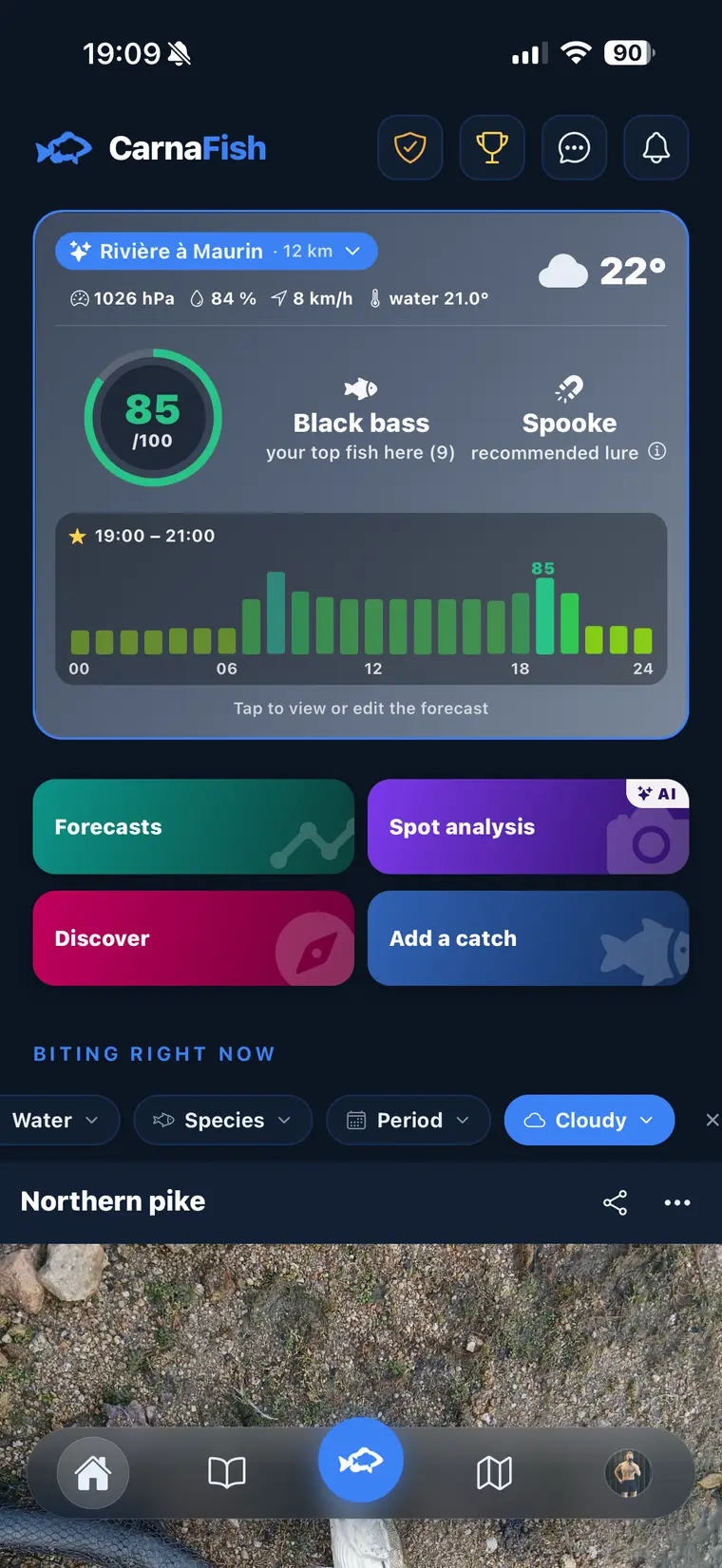
Before tying this one on, it helps to know if the spot actually calls for it. CarnaFish reads the scene from a photo.
Coffee-coloured water after three days of rain, a low ceiling, and nothing working. That is the kind of day when a fish's eyes are almost useless and everything runs through the lateral line. A spinnerbait with two Colorado blades is one of the few credible answers to that situation — and Nichols built the Rado Series for exactly this, since the brand presents it as the hardest-thumping model in its whole spinnerbait range.
Why two Colorados and not two willows
Blade shape decides everything. A willow is long and narrow: it spins fast, nearly flat, producing plenty of flash and very little resistance. A Colorado is wide and cupped: it turns slowly, almost perpendicular to the line, and every rotation sends out a low pulse that carries a long way through water. Flash is something a fish cannot see in 20 cm of visibility. The pulse, it feels.
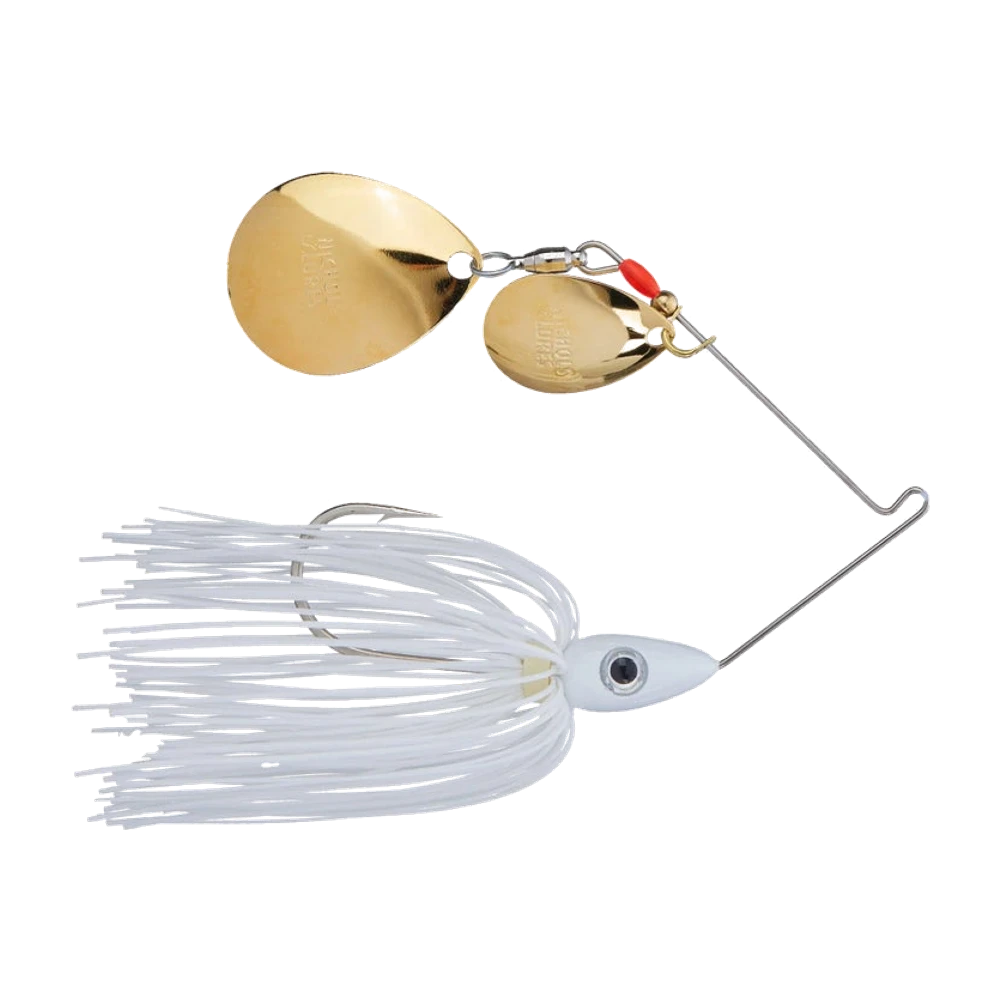
The Rado Series carries two Colorados in tandem, a large one at the rear on a swivel and a smaller one up front on a clevis. This is not simple addition: the two blades do not turn in phase, and the resulting beat is irregular, messier than a single perfectly balanced blade. That irregularity is precisely what pulls a fish out of a laydown.
The price is well known: two Colorados generate enormous lift. The lure wants to climb as soon as you speed up, and it will not go looking for fish six metres down. This is a shallow searching tool, from just under the surface to two or three metres, not a deep-structure lure.
Retrieve just fast enough to feel the blades in the blank, and not one turn of the handle more. If they hum continuously and smoothly, you are going too fast: the right rhythm is when the beat stays slightly jerky and you can register each alternation.
What Nichols gives you, and what it does not
The description covers the build: tapered head with a glitter finish, a stout Mustad hook chosen for hook-setting power, 3D eyes, a premium skirting material. Everything is stamped, plated, painted and assembled in the USA — an origin point the brand states explicitly.
What it does not give is the head weight or the blade size. Yet for a spinnerbait those are the two numbers that define the fishing: weight sets the depth and casting distance, blade size sets the lift and the volume of vibration. Check the label on the exact model you order before adding it to a box — two visually identical spinnerbaits in 3/8 and 3/4 oz do not fish the same water at all.
How to work it
Slow roll in contact
The base technique: cast, let it sink until you feel bottom or structure, then retrieve slowly while keeping contact. The moment a blade touches a branch or a rock the lure deflects, hesitates for a fraction of a second, then carries on — and nine times out of ten the bite comes on that deflection. Do not try to avoid obstacles; aim at them.
Working banks on sight
In stained water, fish pin themselves to the first available piece of cover. Cast parallel to the bank, within a metre of it, and let the lure track along the stumps. The Colorado lift works for you here: you can slow right down without the lure nosing towards the bottom.
Does it need a trailer?
The Rado Series comes with its skirt alone. Adding a soft plastic trailer increases bulk and slows the fall further, which helps in cold water. In exchange it adds lift to a lure that already has plenty. Try it bare first: unlike a willow blade spinnerbait, which often benefits from being dressed, a Colorado tandem already moves a huge amount of water on its own.
The classic mistake
Fishing it in clear water. This is the most common error with this configuration: a Colorado tandem is a low-visibility tool, and in clear bright water it gives the fish all the time it needs to inspect an object that looks like nothing in nature. In those conditions, switch to willow blades, a bladed jig or a hard bait. The Rado Series is for days when you cannot see your hand thirty centimetres under the surface.
For pike too, on one condition
The spinnerbait is an American bass lure by origin, but in Europe it found a second life on pike: a broad profile, strong vibration, and above all a wire arm that makes it almost immune to weed and branches. A Colorado tandem rolled slowly along a weed edge in October is one of the best ways to pull a pike out of cluttered cover.
One non-negotiable condition: a steel or titanium leader. A spinnerbait's single hook often sets deep in the mouth, and fluorocarbon, even at 0.60 mm, does not survive a pike's jaw closing on the leader. Our guide to choosing a pike lure covers the rest of the leader question and the lure families worth knowing.
Not sure what to tie on?
Photograph your spot: CarnaFish reads the scene, cross-checks the conditions and gives you the zone, the lure and the retrieve. Free on iOS and Android.
Colors by water clarity
- Stained water, decent light : all white, like the model in the photo. A clean white remains the most readable silhouette for a fish looking upwards, without the aggression of a fluorescent finish.
- Genuinely dirty water after a rise : chartreuse and white, the classic combination that keeps a visible contrast even when visibility drops below twenty centimetres.
- Low light, dawn, night fishing : black. Counter-intuitive but effective — a black silhouette cuts cleanly against what light remains, where a pale colour simply dissolves.
The lure that saves a ruined session
A big-bladed spinnerbait is what you reach for when conditions deteriorate: rising water, stain, heavy cloud. You still have to know where the fish have retreated to when a fishery changes face in twenty-four hours. That is what CarnaFish does: one photo of the spot and the AI suggests the zone and the presentation that fit what it sees, including when conditions are nothing like last week's. To go further on pike lure families, our guide to choosing a pike lure complements this page well.
Key takeaways
- Two Colorado blades: maximum low-frequency vibration, minimum flash. It is a lateral-line lure, not a visual one.
- Lots of lift: it fishes from just under the surface down to two or three metres, no deeper.
- Nichols publishes neither head weight nor blade size in this description — check the label before buying.
- In pike water, a steel or titanium leader, no exceptions.
FAQ
What is the difference between Colorado and willow blades?
A Colorado is wide and cupped: it turns slowly, makes a lot of vibration and little flash, and lifts the lure. A willow is slim and long: it spins fast, flashes a lot and vibrates little. Colorado for dirty water, willow for clear.
What head weight should I choose?
Nichols does not state it in this description; you have to read it on the model's label. As a rule, 3/8 oz covers shallow bank fishing and 1/2 oz lets you get a little deeper and cast further into a headwind.
How fast should I retrieve it?
As slowly as you can while still feeling the blades turning in the blank. Two Colorados start spinning very early, which gives you a margin of slowness a willow tandem cannot offer.
Should I add a trailer hook?
The lure comes with a single hook. A trailer hook can help if you are getting a lot of short strikes, but it increases snagging in vegetation, which is exactly this lure's playground. Try slowing down and delaying the hookset first.
Does it catch pike?
Yes, and it is a common use in Europe: the broad profile and strong vibration work well on a pike holding along a weed edge. Always fit a steel or titanium leader.
Why two blades of different sizes?
The large rear blade supplies the lift and most of the vibration; the small front blade adds an offset beat. The two do not spin in phase, and that irregularity is what makes the signal harder to ignore than a perfectly even pulse.
The full bass lure guideSeason-by-season strategy: which family of lure, when, and why.Go from theory to fish
CarnaFish reads your spot from a photo and gives you the game plan: zone, lure, retrieve. Free on iOS and Android.