Geecrack G Blade Spinnerbait: twin hammered willows for shallow water
The right lure in the wrong spot still catches nothing. CarnaFish spots the zone that works, from a single photo.
A two-metre flat, sparse weed, a crosswind rippling the surface: this is where a spinnerbait beats any crankbait, because it slips through what the others snag on and stays visible in churned water. The Geecrack G Blade is cut for exactly that ground, and the maker says so plainly: it is an interception bait for shallow fish.
The frame is the whole lure
On a spinnerbait, the difference between a nine-euro model and a premium one is invisible on the shelf: it plays out in the wire and in the swivels. Geecrack specifies a flexible stainless-steel wire, chosen to transmit vibration rather than soak it up. In practice you feel the blades turning in your hand throughout the retrieve, and above all you feel the instant they stall — a brush with a weed stem, a depth change, sometimes a fish following without committing.
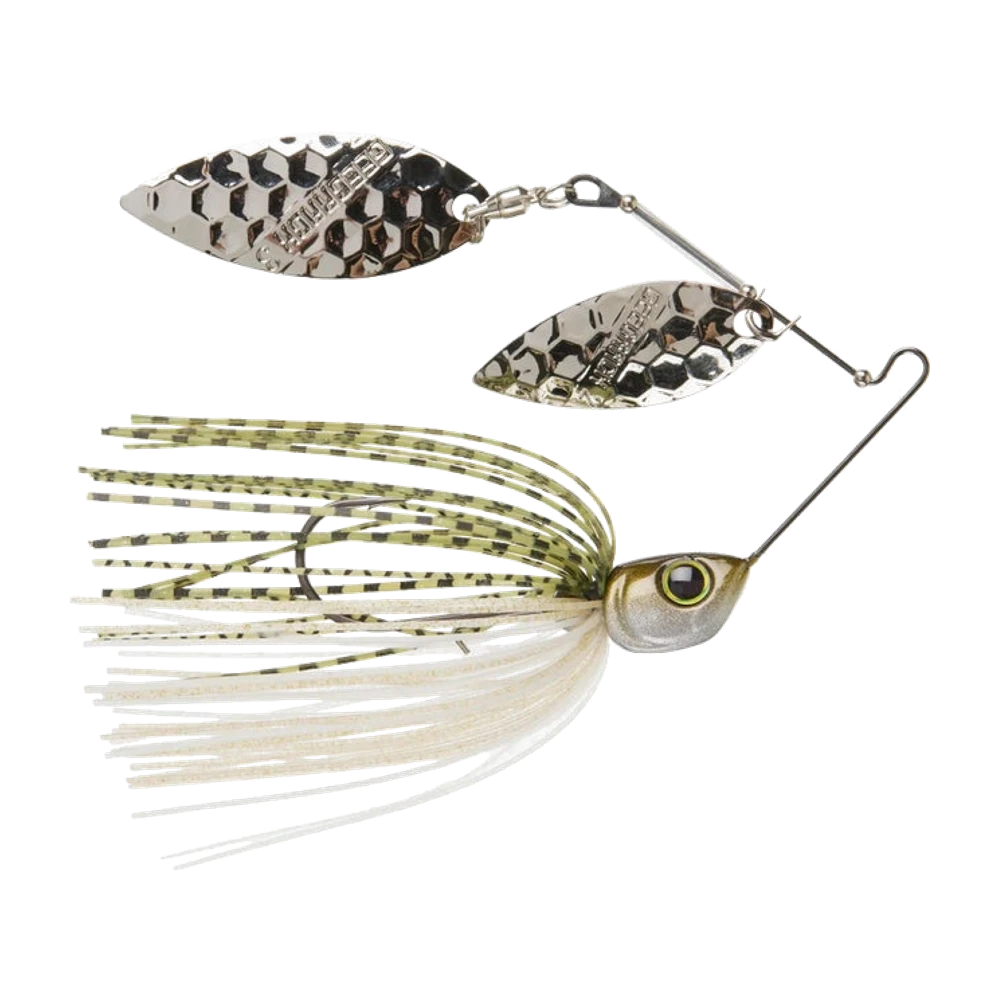
Both blades are hammered willow leaves. The willow shape, long and narrow, spins fast and tight against the shaft: it produces a lot of flash and little pulse, the opposite of a round Colorado, which pushes water but flickers less. The hammering, that honeycomb texture clearly visible in the photo, shatters the reflection in several directions instead of returning a single flat flare. Geecrack stresses a useful point: thanks to quality hardware, each blade engages immediately, on the fall as well as on the retrieve. A spinnerbait whose blades need three turns to spin up loses exactly the two seconds in which a fish sitting under cover decides whether to attack.
A head shaped to shed weed
The second technical argument is the head: a low centre of gravity and a specific shape, claimed to deliver a smooth, stable track with less debris picked up along the way. It is a detail that sells badly in a shop but changes a day on the water. A spinnerbait dragging a blade of weed on the blade is no longer fishing, and you only notice on the next cast. Less fouling means mechanically more effective fishing time.
The hook is specified as a chemically sharpened model, and the lure ships with a wire bait keeper on the shank, meant to lock a soft trailer in place. That small wire stands out clearly in the photo, and it is not fitted to every spinnerbait on the market.
What Geecrack does not publish, and why it matters
Let's say it plainly: the description contains no dimension table. No weight, no blade size, no overall length. On a soft plastic that silence is annoying; on a spinnerbait it is a real problem, because weight is the parameter that sets running depth and the minimum speed at which the lure holds its line.
The practical consequence is simple: don't order this lure expecting it to match a weight you already know. Heft it, compare it to a spinnerbait whose mass you know, and write the figure down once and for all. As long as the maker publishes nothing, no honest write-up can give you a number — and one that does has invented it.
My rule of thumb on any unknown spinnerbait: I drop it on a slack line in three metres, count the fall to the bottom over a depth I know, and work out an approximate sink rate. It is less precise than a scale, but it can be done at the water's edge and it is enough to tell whether the lure is built for one metre or for three.
How to fish it
Slow straight retrieve over the shallows
The baseline. Cast, let it sink a second or two depending on depth, then wind just fast enough to feel the blades turning continuously. If you stop feeling them, you are too slow; if the lure breaks the surface, you are too fast. The window is narrow and it does all the work.
Slow rolling along a drop-off
Retrieve very slowly, holding the lure a few dozen centimetres off the bottom and letting it touch now and then. Each contact stalls the blades and restarts them, and the bite very often comes on that restart. A technique that works on bass and pike alike in slightly stained water.
Killing it over cover
Stop the retrieve dead above a sunken tree or a boulder, let the lure drop with the blades still spinning, then pull away sharply. The willow keeps flickering through the fall, which makes for a highly visible descent — that is exactly why Geecrack stresses immediate blade engagement on the drop.
The trailer
The wire keeper is an invitation to add a soft trailer. A Geecrack Bellows Shad lengthens the silhouette and adds high-frequency vibration without braking the blades. If you want visible bulk and a defined swim instead, a paddle-tail trailer does the job, accepting that it slows the whole rig slightly.
The leader
A spinnerbait's frame wire is not a bite guard: it protects the knot from abrasion, not from the teeth of a pike attacking side on. In pike water, run a steel or titanium leader. For pure bass work in clear water, 25 to 30 hundredths of fluorocarbon is plenty.
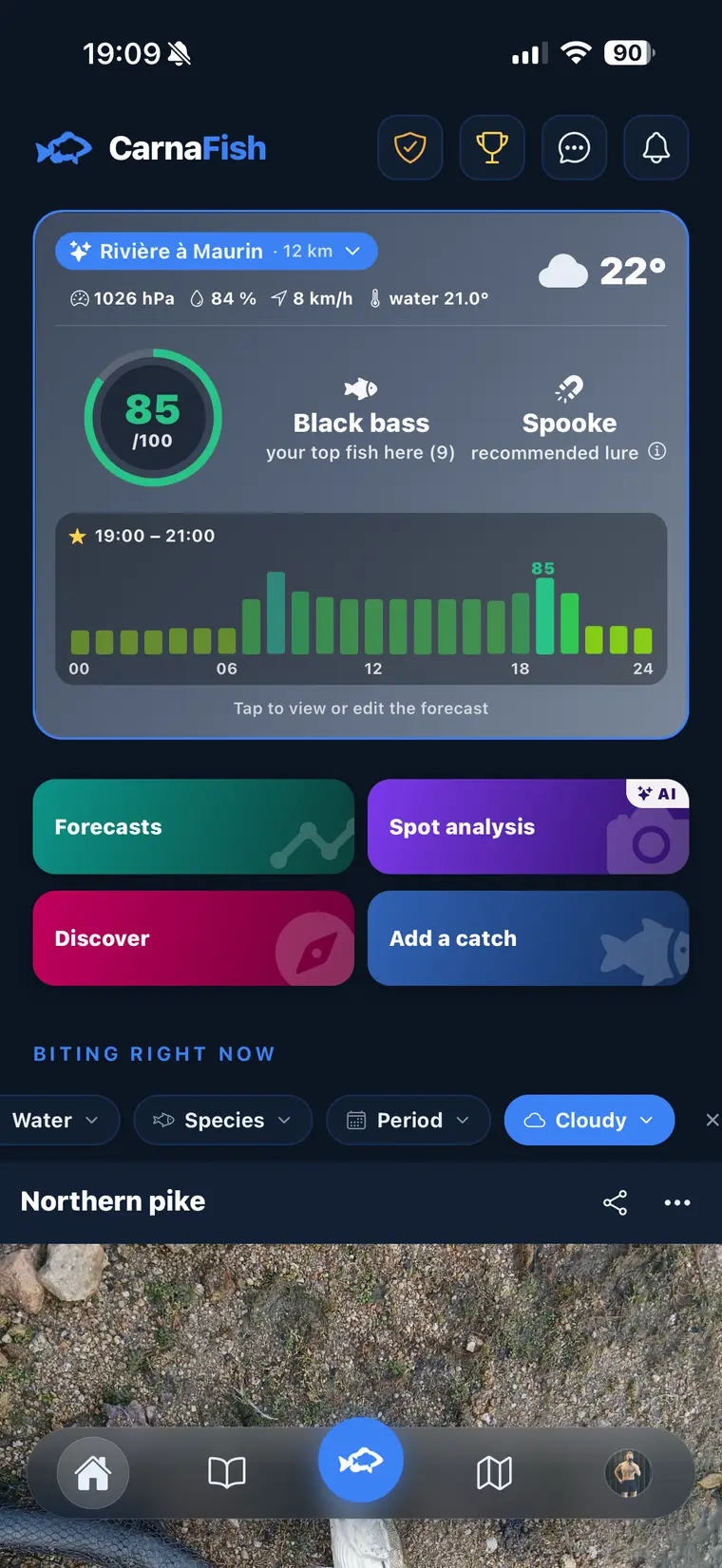
Not sure what to tie on?
Photograph your spot: CarnaFish reads the scene, cross-checks the conditions and gives you the zone, the lure and the retrieve. Free on iOS and Android.
Colour by water clarity
- Clear water: a white-and-olive baitfish skirt paired with the silver blades, which stays believable when the fish sees everything.
- Stained water: chartreuse and white, the classic compromise that gives nothing away and stays detectable at a metre of visibility.
- Overcast sky or dark water: a dark skirt, which reads better in silhouette than a bright tone.
A lure still underused in Europe
The spinnerbait carries a reputation as an American bass lure, and it remains underused in Europe even though it excels along pike-holding pond margins and on late-summer perch flats. Against a Strike King Tour Grade Spinnerbait or a Booyah Covert Spinnerbait, the G Blade reinvents nothing: it bets on the finish of the wire, the hardware and the skirt, and the price reflects that. And against a Z-Man ChatterBait JackHammer, it plays a different card — flash rather than raw vibration.
The remaining question is where to cast. That is exactly the time CarnaFish saves you: a photo of the spot, and the app suggests the zone, the depth and the presentation type suited to the day's conditions. To place the spinnerbait among the other pike lure families, our guide to choosing a pike lure covers the ground.
Key takeaways
- Two hammered willow blades: plenty of flash, little pulse, best kept for clear to lightly stained water.
- Flexible stainless wire specified to carry vibration into your hand, which helps you feel the blades stalling.
- No weight and no dimensions published by Geecrack: weigh it yourself before building a depth strategy around it.
- The factory wire keeper locks a soft trailer cleanly, with no glue and no improvising.
FAQ
How much does the Geecrack G Blade Spinnerbait weigh?
Geecrack publishes no weight and no other dimension for this lure. That is a genuine gap on a spinnerbait, since weight sets running depth. Weigh it, or compare it to a model whose mass you know, before using it to fish a precise depth.
Why two willow blades rather than a Colorado?
The willow spins fast and tight and mostly produces flash. The rounder Colorado pushes more water and emits a low-frequency pulse. A double willow therefore suits clear to lightly stained water, where fish hunt by sight.
Do I need a steel leader with this spinnerbait?
Yes, as soon as pike are present. The frame wire protects the knot, not the line above it: a pike attacking side on cuts nylon or fluorocarbon above the line tie. For pure bass fishing, 25 to 30 hundredths of fluorocarbon is enough.
How deep does it run?
The maker presents it as an interception bait for the shallows, so from just under the surface to a few metres depending on retrieve speed. With no published weight, no reliable depth range can be stated without weighing it first.
What trailer should I rig on it?
The factory wire keeper accepts any compact soft plastic. A ribbed trailer such as the Bellows Shad lengthens the silhouette and adds fine vibration. Avoid a big paddle-tail trailer if you want to keep the willows spinning fast and free.
Is it a good perch lure?
On late-summer flats, yes, especially on a steady retrieve along the margins. Perch respond well to willow flash. On very wary perch in clear water, however, a subtler lure will usually out-fish it.
The full bass lure guideSeason-by-season strategy: which family of lure, when, and why.Go from theory to fish
CarnaFish reads your spot from a photo and gives you the game plan: zone, lure, retrieve. Free on iOS and Android.