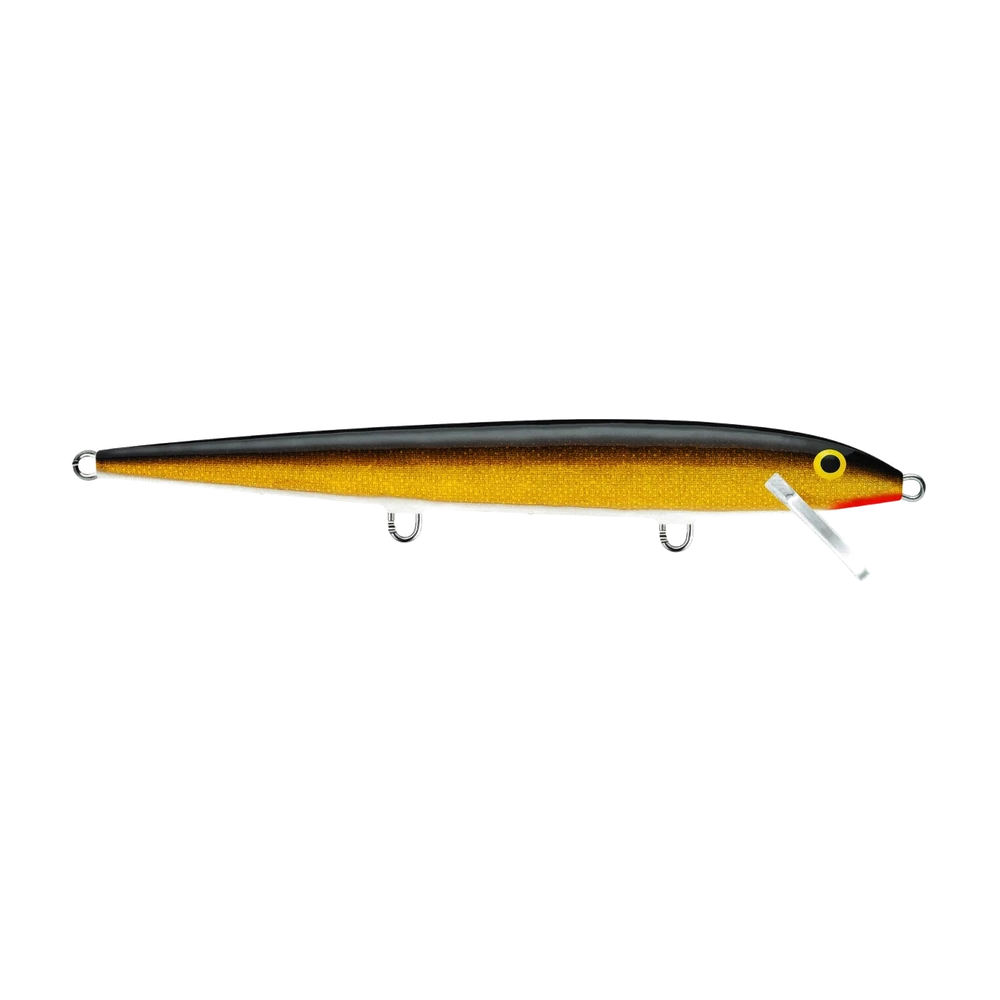
Rapala Original Floater F11: the balsa lure that started it all
The right lure in the wrong spot still catches nothing. CarnaFish spots the zone that works, from a single photo.
In 1936, a Finnish fisherman named Lauri Rapala hand-carved a lure — first from cork, later from balsa wood — meant to mimic the profile and behaviour of a wounded baitfish fleeing near the surface. The story goes that he'd spent years watching predators in Lake Päijänne consistently target weakened fish over vigorous ones. That handmade lure became, through decades of industrialisation, the Original Floater — and the F11 fished today remains remarkably faithful to that original design. It's arguably the most copied hard lure in fishing history, and yet the original still holds up firmly against its countless imitations.
Why balsa changes everything
Nearly all modern hard lures are injection-moulded plastic, a stable material, cheap to mass-produce, but lacking wood's natural liveliness. The Original Floater F11's balsa body is lighter for the same volume and more flexible, giving a wider rolling swim and a vibration you can feel through the rod from the very first turns of the reel, even at very slow speed. That sensitivity is why so many experienced anglers still favour balsa over injected plastic, despite the material being somewhat more fragile against pike teeth or a knock on a rock.
A deliberately modest depth
The F11 runs between 0.9 and 1.5 m (3-5 ft) depending on retrieve speed, a depth built for straight retrieves through the layer where most surface-oriented prey holds — baitfish, small trout, fry. It isn't a deep-diving lure, and that isn't its job: on a deeper spot, a suspending jerkbait or a jighead rig will do a better job.
Retrieve: less is often more
The classic mistake with the Original Floater is trying to impose a complex retrieve on it, the way you would with a modern jerkbait. The F11 was built for a simplicity of use that remains its greatest strength.
- A simple straight retrieve, slow to medium speed: enough in most cases, the balsa's rolling swim does the work without extra input.
- Short, spaced-out pulls to break up the regularity and mimic a struggling fish, particularly effective on a wary river trout.
- Avoid sharp, violent jerks typical of jerkbait fishing: the F11 wasn't built for that style and loses effectiveness when treated as one.
Field rule: with a lure this classic, resist the urge to "do more" — a simple, steady swim is often more productive than a complicated retrieve.
Rigging worth respecting
The stock size 6 trebles are well matched to the 11 cm body and don't need replacing unless worn or rusted after several seasons. The point to watch is the knot: as with any rolling-swim balsa lure, a tight knot straight to the eye reduces the movement's natural amplitude. Always use a loop knot (the classic Rapala knot or a split ring) to preserve the swim as it was designed.
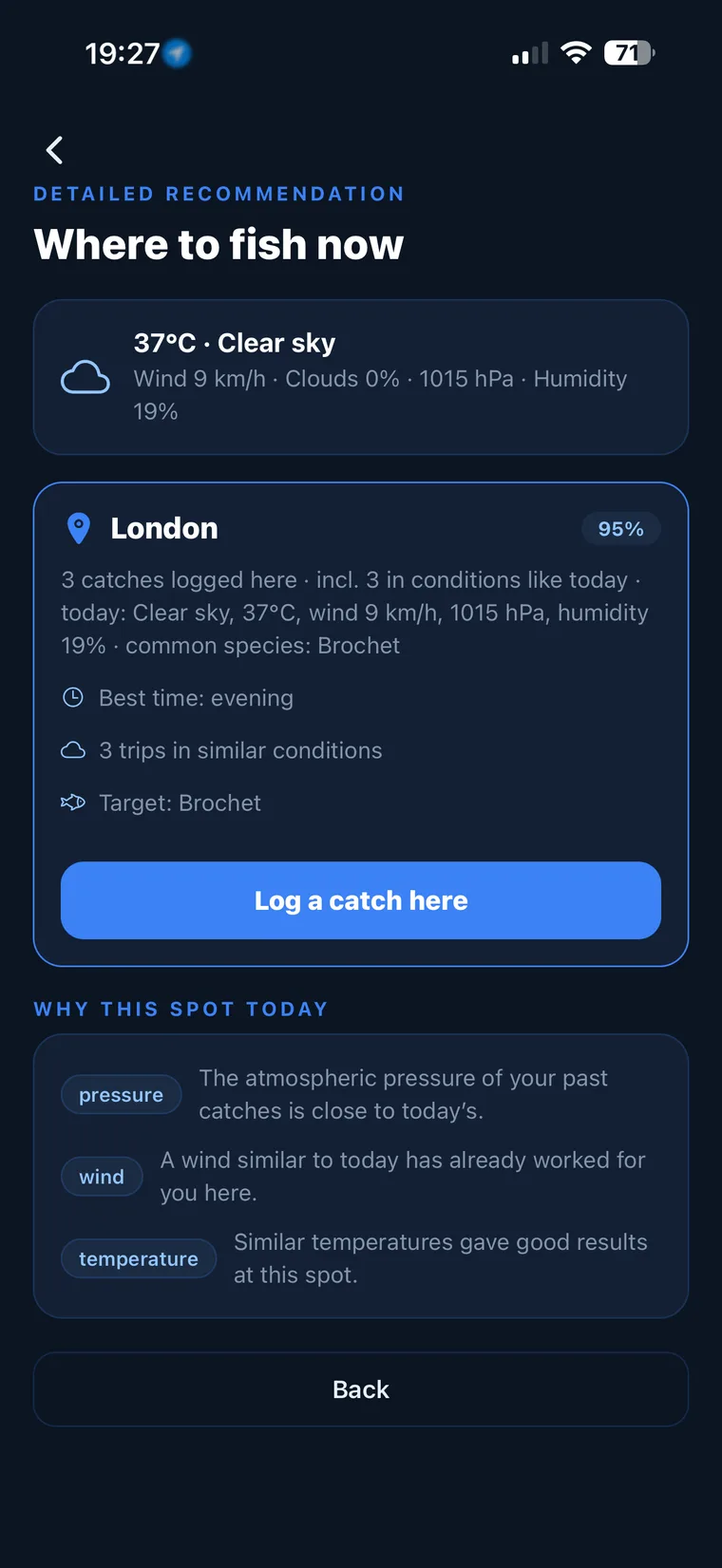
Not sure what to tie on?
Photograph your spot: CarnaFish reads the scene, cross-checks the conditions and gives you the zone, the lure and the retrieve. Free on iOS and Android.
Colour by spot
- Clear water, river or mountain lake: silver/black, a subtle, natural tone particularly suited to wary trout.
- Stained water: orange/gold, a combo that carries further without distorting the lure's profile.
- River with a natural bottom and vegetated water: green or brown back, for maximum blending into the setting.
A classic against modern jerkbaits
Compared with an X-Rap Jerkbait 10, snappier and built for an active twitch-based retrieve, the Original Floater F11 relies on the consistency and subtlety of a simple swim, without demanding any particular technique. For a beginner, or an angler who prefers fishing with confidence over a barrage of technical moves, the F11 remains a relevant entry point — and for a pike or trout that's already seen modern lures go by all season, that simplicity sometimes becomes an advantage rather than a limitation.
For river trout specifically, our guide to lure fishing for river trout covers the spots and conditions where this kind of subtle swim outperforms. And rather than guessing at what speed and spot to fish this kind of classic lure, CarnaFish reads a photo of your water and suggests a starting zone and cadence suited to the day's conditions.
Three things to remember
- The F11 descends directly from the first lure Lauri Rapala carved in 1936: the balsa rolling swim remains its signature.
- Running depth 0.9-1.5 m (3-5 ft): a mid-surface lure, not a tool for deep spots.
- A simple, steady retrieve often works better than a complex one borrowed from modern jerkbait fishing.
- Always tie with a loop knot to preserve the rolling swim's amplitude.
FAQ
Where does the Rapala Original Floater come from?
It descends directly from the first lure Lauri Rapala hand-carved in Finland in 1936, first from cork, then balsa. Today's F11 stays faithful to that original design, making it one of the oldest lures still sold without fundamental changes.
Why choose a balsa lure over injection-moulded plastic?
Balsa is lighter and more flexible for the same volume, giving a wider rolling swim and a vibration you can feel from the first turns of the reel, even at slow speed. In exchange, it's somewhat more fragile against pike teeth.
How deep does the Original Floater F11 run?
Between 0.9 and 1.5 m (3-5 ft) depending on retrieve speed, making it a mid-surface lure suited to straight retrieves rather than deep spots.
How do you work the Original Floater F11?
As simply as possible: a slow to medium straight retrieve is enough in most cases. Short, spaced-out pulls can break up the regularity to mimic a struggling fish.
Is the F11 suited to trout fishing?
Yes, particularly on wary river trout, where its subtle, steady swim often outperforms a complex retrieve. Favour natural silver/black tones in clear water.
Does the Original Floater F11 need a special knot?
Yes, a loop knot rather than a tight knot straight to the eye. That's what preserves the rolling swim's amplitude characteristic of Rapala's balsa lures.
The full pike lure guideSeason-by-season strategy: which family of lure, when, and why.Go from theory to fish
CarnaFish reads your spot from a photo and gives you the game plan: zone, lure, retrieve. Free on iOS and Android.