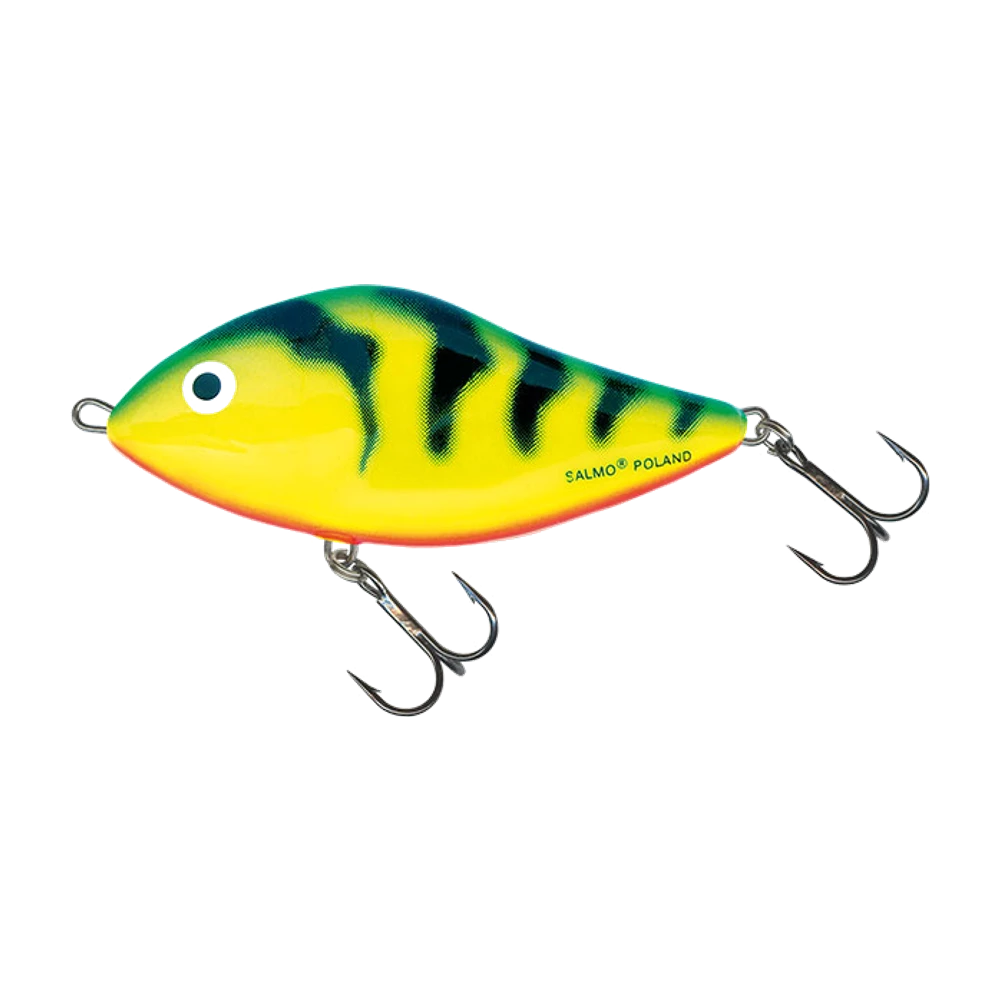
Salmo Slider: the glidebait that zigzags instead of rolling
Not sure this lure fits YOUR spot today? CarnaFish tells you in 10 seconds, from a photo.
There's a real difference between a jerkbait that rolls on its own axis and a glidebait that slides side to side without ever flipping over. The Salmo Slider belongs to the second, rarer family — trickier to work, and deadly on fish that have already seen every standard jerkbait in the area.
Glide, not roll: a swim of its own
On a classic jerkbait, the body rolls on its axis with every rod snap. On the Slider, the body stays flat and turns sideways at close to a right angle to the retrieve direction, cutting sharply left then right into a tight S-shape seen from above. That unpredictable path, so different from anything a fish normally encounters, is what pushes pike and bass grown wary after several sessions on the same water into striking.
Five sizes, two different logics
The Slider comes in 5, 6, 7, 10 and 12 cm, in floating or sinking versions:
- 5-7 cm: a discreet size, ideal for finesse work in clear water or on inactive bass.
- 10 cm floating (36 g): the versatile size, the one to tie on first to learn the technique and cover most pike situations.
- 12 cm sinking (up to 70 g): reserved for big fish and long casts, with a direct fall that also lets you work a bit deeper.
Floating or sinking: two uses that don't overlap
The floating version slowly rises at rest, allowing short pauses without losing contact with the swim zone — the retrieve stays dynamic and covers the surface and just below it well. The sinking version drops during the pause, allowing much longer stops and slightly deeper coverage, particularly useful in cold water when fish won't rise to chase a bait.
A retrieve that takes practice
Unlike a jerkbait you can work almost on reflex, the Slider needs a precise tempo: short, sharp rod snaps, chained together with little pause between them, so the lure keeps its side-to-side glide instead of falling back into a straight swim. Too long a pause breaks the rhythm and forces you to restart the motion from scratch.
Field rule: if your Slider starts swimming straight, you've slowed your rod snaps down — tighten the cadence instead of snapping harder.
Not sure what to tie on?
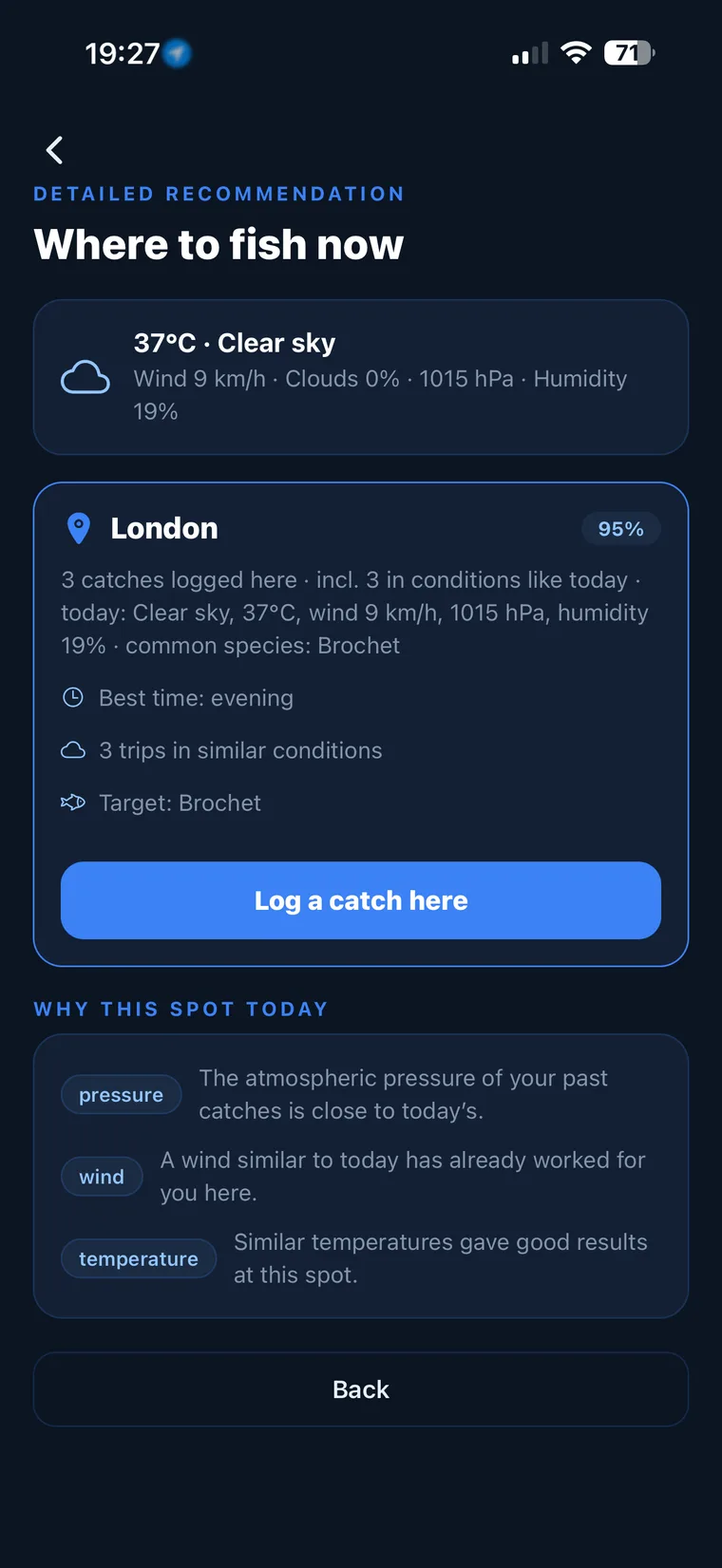
Photograph your spot: CarnaFish reads the scene, cross-checks the conditions and gives you the zone, the lure and the retrieve. Free on iOS and Android.
Speed and water temperature
The retrieve stays slow to very slow across the board, but the cadence of the snaps should adapt: in cold water, space the snaps out slightly and lengthen the pauses (especially on the sinking version); in warmer water, tighten the cadence for a snappier glide that matches the fish's activity level better.
Colour by light conditions
In clear water and bright sun, a natural silver finish reads perfectly as a baitfish without overdoing it. Under overcast skies or in slightly stained water, a brighter tone (chartreuse, orange) helps keep the lure visible without making it aggressive enough to spook a wary fish.
One option among several glidebaits
The Slider isn't the only lure in this family: for a bulkier profile or an even wider glide, the Gan Craft Jointed Claw or the Westin Swim Glidebait push the range toward trophy pike. The Slider still remains the most accessible entry point for learning the glide technique before moving on to harder-to-work sizes.
Even the best glidebait in the world never replaces knowing the spot — that's exactly what CarnaFish simplifies, reading a photo of your spot and handing you a zone and a technique matched to the day's conditions. To build a full season-by-season strategy, check the complete pike lure guide.
FAQ
What's the difference between a jerkbait and a glidebait like the Salmo Slider?
A classic jerkbait rolls on its axis with every rod snap. A glidebait like the Slider stays flat and turns sideways at close to a right angle, tracing a tight S-shape seen from above — a much rarer swim, and often more effective on wary fish.
What size Salmo Slider should you start with?
The 10 cm floating model is the best entry point: versatile enough to cover most pike situations, and easy enough to work to learn the glide's tempo before trying other sizes.
How do you properly work a Salmo Slider?
With short, sharp rod snaps, chained together with little pause between them, to keep the side-to-side glide going. Too long a pause breaks the rhythm and forces you to restart the motion.
Should you pick the floating or sinking version?
Floating suits a dynamic retrieve near the surface and just below it. Sinking allows longer pauses and slightly deeper coverage, particularly useful in cold water.
Does the Salmo Slider work for bass?
Yes, especially in the 5-7 cm sizes, which are more discreet and suited to finesse fishing in clear water on inactive bass or fish already pressured by other lures.
Why does my Slider start swimming straight instead of gliding?
Almost always a cadence issue: the rod snaps are too spaced out. Tighten them up to get back the characteristic side-to-side glide instead of snapping harder.
The full pike lure guideSeason-by-season strategy: which family of lure, when, and why.Go from theory to fish
CarnaFish reads your spot from a photo and gives you the game plan: zone, lure, retrieve. Free on iOS and Android.