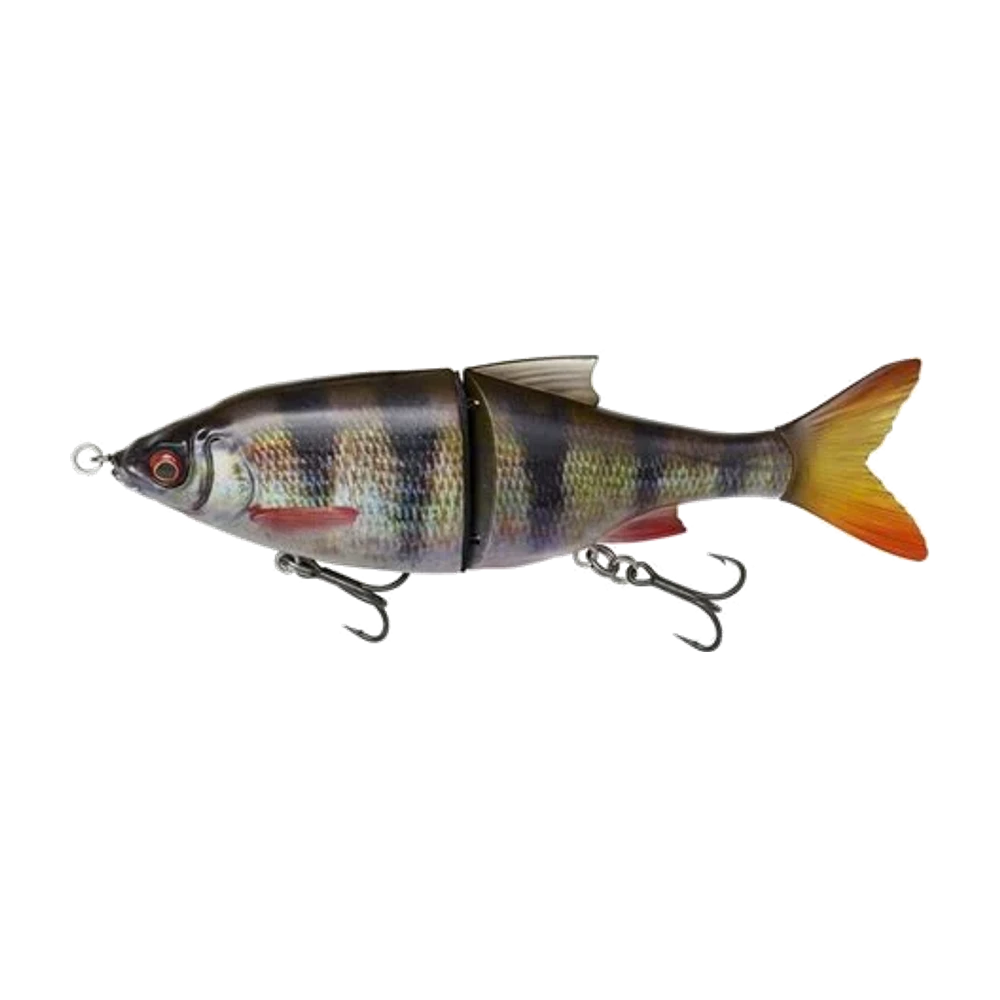
Savage Gear 3D Roach Shine Glider: pick your density before your colour
This lure shines under specific conditions. CarnaFish tells you in 10 seconds if today is one of them.
On a gravel pit in September, two anglers fish the same spot with the same glidebait, in the same colour. One takes three pike, the other none. The difference is not the technique, nor the finish. It is a metre and a half of water depth.
This is the most underrated variable in glidebait fishing. We spend hours working on the amplitude of the S and comparing finishes, and forget that the great majority of pike refuse to rise two metres to take anything at all — especially outside periods of strong activity. A lure gliding beautifully thirty centimetres under the surface above a fish sitting at three metres will catch nothing.
The 3D Roach Shine Glider is interesting on precisely that point, because it exists in several densities. Same profile, same glide, but not the same storey. Choosing the right version is a more important decision than everything else put together.
What density actually changes
A floating version rises during the dead time. Every pause takes you back towards the surface, which has two consequences: you stay stuck in the upper layer, but you get a planing rise that is itself a trigger, and you can fish just above a weed bed without hooking into it.
A sinking version does exactly the opposite. Every pause takes you down, which gives you access to the whole water column: all you have to do is count. But you pay for it with a higher risk of snagging and the need to keep permanent track of the lure's depth.
In practice, ask yourself three questions before choosing:
- How deep is the spot? Under 2 m, the floater already covers the useful part of the column. Beyond 2.5 m, you need the sinker.
- Where is the vegetation? Weed rising a metre off the bottom rules out letting the lure sink freely.
- What season is it? In warm water, pike rise willingly and the floater is often enough. In cold water, and in high summer when the lake is thermally stratified, the fish are deep and stop coming up.
The retrieve: building the descent into the rhythm
On a sinking glidebait, the descent is not dead time to be put up with. It is a phase of the retrieve, and a lot of bites come during it.
- Cast and start counting the moment the lure hits the water, semi-tight line and low rod tip. Count under your breath, evenly.
- Stop at your target number depending on the layer you are after (see the table below).
- Give two short rod-tip impulses, giving slack immediately after each one. The lure makes two opposite glides and stays at roughly the same depth.
- Let it drop back for two to four seconds, semi-tight line. The lure does not fall flat: it planes, drifting slightly sideways, and it is that planing that triggers takes.
- Take two more impulses, then drop again. What you get is a descending staircase.
- Wind back up as you approach the bottom or the weed, and start the cycle again.
On the floating version, reverse the logic: the impulses take the lure slightly down, the pauses bring it back up. You get a rising staircase, to be used above a weed bed or a shallow drop-off.
On the water: count the descent out loud under your breath rather than in your head. It sounds ridiculous, but a mental count speeds up as soon as you have had a bite or you get tired, and you lose the only reliable reference you have on the lure's depth. The day you catch a fish, you want to be able to reproduce the exact number, not an impression.
The counting table
The values below are orders of magnitude to recalibrate on your own lure during the first session: cast into open water, count until it hits a bottom whose depth you know, and work out your real rate of descent.
| Approximate size | Indicative weight | Indicative descent | 5 seconds of counting |
|---|---|---|---|
| 13.5 cm | 30 to 35 g | around 30 cm/s | ~1.5 m |
| 15 cm | 45 to 50 g | around 35 cm/s | ~1.7 m |
| 18 cm | 60 to 70 g | around 40 cm/s | ~2 m |
The real rate varies with braid diameter, the presence of a titanium or wire leader, and the wind pushing on the line. A big bow in the line slows the descent markedly: in a crosswind, add two to three seconds to your count to reach the same depth.
Where this approach pays — and where it is no use
Counting comes into its own on:
- Deep gravel pits and reservoirs, where the useful water column goes well beyond what a subsurface lure reaches.
- Drop-offs and the edges of flats, where fish hold at a precise height along a slope.
- Periods when pike do not rise: cold late-autumn water, or high summer when the warm surface layer is deserted.
- Fish spotted on the sounder at a known depth, where you can aim straight at the storey.
It brings nothing, on the other hand, on shallow spots of less than 1.5 m: you are in the useful layer from the first second anyway, and the floating version will be simpler and less prone to snagging. It is also counter-productive in dense weed and sunken wood, where letting a lure with two trebles sink freely gets expensive fast. And on water with a marked flow, counting loses its reliability because the current carries the lure along as it sinks.

Not sure what to tie on?
Photograph your spot: CarnaFish reads the scene, cross-checks the conditions and gives you the zone, the lure and the retrieve. Free on iOS and Android.
Settings that affect depth
The braid. A 0.30 mm sinks faster than a 0.40 mm, simply because it offers less resistance in the water. Change diameter and your counting table is out.
The leader. Titanium is thinner and lighter than coated wire of equivalent breaking strain: it slows things less. Keep the same type of leader through a session if you want your counts to stay comparable.
The hooks. Moving to heavier trebles speeds up the descent and can tip a floating version into near-neutral behaviour. That is usable on purpose, but do it knowing what you are doing.
Shine Glider or a subsurface glidebait
The Savage Gear 3D Bleak Glide Swimmer, from the same brand, is above all about the quality of your steering and the amplitude of the S in the upper layer. It is an excellent lure for learning the movement, but it does not solve the depth question. The Megabass i-Slide also works the width of the glide to convert followers, in a logic of provocation rather than water layer.
The SPRO Iris Underdog takes the problem from a third angle again: a deliberately short glide, to stay in a narrow lane. In other words, these lures do not replace each other — one sets the amplitude, another the footprint, and the Shine Glider the storey.
Our guide to choosing a pike lure shows how these choices fit together across the year. And if you do not know what depth to start at when you arrive on an unfamiliar gravel pit, CarnaFish analyses a photo of the spot and answers.
Key takeaways
- The density you pick decides the layer you fish: a more important decision than colour.
- Sinking: a descending staircase, with the drop a full phase of the retrieve in its own right.
- Floating: a rising staircase, ideal just above a weed bed or over less than 2 m of water.
- Count the descent out loud and recalibrate your scale against a known depth at the start of the session.
- Braid, leader and hooks all change the rate of descent: do not swap them mid-session.
FAQ
Should I take the floating or the sinking version?
It depends on the depth. Under 2 m of water, or above a weed bed, the floater covers the useful layer without any snagging risk. Beyond 2.5 m, or on deep fish in cold water, only the sinker gives you access to the storey where they are holding.
How do I know how deep my lure is?
By counting. Cast over an area whose depth you know, count until it touches bottom, and work out your rate of descent in centimetres per second. You can then aim at any layer by stopping at the right number.
Do bites come during the descent?
Often, yes. A sinking glidebait does not fall flat: it planes, drifting sideways, and that planing is a trigger. Keep the line semi-tight throughout the descent or you will not feel the bite.
Does the braid change the rate of descent?
Yes, markedly. A thin diameter offers less resistance and sinks faster, while a big wind-pushed bow slows things considerably. In a crosswind, count two to three seconds longer to reach the same depth.
What size should I choose?
The 13.5 cm suits most situations and casts on a standard medium-heavy rod. The 18 cm formats target big pike, sink faster and call for a more powerful setup. Start with the middle size.
Can it be fished in a river?
In light current, yes. As soon as the flow gets pronounced, counting loses its reliability because the current carries the lure sideways as it sinks, and you no longer have a usable reference. In flowing water, prefer a lure whose depth you control through retrieve speed.
The full pike lure guideSeason-by-season strategy: which family of lure, when, and why.Go from theory to fish
CarnaFish reads your spot from a photo and gives you the game plan: zone, lure, retrieve. Free on iOS and Android.