Westin Ricky the Roach: pick the density before you pick the colour
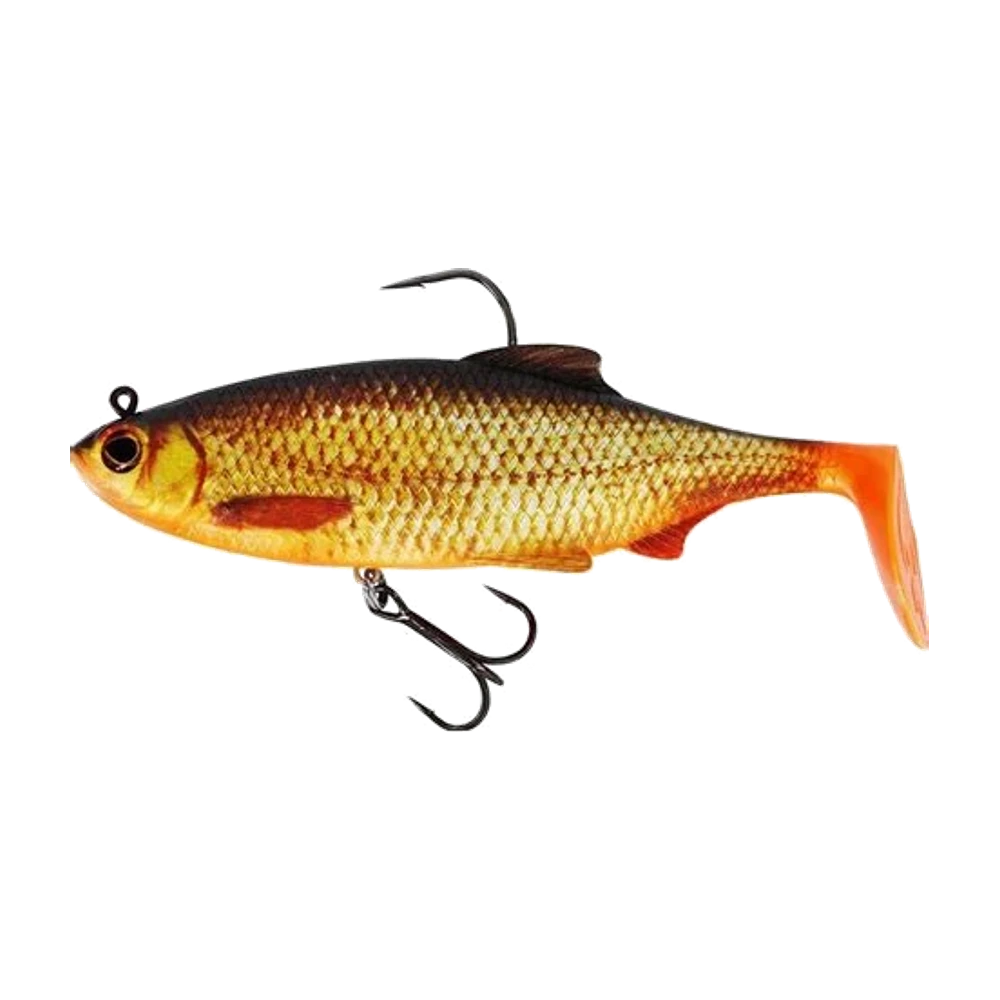
Before tying this one on, it helps to know if the spot actually calls for it. CarnaFish reads the scene from a photo.
A pike sitting in a weed bed doesn't chase. It waits, locked in ambush, and it commits to a prey passing through a precise corridor — usually the thirty to fifty centimetres of water between the top of the vegetation and the surface. If your lure runs a metre above that, it never sees it. If it runs through the weed, you're picking salad off every three metres.
This is where most swimbait anglers go wrong: they pick their lure by colour and size, then fight its density for the whole session.
The Ricky the Roach exists precisely so you don't have to fight. It's a roach imitation offered in several densities, and choosing the right version is the only decision that really counts before you cast.
A roach silhouette, not a generic fish
Pike in ponds and rivers eat roach above all else. That has precise consequences for the shape of the lure.
A deep, laterally compressed body. The opposite of a round shad. That section produces a broad flash along the flanks when the lure rolls, and a recognisable profile silhouette even in moderately clear water.
A tail that beats slowly and widely. A roach doesn't have a nervous swim. The lure reproduces that unhurried rhythm, which avoids the "panicking prey" effect that sometimes puts big pike on alert rather than on the hunt.
A tip-over on the stop. When you cut the retrieve, the lure doesn't stop dead: it pivots slightly onto its flank as it loses speed. That very brief movement imitates a fish turning away — and it's the main trigger for an ambushing pike.
Choosing the density for the spot
This is the heart of the matter. Ask yourself two questions in this order: how much water is there above the obstacle, and how fast do you want to fish.
| Spot | Density to favour | Speed | Running depth |
|---|---|---|---|
| Weed 50 cm below the surface | Floating or very slow sinking | Slow and steady | 30-60 cm |
| Lily pad edge | Floating | Stop and go | 20-50 cm |
| Clean flat at 2-3 m | Slow sinking | Straight retrieve | 1.5-2.5 m |
| Drop-off and hole at 4 m and more | Sinking | Long pulls | 3-4 m |
| River with current | Sinking | Drift then retrieve | Variable |
One simple benchmark: a floating version forgives your mistakes, a sinking version forgives the wind. Over weed, stay with a floater even if you lose casting distance — you'll spend ten times more of the session fishing than unhooking weed.
The retrieve: three sequences worth knowing
The broken straight retrieve, for searching.
- Cast parallel to the weed edge rather than across it.
- Retrieve slowly and steadily, one turn of the handle per second.
- Cut every four or five metres and leave a full second.
- Start again immediately. The bite comes on the restart in the majority of cases.
The long stop and go, on a located fish. Three turns of the handle, a three-second stop, repeat. Use it when you've seen a fish follow or a missed take in the previous few minutes.
The long pull, deep. Rod from 9 o'clock to 11, then take up the slack during the fall. The lure lifts a metre then glides back down on its flank.
On the water: when a pike follows your swimbait to the bank without biting, don't do a figure-of-eight with the rod — that works on big lake fish but usually fails in a pond. Cut the retrieve dead and let the lure sink vertically in front of it. A following pike refuses a fleeing prey but almost always accepts one that stalls.
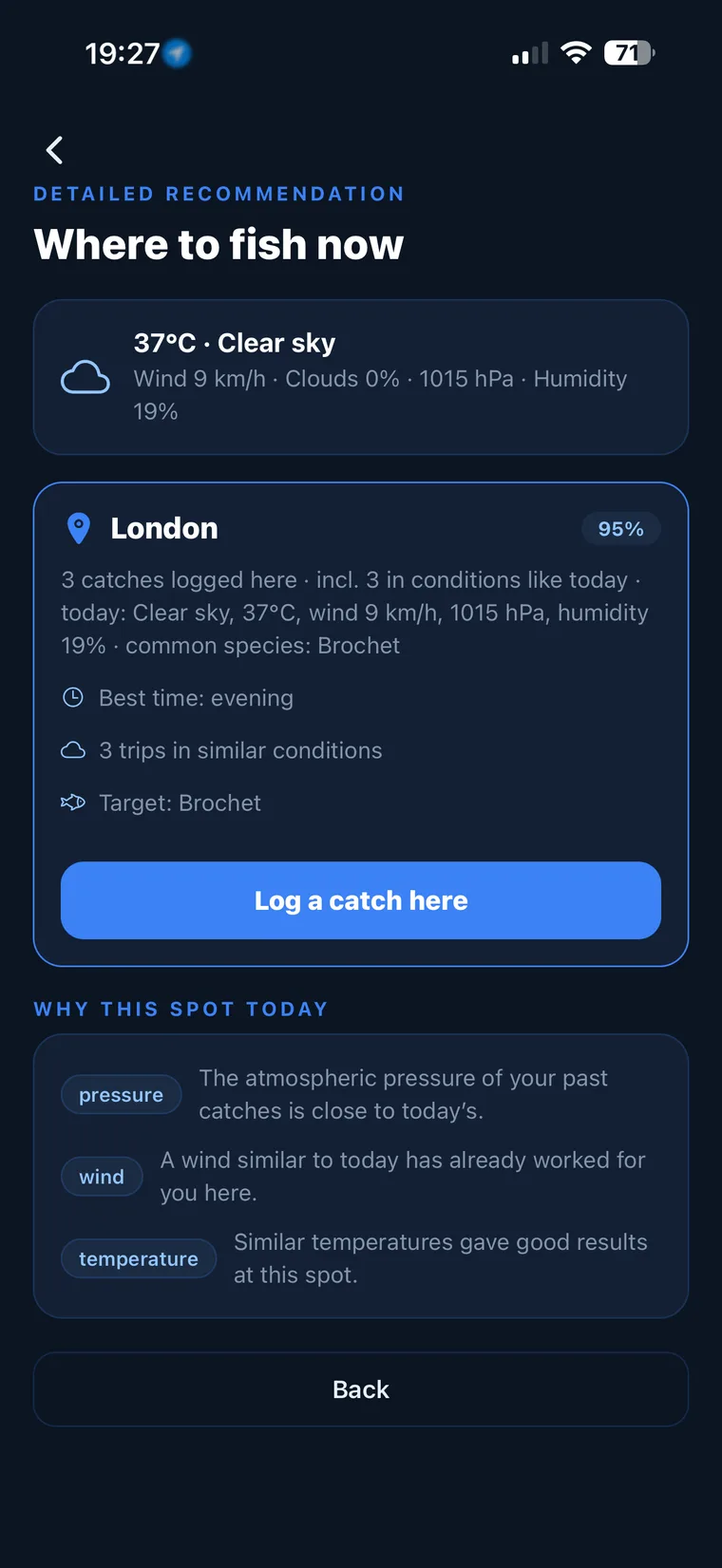
Not sure what to tie on?
Photograph your spot: CarnaFish reads the scene, cross-checks the conditions and gives you the zone, the lure and the retrieve. Free on iOS and Android.
Hooksets, rigging and fish safety
On a soft lure this size, hooksets fail when the fish takes across the body. Two precautions:
- Check the hook positions before every series of casts. In the bigger sizes, a rear stinger added to the harness clearly improves the hook-up rate, without hampering the swim as long as it's short.
- A leader is mandatory: titanium, or 0.70-0.80 mm fluorocarbon over at least fifty centimetres. With a lure this bulky, pike often take it deep.
- Have long pliers and a disgorger ready before you cast, not after the fish is on the mat. On a swimbait with several hooks, a badly unhooked pike gets injured fast.
On rods, you need 30-100 g in 2.40 m minimum for the 15-20 cm sizes, and 0.25-0.35 mm braid. Under-gunning the outfit makes casting uncomfortable and the hookset ineffective at distance.
Ricky the Roach or a glidebait
A glidebait like the Westin Mike the Pike works in a completely different register: wide side-to-side sweeps that force the pike to react, a lure built to provoke. The Ricky the Roach stays imitative and discreet, which makes it better in clear water, on pressured fish, or late in the season once pike have seen plenty of tackle go past.
An internally weighted swimbait like the Megabass Magdraft offers an interesting compromise between imitation and easy casting, with more of a rolling action. And if the problem is your hook-up rate rather than your lure choice, setting up a stinger often changes more than switching models.
Our guide to choosing a pike lure explains how to spread these families across a full season. And if you're torn between a floating and a sinking version when you arrive at a pond, CarnaFish reads a photo of the spot and answers.
Key takeaways
- Density comes before colour: it decides whether you're fishing or unhooking weed.
- Over weed, stay with a floating version even at the cost of casting distance.
- The bite comes on the restart after a stop, not during the steady retrieve.
- On a follower, let the lure stall vertically rather than doing a figure-of-eight.
- Titanium or 0.70-0.80 mm fluorocarbon leader and long pliers ready before the first cast.
FAQ
What size Ricky the Roach should you choose?
The 10 cm suits small waters and average pike, the 15 cm is the most versatile format in ponds and rivers, and the 20 cm serves to select big fish on lakes or late in the season. Above all, match your rod to it.
Floating or sinking version?
It depends on how much water sits above the obstacle. Over weed topping out fifty centimetres below the surface, take a floating or very slow sinking version. On a clean flat at two or three metres, a sinking version lets you hold the layer without effort.
How do you avoid losing fish on a soft swimbait?
Add a short stinger at the back of the harness and check the hook positions regularly. Set firmly but without ripping, and keep the rod loaded throughout the fight: a pike shaking its head on a big lure comes off very quickly on a tight line.
What leader for a pike swimbait?
Titanium, or 0.70-0.80 mm fluorocarbon over fifty centimetres minimum. With an imitative lure that pike take deep, a leader that's too short or too fine gets cut on the teeth.
When is an imitative swimbait better than a glidebait?
In clear water, on heavily fished venues, and late in the season when pike refuse provocative lures. The glidebait keeps the edge for searching a big area fast or waking up inactive fish.
Can you fish it in a river?
Yes, in the sinking version, letting it drift through the slower seams before picking up the retrieve. Avoid strong current, where the lure lies over on its side and the imitation loses all its point.
The full pike lure guideSeason-by-season strategy: which family of lure, when, and why.Go from theory to fish
CarnaFish reads your spot from a photo and gives you the game plan: zone, lure, retrieve. Free on iOS and Android.